Panama vs Uruguay 2026: Which Country Wins for Expats?
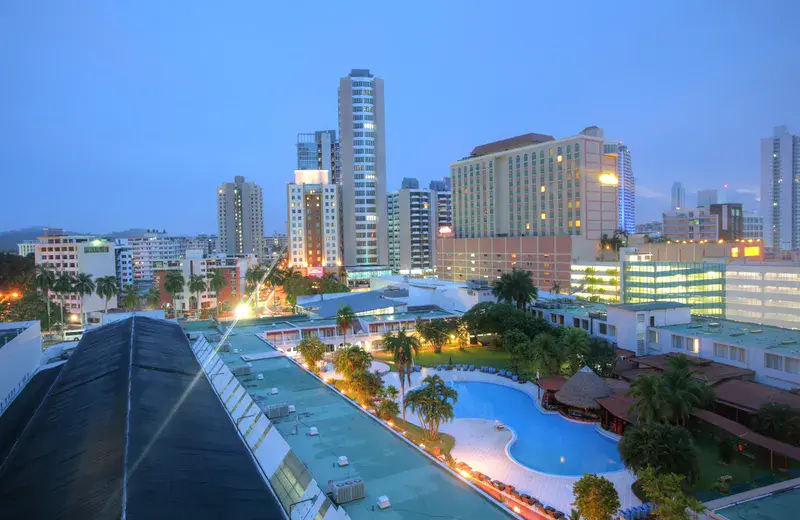
Two countries. One dollarized and tropical, sitting at the crossroads of the Americas. The other temperate, understated, and quietly one of the most stable democracies on the planet. If you're building your shortlist for retiring or relocating abroad, Panama and Uruguay have probably both made the cut — and for good reason. The problem is they appeal to very different kinds of people, and picking the wrong one is an expensive mistake.
This is the comparison that actually tells you the difference — not just the numbers, but what life looks like on the ground, where the visa traps are, and which country wins for your specific situation.
🧭 The Big Picture: Who Each Country Is For
Panama is for the person who wants Latin America with American infrastructure. The dollar is the currency. Johns Hopkins runs a hospital in the capital. You can fly direct to Miami in three hours. The Pensionado program is one of the most generous retirement visas in the world, and the country has spent decades building the legal and financial architecture to attract foreign retirees. It's deliberate. It works.
Uruguay is for the person who wants stability without spectacle. No currency drama, no political chaos, no gimmicks. Montevideo consistently ranks as Latin America's most livable city — not because it's glamorous, but because the buses run, the hospitals are staffed, and the government isn't going anywhere. It's the kind of place where expats arrive skeptical and stay forever.
If you want proximity to the U.S., English-friendly infrastructure, and a plug-and-play retirement program, Panama wins. If you want political stability, a European-feeling capital, and a country that consistently tops Latin America's quality-of-life rankings, Uruguay wins. Most people will land firmly in one camp once they read the details below.
💰 Cost of Living Comparison
Neither country is the cheapest in Latin America — you're not moving to Panama or Uruguay to live on $800 a month. But both offer meaningful savings compared to the U.S., with very different cost profiles.
Panama sits at a Cost of Living Index of 43.9 vs. NYC (meaning roughly 56% cheaper than New York). A 1-bedroom apartment in Panama City averages $1,023/month in the city center. Single-person monthly costs excluding rent run around $781. A couple living comfortably in Panama City — decent apartment, meals out a few times a week, private health insurance — should budget $2,500 to $3,000/month. Step outside the capital to Boquete or Coronado, and that number drops considerably.
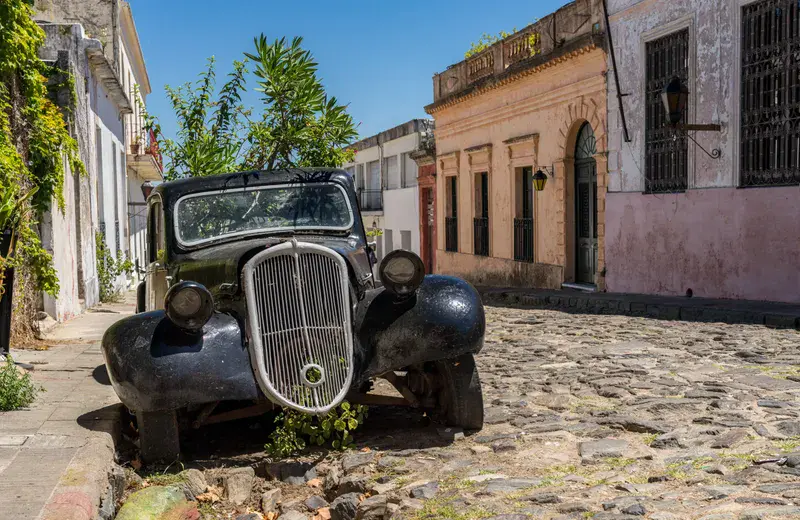
Uruguay has a similar Cost of Living Index of 46.3, but with a dramatically lower rent profile. A 1-bedroom in Montevideo averages just $625/month — 63% below the U.S. average. Single-person monthly costs excluding rent run around $885. The catch: eating out in Uruguay costs more than Panama. Restaurant prices run about 18% higher. A couple living well in Montevideo can expect to spend $2,000–$2,500/month. Head inland to cities like Rivera or Las Piedras, and you're looking at budgets closer to $800–$1,000/month.
The bottom line: Uruguay wins on rent. Panama wins on dining out and groceries. For total monthly spend, Uruguay typically edges out Panama by $200–$400/month for similar lifestyle levels — but the gap narrows when you factor in Panama's Pensionado discounts (more on those below).
Recommended Tool
Send Money to Panama & Uruguay Without the Fees
Wise makes international transfers fast, cheap, and transparent — no hidden exchange rate markups. Essential for moving money abroad.
We may earn a commission Affiliate Disclosure
🛂 Visas & Residency
This is where the two countries diverge most sharply — and where getting the details wrong costs you real money and time.
Panama Visas
Panama's flagship retirement program, the Pensionado Visa, requires a guaranteed lifetime pension income of just $1,000/month — making it one of the most accessible retirement visas in the world. U.S. Social Security qualifies. So does a pension from a private company. The visa grants immediate permanent residency from day one, with no temporary phase. Add $250/month per dependent. If you own Panamanian real estate valued over $100,000, the income requirement drops to $750/month. Processing takes 3–6 months through a licensed Panamanian immigration attorney ($2,000–$4,000 in fees).
The Pensionado also comes with legally mandated discounts that genuinely add up: 50% off entertainment and hotels Monday–Thursday, 25% off restaurant bills on certain days, 15% off hospital bills, 25% off utilities, and duty-free import of a new car every two years.
The Friendly Nations Visa (FNV) is a second pathway, open to citizens of 50+ countries including the U.S., UK, Canada, and EU member states. Important: the program was modified in 2021. It now grants two-year provisional residency first, not immediate permanent residency as many older guides still state. After two years, you can apply for permanent status. Economic ties can be established via employment with a Panamanian company, a $200,000 real estate investment, or a $200,000 fixed-term bank deposit — the option of incorporating a Panamanian company was removed in 2021 and is no longer valid.
For remote workers, Panama's Digital Nomad Visa allows a stay of up to 18 months for those earning $3,000/month or more from outside Panama.
Visa Help
Get Your Panama or Uruguay Visa Done Right
VisaHQ simplifies the document process so you don't miss a step — or lose months to a rejected application.
We may earn a commission Affiliate Disclosure
Uruguay Visas
Uruguay's approach is simpler and more flexible, but less structured. There's no single branded "retirement visa" — instead, foreigners apply for legal residency through the Dirección Nacional de Migración by proving a stable income sufficient to support themselves. The widely accepted practical threshold is around $1,500/month for a single applicant, though this is not a fixed legal minimum. Income can come from pensions, Social Security, rental income, investment returns, or remote work.
The process is known to be bureaucratic and slow — expect 6–12 months. During this time, you'll receive a temporary ID and can live legally in the country. Once residency is granted, you can apply for permanent status without a fixed waiting period, provided you maintain physical ties to Uruguay. Citizenship follows after 5 years for singles, 3 years for married couples — and Uruguay permits dual citizenship, so no renunciation required.
⚠️ Note for your site: As of 2026, there is no formal digital nomad visa in Uruguay. The 2023 pilot program was not codified into a standalone visa category. Remote workers typically enter on 90-day tourist visas and apply for standard residency from within the country.
For a deeper dive into the complexities of visa strategy, see our guide on Visa Strategy Mistakes That Cost Expats $2,000+.
Verdict: Panama wins on clarity and speed. The Pensionado is one of the cleanest, best-defined retirement visas on earth. Uruguay's process takes longer and requires more patience, but offers comparable (and arguably more flexible) access once you're through.
🏥 Healthcare
Panama's healthcare system is genuinely strong — within Panama City. The Hospital Punta Pacifica is Johns Hopkins-affiliated. Hospital Nacional is fully accredited with English-speaking specialists. Private care in the capital runs 50–70% below U.S. prices, and Pensionado holders get an additional 15% off. The friction: outside Panama City, specialized care becomes scarce quickly. If you're living in Bocas del Toro or even Boquete full-time, access to specialists means traveling to the capital.
Uruguay's healthcare system is broader and more evenly distributed. The country's unique Mutualista model — private hospital membership plans with a flat monthly fee — is one of the most practical healthcare setups for expats anywhere in Latin America. For around $80–$150/month, a Mutualista plan covers doctor visits, emergencies, and most procedures with no per-visit premiums or coverage caps. The British Hospital in Montevideo is particularly well-regarded by the expat community. English-speaking doctors are limited but available in Montevideo's private sector. Public healthcare (ASSE) is accessible to legal residents but quality varies.
Healthcare Index: Uruguay scores 68.6 vs Panama's 60.7 — a meaningful gap that reflects Uruguay's more consistent nationwide access.
Recommended Coverage
Don't Move Abroad Without Health Insurance
SafetyWing gives expats flexible, affordable coverage with no long-term commitment — starting at under $50/month.
We may earn a commission Affiliate Disclosure
For a full breakdown of how to navigate international health coverage, read our Expat Health Insurance: Complete Coverage Guide and Healthcare Abroad: Better & Cheaper Than the US.
🧾 Taxation
This section has seen major changes in 2026 — both countries require updated context.
Panama Taxes
Panama operates a pure territorial tax system: income earned outside Panama is simply not taxed by Panama, period. Your U.S. Social Security, pension, investment withdrawals, rental income from foreign property — none of it is touched by Panamanian tax authorities. This has been the rule for decades and has not changed. The Pensionado program adds an additional layer of exemptions on imports and purchases.
That said, as a U.S. citizen you still owe the IRS. Panama has no income tax treaty with the United States, but you can use the Foreign Earned Income Exclusion (up to $132,900 in 2026) and the Foreign Tax Credit to reduce your U.S. bill. Most American retirees in Panama owe little to nothing to the IRS after properly applying these tools. See our Retire Abroad Tax Guide: IRS Rules for US Expats for the full breakdown.
One practical friction point: FATCA compliance has made banking in Panama complicated for Americans. Many local banks simply decline U.S. citizens as clients. This is a real issue that doesn't get enough attention in retirement guides. Budget time — and possibly a trip to Miami — to sort your banking situation before you relocate. More on this in our Digital Nomad Banking: 6 Countries That Freeze Accounts.
Uruguay Taxes — Major 2026 Changes
Uruguay's tax situation is significantly more complex in 2026 than what most guides (including older versions of expat sites) describe. Here's the accurate picture:
For legal residency (not tax residency): You apply to live in Uruguay, and your right to reside is not affected by these tax changes. Income requirements remain around $1,500/month in practice.
For tax residency and the foreign income exemption: Uruguay's Budget Law 20.446, effective January 1, 2026, made sweeping changes:
- The old rule — spend 60 days/year in Uruguay, buy ~$590K in real estate, access the 11-year tax holiday — is gone.
- New path 1: Spend 183+ days/year in Uruguay. No investment required. You still qualify for the 10-year holiday on foreign-source income.
- New path 2: Invest ~$2 million USD in Uruguayan real estate. Qualifies for the 10-year holiday with lower physical presence requirements.
- New path 3: Contribute $100,000/year to the National Innovation Fund.
- For everyone else: Foreign-source capital income (dividends, capital gains, foreign rental income) is now taxed at 12% flat (IRPF).
What this means practically: If you're a retiree who plans to spend most of your year in Uruguay anyway — 6+ months — the tax holiday is still fully available at zero investment cost. If you were planning to live primarily elsewhere and "park" tax residency in Uruguay for the exemption, that strategy is effectively dead unless you can deploy $2M in real estate.
For a deeper look at how this interacts with U.S. filing obligations, read our Tax-Free Retirement Abroad: Estate Planning Guide.
Verdict: Panama is cleaner and simpler for U.S. retirees — pure territorial, no changes, no conditions. Uruguay's tax holiday is still excellent for those spending 183+ days/year in-country, but requires understanding the new 2026 framework before planning around it.
🛡️ Safety & Stability
Safety is where these two countries swap positions depending on what metric you use.
Panama has a Safety Index of 57.3 and a Crime Index of 42.7. Crime is moderate — petty theft and occasional violent incidents, concentrated in certain neighborhoods of Panama City. Expats living in Boquete, Coronado, or the nicer areas of the capital generally report feeling safe. Political Stability Index sits at 52.6, which is adequate but not exceptional.
Uruguay has a lower Safety Index (48.0) and a higher Crime Index (52.0) — which sounds worse, but the picture is more nuanced. Uruguay's crime is concentrated in certain areas of Montevideo (theft, car break-ins) and is largely non-violent. What Uruguay has that Panama doesn't is a Political Stability Index of 82.0 — among the highest in all of Latin America. Uruguay is ranked as the safest country in South America, and second safest in Latin America overall. Its institutions are durable, its democracy transparent, and corruption levels are the lowest in the region.
Verdict: Panama feels safer day-to-day in expat areas. Uruguay is more structurally stable as a country. Both are safe by Latin American standards. Neither should alarm a reasonably cautious expat.
Ready to Rewire your Life?
Sign up to receive updates and insights.
By submitting your email address, you will receive a free subscription to RA Postcards and special offers from Rewire Abroad and our affiliates. You can unsubscribe at any time, and we encourage you to read more about our Privacy Policy.
🌤️ Climate & Environment
This one's decisive for many people.
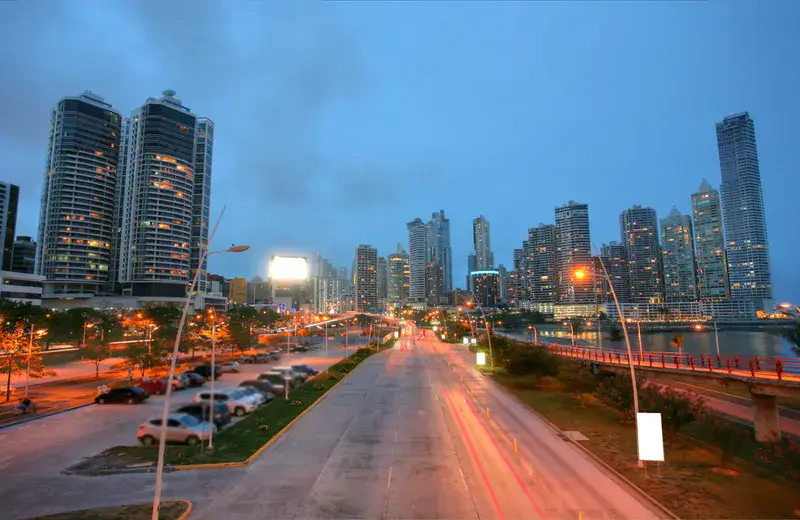
Panama is tropical — hot, humid, and green year-round. Temperatures in Panama City hover between 24–32°C (75–90°F) all year with a rainy season from May to December. If you love warmth and hate winter, Panama delivers. The tradeoff: high humidity is constant, and the rainy season in the city can be intense. Head up to Boquete in the highlands and the temperatures drop to a perfect 18–24°C range — one of the most comfortable climates in Central America.
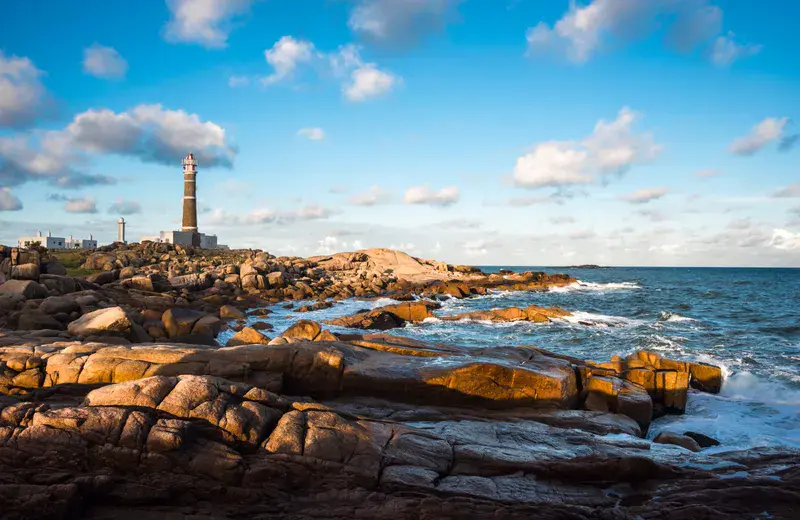
Uruguay has four distinct seasons. Summers (December–February) hit 21–28°C. Winters (June–August) cool to 6–14°C — chilly, but not harsh. Rainfall is fairly even throughout the year. If you're coming from a northern U.S. climate and want something familiar with a slight upgrade, Uruguay delivers. If you're fleeing cold winters entirely, Panama is the better call.
Air Quality Index: Panama 10.1 vs Uruguay 11.5 — both are good, with minimal urban pollution compared to large global cities.
🏙️ Where to Live
Top Panama Destinations for Expats
- Panama City — Modern, urban, best healthcare access, strongest English-speaking infrastructure. Est. $1,850/month total.
- Boquete — Highland mountain town, cooler climate, strong expat community, slower pace. Est. $1,481/month total.
- Coronado — Pacific beach community, popular with American retirees, good amenities. Est. $1,345/month total.
- Bocas del Toro — Caribbean islands, stunning nature, remote but beautiful. Est. $1,681/month total.
Find Your Home Abroad
Book Your First Month Before You Commit
Try a neighborhood before signing a lease. Booking.com has apartments and long-stay options in Panama City, Montevideo, Boquete, and beyond.
We may earn a commission Affiliate Disclosure
Top Uruguay Destinations for Expats
- Montevideo — Capital and cultural hub, best healthcare, strongest expat community, walkable rambla waterfront. Est. $1,550/month total.
- Punta del Este — Glamorous beach resort city, higher costs (avoid high season), popular with Argentine and Brazilian expats. Est. $1,768/month total.
- Colonia del Sacramento — Historic, charming colonial city on the river, ferry access to Buenos Aires. Est. $1,350/month total.
- Rivera — Border town with Brazil, dramatically lower costs, surprisingly good quality of life. Est. $770/month total.
🌐 Internet & Infrastructure
Panama: Fixed broadband averages 36.9 Mbps — functional for remote work but not exceptional. Fiber is expanding in Panama City. Mobile networks provide good backup. Coworking options growing in the capital.
Uruguay: Fixed broadband averages 144 Mbps — among the fastest in all of South America, and it's available nationwide, including rural areas. This is government-backed infrastructure built deliberately. Uruguay wins this category decisively — and it's a major reason remote workers choose it over other South American destinations.
If you're building location-independent income streams alongside retirement savings, read Location-Independent Income: Build Remote FIRE Streams.
🗳️ The Verdict: Which Country Wins?
There is no universal winner here — but there are clear winners for specific types of people.
Choose Panama if:
- You have a qualifying pension or Social Security ($1,000+/month) and want immediate, structured permanent residency
- You want the security of USD with no currency risk
- You value proximity to the U.S. and frequent direct flights
- You prefer warm, tropical weather year-round
- You want a large English-speaking expat infrastructure in place
- Healthcare quality in a major city matters more than nationwide access
Choose Uruguay if:
- You value political stability and institutional durability above all
- You're comfortable spending 183+ days/year in Uruguay (and want the 2026 tax holiday)
- You'll be working remotely and need reliable, fast internet
- You prefer a temperate, four-season climate
- You want the lowest rent in the comparison — and a European-feeling capital
- You plan to pursue citizenship (faster path for married couples: 3 years)
For the FIRE-minded expat planning around geoarbitrage and portfolio income, Uruguay's tax holiday (for 183+ day residents) can be a compelling structure — but run the numbers carefully under the new 2026 rules. Panama's pure territorial system requires zero planning or conditions. Both countries significantly accelerate your FIRE timeline compared to staying in the U.S. — see Retire 10 Years Early: 5 Countries That Cut Your FIRE Age and Couple's FIRE Abroad: Retire in 8 Years, Not 25 for the math.
Not sure either is right for you? Compare the full Latin America landscape in Best 15 Countries to Retire Abroad in 2026 (Ranked) or explore Best Countries to Retire Abroad: $500 to $5,000/Month to find your budget fit. If South America specifically is calling, our Retire in Chile: First-World Life, South American Prices is worth a read before you finalize anything.
📊 Quick Comparison Table
Category | 🇵🇦 Panama | 🇺🇾 Uruguay |
|---|---|---|
Monthly Budget (Couple) | $2,500–$3,000 | $2,000–$2,500 |
Avg. Rent (1BR City Center) | $1,023 | $625 |
Cost of Living Index | 43.9 | 46.3 |
Currency | USD | Uruguayan Peso |
Retirement Visa Income | $1,000/month | ~$1,500/month (practical) |
Residency Timeline | 3–6 months | 6–12 months |
Citizenship | 5 years | 3 years (married) / 5 years (single) |
Foreign Income Tax | 0% (territorial) | 0% if 183+ days/yr (2026 rules) |
Healthcare Index | 60.7 | 68.6 |
Safety Index | 57.3 | 48.0 |
Political Stability Index | 52.6 | 82.0 |
Internet Speed | 36.9 Mbps | 144 Mbps |
Climate | Tropical year-round | Four seasons |
English Proficiency | Medium | Low |
Expat Community | Medium | Small but growing |
Frequently Asked Questions
Click any question to expand the answer.
Disclaimer: Visa rules, tax laws, and cost of living data change regularly. This article reflects information current as of May 2026. Always consult a licensed immigration attorney and qualified tax advisor before making relocation decisions.
Colombia vs. Argentina: The Digital Nomad's South American Dilemma
Choosing between Colombia and Argentina for digital nomads? Complete cost, visa, and lifestyle comparison to help you make the perfect SA move.
France vs Germany: Which European Destination Is Right for You?
Can't decide between France's romantic allure and Germany's efficient charm? Compare everything from Paris vs Berlin, cost of living, food, and more!
Estonia vs Finland Living Abroad 2025: Digital Nomad vs Scandinavian Stability Complete Guide
Estonia vs Finland: Which Nordic destination offers better value, freedom, and long-term feasibility for digital nomads and FIRE followers?
Italy vs Greece for Expats (2026): Cost, Visas, Healthcare & Lifestyle Compared
Florence at $1,830/month vs Thessaloniki at $1,200/month. Real housing, visa, healthcare & lifestyle data to pick your Mediterranean home.