Living in St. Kitts and Nevis: Complete Guide for Expats & Retirees 2026

Why St. Kitts and Nevis Stands Out for International Living 🏝️
Tucked away in the eastern Caribbean, St. Kitts and Nevis remains one of the region's best-kept secrets. While destinations like Barbados and the Cayman Islands dominate headlines, this twin-island federation of just 55,000 people offers something increasingly rare: authentic Caribbean living without the overwhelming tourist crowds, combined with one of the world's most respected citizenship by investment programs and genuinely attractive tax benefits.
For retirees, the appeal is immediate. St. Kitts and Nevis provides year-round warmth, English as the official language, stable governance (independent since 1983), and a healthcare system that, while modest, serves the expat community adequately for routine care. The country's strategic positioning makes it an excellent base for exploring the wider Caribbean, with flights connecting to major hubs in Puerto Rico, Antigua, and Miami.
Digital nomads discover something different here: a slower-paced Caribbean lifestyle that's less developed than Barbados's Remote Work programs but offers authentic island immersion. The internet infrastructure is improving, particularly in Frigate Bay and around Basseterre, though it won't match what you'd find in more digitally-focused destinations.
Saint Kitts and Nevis at a Glance
What truly distinguishes St. Kitts and Nevis is its citizenship by investment program—one of the oldest and most reputable globally. Since 1984, the program has attracted individuals seeking a second passport that provides visa-free access to over 150 countries, including the Schengen Area and the UK. But beyond citizenship seekers, there's a growing community of retirees and expats who've discovered that life in St. Kitts and Nevis offers something money can't easily buy elsewhere: genuine peace, natural beauty, and a tight-knit community where newcomers can genuinely integrate.
The country isn't without challenges. Limited job opportunities mean most expats are either self-employed, retired, or have secured employment before arriving. The cost of living, particularly for imported goods, runs higher than you might expect. And the islands' small size means entertainment and dining options are modest compared to larger Caribbean destinations. But for those seeking tranquility, natural beauty, and favorable residency pathways, St. Kitts and Nevis delivers something exceptional.
Understanding the Twin Islands: Regional Deep-Dive 🗺️
St. Kitts and Nevis are two distinct islands separated by a two-mile channel called The Narrows. Each offers different living experiences, and understanding these differences is crucial for anyone considering relocating here.
St. Kitts: The Larger, More Developed Island
St. Kitts spans 68 square miles and hosts about 75% of the federation's population. The island's volcanic origins created dramatic landscapes—dominated by Mount Liamuiga, a dormant volcano rising 3,792 feet—lush rainforests, and the famous black sand beaches along the Atlantic coast contrasting with the golden sands on the Caribbean side.
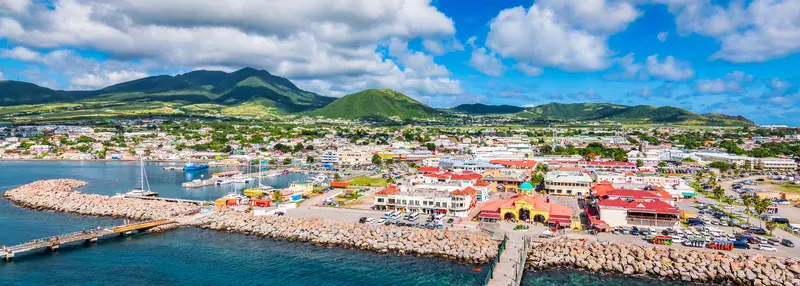
Basseterre, the capital and only true city, sits on the southwestern coast. With roughly 13,000 residents, Basseterre functions as the commercial and administrative hub. Living in Basseterre St. Kitts means walkable access to government offices, the main hospital, the island's largest grocery stores, and the historic Port Zante where cruise ships dock. The city retains colonial architecture, particularly around Independence Square and the Treasury Building. For expats, Basseterre offers the most urban lifestyle available, though "urban" here means a small Caribbean town rather than a bustling metropolis.
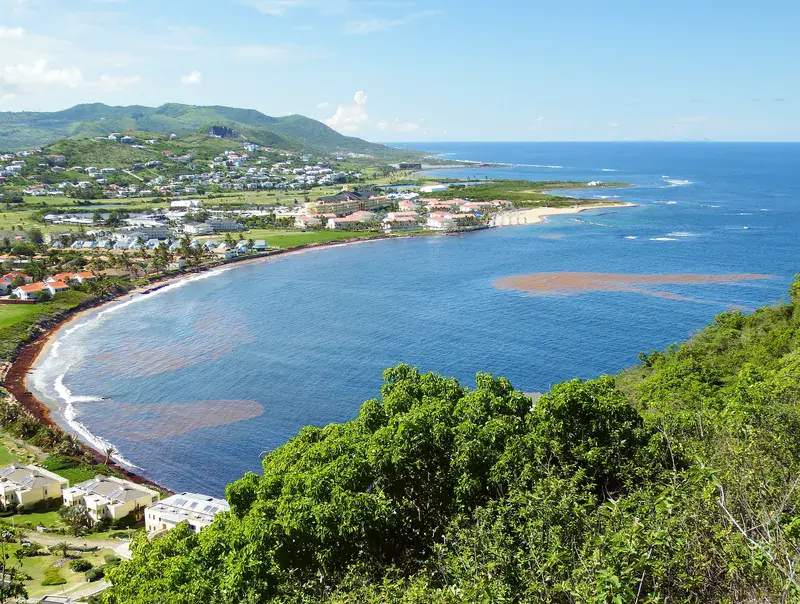
Frigate Bay has emerged as the primary expat enclave. This area on the southeastern peninsula attracts both retirees and younger expats with its proximity to two beaches (one Atlantic, one Caribbean), condominium developments, restaurants, and the island's casino. The Friday night street party known as "The Strip" brings weekly energy to the area. Most modern rental properties targeting expats concentrate here, and the developing Southeast Peninsula road continues extending further south toward Timothy Beach and Cockleshell Bay.
The Southeast Peninsula represents St. Kitts's premium real estate frontier. Once accessible only by rough roads, improved infrastructure has opened this area for development. Luxury villas and boutique resorts dot the coastline, offering stunning ocean views and relative seclusion. This is where you'll find some of the best places to live in St. Kitts and Nevis if your budget allows—properties with private beach access, infinity pools, and the island's most spectacular sunsets.
The West Coast from Old Road Town up through Sandy Point offers a more local experience. These communities have existed since colonial times, and while expats are less common here, those seeking authentic Kittitian life and lower costs sometimes settle in these areas. Infrastructure is more basic, but you're closer to rainforest hiking trails and historical sites like Brimstone Hill Fortress.
Nevis: The Quieter Sister Island ✨
Nevis covers just 36 square miles and hosts about 12,000 people. The island's centerpiece is Nevis Peak, a cloud-wrapped volcanic cone rising 3,232 feet that creates the island's distinctive silhouette visible from St. Kitts.
Charlestown, Nevis's capital, is tiny—essentially a few streets of colonial buildings, shops, and restaurants hugging the waterfront. Life here moves even more slowly than in Basseterre. The island's administrative offices, museum, and main pier are here, but there are no traffic lights on the entire island. For retirees seeking ultimate tranquility, Charlestown and its surroundings offer an unhurried Caribbean lifestyle that's increasingly rare.
The Northern Coast from Oualie Beach to Hurricane Hill hosts most of Nevis's expat population and visitor accommodations. Several small resorts and rental villas line this coastline, taking advantage of the calm Caribbean waters and views toward St. Kitts. This area offers the best beach access and the most developed dining scene on Nevis, though "developed" remains relative.
The Plantations scattered around Nevis's mid-elevation slopes have been converted into some of the Caribbean's most charming small hotels and private estates. Living in one of these restored plantation properties means embracing historical architecture, tropical gardens, and often spectacular ocean views, though you'll need a vehicle for daily errands.
The Eastern Coast and interior remain largely agricultural and residential for locals. Few expats settle here, but it's where you find Nevis's most authentic communities and lowest property costs.
Getting Between the Islands
The government-operated ferry service connects the islands multiple times daily, with the journey taking 45 minutes. The service is reliable if occasionally weather-dependent. Many expats living on one island regularly visit the other, treating the federation as a single living space. Private water taxis offer flexibility for those who can afford them.
Cost of Living in St. Kitts and Nevis: Budgeting for Island Life 💰
Understanding the cost of living in St. Kitts and Nevis requires adjusting expectations. This is an island nation that imports most goods, and prices reflect that reality. The Eastern Caribbean Dollar (XCD) is the official currency, pegged to the US dollar at approximately 2.7 XCD to 1 USD, and US dollars are widely accepted.
Monthly Budget Breakdown
Expense Category | Budget Range | Mid-Range | Comfortable | Luxury |
|---|---|---|---|---|
Housing (Rent) | Studio/1BR: $800-$1,200 2BR: $1,200-$2,000 3BR: $1,800-$3,500+ | $1,400 | $2,200 | $4,000+ |
Utilities | Electric, water, internet, trash | $250 | $350 | $500+ |
Groceries | Local + imported items | $400 | $600 | $900+ |
Dining Out | 2-3x weekly | $200 | $400 | $800+ |
Transportation | Car rental/ownership + fuel | $300 | $450 | $700+ |
Healthcare | Insurance + out-of-pocket | $200 | $400 | $800+ |
Entertainment | Activities, social, travel | $150 | $300 | $600+ |
Miscellaneous | Personal care, household | $150 | $200 | $300+ |
TOTAL | $2,450 | $4,900 | $8,600+ |
Housing Costs: What to Expect
St. Kitts and Nevis cost of housing varies dramatically by location and property type. The most affordable rentals are in local neighborhoods away from expat areas, but these typically lack modern amenities. Most expats rent in Frigate Bay, along the Southeast Peninsula, or in Charlestown/northern Nevis.
A basic one-bedroom apartment in Frigate Bay typically runs $900-$1,200 monthly. Two-bedroom condos in the same area range $1,400-$2,000. Luxury three-bedroom villas with pools and ocean views command $3,000-$6,000+ monthly. On Nevis, prices run slightly lower for comparable properties.
For those purchasing property, the real estate market caters heavily to the citizenship by investment program. Studio condos in approved developments start around $200,000-$250,000, while luxury beachfront villas easily exceed $1 million. The St. Kitts and Nevis real estate for expats market includes:
- Approved CBI Properties: New developments specifically created for the citizenship program, often with resort amenities and rental management
- Resale Market: Existing homes and condos, typically offering better value but not qualifying for CBI
- Land: Buildable lots ranging from $50,000-$500,000+ depending on location and ocean views
- Plantation Properties: Historic estates, primarily on Nevis, requiring significant maintenance
Property purchase by foreigners requires an Alien Landholding License, which costs 10% of the purchase price on St. Kitts (12% on Nevis). This significant fee, along with legal costs (typically 2-3% of purchase price), means buying property here requires substantial capital.
Daily Living Expenses
Groceries represent a significant ongoing cost. The islands import most food, and prices reflect shipping costs. Expect to pay 30-50% more than US mainland prices for standard items. Local produce—breadfruit, mangoes, plantains, fresh fish—offers both savings and better quality. A week's groceries for one person typically costs $100-$150.
Major supermarkets like Rams and Best Buy offer decent selection but at import premiums. Some expats make quarterly trips to Puerto Rico or St. Martin to stock up on non-perishables, which can generate meaningful savings for those committed to the strategy.
Utilities can shock newcomers. Electricity costs run high—approximately $0.35-$0.45 per kWh—because the islands rely on diesel generators. A typical two-bedroom apartment with air conditioning can easily generate $200-$300 monthly electric bills. Water is metered and reasonable at $30-$50 monthly. Internet service from providers like Flow and Digicel costs $60-$100 monthly for basic residential service.
Transportation means owning or renting a vehicle. While Basseterre and Charlestown are walkable, you'll need a car for grocery shopping, beach access, and general mobility. Used vehicles cost more than in North America due to import duties. Many expats rent long-term at $300-$450 monthly. Gas prices hover around $5-$6 per gallon. A local driver's license costs $62.50 and requires presenting your home country license at the Traffic Department.
Dining out ranges widely. Local spots serving Caribbean staples like goat water stew, roti, or fresh fish run $10-$15 per meal. Mid-range restaurants charge $20-$35 per entrée. Upscale resort dining easily reaches $50-$80+ per person. Alcohol is relatively affordable—Carib beer costs $3-$4, and the local CSR rum is inexpensive.
Hidden Costs and Surprises
Several expenses catch newcomers off-guard:
- Shipping costs for items not available locally can be substantial
- Vehicle import duties make bringing your car from abroad expensive (45-75% of value)
- Air conditioning necessity during hot months significantly impacts utility costs
- Hurricane preparedness supplies and potential evacuation costs
- Limited competition means some services and products have effective monopolies with corresponding prices
Comparison with Other Caribbean Destinations
Compared to similar Caribbean locations, St. Kitts and Nevis sits in the middle tier for cost of living. It's more expensive than the Dominican Republic or Grenada but notably cheaper than the Cayman Islands, Turks & Caicos, or the US Virgin Islands. It's roughly comparable to Barbados and Saint Lucia.
The value proposition improves significantly when you factor in the tax benefits (covered below) and residency pathways. For retirees with stable income from abroad, the lack of income tax can offset higher daily living costs. Those interested in comparing Caribbean options should also explore living in Antigua and Barbuda, which offers similar citizenship by investment opportunities.
Residency, Citizenship, and Legal Pathways 📋
St. Kitts and Nevis offers several routes for establishing legal residence, from temporary permits to full citizenship. Understanding these pathways is essential for anyone considering moving to St. Kitts and Nevis.
Tourist Entry and Initial Stay
Citizens of the US, Canada, UK, and EU countries can enter visa-free for up to 90 days. This provides ample time to explore the islands and determine if relocation is right for you. Extensions beyond 90 days can be requested through the Immigration Department for a fee.
Work Permits 🏢
If you've secured employment, your employer must apply for a St. Kitts and Nevis work permit on your behalf. The process involves demonstrating that no qualified local could fill the position—a requirement that limits opportunities for expats except in specialized fields like hospitality management, healthcare, or finance.
Work permit applications require:
- Job offer letter from a registered local employer
- Police clearance from your home country
- Medical examination
- Passport and photographs
- Processing fee (varies by occupation)
The permit must be renewed annually, and processing takes 4-8 weeks. Work permits don't provide a path to permanent residency; they're employment-specific and terminate if you change employers.
For digital nomads, the situation is less clear. The country hasn't established a formal digital nomad visa program like Barbados or Antigua. Some remote workers enter on tourist visas and work for foreign employers, though this exists in a legal gray area. If you're considering St. Kitts and Nevis as a digital nomad in St. Kitts and Nevis base, consult with an immigration attorney about your specific situation.
Temporary Residency
St. Kitts and Nevis residency requirements for temporary permits generally apply to:
- Retirees with sufficient financial means
- Self-employed individuals with businesses registered in the federation
- Investors in local businesses (below CBI threshold)
The application requires:
- Proof of financial means (bank statements showing $250,000+ in liquid assets)
- Police clearance
- Medical certificate
- Proof of accommodation in St. Kitts and Nevis
- Application fee
Temporary residency must be renewed annually. After five consecutive years, you may apply for permanent residency, though approval isn't automatic. For those exploring retirement visas with no income proof requirements, St. Kitts and Nevis's financial documentation requirements are relatively straightforward.
Permanent Residency
Permanent residency offers more stability and can eventually lead to citizenship through naturalization (after 14 years of residence). Requirements include:
- Five years of continuous temporary residency
- Clean criminal record
- Financial self-sufficiency
- Integration into the community
- Application fee ($2,000+)
Permanent residents can work without additional permits and enjoy most rights except voting in federal elections.
Citizenship by Investment: The Premium Pathway 🎯
The St. Kitts and Nevis citizenship by investment program, established in 1984, is the world's longest-running CBI program. It attracts individuals seeking a second passport for travel flexibility, tax planning, or geopolitical diversification.
Investment Options:
1. Sustainable Island State Contribution (SISC)
- Single applicant: $250,000
- Applicant + spouse: $300,000
- Applicant + spouse + 2 dependents: $350,000
- Each additional dependent: $50,000
- Non-refundable donation to government fund
2. Real Estate Investment
- Minimum $400,000 in approved real estate project
- Must hold for 5 years (7 years for resale to another CBI applicant)
- Additional government fees: $50,000+ depending on family size
3. Alternative Investment (introduced 2023)
- Minimum $250,000 in approved alternative investment vehicles
- Includes private equity, venture capital, or government bonds
- Specific terms vary by investment
Benefits of Citizenship:
- Visa-free or visa-on-arrival access to 150+ countries including UK, Schengen Area, Ireland, Singapore, Hong Kong
- No residency requirement—you never need to live in St. Kitts and Nevis
- No wealth, gift, or inheritance taxes
- Can include spouse, dependent children, dependent parents, and dependent siblings
- Citizenship is for life and inheritable
- No interview or language requirements
Processing Timeline: Due diligence and processing typically take 4-6 months. Reputable CBI agencies handle applications for fees of $25,000-$40,000 in addition to government charges.
Important Considerations: The program faces ongoing international scrutiny regarding due diligence. In 2023, the US required citizens of St. Kitts and Nevis to obtain visitor visas (previously visa-free) due partly to concerns about the CBI program. The government has since strengthened due diligence procedures, but applicants should be aware that holding a CBI passport may face different treatment than citizenship by birth or naturalization.
Official program information: St. Kitts and Nevis Citizenship by Investment Unit
Retiring in St. Kitts and Nevis Without CBI
For retirees not pursuing citizenship by investment, the pathway involves securing temporary residency based on financial self-sufficiency, then potentially converting to permanent residency after five years. This route requires:
- Initial entry on tourist visa
- Application for temporary residency with proof of pension/retirement income and assets
- Annual renewal of temporary residency
- Application for permanent residency after five consecutive years
- Potential naturalization after 14 years of continuous residency
This traditional path receives less attention than CBI but serves retirees seeking a more gradual commitment to island life. The Immigration Department in Basseterre handles these applications.
Healthcare in St. Kitts and Nevis: What to Expect 🏥
Healthcare in St. Kitts and Nevis represents one area where expectations must be carefully calibrated. The system adequately handles routine medical care but has significant limitations for complex or emergency situations.
Medical Infrastructure
Joseph N. France General Hospital in Basseterre serves as the country's main medical facility. This government-run hospital provides emergency care, general surgery, internal medicine, and basic specialist services. The facility has undergone renovations but remains a modest regional hospital rather than a modern medical center.
Alexandra Hospital in Charlestown serves Nevis with similar capabilities on a smaller scale.
Both facilities can handle:
- Routine medical consultations
- Basic diagnostic testing
- Emergency care for moderate injuries and acute illnesses
- Uncomplicated surgeries
- Maternity care for normal deliveries
Neither hospital reliably handles:
- Complex cardiac procedures
- Advanced cancer treatment
- Neurosurgery
- High-risk obstetric cases
- Advanced orthopedic surgery
- Dialysis and organ transplantation
Private Medical Care
Several private clinics and practices supplement the public system:
- Pogson Medical Centre in Basseterre offers private consultations with better wait times
- Individual private physicians practicing various specialties
- Private clinics in Frigate Bay and Nevis serving the expat community
Private care is affordable by North American standards—a typical consultation runs $50-$75, specialist visits $100-$150. However, diagnostic capabilities remain limited even in private settings.
Medical Tourism for Complex Care
Most expats establish relationships with medical facilities in:
- Puerto Rico (3-hour flight): Modern hospitals with full services
- Miami (2.5-hour flight): American healthcare for those with US insurance
- Martinique (close by sea): French healthcare system
For planned procedures or ongoing management of complex conditions, factoring in travel costs and logistics is essential. Some expats maintain insurance that covers medical evacuation or treatment abroad. For those comparing healthcare abroad vs. the US, understanding these limitations is crucial, especially when considering Medicare vs. international health insurance options.
Dental Care
Dental services are adequate for routine care. Several dentists practice on both islands, with cleanings costing $80-$120 and basic procedures reasonably priced. Complex dental work often means traveling to Puerto Rico or returning to your home country.
Prescriptions and Medications
Local pharmacies stock common medications, though brand availability varies. Bringing a supply of essential medications and having prescriptions transferred to local doctors is advisable. Prices for generic medications are comparable to US costs, though some brand-name drugs may be expensive or unavailable.
Health Insurance Options
For CBI Participants: Many approved developments include group health insurance as part of property ownership.
For Retirees and Long-term Expats: Options include:
- International health insurance providers (Cigna Global, Allianz, IMG) offering Caribbean coverage: $200-$800+ monthly depending on age and coverage level
- Local insurance companies offering more limited regional coverage
- Maintaining US Medicare with supplemental travel insurance (Medicare doesn't cover foreign healthcare)
- Self-insurance for routine care with evacuation insurance for emergencies
The most common approach among financially secure expats is international insurance covering medical evacuation plus self-payment for routine care locally. Annual costs for comprehensive international coverage typically run $3,000-$8,000 depending on age and coverage. For early retirees, understanding healthcare options before Medicare eligibility is essential.
Mental Healthcare
Mental health resources are extremely limited. A few counselors and therapists practice on the islands, but specialized psychiatric care often requires teletherapy with providers abroad or travel for in-person treatment.
Emergency Services
Ambulance service exists but shouldn't be relied upon like in developed nations. Response times can be slow, and equipment is basic. The islands have helicopter evacuation capabilities to Puerto Rico or other islands for critical emergencies, but this service is expensive ($15,000-$40,000+) and requires appropriate insurance or payment guarantees.
Practical Recommendations
For life in St. Kitts and Nevis for Americans and other expats:
- Undergo comprehensive health screening before relocating
- Secure international insurance with medical evacuation coverage
- Establish care with local physicians for routine needs
- Build relationships with specialists in Puerto Rico or Miami for ongoing conditions
- Bring 3-6 months of essential medications when relocating
- Consider proximity to airports when choosing where to live if health concerns exist
The healthcare system is adequate for healthy retirees and expats without complex medical needs, but those with serious ongoing conditions should carefully evaluate whether the islands' limitations are acceptable given their health status. For comprehensive overseas health coverage planning, consulting with specialized insurance brokers is advisable.

Tax Benefits: A Legitimate Draw for Retirees and Expats 💵
The st kitts and nevis tax benefits deserve serious consideration, as they represent one of the country's most compelling advantages for certain categories of expats.
Personal Taxation
St. Kitts and Nevis imposes no personal income tax on residents or citizens. This means:
- Pension income goes untaxed
- Retirement account distributions face no local taxation
- Investment income (dividends, interest, capital gains) is tax-free locally
- Foreign employment income isn't taxed by St. Kitts and Nevis
This creates significant advantages for retirees with substantial retirement income, dividend portfolios, or capital gains from investment activities.
Corporate Taxation
For entrepreneurs and business owners, corporate taxation is straightforward:
- Standard corporate tax rate: 33%
- Exemptions available for certain industries and activities
- Territorial tax system—offshore income may receive preferential treatment
The country maintains several offshore financial structures, though international pressure has led to increased reporting requirements. Information is available through the Inland Revenue Department.
Property Taxes
Real property taxes are modest:
- Residential property: 0.2% of assessed value annually
- Commercial property: Higher rates apply
- New construction often receives tax holidays
For a $500,000 home, expect annual property tax of approximately $1,000—substantially lower than most US states.
Import Duties and VAT
The tradeoff for no income tax comes from import duties and VAT:
- VAT (Value Added Tax): 17% on most goods and services
- Import duties: 10-60%+ depending on item category
These taxes significantly impact cost of living.
US Tax Obligations
For US citizens, the lack of local income tax doesn't eliminate US tax obligations. The IRS requires reporting worldwide income regardless of residence. However:
- Foreign Earned Income Exclusion (FEIE): Up to $120,000 (2023) of foreign earned income can be excluded
- Foreign Tax Credit: Limited utility here since there's no income tax
- FATCA Reporting: Required for foreign financial accounts over $10,000
Working with a CPA experienced in expat taxation is essential for US citizens. The tax benefit comes from avoiding double taxation rather than eliminating US obligations entirely. For comprehensive strategies, review our FIRE tax optimization playbook.
Other Nationalities
Canadian, UK, and EU citizens face similar situations—they must understand home country tax obligations before assuming the local tax situation eliminates all taxation. However, many countries offer foreign residence provisions that can, with proper planning, significantly reduce tax obligations.
Wealth Transfer Planning
St. Kitts and Nevis imposes:
- No estate tax
- No inheritance tax
- No gift tax
This makes the jurisdiction attractive for wealth transfer planning, particularly for high-net-worth individuals structuring international estates. For those interested in comprehensive planning, explore our guide to global retirement tax havens and estate planning.
The Bottom Line on Taxes
The tax benefits are real and substantial for:
- Retirees with significant pension or investment income
- High-net-worth individuals managing international portfolios
- Entrepreneurs with location-independent businesses
They're less relevant for:
- Employed workers paying home country taxes
- Those with modest retirement income already below tax thresholds
- Digital nomads from countries with territorial taxation
Always consult qualified tax advisors in both your home country and St. Kitts and Nevis before making financial decisions based on tax considerations. Understanding digital nomad tax traps is also important for remote workers.

Safety, Security, and Daily Life Considerations 🛡️
Understanding st kitts and nevis safety for expats requires examining both statistical crime rates and the practical daily experience of living in a small island community.
Crime and Safety Reality
St. Kitts and Nevis has a mixed safety profile. The country is generally safe for expats who exercise normal precautions, but crime does exist—primarily petty theft, occasional burglary, and sporadic violent crime related to local disputes or gang activity.
Realistic Assessment:
- Violent crime occasionally occurs, mostly concentrated in specific neighborhoods of Basseterre
- Petty theft and opportunistic burglary affect tourists and residents alike
- Drug trafficking through the Caribbean creates some gang-related activity
- Crimes specifically targeting expats are relatively rare
- Police presence is visible but resources are limited
Practical Safety Measures:
- Secure your home properly with bars, locks, and security systems
- Don't leave valuables visible in vehicles
- Avoid isolated areas after dark
- Get to know your neighbors—community awareness is your best security
- Don't flash wealth or expensive items
- Frigate Bay and the Southeast Peninsula generally feel safer than parts of Basseterre
- Nevis typically experiences even lower crime rates
The US State Department currently places St. Kitts and Nevis at Level 1: Exercise Normal Precautions—the same as France, Germany, or Portugal.
Hurricane Season Reality 🌀
Living in the Caribbean means accepting hurricane season (June-November, peak August-October). St. Kitts and Nevis sits in a hurricane-prone zone, and major storms have historically impacted the islands:
- Hurricane Georges (1998): Caused significant damage
- Hurricane Omar (2008): Major impact on Nevis
- Hurricane Irma (2017): Near miss with strong winds and flooding
- Various tropical storms: Regular occurrence
Hurricane Preparedness:
- Build emergency supplies (water, food, batteries, first aid)
- Understand your building's construction standards—newer developments use hurricane-resistant designs
- Have evacuation plans and funds reserved
- Secure comprehensive property insurance including hurricane coverage
- Expect power outages lasting days after major storms
- The government has improved emergency management systems
Most expats successfully weather hurricanes by preparing properly, though the stress and occasional property damage represent real considerations. For comprehensive planning, our guide on retiring abroad emergency preparedness provides essential strategies. Those concerned about climate migration should carefully evaluate hurricane risk.

Infrastructure Realities
Infrastructure varies across the islands:
Roads: Generally adequate on main routes, but some secondary roads deteriorate during rainy season. Potholes are common. The Southeast Peninsula road has improved significantly but still has rough sections.
Electricity: Powered by diesel generators, the grid is generally reliable in main areas but brief outages occur. Backup generators or solar systems with battery storage provide peace of mind.
Water: Municipal water is treated and generally safe to drink, though many expats use filtration systems or bottled water. Supply is usually reliable.
Internet: Flow and Digicel provide service. Speeds range from adequate (15-50 Mbps typical) to frustrating during peak times. Remote workers should test speeds in their specific location before committing to housing. Fiber has been expanding but isn't universally available.
Waste Management: Regular trash collection exists in developed areas. Recycling options are extremely limited.
Social Integration and Expat Life
Expat life in St. Kitts and Nevis involves navigating a small-island community with its own rhythms and customs.
The Expat Community:
- Small but present, primarily concentrated in Frigate Bay, Southeast Peninsula, and northern Nevis
- Mix of retirees, CBI participants, and business owners
- Various informal social groups and activities
- Some integration with local community, some expats remain in expat bubbles
Cultural Considerations:
- English is the official language, but locals speak a Caribbean English dialect that takes adjustment
- Cricket is the national passion—understanding the sport helps social integration
- Island time is real—business moves slowly, schedules are flexible
- Friendly, welcoming culture once relationships are established
- Respect local customs and religious sensibilities (predominantly Christian)
- Carnival season (December-January) brings the islands alive with music and celebration
Social Activities:
- Beach culture and water sports
- Friday night "Strip" in Frigate Bay
- Local festivals and cultural events
- Hiking Mount Liamuiga or Nevis Peak
- Limited but adequate restaurant scene
- Golf at the Royal St. Kitts Golf Club
- Sailing and fishing charters
- Weekend trips to neighboring islands
Challenges to Daily Life:
- Limited shopping options—you won't find major retail chains
- Some goods require ordering from abroad
- Entertainment options are modest—no cinema on Nevis, one on St. Kitts
- Small-town dynamics mean everyone knows everyone's business
- Island fever is real—periodic trips off-island help maintain perspective
- Service-based businesses can be unreliable (repairmen may not show up)
Living as Different Demographics
Families with Children:
- Local public schools follow British-style education
- Private international schools are extremely limited
- Many expat families homeschool or use online programs
- Children's activities are less structured than in North America
- Safe environment for kids to grow up in nature
Singles and Couples:
- Dating scene is limited for expats
- Social life revolves around beach bars, restaurants, and expat gatherings
- Loneliness can be an issue for those not proactive about building community
- Some find partners within the expat or local community
LGBTQ+ Individuals:
- Homosexuality is legal but the culture is socially conservative
- PDA may attract unwanted attention
- Small LGBTQ+ community exists but isn't openly visible
- More accepting attitudes among younger generations and expats

Working and Business Opportunities 💼
Realistic employment opportunities for expats are limited. The small economy and local employment preferences mean most expats moving to St. Kitts and Nevis fall into one of these categories:
Employment Sectors Open to Expats
- Hospitality and Tourism: Hotels, resorts, yacht services, and restaurants occasionally hire expats for management positions
- Finance: The offshore financial sector employs some international professionals
- Healthcare: Doctors, nurses, and specialized medical professionals are sometimes recruited
- Education: International schools and private tutoring (though options are very limited)
- Real Estate: Property management and sales, particularly for CBI properties
- IT and Tech: Very limited opportunities for local employment
Business Ownership
Starting a business offers more realistic options:
- Registering a Local Company: Requires government approval and typical business licensing
- Minimum Capital: Varies by business type
- Work Permits: Still required even as business owner unless you have citizenship or permanent residency
- Viable Business Ideas: Tourism services, property management, yacht services, niche retail, consulting for CBI applicants
The St. Kitts Nevis Chamber of Industry and Commerce provides resources for entrepreneurs.
Remote Work Opportunities
This represents the most accessible option for many. Since the country hasn't formalized digital nomad provisions, remote workers typically:
- Enter on tourist visas and work for foreign employers
- Establish temporary residency while maintaining offshore employment
- Structure themselves as independent contractors for foreign clients
The ethical and legal status of this approach exists in a gray area. Some immigration attorneys suggest formally establishing residency, while others indicate tourist status for remote workers serving foreign clients is tacitly accepted. The key is not displacing local employment opportunities.
Internet speed and reliability become critical. Test thoroughly before committing to any location. For those interested in building remote income for FIRE or developing side hustles, understanding the infrastructure limitations is essential.
Best Places to Live in St. Kitts and Nevis: Location Breakdown 🏘️
Choosing where to settle significantly impacts your experience.
For Beach Lifestyle and Amenities: Frigate Bay
Frigate Bay stands as the default choice for most expats seeking modern conveniences combined with beach access. This southeastern peninsula area offers:
- Twin beaches: Caribbean side (calm, swimming) and Atlantic side (waves, walking)
- Condominium developments: Modern units with pools, security, and amenities
- Restaurant scene: The Strip (Friday night street party), Timothy Beach Resort, several beach bars
- Golf access: Royal St. Kitts Golf Club
- Social hub: Largest concentration of expats and social activities
- Infrastructure: Best internet options, regular utilities, paved roads
Costs:
- Rental: $1,200-$2,500+ monthly for 1-2 bedroom units
- Purchase: $250,000-$800,000+ for condos
Best for: Social butterflies, those wanting easy access to amenities, first-time island residents, digital nomads needing reliable internet.
For Luxury and Seclusion: Southeast Peninsula
The Southeast Peninsula extending from Frigate Bay toward Cockleshell Bay represents St. Kitts's premium living option. Recent road improvements have opened this dramatic coastline for development.
- Stunning views: Ocean panoramas and sunset vistas
- Privacy: Scattered villas with significant land
- Beach access: Multiple beaches including Cockleshell Bay and Turtle Beach
- Modern construction: Newer properties with contemporary amenities
- Resort proximity: Kittitian Hill, Park Hyatt St. Kitts
Costs:
- Rental: $2,500-$6,000+ monthly for villas
- Purchase: $500,000-$3,000,000+ for luxury properties
Best for: Retirees seeking tranquility, those with higher budgets, people who prioritize natural beauty and privacy over convenience.

For Urban Convenience: Basseterre and Surroundings
Living in Basseterre St. Kitts or nearby neighborhoods offers the most "city" experience available:
- Walkability: Access to shops, restaurants, services without driving
- Government offices: Immigration, licensing, hospitals all nearby
- Cultural sites: Historical architecture, Port Zante, Independence Square
- Local authenticity: More integration with Kittitian daily life
- Cost advantage: Generally lower rents than tourist areas
Areas to consider:
- Fortlands: Residential area just outside downtown
- Bird Rock: Coastal area with middle-class neighborhoods
- Harbour View: Hillside location with ocean views
Costs:
- Rental: $700-$1,500 monthly for decent housing
- Purchase: $150,000-$400,000 for local-style homes
Best for: Those wanting local immersion, people on tighter budgets, individuals who don't prioritize beaches, those needing frequent access to government services.
Considerations: Some neighborhoods have higher crime, traffic can be congested (by island standards), less expat community.
For Tranquility and Charm: Nevis
Nevis offers the quietest Caribbean lifestyle imaginable—perfect for those seeking to truly disconnect.
Charlestown and surroundings:
- Tiny capital with colonial charm
- Minimal development and tourism
- Close-knit community (everyone truly knows everyone)
- Beautiful botanical gardens and historical sites
- Ferry access to St. Kitts for shopping and services
Northern coast (Oualie Beach to Hurricane Hill):
- Best beaches on Nevis
- Small resort properties
- Expat concentration (though still very small)
- Restaurants and beach bars
- Views across to St. Kitts
Plantation properties:
- Historic estates converted to hotels and private homes
- Mid-elevation location with tropical gardens
- Stunning architecture and grounds
- More expensive but utterly unique
Costs:
- Rental: $800-$2,500+ monthly depending on type
- Purchase: $200,000-$1,500,000+ with wide variation
Best for: Retirees seeking ultimate peace, those who love small-town life, people interested in historical properties, individuals comfortable with very limited amenities.
Considerations: Even more limited shopping and dining than St. Kitts, ferry dependence for many services, smallest expat community, "island fever" can hit harder.
Factors to Weight in Your Location Decision
- Internet reliability: Critical for remote workers—test before committing
- Medical proximity: Distance to Joseph N. France Hospital matters for health concerns
- Social needs: Frigate Bay offers the most expat interaction
- Budget: Significant price differences between areas
- Transportation: Some locations require vehicles, others are somewhat walkable
- Hurricane exposure: Coastal properties face greater storm risk
- Resale potential: CBI-approved developments may have better liquidity
Most expats visit for 2-4 weeks, rent short-term in different areas, and make location decisions based on actual experience rather than online research alone. The islands are small enough that you can explore thoroughly before committing to a long-term rental or purchase.
Who Thrives Here vs. Who Struggles
Personalities that thrive:
- Retirees ready for simplicity and natural beauty
- Those who embrace community over anonymity
- Beach and outdoor enthusiasts
- People comfortable with limited shopping/entertainment
- Those who can travel periodically to break up island life
- Individuals seeking tax optimization with stable foreign income
- People who appreciate authentic culture over tourist infrastructure
Personalities that struggle:
- Those needing constant stimulation and variety
- People dependent on cutting-edge medical care
- Shopaholics and entertainment seekers
- Those who can't handle infrastructure frustrations patiently
- People requiring fast, reliable internet for work (location-dependent)
- Individuals needing to be near family
- Those expecting first-world efficiency in all aspects
Strategic Tools for Planning Your Caribbean Relocation 🛠️
Before making the significant decision to relocate to St. Kitts and Nevis, taking advantage of specialized planning tools helps ensure the islands align with your retirement goals and financial situation.
Explore Your Caribbean Options
The Country Search tool on Rewire Abroad allows you to compare St. Kitts and Nevis against other Caribbean and international retirement destinations based on your specific priorities—healthcare quality, cost of living, visa accessibility, tax treatment, and climate preferences. This comparison is particularly valuable since Caribbean islands often appear similar from afar but differ dramatically in practical living experience.
Similarly, the Country Directory provides quick-reference information across dozens of retirement destinations, helping you understand how St. Kitts and Nevis stacks up in the broader Caribbean context—from tax-free havens like Cayman Islands to more affordable options like the Dominican Republic. For those exploring the best places to retire abroad, comprehensive comparisons are essential.
Financial Planning for Retirement Abroad
Understanding whether your retirement finances support island living is critical given the higher-than-expected cost of living.
The FIRE Calculator helps determine if your savings and income sources provide adequate financial independence for retiring in St. Kitts and Nevis. While the FIRE (Financial Independence, Retire Early) movement typically targets aggressive early retirement, the calculator works equally well for traditional retirees assessing whether they can afford Caribbean living without financial stress.
For those still building toward retirement, the FIRE Procrastination Calculator demonstrates the long-term cost of delaying retirement savings—particularly relevant when you're excited about Caribbean retirement but need motivation to maximize savings now.
The Geo-Arbitrage Savings Calculator specifically addresses geographic arbitrage—the strategy of earning in a strong currency while living in a lower-cost location. While St. Kitts and Nevis isn't a low-cost destination in absolute terms, tax-free status means significant geographic arbitrage benefits for those with substantial retirement income. The calculator quantifies these savings compared to remaining in high-tax jurisdictions. For real-world examples, explore FIRE abroad geoarbitrage stories.
Investment Strategy for Expat Life
Managing investments while living abroad requires specific considerations, particularly regarding dividend taxation and portfolio withdrawal strategies.
The Dividend Portfolio Shield tool helps structure dividend portfolios to minimize tax drag—highly relevant in St. Kitts and Nevis where local dividend taxation is zero but home country obligations may still apply. For retirees living on dividend income, this tool optimizes portfolio structure for expat life. Those interested should also review common FIRE investment mistakes and understand how the 4% rule has evolved in 2025.
For those managing mutual funds or ETFs, the DRIP NAV Comparison Calculator helps understand how dividend reinvestment strategies perform under different market conditions—important when you're transitioning from accumulation to distribution phase while living abroad.
Legal and Practical Preparation
The Visa Pathways tool provides comprehensive information on residency and visa options across countries including St. Kitts and Nevis. While we've covered the main pathways above, this tool helps you understand how St. Kitts and Nevis's options compare to alternatives and what documentation you'll need for your specific situation. Be aware of visa violations and enforcement to avoid common mistakes.
Before committing to any international relocation, the Expat Readiness Quiz assesses whether you're psychologically, financially, and practically prepared for expat life. The quiz identifies potential challenges specific to your personality and situation—particularly valuable for small-island living where isolation and limited amenities challenge certain personality types.
Using These Tools Together
The most effective approach combines multiple tools:
- Start broad: Use Country Search to compare St. Kitts and Nevis against alternatives
- Assess finances: Run the FIRE Calculator and Geo-Arbitrage Calculator with realistic Caribbean cost estimates
- Understand investment implications: Use Dividend Portfolio Shield if living on investment income
- Verify visa pathway: Check Visa Pathways for your specific citizenship and situation
- Test readiness: Take the Expat Readiness Quiz honestly
- Deep dive: Return to the Country Directory for specific details as you narrow options
These tools don't make the decision for you, but they transform vague aspirations into concrete data—helping you understand whether St. Kitts and Nevis represents a financially viable, personally suitable retirement destination or whether another Caribbean island or international location better matches your profile.
Practical Next Steps: How to Move to St. Kitts and Nevis 🚀
If you've decided to seriously pursue living in St. Kitts and Nevis, here's a realistic roadmap.
Phase 1: Extended Research Visit (2-4 weeks)
Don't commit to Caribbean living without extended boots-on-ground experience:
- Book accommodations in 2-3 different areas: Spend time in Frigate Bay, Southeast Peninsula, Basseterre, and/or Nevis
- Test the lifestyle: Grocery shop, cook meals, work remotely if applicable, experience daily routines
- Meet expats: Join Facebook groups beforehand and connect with current residents
- Explore thoroughly: Visit every area you'd consider living
- Test internet: If working remotely, thoroughly test speeds and reliability at different times
- Visit during different seasons: If possible, experience both dry season (December-April) and wet season (May-November)
- Assess healthcare: Visit Joseph N. France Hospital, meet with local doctors, understand emergency protocols
Phase 2: Legal and Financial Preparation (3-6 months)
Assuming your research visit confirms your interest:
- Choose your residency pathway: CBI, temporary residency, work permit, or long-term tourist approach
- Engage professionals:
- Immigration attorney in St. Kitts and Nevis
- Tax advisor familiar with your home country and Caribbean taxation
- Insurance broker for health and property coverage
- Gather documentation: Police clearances, medical certificates, financial statements, passport copies
- Establish banking: Some expats open accounts during research visits; others wait until residency is secured
- Plan finances: Transfer methods for ongoing income, currency exchange strategies, estate planning updates
Phase 3: Trial Relocation (6-12 months recommended)
Before making permanent commitments:
- Secure long-term rental: Avoid purchasing immediately; rent for at least one year first
- Ship essentials: Container shipping for household goods, vehicles (if importing)
- Establish routines: Find doctors, dentists, grocery preferences, service providers
- Build community: Actively engage with expat and local communities
- Experience hurricane season: One full hurricane season provides essential perspective
- Refine location choice: You may discover you prefer different areas than initially expected
For those relocating with pets, research import requirements early in the process.
Phase 4: Permanent Commitment (After 12+ months)
Only after successful trial period:
- Consider property purchase: If it aligns with your financial plan and you're certain about location
- Convert temporary to permanent residency: If on that pathway
- Fully integrate: Join community organizations, volunteer, build deep relationships
- Establish backup plans: Medical evacuation insurance, property management if you travel, emergency contacts
Common Mistakes to Avoid
- Rushing the process: Caribbean fantasy doesn't always match reality. Don't sell everything and commit without extended trial periods.
- Underestimating costs: Budget at least 30% above your estimates for the first year as unexpected expenses emerge.
- Ignoring hurricane preparation: Your first major storm will test your commitment. Prepare physically and emotionally.
- Failing to build community: Isolation destroys many expat experiences. Actively cultivate relationships.
- Neglecting home country obligations: Taxes, voting, legal matters require ongoing attention despite distance.
- Buying property too quickly: Rent first. Location preferences change with experience.
- Comparing constantly to home: Accept that things work differently. Frustration comes from expectations, not reality.
For those considering this lifestyle, our guide on Americans retiring overseas provides additional context, while understanding the retire abroad vs. US comparison helps set realistic expectations.
Essential Resources and Official Links 📚
Government Resources
- Official Government Portal: www.gov.kn
- Citizenship by Investment Unit: ciu.gov.kn
- Department of Immigration: immigration.gov.kn
- Ministry of Health: Check official portal for current link
- Inland Revenue Department (Taxation): ird.gov.kn
Practical Services
- St. Kitts Nevis Chamber of Industry and Commerce: skncioc.org
- St. Kitts Tourism Authority: stkittstourism.kn
- Nevis Tourism Authority: nevisisland.com
Community and Networking
- Facebook Groups: "Expats in St. Kitts and Nevis," "Living in St. Kitts," "St. Kitts and Nevis Expats"
- Expat Forums: Caribbean-specific forums often have St. Kitts threads
Healthcare
- Joseph N. France General Hospital: Located in Basseterre, St. Kitts
- Alexandra Hospital: Located in Charlestown, Nevis
- Emergency Services: 911 (works throughout the federation)
Transportation
- Robert L. Bradshaw International Airport (St. Kitts): SKB
- Vance W. Amory International Airport (Nevis): NEV
- Ferry Service: Multiple daily crossings between islands
Media and News
- The St. Kitts-Nevis Observer: Local newspaper
- SKN Vibes: Online news source
- ZIZ Broadcasting: National broadcaster
Final Thoughts: Is St. Kitts and Nevis Right for You? 💭
Living in St. Kitts and Nevis represents a significant departure from conventional retirement paths. These aren't the overdeveloped, cruise-ship-dominated Caribbean islands where expats live in resort bubbles. They're working nations where sugarcane history meets modern citizenship programs, where volcanic peaks meet turquoise waters, and where island rhythms move slower than mainland expectations.
The islands suit particular personalities exceptionally well: retirees ready to simplify, individuals optimizing international tax situations, those who genuinely love beach and outdoor lifestyles, and people who appreciate authentic culture over tourist infrastructure. For these profiles, St. Kitts and Nevis delivers exceptional quality of life at a cost that, while not cheap, provides tremendous value when you factor in tax benefits, natural beauty, and genuine community.
The islands frustrate others: those needing reliable high-speed internet for work, people dependent on sophisticated medical care, individuals requiring constant entertainment and variety, and those uncomfortable with infrastructure quirks. If you're considering St. Kitts and Nevis but haven't experienced extended small-island living previously, invest heavily in thorough research visits before making irreversible commitments.
Ready to Rewire your Life?
Sign up to receive updates and insights.
By submitting your email address, you will receive a free subscription to RA Postcards and special offers from Rewire Abroad and our affiliates. You can unsubscribe at any time, and we encourage you to read more about our Privacy Policy.
The citizenship by investment program has undeniably shaped modern St. Kitts and Nevis, bringing development and international residents. But beyond CBI participants, there's a genuine community of retirees and expats who've found exactly what they sought: a place where life moves at a human pace, where natural beauty surrounds daily life, where favorable economics support comfortable retirement, and where community still means something.
Unlike destinations that will suit almost anyone willing to adjust (Portugal or Slovenia come to mind), St. Kitts and Nevis works brilliantly for the right person and poorly for the wrong one. The key is honest self-assessment about what you truly need versus what sounds appealing in theory. For those considering multiple options, comparing best countries to retire abroad by budget or reviewing comprehensive retirement rankings can provide valuable perspective.
The Caribbean has long attracted dreamers, and these islands are no exception. But successful expat life here comes from approaching the dream with open eyes, realistic budgets, thorough preparation, and genuine respect for the culture and community you're joining. Do that, and St. Kitts and Nevis might just become not only your retirement home but one of the best decisions you've ever made.
For those ready to take the next step, explore our comprehensive Rewire Abroad roadmap for thriving overseas or learn how to achieve FIRE faster with our 7-step guide. Whether you're pursuing early retirement in your 40s or after 50, or even exploring alternative strategies like snowbird retirement, St. Kitts and Nevis represents one of many paths to international living.
Start your exploration of Caribbean retirement today. The twin islands are waiting—pristine beaches, volcanic peaks, friendly communities, and all. But they'll reveal their full magic only to those who approach thoughtfully, prepare thoroughly, and commit authentically. 🌴
Ready to explore whether St. Kitts and Nevis fits your international retirement plans? Use RewireAbroad's comprehensive tools to compare Caribbean destinations, assess your financial readiness, and determine if island life aligns with your retirement vision.

Your $5 Latte Isn't Why You're Not Rich. I Used a Calculator to Prove It
I used a calculator to prove your daily latte isn't killing your wealth. One year of investment delay costs 4x more than a lifetime of coffee, go see.

Why I Send My Paycheck Straight to a Brokerage Account (And You Might Want to Too)
Discover how sending your paycheck directly into a brokerage account makes your money work harder for you, and tap margin loans for living expenses.
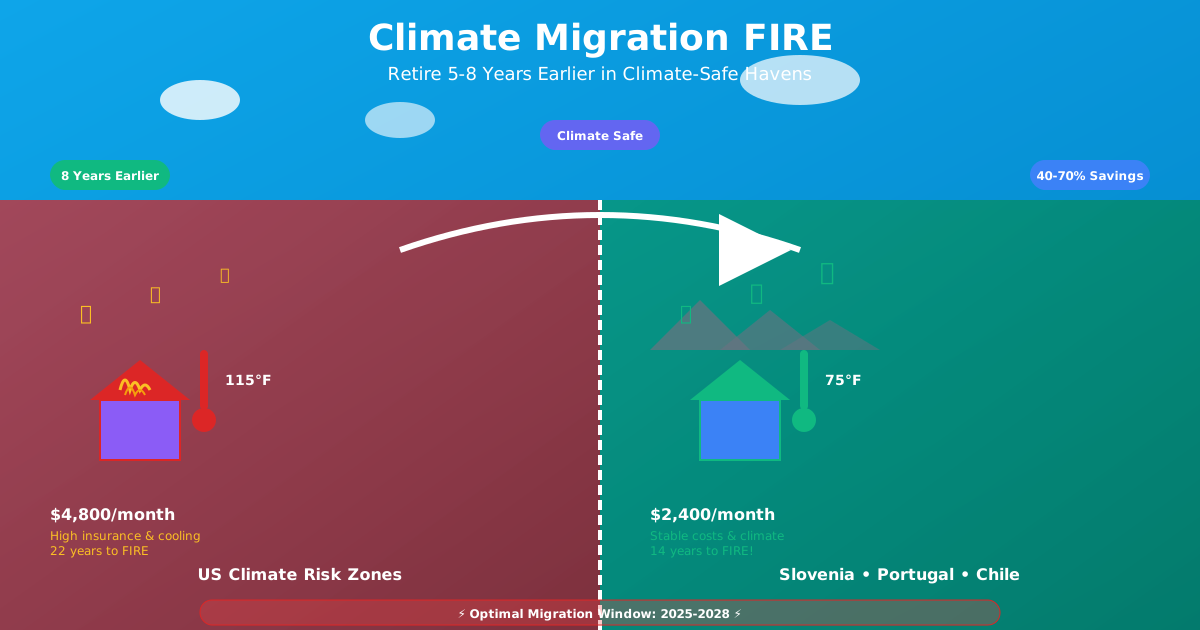
The Climate Migration FIRE Guide: Retire Early While Escaping Extreme Weather
Combine climate safety with FIRE. Discover climate-resilient countries where you can retire early while escaping extreme weather events.
I Compared the REAL Cost of FIRE in 10 Countries — Here's What I Found
Discover how moving to underrated countries like Georgia or Vietnam can slash 10+ years off FIRE timelines. Real data. Real savings. Try our simulator