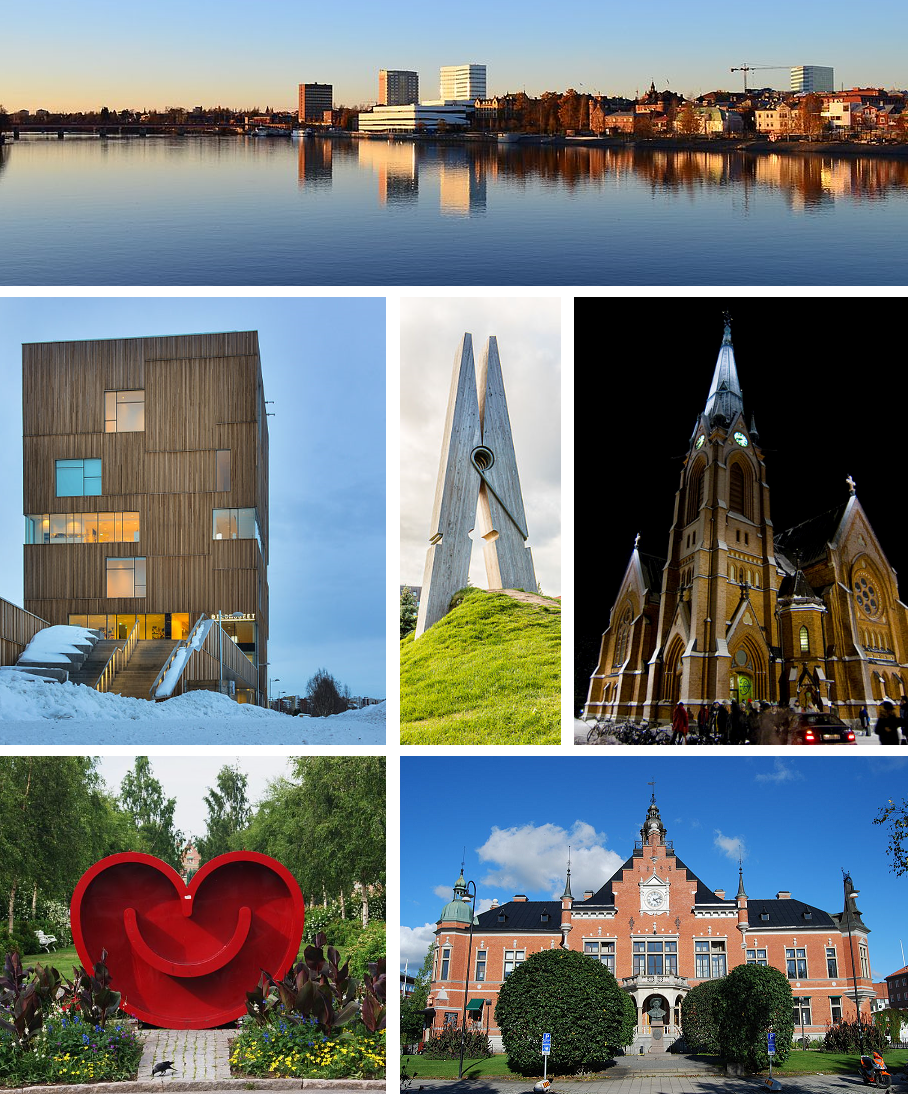
Umea sits in northern Sweden on the Gulf of Bothnia, a small city of 94 thousand people at just 14 m above sea level, where the climate is continental and the seasons arrive in sharp contrast, with bright summer nights giving way to cold, snow-heavy winters. The timezone is Europe/Stockholm, and the city is compact enough that most daily errands unfold within a short walk or bike ride. Expats tend to settle in Umedalen, Berghem, and Haga, three neighborhoods that balance residential calm with reasonable access to the center. English is widely spoken, which softens the landing for newcomers, and the expat community is medium in size, large enough to find familiar faces without losing the sense that you are living in a genuinely Swedish city.
Renting a one-bedroom apartment in the city center runs about $750/mo, while the same unit outside the center drops to $512/mo. A three-bedroom in the center costs around $1,116/mo, and outside the center it falls to $840/mo. Utilities add roughly $85/mo, internet about $27/mo, and a mobile phone plan near $33/mo. A monthly public transport pass is $57/mo, and a gym membership is $49/mo. Everyday spending stays modest: an inexpensive restaurant meal is about $15 per person, a mid-range three-course dinner for two is $80, and a cappuccino is around $4. Excluding rent, a single person spends about $1,080/mo, while a family of four spends about $3,550/mo. The average monthly net salary locally is $2,699/mo, and the cost of living index sits at 70/100 against New York City as 100. Budget, mid-range, and comfortable tiers for a single adult, rent included, come in at $744/mo, $1,157/mo, and $1,588/mo respectively.
Safety is one of Umea's strongest selling points. The safety index is 85/100 and the crime index is just 15/100, where lower is safer, so walking home after dark or leaving a bike locked outside a cafe rarely feels like a gamble. Air quality is good, with an index of 25 where lower is better, helped by the city's size and its coastal position. Healthcare quality is rated excellent, and residents can expect a system that is organized, accessible, and staffed by professionals who generally speak English well. For anyone arriving from a larger, noisier city, the combination of low crime, clean air, and strong medical care is often the detail that turns a short stay into a long one.
Getting there is straightforward: Umea Airport (UME) is only 4 km from the city, so the trip from arrival gate to apartment door takes minutes rather than hours. Visa routes exist for workers, students, researchers, and family members, and the specifics depend on your situation, so plan for paperwork well before your move. Internet speeds average 150 Mbps, which supports remote work without drama. The city scores 78/100 overall for expats, 80/100 for digital nomads, 71/100 for retirees, and 70/100 on the FIRE measure. It suits people who want a manageable northern city with real seasons, solid infrastructure, and a cost of living that leaves room to save, and it rewards those who value calm, safety, and a community that is easy to enter.