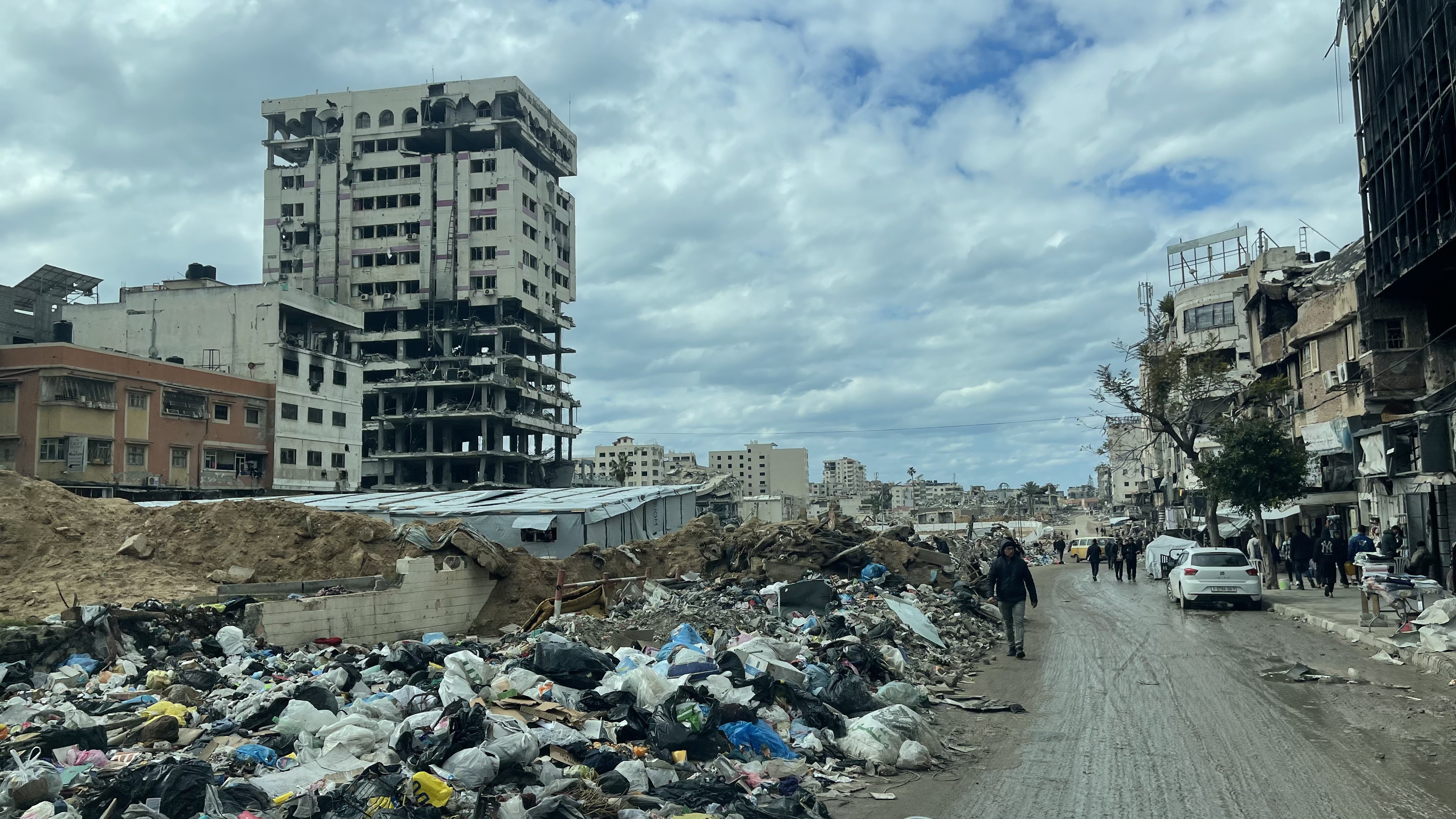
Gaza sits on the eastern Mediterranean coast, a sliver of land that has been shaped by history and resilience. Its climate is a hot-summer Mediterranean one, with mild, rainy winters and hot, dry summers, making it a place of stark seasonal contrasts. For the few expats who find their way here, the Rimal District is the most popular neighborhood, a coastal area that offers a semblance of normalcy amid the broader challenges. The city's elevation is just 14 meters above sea level, and its population of 749 thousand people lives within a timezone that is uniquely its own, Asia/Gaza.
Living in Gaza is remarkably inexpensive by global standards, with a cost of living index of 35 out of 100, where New York City is the baseline at 100. A one-bedroom apartment in the city center rents for $400/mo, while the same outside the center costs $300/mo. For families, a three-bedroom in the center is $850/mo, and outside the center it drops to $600/mo. A single adult can manage on a budget tier total of $800/mo, which includes rent, while a mid-range tier comes to $1,400/mo, and a comfortable tier is $2,200/mo. Excluding rent, a single person's monthly costs are $450/mo, and a family of four spends $1,350/mo. These figures paint a picture of a place where money goes far, though the local economy is constrained by factors beyond simple cost.
Safety and healthcare are the two most pressing concerns for anyone considering a move to Gaza. The safety index is 20/100, and the crime index is 80/100, indicating a high level of risk and instability. Healthcare quality is rated as poor, and the air quality index is 75, which is moderate but not ideal. These are not abstract numbers; they reflect daily realities that require serious consideration. The expat community is very few, and English proficiency is limited, which means that navigating daily life without Arabic is a significant hurdle. For those who do come, the challenges are not just logistical but deeply personal.
Getting to Gaza is not a straightforward matter, and the visa process is complex, with no specific programs to name. The journey typically involves crossing through neighboring territories, and the lack of a designated airport means that travel is often indirect. This is not a destination for the casual traveler or the digital nomad seeking a seamless remote work setup, given the average internet speed of 10 Mbps and a digital nomad score of 38/100. The retiree score is 34/100, reflecting the healthcare and safety concerns, while the FIRE score is 67/100, appealing to those who prioritize low living costs above all. The overall expat score is 42/100, a sobering figure that underscores the trade-offs. Gaza suits a very specific kind of person: one who is drawn by a sense of purpose, who is undeterred by hardship, and who finds value in a place that most of the world overlooks.