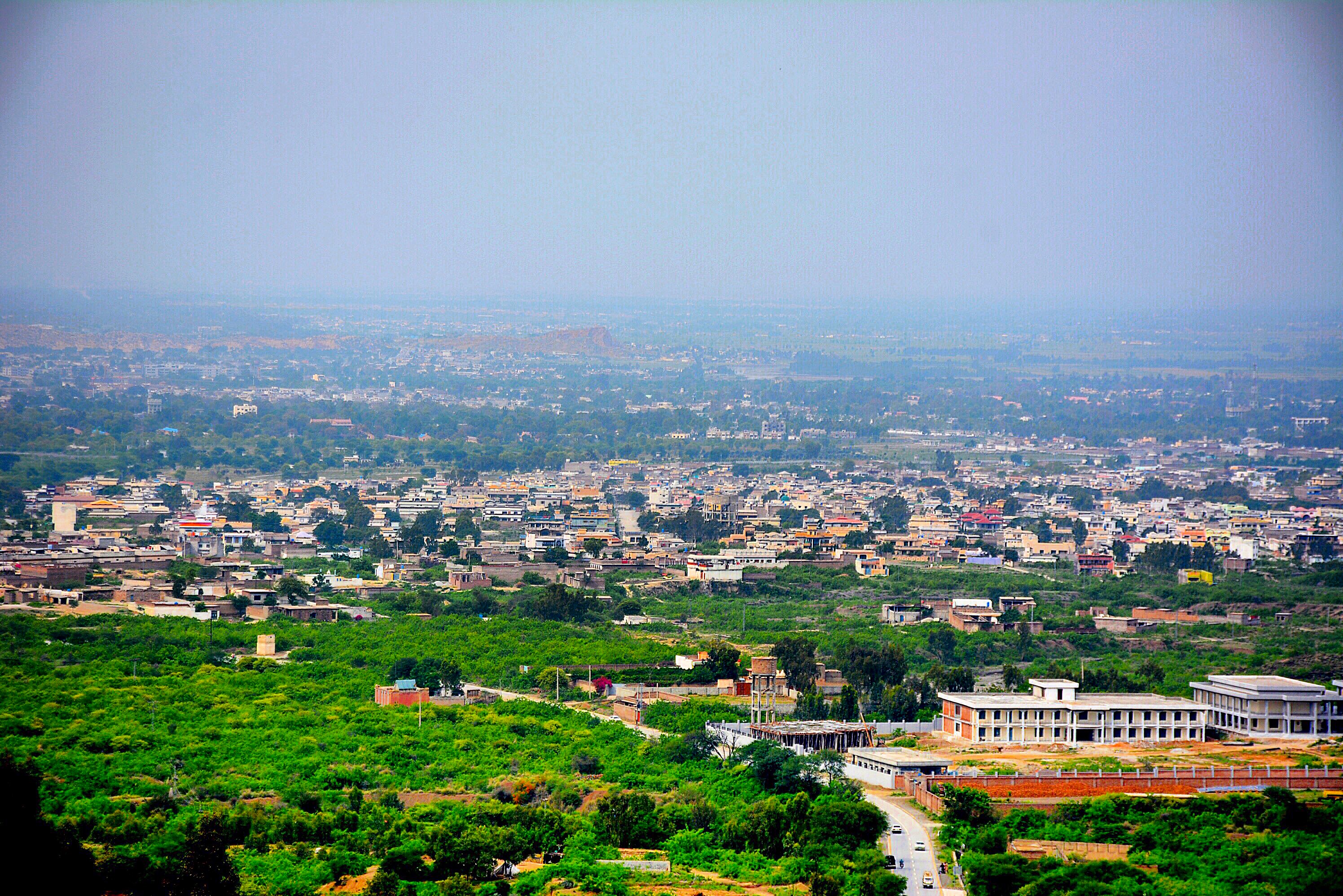
Nowshera sits in Pakistan's Khyber Pakhtunkhwa province at 288 m above sea level, keeping time on Asia/Karachi. The climate runs to extremes: hot, dry summers from May through September push past 38°C, winters from December through February stay mild at around 12°C, and spring and autumn pass quickly with moderate conditions. About 120 thousand people live here, and the city's compact scale means most daily errands stay within a short ride. The nearest airport, PEW, is just 4 km away, so arrivals and departures are unusually quick for a city of this size.
Monthly costs are low by most international standards. Utilities run about $102/mo, internet about $17/mo, and a mobile phone plan about $6/mo, though average internet speed sits at 5 Mbps. Eating out is cheap: an inexpensive restaurant meal costs $4 per person, a three-course mid-range meal for two comes to $23, and a cappuccino is $3. A one-bedroom rental in the city center, estimated at the country level, is $136/mo. These figures make Nowshera affordable for anyone earning in a stronger currency, while day-to-day budgeting stays modest.
Safety is a mixed picture. The safety index is 40/100 and the crime index is 60/100, where lower is safer, so caution and local advice matter, especially after dark. Healthcare quality is rated Fair, adequate for routine needs but limited for complex or specialized care. Air quality is a serious concern: the air quality index of 185 signals unhealthy conditions, particularly through the dry summer months when dust and heat compound the problem. English proficiency is Limited, so basic Urdu or Pashto phrases help in shops, clinics, and with landlords.
Pakistan's Digital Nomad Visa program is the relevant route for remote workers planning an extended stay. The city scores 33/100 overall for expats, 34/100 for digital nomads, and 43/100 for retirees, reflecting a place that rewards patience and low overhead rather than convenience. With PEW only 4 km away, travel connections are simple. Nowshera suits budget-conscious long-stayers, remote workers who can tolerate slow internet and harsh air, and retirees seeking very low rents, while those needing fast connectivity, clean air, or high-level medical care will find it a difficult fit.