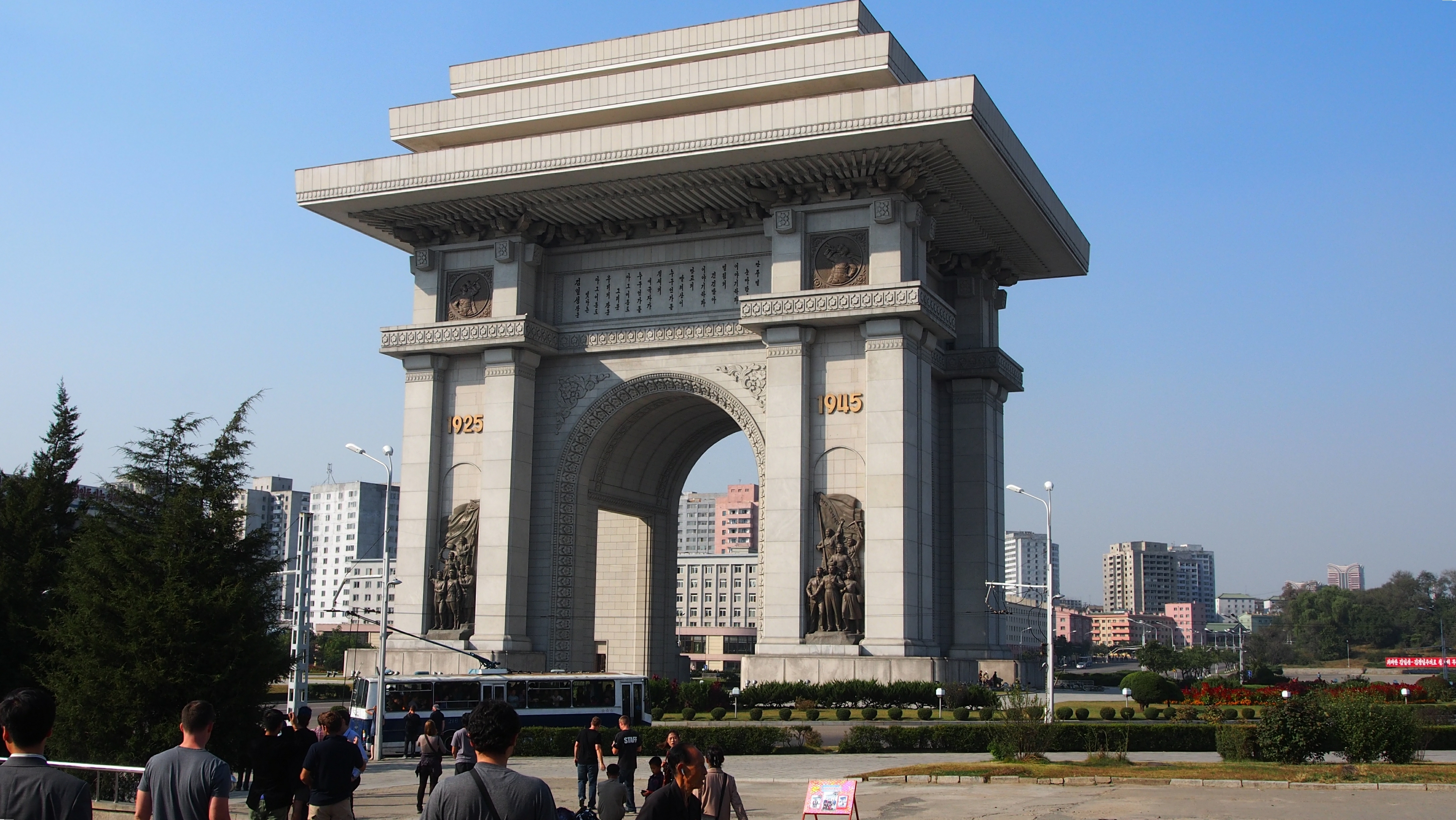
The economy here is not a job market in any conventional sense — it is a state-directed allocation system. Every significant employer is the government: military institutions, the Workers' Party apparatus, state factories, and construction brigades executing Kim Jong Un's urban development agenda. Foreign nationals cannot legally work here outside of a narrow band of diplomatic or NGO roles, and even those are heavily surveilled and restricted. There is no freelance economy, no startup scene, no remote work infrastructure. You do not move to Pyongyang for a career.
A one-bedroom in the city center runs around $350/month, but that figure is almost meaningless context — foreigners are assigned housing, not permitted to rent freely on an open market. Internet access is restricted to a domestic intranet for most residents; foreigners in diplomatic compounds get limited monitored access. Healthcare exists but is severely under-resourced outside elite facilities reserved for party members. There is no bureaucratic friction in the expat sense because there is no legal pathway for independent expat residency. The language barrier is total, and English is essentially nonexistent outside state-controlled interactions.
Winters are genuinely harsh, dropping well below freezing, and summers are warm and humid. Food options outside diplomatic compounds are extremely limited and subject to state distribution systems. There is no independent restaurant scene, no weekend farmers market, no expat bar. The expat community consists almost entirely of diplomats and a small number of aid workers, numbering in the low hundreds at most. Weekends mean organized tours to approved monuments or staying within compound walls. This city suits nobody pursuing freedom, financial independence, or a normal life abroad — it is functionally inaccessible to the people who read this site.
Estimate the cost of moving to Pyongyang, North Korea
Get a free moving cost estimate for moving to Pyongyang, North Korea. Takes 10 seconds.
How much are you shipping?
When are you moving?
Powered by Sirelo. Free quotes from international movers.
🏚️ Cost of Living
A 1BR in the center runs about $89.71/mo. If your income is in another currency, bank FX fees add up. A multi-currency account can cut that cost.
Pyongyang presents a paradoxical safety profile. Street crime against foreigners is exceptionally rare due to pervasive state surveillance and severe penalties for theft. Walking at night feels physically safe from mugging or assault. However, this safety is enforced through authoritarian control, not genuine civic order. Expats operate under constant monitoring and restricted movement, which creates a different kind of vulnerability than typical crime.
Traditional street crime—petty theft, robbery, violent assault—is virtually nonexistent for foreigners in Pyongyang due to state enforcement. The actual risks are political and administrative: arbitrary detention, restricted access to areas, confiscation of materials, and severe penalties for rule violations. Solo female travelers face no greater physical crime risk than males, but all expats face equal restrictions on movement and association. Avoid photographing military sites, discussing politics, or attempting unauthorized travel outside designated zones.
Pyongyang is not a viable relocation destination for American expats. The North Korean government maintains absolute control over foreign residents, limiting employment to NGOs or diplomatic missions, restricting communication, and permitting no genuine freedom of movement. Political instability is structural—not situational—with unpredictable policy shifts affecting foreigners. Police are instruments of state control, not public safety. For Americans seeking retirement or remote work abroad, this city is categorically unsuitable due to geopolitical tensions, visa restrictions, and absence of normal expat infrastructure.
Pyongyang has a safety index of 20/100. Petty theft and lost belongings are the most common problems for newcomers. Compare travel insurance before you go.
Located in the central district, this center offers basic office facilities and meeting rooms. It's one of the few options available for foreigners needing a workspace, though amenities are limited compared to Western standards.
Situated in the Ryomyong New Town, this incubator may offer shared workspace for startups and potentially foreign entrepreneurs. Access and amenities are likely basic, but it could provide a local business environment.
See how Pyongyang's digital nomad life compares with Ongjin
🧳 Expat Life
English Proficiency
Limited
Expat Community
Very Few
Top Neighborhoods
Diplomatic Quarter (Munsu-dong)
Banks Nearby
2
ATMs Nearby
0
Expat Life Notes
Relocation is restricted to diplomats and international organizations under extreme surveillance and isolation.
Pros
✓ Extreme safety (controlled)
✓ Unique historical experience
Cons
✗ Total lack of personal freedom
✗ No independent movement
✗ Complete international isolation
🏘️ Neighborhoods in Pyongyang
Areas of Pyongyang that expats often consider.
Conditions can change from one block to the next, and these descriptions are general guides, not safety assessments. Before choosing where to stay or live, check current travel advisories, talk to people who live there, and visit in person if you can.
Changgwang Street
Modern, monumental, government housing
Changgwang Street is known for its high-rise apartment buildings, often housing government officials and those connected to the regime. While visually impressive, access for foreigners is heavily restricted and independent living is virtually impossible. Public transit is available, but navigating it without Korean language skills would be extremely challenging.
Pipa Street
Residential, quiet, limited amenities
Pipa Street is a more residential area, likely housing ordinary citizens. Foreigners would find it difficult to reside here due to restrictions and the lack of services catering to non-Koreans. Walkability is decent within the immediate area, but access to other parts of the city relies on public transport.
Munsu Street
Newer, planned, high-rise living
Munsu Street is a newer development with modern high-rise apartments. While theoretically offering better living conditions, access for foreigners remains tightly controlled. The area is relatively walkable, but independent exploration is not permitted.
Potonggang District (near Diplomatic Compound)
Restricted, monitored, diplomatic enclave
This area, near the diplomatic compound, is the most likely place for foreigners to reside, though options are extremely limited and heavily monitored. Rent is higher due to the relative convenience and security. Movement outside the immediate area is restricted.
Central District (near Kim Il-sung Square)
Ceremonial, grand, politically significant
The central district, surrounding Kim Il-sung Square, is the heart of Pyongyang's political and cultural life. While impressive, it's not a residential area for foreigners. Access is highly regulated, and independent living is impossible.
Page 1 of 2
Could living/working in Pyongyang cut years off your work life?
With a 1-bedroom in the center at $90/mo, your FIRE number here might be much lower than you think.
Pyongyang has a population of approximately 3,223,000 people.
A single person can expect to spend around $224 per month in Pyongyang, including rent. A 1-bedroom apartment in the city center costs approximately $90/month.
The nearest airport to Pyongyang is FNJ, approximately 8.7km away.
Pyongyang is considered a higher-crime area that requires caution, with a safety index of 20.0. As with any city abroad, expats should research specific neighborhoods before committing to a location.
Pyongyang has an average internet speed of 2 Mbps. It is not yet considered a well-established digital nomad destination.
Effectively no. The only foreigners permitted to reside in Pyongyang are diplomats, accredited journalists, and a small number of vetted NGO or aid workers. There is no visa category for independent expats, digital nomads, or retirees. All foreign residents are monitored, housed in designated compounds, and subject to strict movement restrictions.
The safety index score of 20 reflects the extreme level of state control rather than street crime — violent crime against foreigners is rare, but the risks are political. Foreigners have been detained for minor infractions, religious materials, or unauthorized photography. The environment is controlled, not safe in any meaningful sense of personal freedom or legal protection.
No. North Korea operates a domestic intranet called Kwangmyong, which is inaccessible to most residents and useless for remote work. Diplomats in foreign compounds have limited, monitored international internet access. There is no infrastructure for remote work, no VPN tolerance, and no legal framework that would allow a digital nomad to operate from Pyongyang.
Pyongyang is surprisingly affordable, but access to goods and services is limited. Expect to pay around $500-$1000 USD per month, covering basic accommodation, food (mostly local), and transportation; luxury items are rare and expensive. Rent for a basic apartment can be as low as $100, but quality varies greatly.
Access to quality healthcare is a major concern in Pyongyang. While some hospitals exist, English-speaking doctors are extremely rare, and medical facilities are not up to Western standards. Evacuation for serious medical issues is highly recommended and should be factored into your budget.
Obtaining a visa to live in Pyongyang as a US citizen is extremely difficult and generally requires sponsorship from a recognized organization or employer. Long-term residency is almost impossible to secure independently; tourism visas are more common but short-term.
Pyongyang is generally considered safe in terms of petty crime, but freedom of movement is heavily restricted. Avoid unauthorized travel, political discussions, and photographing sensitive locations. Stick to designated tourist areas and always be accompanied by your government-assigned guide.
English proficiency is limited to specific sectors, such as tourism and foreign affairs. Outside of these areas, expect significant language barriers. Learning basic Korean is essential for daily life and showing respect.
International banking in Pyongyang is virtually non-existent. Foreign credit cards are rarely accepted, and ATMs are scarce. Bring sufficient cash in EUR, USD, or CNY, and be prepared to exchange it at official exchange points.
Internet access is heavily restricted and monitored in Pyongyang. While some foreigners may have access, speeds are slow and unreliable, making remote work challenging. Expect significant limitations on accessing websites and online services.
The expat community in Pyongyang is very small and tightly controlled, consisting mainly of diplomats, NGO workers, and business representatives. Social life is limited and revolves around official events and designated venues.
Pyongyang has a continental climate with cold, dry winters and hot, humid summers. Expect temperatures ranging from -10°C (14°F) in winter to 30°C (86°F) in summer. Spring and autumn offer milder temperatures and are the most pleasant times to visit.
Public transportation in Pyongyang is available but primarily used by locals. Foreigners are often restricted to taxis or guided tours. The Pyongyang Metro is a unique experience, but access may be limited.
Pyongyang is not a viable option for FIRE due to political instability, limited access to goods and services, and restrictions on personal freedom. While the cost of living is low, the overall quality of life and lack of investment opportunities make it unsuitable for early retirement.
The day-to-day quality of life in Pyongyang as an English speaker is challenging due to language barriers, limited access to information, and constant surveillance. Expect a highly controlled environment with little personal freedom and limited opportunities for social interaction with locals.
Foreigners are typically housed in designated compounds or hotels, such as the Diplomatic Compound or specific floors of certain hotels. There is little choice in terms of neighborhoods, and access to local residential areas is restricted.
As a US citizen living in Pyongyang, you are still subject to US taxes. The Foreign Earned Income Exclusion (FEIE) may apply if you meet certain residency requirements. You must also report foreign bank accounts (FBAR) and potentially other foreign assets. Consult a tax professional specializing in expat taxes.
Cost-of-living and visa updates for Pyongyang and the rest of North Korea. Free with RA Postcards.
By submitting your email address, you will receive a free subscription to RA Postcards and special offers from Rewire Abroad and our affiliates. You can unsubscribe at any time, and we encourage you to read more about our Privacy Policy.