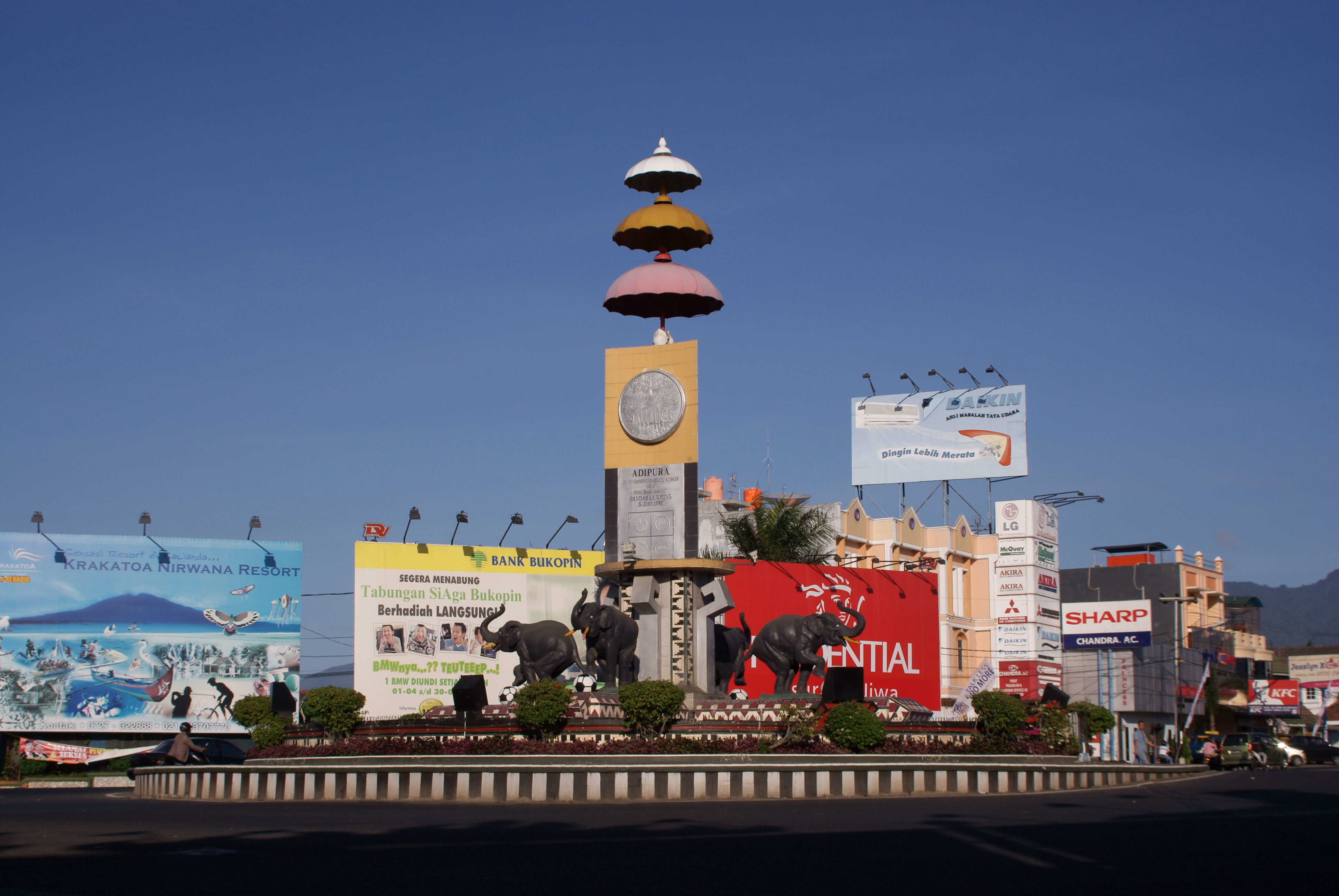
Bandar Lampung sits at the southern tip of Sumatra, a city of 1.2 million people spread across hills and coastline at 92 m above sea level, keeping time on Asia/Jakarta. The climate is a tropical rainforest pattern, with consistent heat and rainfall rather than distinct seasons, so packing for humidity matters more than packing for winter. Expats who settle here tend to cluster in Enggal and Teluk Betung, two neighborhoods that balance access to the city's commercial core with a quieter residential feel. The expat community itself is small, which shapes daily life in ways newcomers notice quickly: fewer organized meetups, more reliance on local friendships, and a slower path to feeling plugged in.
The money math is the headline. A one-bedroom apartment in the city center rents for $112/mo, and the same figure buys a three-bedroom in the center, while outside the center a one-bedroom drops to $56/mo and a three-bedroom to $84/mo. Utilities run $39/mo, internet $11/mo, and a mobile phone plan $6/mo. A single adult can live on a budget tier total of $178/mo with rent included, step up to a mid-range tier at $218/mo, or settle into a comfortable tier at $298/mo. Excluding rent, a single person spends around $400/mo and a family of four around $1,250/mo. Everyday prices stay low: an inexpensive restaurant meal is $2 per person, a three-course mid-range dinner for two is $10, and a cappuccino is $1. The catch is local wages, with an average monthly net salary of $180/mo, which means the cost of living index of 32/100 against New York City flatters anyone earning remotely and pinches anyone earning locally.
Safety is middling rather than alarming. The safety index reads 55/100 and the crime index 45/100, where lower is safer, so ordinary precautions apply without much drama. Air quality sits at 55 on the index, better than many Asian metros but not pristine. Healthcare quality is rated poor, which is the single biggest practical concern for long stays, and English proficiency is limited, so navigating hospitals, clinics, and paperwork usually requires local help or a translation app. Internet averages 15 Mbps, workable for messaging and browsing but not generous for heavy video calls or large file transfers.
For stays, Indonesia offers the Retirement Visa (KITAS) and the Remote Worker Visa (E33G), each requiring a minimum monthly income of $2,000/mo. The nearest airport is TKG, 23 km away, which keeps arrivals and departures simple. The city scores 73/100 overall for expats, 75/100 on FIRE, 46/100 for retirees, and 52/100 for digital nomads. That profile suits remote workers and early retirees who want very low fixed costs and can tolerate limited healthcare, limited English, and a small social circle. It suits budget-focused long-stayers who value cheap rent and $2 meals over polished infrastructure, and it rewards people who arrive with patience, a local network, and income that does not depend on the local job market.