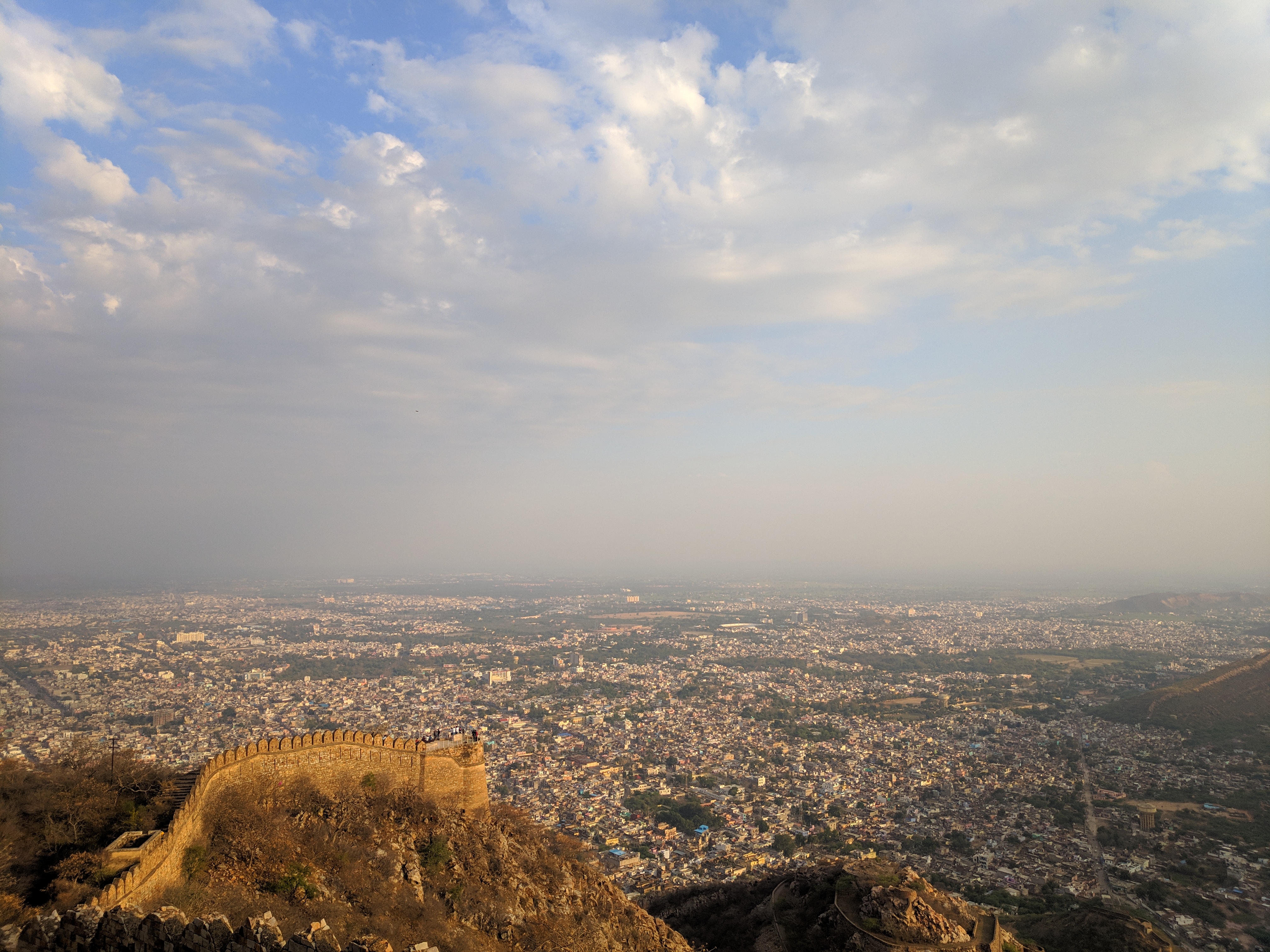
Alwar sits in the arid belt of Rajasthan, a city of 341 thousand people at 271 meters above sea level, keeping time on Asia/Kolkata. The climate is arid, which means dry heat, sharp seasonal swings, and little humidity to soften either. Travelers who settle here do not cluster into any established expat neighborhood, because there are none. The expat community is effectively absent, so newcomers choose their own streets rather than following a well-worn path laid down by others.
Rent tells the story of why Alwar draws budget-minded long-stayers. A one-bedroom in the city center runs $46/mo, while the same outside the center drops to $31/mo. Three-bedroom units go for $155/mo centrally and $83/mo farther out. Utilities add $52/mo, internet $5/mo, and a mobile phone plan $3/mo. A gym membership costs $15/mo. Eating out is cheap: $2 for an inexpensive restaurant meal per person, $5 for a mid-range three-course meal for two, and $1 for a cappuccino. A single adult can live on a budget tier of $129/mo, a mid-range tier of $175/mo, or a comfortable tier of $214/mo, all rent included. Excluding rent, a single person spends about $300/mo and a family of four about $900/mo. Against that, the average monthly net salary locally is $379/mo, and the cost of living index sits at 25/100 against New York City at 100.
Safety is moderate, with a safety index of 55/100 and a crime index of 45/100, where lower is safer. Healthcare quality is rated fair, so routine care is available while complex or specialized treatment may require looking elsewhere. Air quality is a real consideration, with an index of 185, which is high enough to matter for anyone with respiratory sensitivities or a preference for clean air. English proficiency is limited, so daily interactions reward at least some patience and a willingness to learn a few local phrases.
Visas are handled through the standard channels for foreign visitors and residents, and there is no shortcut around that process. The nearest airport is DEL, 45 kilometers away, which keeps international connections within reasonable reach. Internet averages 18 Mbps, enough for most remote work but not for heavy data demands. The overall expat score is 81/100 and the FIRE score is 83/100, while the retiree score is 47/100 and the digital nomad score is 50/100. That mix suits frugal long-stayers, early retirees chasing low fixed costs, and remote workers who value cheap rent over fast connectivity or a built-in social scene.