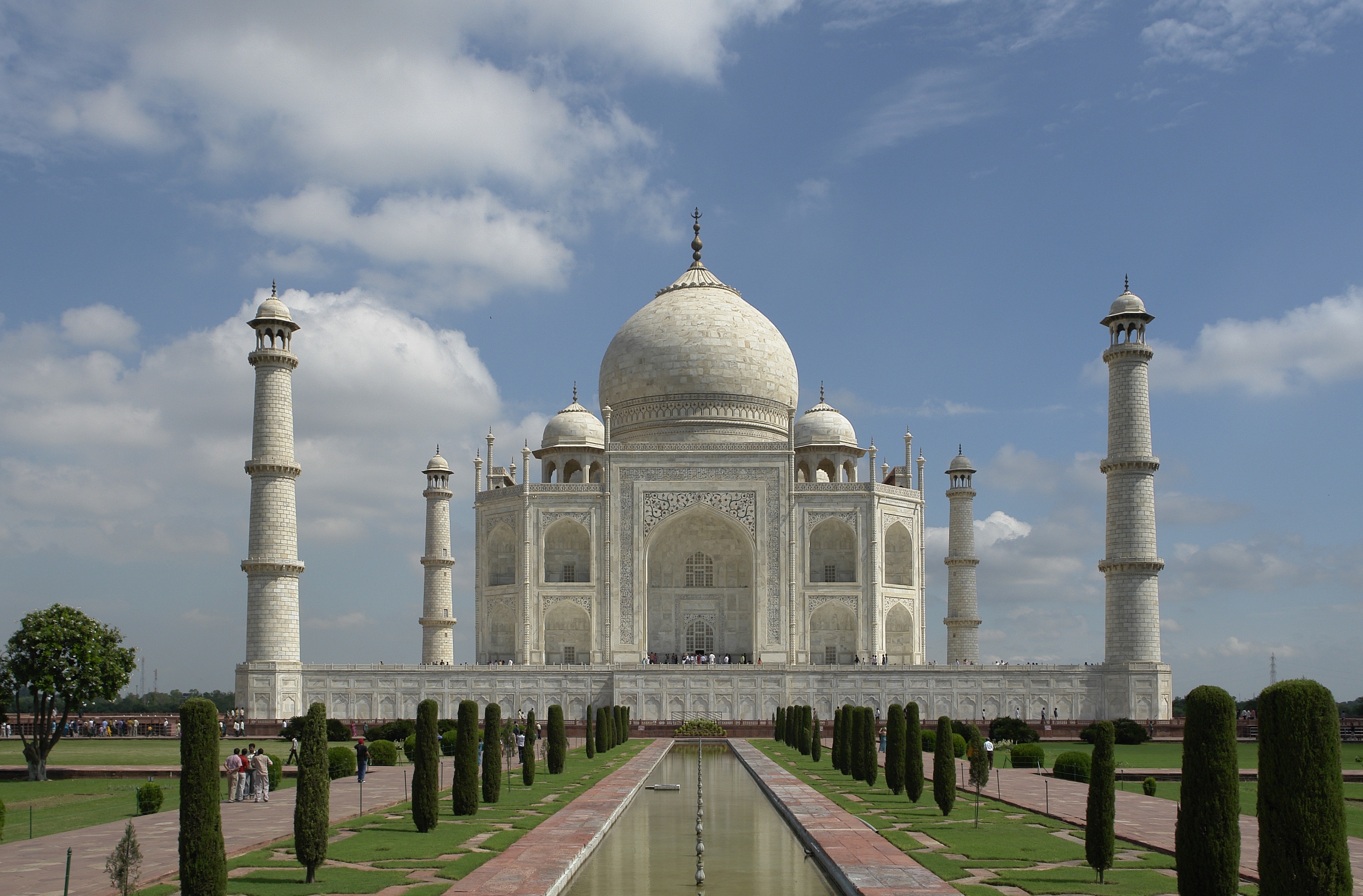
Agra sits in the northern Indian plains at 169 m above sea level, in the Asia/Kolkata timezone, with an arid climate that brings searing summers, mild winters, and sparse rainfall. The city holds about 1.6 million people, and its fame rests on the Taj Mahal, which draws visitors from everywhere and shapes daily life in the districts closest to it. Expats who settle here tend to cluster in Cantonment, a leafy, quieter quarter with colonial-era bones, and Tajganj, the neighborhood immediately around the monument, where guesthouses, cafes, and tour offices keep English speakers within easy reach. English is common in tourist areas, which softens the landing for newcomers, though the expat community itself is small, so social circles form slowly and often through work, volunteering, or long stays rather than through a ready-made scene.
The money math here is startling. A one-bedroom apartment in the city center rents for $119/mo, while the same outside the center drops to $52/mo. Three-bedroom places run $181/mo centrally and $62/mo farther out. Utilities add about $52/mo, internet about $6/mo, and a mobile phone plan around $3/mo, with average internet speeds near 30 Mbps. A monthly public transport pass costs $16/mo and a gym membership $17/mo. Eating out is cheap: an inexpensive restaurant meal is about $3 per person, a mid-range three-course meal for two around $16, and a cappuccino roughly $2. Numbeo puts single-person monthly costs excluding rent at $336/mo and a family of four at $1,205/mo. Budget, mid-range, and comfortable tiers for a single adult, rent included, come to $186/mo, $256/mo, and $362/mo. Against that, the average monthly net salary locally is $287/mo, and the cost of living index sits at 25/100 with New York at 100, so remote earners live very well while local wages stay modest.
Safety is a mixed picture: the safety index is 50/100 and the crime index is 50/100, meaning ordinary precautions apply, particularly after dark and in crowded tourist zones. Healthcare quality is rated fair, adequate for routine care and minor issues, with more complex treatment usually handled in Delhi. The air quality index of 185 is the sharper concern, a level that pushes many residents toward air purifiers, masks on bad days, and seasonal timing of outdoor activity. Retirees score 50/100, reflecting those environmental and medical tradeoffs, while the overall expat score of 80/100 and a FIRE score of 82/100 point to a place that rewards those who arrive with income already sorted.
Visas follow India's standard immigration channels, and long-stay options reward planning well before arrival. The nearest airport is Agra Airport (AGR), just 7 km from the city, though many international travelers connect through larger hubs. Digital nomads score 61/100, held back by the small expat community and patchy infrastructure rather than cost. Agra suits remote workers, early retirees, and slow travelers who want monument-scale history at a fraction of Western prices, and who can accept the heat, the air, and a quieter social landscape in exchange for rents that leave room to save.