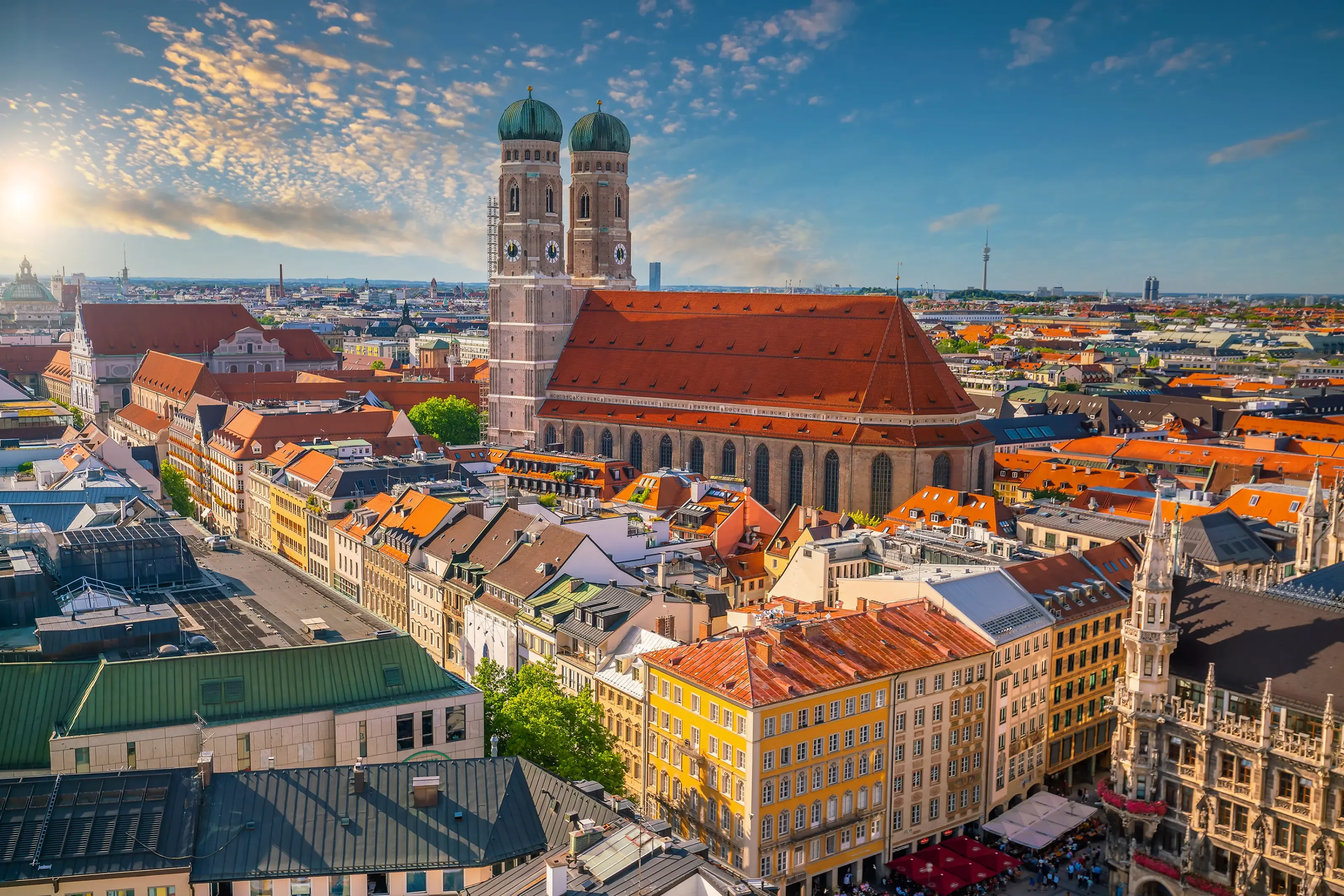
Munich, Germany Hero Image
Stock, CC BY-SA

Munich, Germany

Data updated Oct 8, 2026

Follows Germany Residency Rules. Check Digital Nomad & Retiree Pathways →

📊 Scores

68
FIRE
72
Retiree
84
Digital Nomad

Best fit: Digital Nomad (score: 82)

Munich sits in southern Germany at 519 m above sea level, in the Europe/Berlin timezone, with a temperate climate that brings warm summers and cold winters. The city is home to 1.5 million people, and its most popular expat neighborhoods are Altstadt and Schwabing, where a large and active expat community has taken root. English is widely spoken, which makes the transition easier for newcomers arriving from abroad.

Rents and daily costs reflect Munich's standing as one of Germany's priciest cities. A one-bedroom apartment in the city center runs $1,680/mo, while the same outside the center costs $1,258/mo. Three-bedroom units go for $2,990/mo in the center and $2,299/mo outside it. Excluding rent, a single person spends about $1,204/mo and a family of four about $4,192/mo. Utilities average $361/mo, internet $40/mo, and a mobile phone plan $19/mo. A monthly public transport pass is $71/mo and a gym membership $52/mo. An inexpensive restaurant meal costs $18 per person, a mid-range three-course meal for two is $90, and a cappuccino is $4. Budget, mid-range, and comfortable tiers for a single adult, rent included, come to $1,470/mo, $2,215/mo, and $2,859/mo respectively. The average monthly net salary is $4,102/mo, and the cost of living index sits at 74/100 against New York City as 100.

Safety and public health are strong points. The safety index is 85/100 and the crime index is 15/100, with lower numbers indicating a safer environment. Air quality registers at 35, where lower is better, and healthcare quality is rated excellent. Internet speeds average 150 Mbps, fast enough for remote work and streaming.

For longer stays, the retirement visa program is §7 Abs. 1 S. 3 AufenthG, which requires a minimum monthly income of $1,200/mo. Freelancers can pursue the Freelancer Residence Permit under Section 21 of the German Residence Act. The nearest airport is OBF, 11 km away. With an overall expat score of 82/100, a digital nomad score of 84/100, a retiree score of 72/100, and a FIRE score of 68/100, Munich suits remote workers, freelancers, and retirees who want a safe, well-connected base with a sizable international community.
Estimate the cost of moving to Munich, Germany

Get a free moving cost estimate for moving to Munich, Germany. Takes 10 seconds.

How much are you shipping?

When are you moving?

Powered by Sirelo. Free quotes from international movers.

🏚️ Cost of Living

💰 Budgets and Costs

$2,309/mo, one person, rent included
Selected: mid-range lifestyle

Munich on a mid-range budget comes to about $2,309 a month for one adult, with $1,258 of that going to rent. Beyond rent the estimate covers $243 on groceries, $182 on dining out, $136 on entertainment and lifestyle, $419 on utilities and connectivity and $71.00 on transport.

Rent

$1,258/mo

1BR outside the centre

Groceries

$243/mo

Staples basket scaled to a full month

Dining out

$182/mo

10 inexpensive meals

Entertainment & lifestyle

$136/mo

gym, 2 cinema trips, 12 cappuccinos

Utilities & connectivity

$419/mo

utilities, mobile, internet

Transport

$71.00/mo

Monthly pass

Budgets (excl. rent)

Single person$1,051/mo

Excludes rent. The total above is all-in, rent included.

Estimates for one adult, built from this city's average prices and the usage shown for each tier. Your spending will differ with how often you eat out and where you live.

A 1BR in the center runs about $1679.87/mo. If your income is in another currency, bank FX fees add up. A multi-currency account can cut that cost.

See low-fee transfers

We may earn a commission at no cost to you.

See how Munich's cost of living compares with Freising

Be the first to report costs in Munich

Share

🛡️ Safety & Crime

85
Safety Index

(Higher is safer)

15
Crime Index

(Lower is safer)

Munich is genuinely safe for expats, with low violent crime and well-policed neighborhoods. Petty theft and pickpocketing occur mainly in crowded areas (Marienplatz, train stations, beer halls), but serious crime is rare. Avoid Bahnhofsviertel late at night due to drug activity, though it's not dangerous by American standards. Scams are minimal; standard precautions suffice. The city's affluence, strong police presence, and civic order make it one of Germany's safest major cities. For a 30-65 year-old American, Munich presents minimal safety concerns and is an excellent choice for relocation.

🏥 Healthcare

Excellent
Public Hospitals
Yes
Private Clinics
Yes
English-Speaking Doctors
Widely Available

See how Munich's healthcare compares with Freising

🌤️ Climate

Climate Zones
Temperate
Summer Temp
24°C
Winter Temp
-3°C
Humidity
70%
Air Quality Index
35
Annual Rainfall
1148 mm

Best Months

MayJunJulSep

Climate Notes

Humid continental climate with a significant oceanic influence and frequent summer thunderstorms.

💻 Digital Nomad

Avg Internet Speed
150 Mbps
Internet (monthly)
$40/mo
Coworking Availability
Abundant
Coworking Spaces Nearby
37
Digital Nomad Score
84/100

Community Notes

Munich is an excellent hub for digital nomads with robust infrastructure and English widely spoken.

Coworking Spaces

NameNotes
Werk1Located in the Werksviertel-Mitte district, Werk1 is a popular hub for startups and tech professionals. It offers a vibrant community, regular events, and modern facilities, making it ideal for digital nomads seeking networking opportunities.
WeWork HackerbrückeA well-known global brand, WeWork Hackerbrücke provides a reliable and professional coworking environment near the city center. It offers a range of amenities, including private offices, meeting rooms, and a dedicated community team, appealing to expats looking for a familiar setup.
SPACE4USSituated in the heart of Munich, SPACE4US offers a creative and collaborative atmosphere. With flexible membership options and a focus on community, it's a great choice for freelancers and remote workers seeking a more intimate coworking experience.
Regus Munich, Arnulfstraße 60Located near the central train station, this Regus location offers convenient access and a professional environment. It's a solid option for those who value a straightforward, no-frills workspace with reliable amenities.

Names, locations and hours can change. Check each space's website before you visit. Places from © OpenStreetMap contributors and Foursquare Open Source Places (Apache 2.0).

Working remotely from Munich? Nomad health insurance covers you across borders, month to month.

See nomad insurance

We may earn a commission at no cost to you.

See how Munich's digital nomad life compares with Freising

🧳 Expat Life

English Proficiency
Widely Spoken
Expat Community
Large & Active
Top Neighborhoods
Altstadt, Schwabing
Banks Nearby
181
ATMs Nearby
357

Expat Life Notes

World-class hub for engineering and quality of life. Extremely expensive but very safe and efficient.

Pros

  • ✓ Major job hub
  • ✓ Clean and safe
  • ✓ Alps proximity

Cons

  • ✗ Prohibitively expensive
  • ✗ Housing shortage

🏘️ Neighborhoods in Munich

Areas of Munich that expats often consider.

Conditions can change from one block to the next, and these descriptions are general guides, not safety assessments. Before choosing where to stay or live, check current travel advisories, talk to people who live there, and visit in person if you can.

Schwabing

Bohemian, lively, student-filled

Schwabing is known for its vibrant nightlife, art galleries, and numerous cafes and restaurants. It's popular with students and young professionals, making it a lively and somewhat noisy area. Excellent public transport links make it easy to get around, but expect higher prices and tourist crowds, especially in the summer.

Maxvorstadt

Cultural heart, museums, universities

Home to many of Munich's major museums, universities, and art institutions, Maxvorstadt is a culturally rich and intellectually stimulating area. It's well-connected by public transport and offers a mix of residential and commercial spaces. Expect higher rents and a bustling atmosphere due to its central location and popularity with students and tourists.

Haidhausen

Trendy, village-like, charming

Haidhausen, also known as the "French Quarter," offers a more relaxed and village-like atmosphere with its charming streets, independent shops, and cozy restaurants. It's popular with families and young professionals seeking a quieter alternative to Schwabing. Good public transport links and a walkable environment make it a desirable location, but rents are steadily increasing.

Glockenbachviertel

LGBTQ+, hip, vibrant nightlife

Glockenbachviertel is Munich's LGBTQ+ district, known for its open-minded atmosphere, trendy bars, and independent boutiques. It's a lively and vibrant area, especially at night, which may not suit everyone. Excellent public transport and a central location make it convenient, but expect higher rents and potential noise.

Page 1 of 2

Could living/working in Munich cut years off your work life?

With a 1-bedroom in the center at $1680/mo, your FIRE number here might be much lower than you think.

Calculate My FIRE Date →

🛂 Visa Options for Germany

Many long-stay visas require proof of health insurance. Compare international health plans before you apply.

Compare health insurance

We may earn a commission at no cost to you.

🛂

Earning over $1,223/mo? You may qualify for a Germany visa.

Answer 11 questions and get a personalized match in under 2 minutes.

Find My Visa →

More Cities to Consider instead of Munich

FAQ

Frequently Asked Questions about Munich

Click any question to expand the answer.

Munich has a population of approximately 1,512,491 people.
A single person can expect to spend around $4,200 per month in Munich, including rent. A 1-bedroom apartment in the city center costs approximately $1680/month.
The nearest airport to Munich is OBF, approximately 11.2km away.
Munich is considered relatively safe, with a safety index of 85.0. As with any city abroad, expats should research specific neighborhoods before committing to a location.
Munich has an average internet speed of 150 Mbps. It is considered a well-established digital nomad destination.
Many multinational companies operate in English, especially in tech and finance sectors. However, German is essential for housing searches, banking, government paperwork, and career advancement in most German companies.
Plan for €3,200-3,700 ($3,500-4,000) monthly including rent, food, transport, and entertainment. Housing alone takes €1,600+ ($1,750+) for city center apartments, with additional costs for utilities and internet.
Yes, expect extensive paperwork for residence registration (Anmeldung), tax ID, health insurance, and bank accounts. Appointments often require weeks of advance booking, and most processes require physical documents rather than digital submissions.
For more affordable living, consider neighborhoods like Studentenstadt (student area), Hasenbergl, or Neuperlach. These areas are further from the city center but offer lower rents and good transport links. You'll find more local, less touristy experiences there too.
Internet in Munich is generally very reliable and fast, especially in the city center. You can expect speeds suitable for video conferencing and other remote work tasks. Coworking spaces abound, offering backup connections and professional environments.
Munich has a continental climate with warm summers and cold winters. Expect snow in winter and pleasant temperatures in summer, though rain is common year-round. Pack layers and be prepared for unpredictable weather, especially in spring and fall.
Yes, you can find many English-speaking doctors and dentists in Munich, especially in the city center and areas with large expat populations. Websites like Doctolib allow you to search for healthcare providers by language spoken. Private health insurance often provides access to a wider network.
Munich has an excellent public transportation system, including the U-Bahn (subway), S-Bahn (commuter rail), trams, and buses. A monthly pass is a cost-effective option if you plan to use public transport regularly. Cycling is also popular, with dedicated bike lanes throughout the city.
There isn't a specific retirement visa for Germany. Americans typically need to apply for a residence permit based on sufficient financial resources and health insurance. Demonstrating passive income or a private pension is crucial for this pathway. Consulting with an immigration lawyer is highly recommended.
Several options exist for international money transfers, including Wise (formerly TransferWise), Remitly, and traditional bank transfers. Wise often offers the best exchange rates and lower fees. Be aware of potential ATM fees when withdrawing cash from foreign accounts.
As a US citizen, you're still required to file US taxes even when living abroad. The Foreign Earned Income Exclusion (FEIE) can help you exclude a certain amount of your foreign-earned income from US taxes. You may also need to report foreign bank accounts (FBAR) if the total value exceeds $10,000 at any point during the year. Consult a tax professional specializing in expat taxes.
Munich has a large and active expat community. Numerous groups and organizations cater to expats, offering social events, networking opportunities, and support. Websites like Internations and Meetup are good resources for finding expat groups.
Living on $3,000 (approximately €2,700) per month in Munich would be challenging but possible with careful budgeting. You'd need to live outside the city center, cook most of your meals, and minimize discretionary spending. It's doable, but requires a frugal lifestyle.
Germany has a universal healthcare system. As a resident, you'll need either public or private health insurance. Public insurance is generally more affordable, while private insurance offers more flexibility and access to specialists. Ensure your insurance covers pre-existing conditions.
Popular grocery stores include REWE, Edeka, Aldi, and Lidl. Budget around €300-€500 per month for groceries, depending on your dietary habits and preferences. Eating out can be expensive, so cooking at home is a good way to save money.

Share This Guide