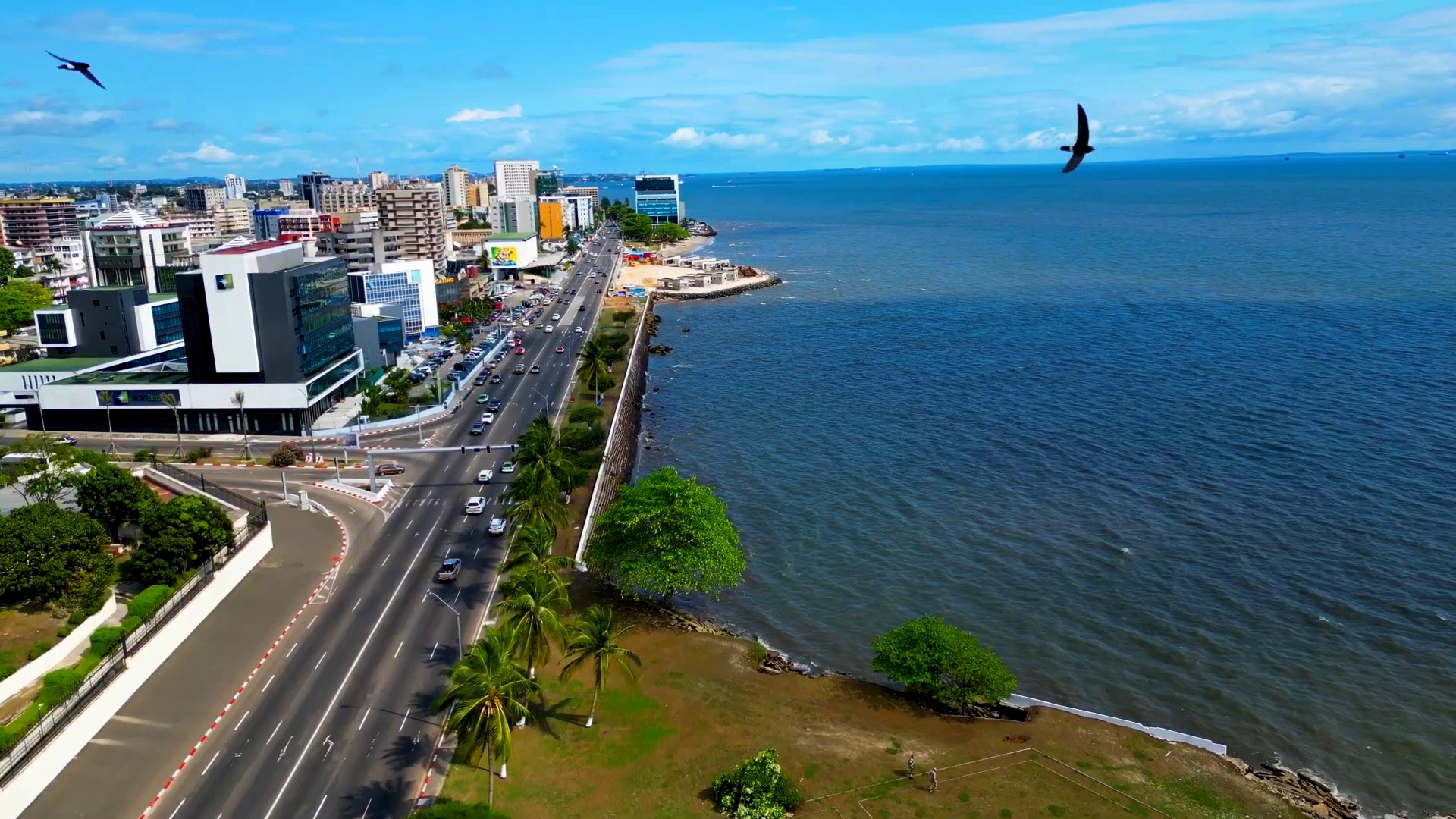
Libreville sits on the Atlantic coast of Gabon, just 12 m above sea level in a tropical climate that shapes daily life around heat, humidity, and rain. The city is home to roughly 899 thousand people, and its timezone is Africa/Libreville. Expats tend to settle in La Sabliere and Haut de Gue-Gue, two neighborhoods that have become the default choices for newcomers who want established residential streets and easier access to the city's international schools and offices. The nearest airport is LBV, only 11 km away, which keeps arrivals and departures unusually simple for a capital of this size.
Housing costs split sharply depending on where you land. A 1-bedroom apartment in the city center runs $1,026/mo, while the same unit outside the center drops to $427/mo. Three-bedroom units follow the same pattern: $2,080/mo in the center and $855/mo outside it. Beyond rent, a single adult can expect about $1,100/mo in living costs, and a family of four closer to $3,300/mo. Utilities average $85/mo, internet $64/mo, and a mobile phone plan $34/mo. A monthly public transport pass costs $47/mo, a gym membership $64/mo, an inexpensive restaurant meal $17 per person, a mid-range three-course meal for two $68, and a cappuccino $6. Budget, mid-range, and comfortable tiers for a single adult, rent included, come to $714/mo, $1,120/mo, and $1,898/mo respectively. Against those figures, the average monthly net salary locally is $427/mo, and the cost of living index sits at 65/100 with New York City at 100.
Safety is moderate. The safety index is 55/100 and the crime index is 45/100, where a lower crime figure is better, so the city is neither a high-risk posting nor a place to abandon basic precautions. Air quality is good by regional standards, with an index of 35 where lower is better. Healthcare quality is rated fair, which means routine care is available but serious or specialized treatment often prompts a trip abroad. Average internet speed reaches 50 Mbps, fast enough for remote work and video calls, though English proficiency is limited, so everyday errands and bureaucracy generally reward at least some French.
Visas are handled through the usual immigration channels, and it pays to sort documentation before booking flights. Arrivals come through LBV, 11 km from the city. The expat community is small, which means newcomers often build social circles quickly through work, schools, or the neighborhoods of La Sabliere and Haut de Gue-Gue. With an overall expat score of 60/100, a FIRE score of 62/100, a retiree score of 50/100, and a digital nomad score of 57/100, Libreville suits budget-conscious remote workers, oil and public sector professionals, and anyone who wants a tropical West African capital with a low cost of living index and a manageable footprint, rather than those seeking a large, English-speaking expat scene.