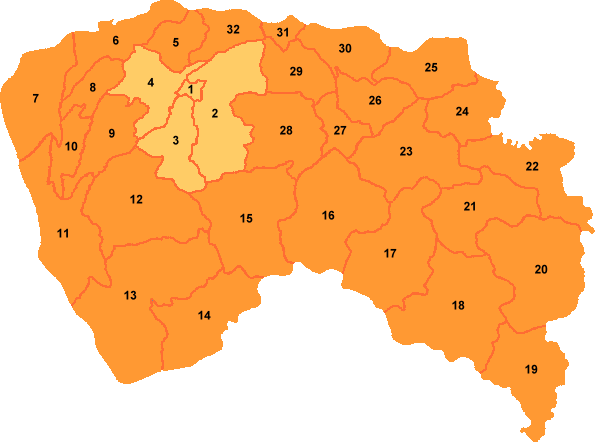
Shilong sits at 120 m above sea level in a subtropical climate zone, within the Asia/Shanghai timezone. This city of 142 thousand people has a small expat community, and newcomers tend to settle in Shilong New Town or the Riverside area. The weather runs warm and humid through much of the year, with distinct wet and dry seasons shaping daily life. The compact scale means most errands and social spots stay within easy reach, and the two popular neighborhoods offer different tradeoffs between convenience and quiet.
Housing costs are the clearest draw. A 1-bedroom apartment in the city centre rents for $183/mo, while the same outside the centre drops to $107/mo. Utilities run $61/mo, internet $13/mo, and a mobile phone plan $9/mo. A monthly public transport pass costs $18/mo, and a gym membership is $40/mo. For a single adult, the budget tier totals $255/mo with rent included, the mid-range tier $361/mo, and the comfortable tier $472/mo. Excluding rent, a single person spends about $363/mo. Eating out stays cheap: an inexpensive restaurant meal is $3 per person, a mid-range three-course meal for two is $22, and a cappuccino is $3.
Safety is a strong point, with a safety index of 70/100 and a crime index of 30/100, where lower is safer. Healthcare quality is rated Good, which covers most routine needs and gives reassurance for longer stays. Air quality sits at an air quality index of 65, lower being better, so sensitive individuals may want to check seasonal patterns. The overall expat score is 70/100, with a retiree score of 72/100 and a digital nomad score of 63/100, reflecting a place that works better for settled residents than for constant movers.
Visas follow standard national rules, and the nearest airport is CSX. Average internet speed reaches 84 Mbps, enough for remote work and streaming, though English proficiency is Limited, so basic Mandarin helps with daily interactions. The small expat community means social circles form slowly but tend to be tight. Shilong suits budget-conscious singles, retirees drawn by the low costs and Good healthcare, and remote workers who value cheap rent and fast internet over a large international scene. It rewards those who prefer a quieter, more local rhythm.