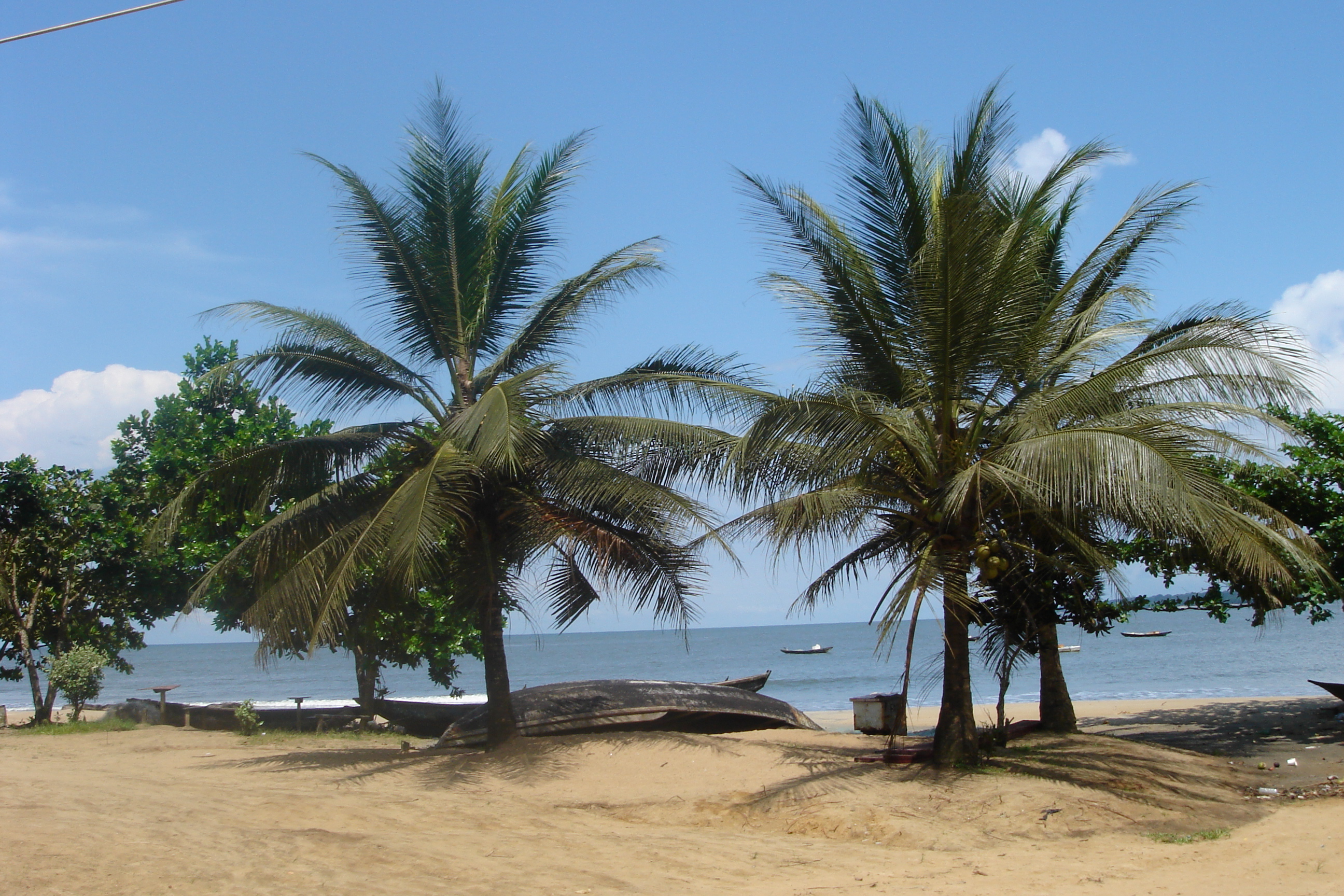
Kribi sits on Cameroon's Atlantic coast at just 13 m above sea level, a small tropical city of 60 thousand people where the climate stays warm and humid year round. The timezone is Africa/Douala, and the nearest airport is KBI, only 10 km away. Expats who settle here tend to choose between the city centre and areas outside the centre, trading a short walk to markets and the beach for lower rents and quieter streets.
Housing costs are the clearest draw. A one-bedroom apartment in the city centre rents for $155/mo, while the same outside the centre drops to $110/mo. Three-bedroom places run $295/mo in the centre and $210/mo outside it. Utilities add $163/mo, internet $177/mo, and a mobile phone plan $26/mo. A single adult can live on a budget tier total of $626/mo including rent, step up to a mid-range tier at $767/mo, or settle into a comfortable tier at $928/mo. Excluding rent, a single person spends about $230/mo, and a family of four about $600/mo. Everyday food is cheap: an inexpensive restaurant meal costs $4 per person and a cappuccino is $2, though a mid-range three-course meal for two runs $120. The cost of living index is 20/100 against New York City at 100.
Safety is moderate, with a safety index of 50/100 and a crime index of 50/100, where a lower crime number would mean a safer city. Air quality sits at 50 on the index, where lower is better. Healthcare quality is rated poor, so most expats keep a plan for treatment in larger cities or abroad. Internet averages 25 Mbps, workable for routine tasks but not always for heavy uploads.
Entry rules depend on your nationality and purpose of stay, and long-term visitors typically arrange the appropriate visa before arrival or shortly after. KBI airport is 10 km from town, making the final transfer quick. With an overall expat score of 78/100, a FIRE score of 80/100, a retiree score of 50/100, and a digital nomad score of 56/100, Kribi suits budget-conscious expats, early retirees chasing low rents, and remote workers who can tolerate limited English proficiency and poor healthcare in exchange for a slow tropical pace.