Min Monthly Income
$5,500
Application Fee
$45
Difficulty
Moderate
Duration
12 months
Overview
South Korea’s F-1-D “workation” digital nomad visa targets remote workers earning solid first-world incomes. The hard financial gate is at least $5,500/month in foreign-earned income (as of 2026), aligning with the legal requirement to earn at least twice Korea’s per-capita GNI (around 85 million KRW, roughly $66,000/year) from a foreign employer or business. Income has to come from active remote work or business activity abroad, salary, contractor income, or self-employment in your own company. Purely passive flows like Social Security, rental income, and ETF dividends do not count toward the $5,500/month requirement, and the program explicitly does not recognize pension income for eligibility.
The visa is issued for 12 months and can be renewed once, giving a maximum 2-year stay if you extend in-country. There is no path from this digital_nomad status to permanent residency or citizenship; the “Leads to PR” flag is explicitly set to No, and there is no conversion path for counting F-1-D time toward a long-term residency track. Anyone planning a 10-year Korea plan would need to treat this as a trial stay and then transition to a different visa class (for example, long-term work or investment) if they want PR or a citizenship timeline.
Application friction is modest but not trivial. The consular fee for US citizens is about $45 (as of 2026), matching the $45 Application Fee in the program rules, and the bureaucracy score of 1.1/5 reflects a relatively light document list compared to classic long-stay visas. However, the Houston consulate checklist shows some real pain points: you need an FBI criminal background check with apostille, proof of at least 1 year of work in the same industry, payslips and bank statements to evidence your income, and private health insurance covering at least 100 million KRW for 1 year. No medical exam or in-person interview is required, though an apostilled FBI background check is required.
From a lifestyle-planning perspective, the main trade-off is tax and time in-country. The visa itself does not state a minimum day count, but Korea’s tax law treats you as a resident if you have a place of residence or stay more than 183 days. Since this is a resident-type tax regime and there is no explicit “non-resident digital nomad” carve-out, anyone actually using the visa as intended (living in Korea for months at a time) should assume they will trigger tax residency if they cross the 183-day mark, even though the Local Work Permitted flag remains No and you cannot earn local Korean-source wages.
Fit depends on the structure of your income. This makes most sense if you can show at least $5,500/month from a foreign W‑2, contractor, or self-employment stream and want 12–24 months in Korea without committing to PR, accepting that foreign income becomes taxable locally once you are a resident. It’s a poor fit if you are a FIRE retiree living on $3,000–$4,000/month of dividends, bond interest, rental income, or Social Security, as none of that counts toward eligibility and you would fail the minimum income test despite being financially secure.
Eligibility Requirements
Any nationality can apply for South Korea’s F‑1‑D digital nomad (workation) visa in principle; the visa’s nationality_restrictions field is set to “all,” and the official tourism and consular sources state there are no nationality-based exclusions. In practice, applicants from heavily sanctioned or diplomatically isolated countries such as Iran, Syria, Russia, and especially North Korea or Cuba can encounter consular refusals, banking obstacles, or background-check issues that make approval difficult even if not formally banned in the law. Before gathering FBI checks, apostilles, and proof of $5,500/month income, confirm your eligibility with the Korean immigration authority (Ministry of Justice/HiKorea portal) or the nearest Korean consulate, since they apply the final nationality and security-screening rules.
Min Income
$5,500
Application Fee
$45
Min Age
18 yrs
Duration
12 months
Remote Work / Freelance · Business Income
W2 Employee (foreign employer) · 1099 Contractor · Business Owner · Self-Employed
Max 0% from local sources
Requirements Checklist
0 of 15 documents in hand
0%These take the longest, so start them first.
Request these while the slow items are in progress.
You only need these on the day you submit.
Extra requirements for this visa
- Apostille required on official documents
How and where to apply
You can apply at a South Korean consular office in your home country or jurisdiction. Alternatively, if you are already in South Korea on a short-term visa, visa-exempt status, or tourist visa, you can apply in-country at the immigration office without having to leave the country. Applications submitted in-country follow the same requirements and processing timeline (10–15 days).
Tax Information
Local tax regime and what gets taxed
South Korea applies a resident worldwide-income regime rather than a territorial or remittance system, and the Tax Regime Type for this visa is explicitly marked “resident.” Once you are a Korean tax resident, global income streams become taxable: remote salary from a US or EU employer, contractor payments from offshore clients, and self-employment profits from your own foreign company are all within scope. Foreign passive income such as ETF dividends from a US brokerage, interest on foreign bank deposits, and rental income from property in Canada, Australia, or the UK are treated as taxable foreign-source income for residents, even if paid into foreign accounts. Pension distributions and Social Security are also conceptually within the tax net once you are resident, though this visa program does not count them for eligibility.
Capital gains on foreign investments
For a Korean tax resident, capital gains on foreign financial investments , for example, selling $200,000 of US index funds in a Vanguard or Fidelity account, are in principle taxable as part of worldwide income. There is no special exemption for digital nomads that would reclassify them as non-residents for this purpose, and the regime is resident, not territorial or remittance-based. Exact rates depend on Korea’s progressive income tax brackets and any specific capital gains rules in force at the time of sale, but the key point for FIRE readers is that gains on foreign ETFs and stocks are not automatically exempt merely because the assets are held abroad.
Tax residency triggers and registration
Korean domestic law looks at two main triggers for tax residency: (1) having a domicile or a place of residence in Korea, and (2) staying in Korea for more than 183 days in a tax year. An F‑1‑D holder living in a leased apartment and spending most of the year in Seoul or Busan will generally be treated as a tax resident after crossing 183 days, regardless of the visa label. The visa itself does not set a separate tax-residency threshold, but KPMG notes that foreigners staying more than 90 days must complete foreigner registration with immigration within 90 days of arrival; tax registration then follows from residence status.
Local filing and tax treaty status
Once resident, you should expect to need a Korean tax ID and to file an annual income tax return reporting worldwide income, including your foreign remote earnings and investment income. Korea aligns its income tax filing with the calendar year and requires returns shortly after year-end. A US-South Korea tax treaty exists, but for many income types double taxation relief will still have to come from the US side via foreign tax credits rather than relying solely on treaty provisions. For non-US citizens, whether your home country has a treaty with Korea will determine if and how you can offset Korean tax back home.
For US Citizens and Green Card Holders
US persons on this visa remain fully subject to US worldwide taxation while also potentially becoming Korean tax residents once they pass 183 days or establish a domicile. The main US relief tools are the Foreign Earned Income Exclusion (FEIE), Foreign Tax Credit (FTC), and careful reporting of foreign accounts.
For FEIE on Form 2555, only earned income qualifies: salary from a foreign or US employer, contractor payments, or self-employment profit. The 2026 exclusion limit is $132,900. It does not cover ETF dividends, capital gains, rental income, pensions, or Social Security. Because the F‑1‑D visa is expressly for living and working remotely in Korea for up to 12–24 months, most users will rely on the Physical Presence Test, 330 full days abroad in any 12‑month period, rather than the Bona Fide Residence Test, which is harder to satisfy for a trial 1–2 year stay with no PR track.
For FTC on Form 1116, the mechanism only helps if Korea actually taxes the same income and the Korean effective rate on that stream meets or exceeds the US rate. Under a resident regime, your foreign remote salary and potentially your foreign investment income are exposed to Korean tax once you are resident, so FTC can meaningfully offset US tax on those items. If in a given year you engineer your facts to remain a Korean non-resident (for example, spending under 183 days), your Korean tax on foreign income may be close to zero; in that case, the FTC gives little to no benefit, and you lean more on FEIE for earned income while paying full US tax on passive income.
FBAR (FinCEN 114) and FATCA (Form 8938) obligations apply regardless of where you live. If at any point in the year the aggregate balance of foreign financial accounts (Korean bank accounts, local brokerage accounts, plus any other non-US accounts) exceeds $10,000, you must file FBAR electronically with FinCEN, with non-willful penalties starting around $10,000 per violation (inflation-adjusted to approximately $16,700 as of 2026). Because a local bank account is not formally required for this visa (Local Bank Account Required: No), some Americans choose to rely on Wise/Revolut or keep funds in US accounts. But opening a Korean account or brokerage immediately pulls you into FBAR and potentially Form 8938 if you cross the higher FATCA thresholds.
The practical way to handle this is to engage two specialists in year one: a US CPA focused on expat taxation to optimize FEIE vs FTC and handle FBAR/Form 8938, and a Korean tax advisor to confirm your residency status and file local returns. The $1,500–$3,000 spent on coordination in the first year of F‑1‑D status often pays for itself in avoided penalties and better elections on both sides of the Pacific.
Living in South Korea
COL Index vs NYC
56.5
Monthly Cost (excl. rent)
$966
1BR Rent (City Center)
$677
Safety Index
75.1
Healthcare Index
82.8
Quality of Life Index
147.7
Time Zone
UTC+09:00
Capital
Seoul
Population
51.8M
Official Languages
Korean
Avg Internet Speed
323 Mbps
Public Transit Quality
Excellent
With a budget covering rent and living costs, you'd need roughly $1,643/mo for a comfortable single-person lifestyle in South Korea.See how far your money goes →
🏙️ Best Cities in South Korea for Digital Nomads
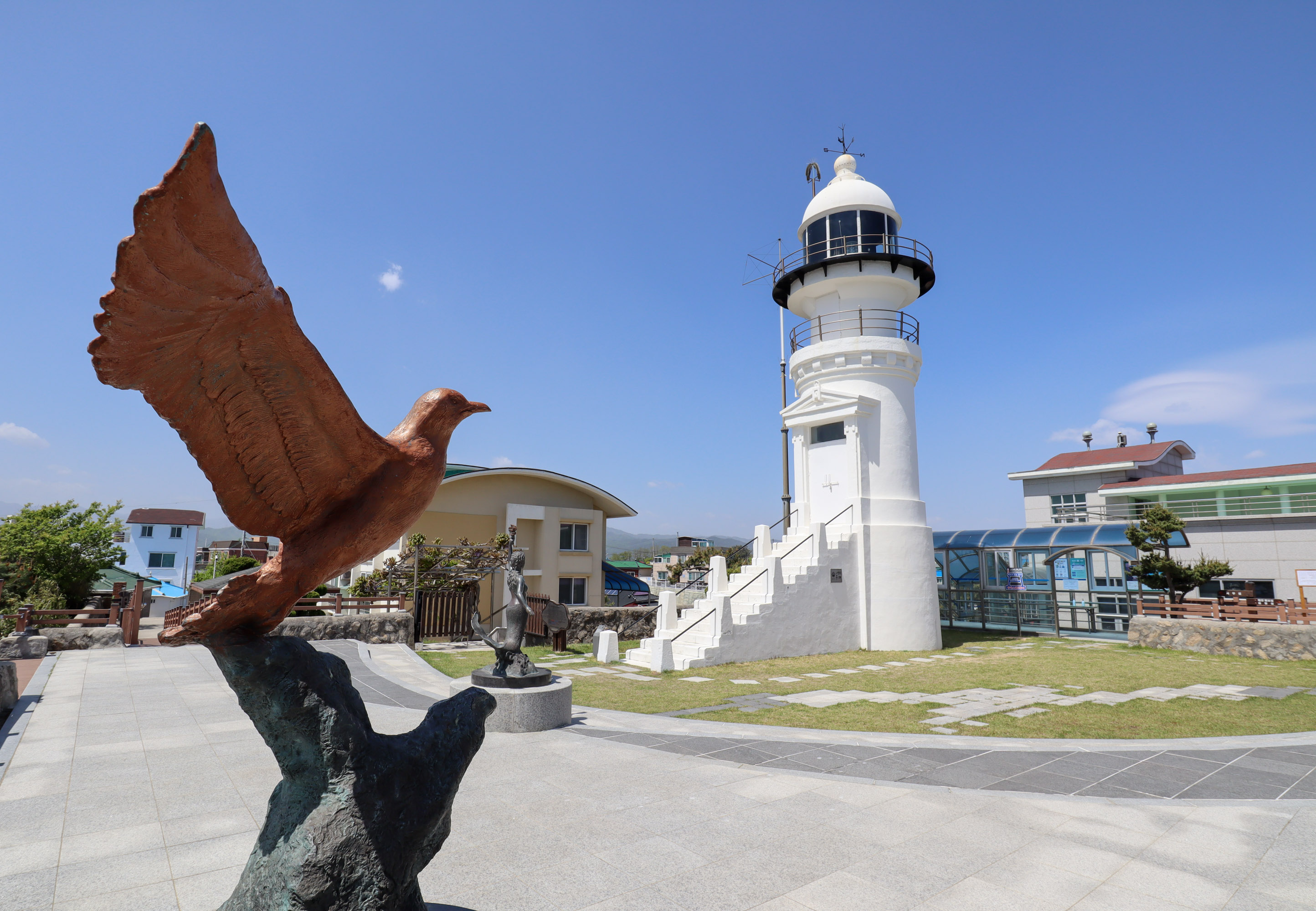 ✦ 76
✦ 76 ✦ 78
✦ 78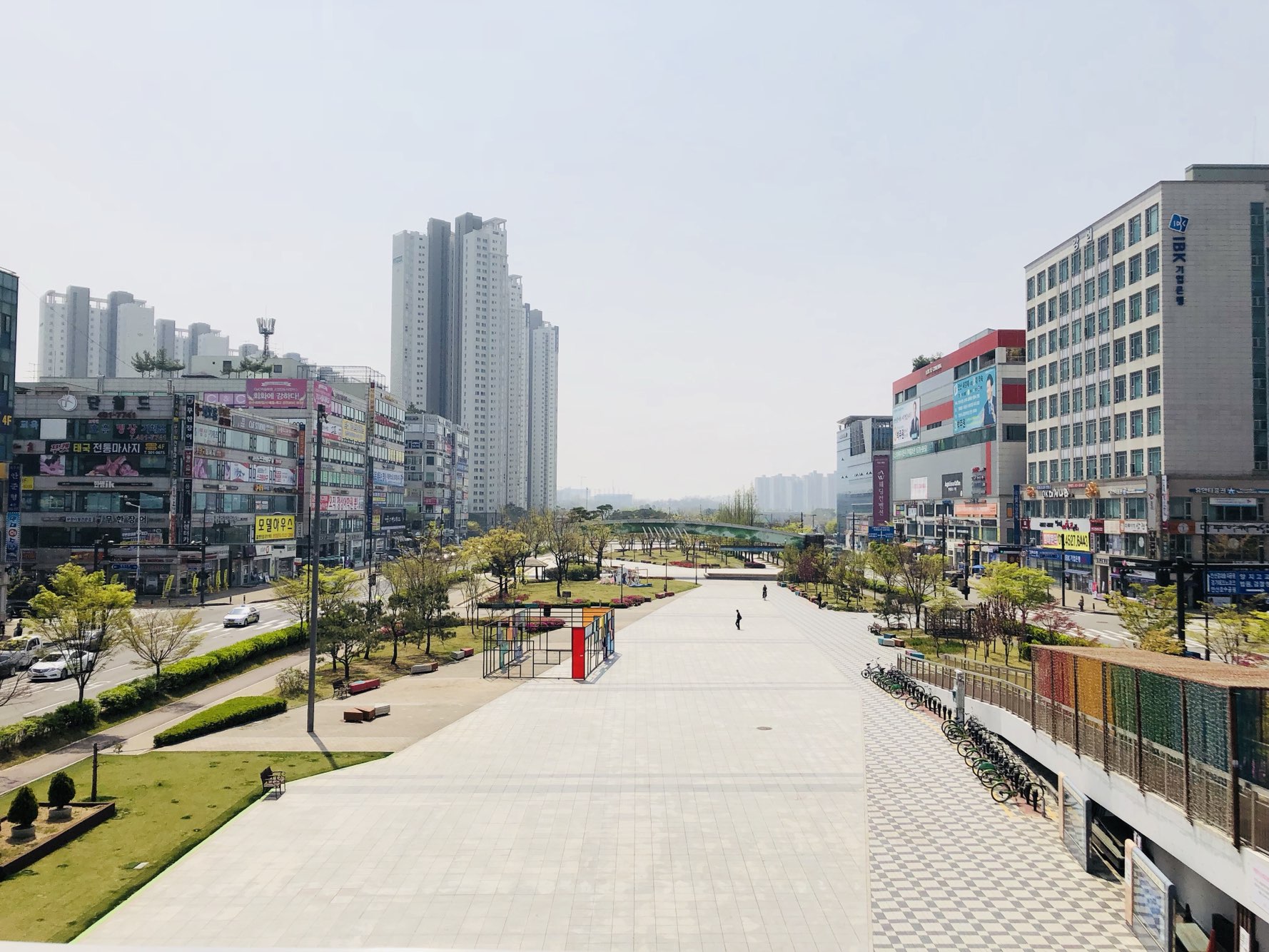 ✦ 78
✦ 78 ✦ 80
✦ 80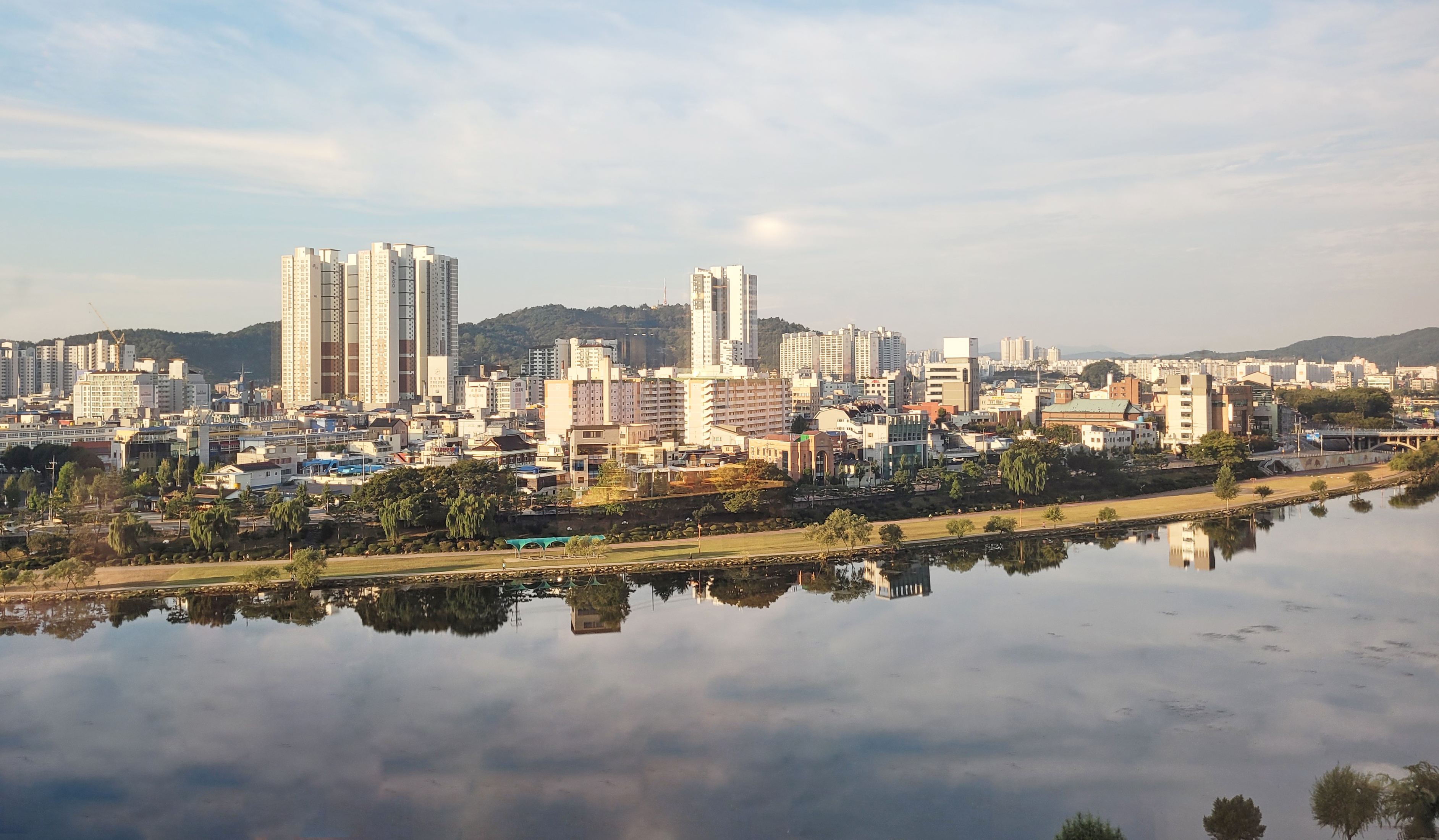 72
72The accommodation requirement and where it actually breaks
The address requirement looks like a formality until you try to satisfy it with a two-week Airbnb booking made to cover a twelve-month visa. Immigration wants documentation tied to the length of stay you're requesting, not a placeholder that gets you in the door. A lease is the cleanest option because it's unambiguous, but signing a full-year Korean lease before you have a visa is its own problem, since many landlords won't rent long-term to someone who isn't yet a resident.
The workaround people use is a shorter-term arrangement with a host willing to sign a residency confirmation form, but this only works if the host actually understands what they're signing and is reachable if immigration follows up. A hotel or short-term rental confirmation with vague host consent language gets flagged more often than people expect, because it doesn't establish a real, checkable address. If you're planning to arrive and find housing once you're there, sequence it the other way: secure something documentable first, even a short-term corporate housing arrangement, and treat the permanent living situation as a problem you solve after the visa is in hand.
What happens after you land
Two paths lead to the same outcome. You can apply from a consular office before ever entering Korea, or if you're already there on a short-term entry, visa-exempt status, or tourist visa, you can switch over at an immigration office without leaving the country. Both routes run on the same 10 to 15 day processing window, and neither requires an interview or a medical exam, which means the entire decision rests on the paper file. There's no moment where an officer meets you and can smooth over a weak application with a good impression. The documents are the whole case.
That absence of an interview cuts both ways. It removes a source of anxiety for people who don't test well in official settings, but it also means any ambiguity in your paperwork has no chance to get clarified in person. If something in your file looks inconsistent, the file gets rejected rather than questioned.
Once approved, you're not stepping into a broader immigration pipeline. The permit runs for an initial period that can be renewed, but it's a bounded work-and-live arrangement, not a staged process toward something more permanent. And the local work prohibition doesn't loosen once you're settled in. No side project for a Korean company, no local freelance client, no informal teaching gig on the weekend. The income that got you the visa has to remain the income that sustains you for as long as you hold it.
The long-term path, and where this visa stops
This is the point people miss most often: this status does not lead to permanent residency. It's renewable, and family members can come with you, but there's no built-in mechanism that converts years of holding this visa into a settlement track. If you're mentally treating your first year here as the opening chapter of an eventual move to Korea, you're planning around a door that this particular visa doesn't open. Someone who wants a residency trajectory needs a different visa category from the start, not this one extended repeatedly.
It's also worth being clear-eyed about who this excludes. Retirement income doesn't count toward eligibility here, so a retiree living on pension income has no route through this program no matter how comfortable that income is. The visa is built for people still actively earning from foreign clients or a foreign employer, full stop. If your income is passive, this isn't your lane, and no amount of paperwork changes that.
What renewal does buy you is time and stability without the pressure of a settlement clock ticking in the background. For someone who wants a year or two of a lower cost of living and genuine access to Korea without any interest in eventually naturalizing, that's not a limitation so much as a fit. For someone hoping this becomes a foothold toward permanent status, it's a dead end dressed up as a visa.
The alternative most people actually weigh this against
The realistic alternative isn't usually another country's digital nomad visa, it's staying under the radar on repeated tourist entries or visa-exempt stays and working quietly without formal status. Plenty of remote workers do exactly this in Korea for months at a time. The appeal is obvious: no employment history documentation, no insurance minimum, no address paperwork tied to a specific application, and no formal declaration of income to Korean authorities.
What that approach costs you is legal footing. You're not authorized to be earning income while present that way, even if the income itself is foreign-sourced and the work happens on a laptop in a coffee shop. It's a risk that mostly goes unnoticed until it doesn't, and there's no clean way to convert a string of tourist stays into something official later if you decide you want that. The digital nomad visa, by contrast, forces upfront cost and paperwork, including a private health insurance policy that has to meet a real coverage minimum, but it gives you something the informal approach never does: a status you can point to if a landlord, bank, or immigration officer asks what you're doing there.
The decision mostly comes down to time horizon. If you're testing Korea for a few months before deciding whether to commit further, the informal route carries real risk but low friction. If you already know you want a full year or more and value not having to think about your legal status every time you leave and re-enter the country, the visa is the better bet, even with the extra insurance cost and the year-of-employment hurdle standing in front of it.
Work Permissions
Application Steps
- 1
📋 Verify your eligibility and gather income documentation
1-2 weeks
- 2
📄 Obtain criminal record certificate with apostille
2-4 weeks
- 3
📄 Secure health insurance with required coverage
1-2 weeks
- 4
📄 Prepare and compile all required application documents
1 week
- 5
📬 Submit application at South Korean consulate
Same day
- 6
⏳ Wait for visa processing and approval
10-15 days
- 7
📬 Receive visa and travel to South Korea
1-2 weeks
- 8
🏛️ Register with immigration within 90 days of arrival
Same day
- 9
🏛️ Understand your tax residency status and obligations
1-2 weeks
This visa requires proof of health insurance. Compare international plans before you apply.
Compare health insuranceWe may earn a commission at no cost to you.
Compare this visa
Curated comparisons that include this route.
Frequently Asked Questions
Click any question to expand the answer.
Ready to Apply?
Work with trusted visa specialists who handle the paperwork so you can focus on your move.
Get help with this visa →* We may earn a commission if you apply through our link
At a Glance
Last verified: October 9, 2026