Min Monthly Income
$1,031
Processing Time
13-17 wks
Difficulty
Moderate
Duration
24 months
Overview
Portugal’s D7 Passive Income Visa revolves around proving that you can support yourself from non-Portuguese income. Using the program rules numbers: as of 2026 you need at least €920/month (roughly $1,050 USD) in passive or pension income, plus a savings buffer of roughly $1,080 USD/year. Both figures are pegged to Portugal’s minimum wage and rise whenever it does. Accepted income sources explicitly include pension and other passive income (dividends, rental income, interest, royalties). Active remote salary is not listed as a qualifying source, so someone earning 3,800 USD/month purely from US rental properties and ETF dividends fits the model cleanly; someone whose only income is an overseas W‑2/remote salary is in a grey area and usually better suited to Portugal’s separate digital nomad/remote work visa.
The financial hurdle is low compared with peers: Panama’s Pensionado demands 1,000 USD/month in pension, while Portugal’s D7 threshold is roughly $1,050 USD/month as of 2026 (€920, pegged to the minimum wage), and Portugal also expects a matching roughly $1,080 USD in savings locked in on paper. The core trade‑off is residency obligation: to keep the visa and progress toward status, you’re expected to spend 183 days/year in Portugal. That effectively makes Portugal your primary home for tax purposes, which matters if you were hoping to split time 50/50 between, say, Florida and Lisbon; extended absences risk both tax complications and residency non‑compliance.
From an immigration runway perspective, the D7 is straightforward on the residency side, though the citizenship runway got longer in 2026. The initial residence permit runs 24 months and is renewable, and the program still leads to permanent residency after 5 years, assuming you maintain eligibility and presence. Naturalization is separate: a 2026 reform of Portugal’s Nationality Law, in force since May 19, 2026, extended the residency requirement for citizenship from 5 years to 10 years for most non‑EU/CPLP nationals (7 years for EU and CPLP nationals), with the clock now starting from the date your residence permit is issued rather than your application date. That puts Portugal roughly in line with Spain rather than ahead of it. A FIRE household planning a long‑term European base can still expect permanent residency around year 5, but should now plan for naturalization closer to year 10.
Friction points show up on the administrative side rather than in extreme documentation demands. In practice you should plan on an apostilled criminal record (an FBI background check for Americans), a consulate interview, a Portuguese NIF and bank account, and health insurance in place before approval; no medical exam is required. Expect roughly 4 to 9 months from consulate application to residence card in hand given current AIMA backlogs, on top of the time needed upfront to secure accommodation proof, open the local bank account, and move funds. The D7 visa application fee is roughly $1,051 USD as of 2026.
This path makes most sense if you can document at least roughly $1,050 USD/month as of 2026 (€920) in offshore pension/portfolio income, have roughly $1,080 USD in liquid savings, and are willing to spend 183 days/year in Portugal for at least 5 years to reach permanent residency (10 years if citizenship is the end goal). It is a poor fit if your plan is to maintain primary residence and tax ties in the US or another country by spending only 2–4 months a year in Portugal while relying on active remote salary as your main income stream.
Eligibility Requirements
Citizens of EU countries do not need Portugal’s D7 Passive Income Visa because they have free movement and residence rights within the EU/EEA. The program is aimed at non‑EU nationals: Americans, Canadians, Australians, New Zealanders, Britons post‑Brexit, and other third‑country citizens who do not already enjoy EU residence rights.
The usual confusion cluster is around EEA and near‑EU states. Norway, Iceland, and Liechtenstein are part of the EEA and therefore have similar free‑movement rights; their citizens, like EU citizens, generally register locally rather than applying for the D7. Switzerland sits outside the EU and EEA but has its own bilateral free‑movement arrangements with the EU; Swiss citizens also do not use the D7 route. By contrast, UK nationals after Brexit are treated as non‑EU and can be classic D7 applicants alongside US, Canadian, and Australian nationals.
If you hold dual citizenship and one of your passports is from an EU or EEA member state (or Switzerland, under its agreements), you should use that EU/EEA/Swiss passport rather than applying for the D7. Entering and registering under your EU citizenship is faster, cheaper, and aligns with how Portuguese authorities expect you to exercise your rights; using a non‑EU passport to pursue the D7 when you have an EU option generally adds bureaucracy without benefit.
Min Income
$1,031
Duration
24 months
Physical Presence
183 days/yr
Pension / Social Security · Passive / Investment Income
+50% per adult · +30% per child
Requirements Checklist
0 of 20 documents in hand
0%These take the longest, so start them first.
Request these while the slow items are in progress.
You only need these on the day you submit.
Extra requirements for this visa
- Apostille required on official documents
- FBI background check required (allow 3–4 months)
- In-person interview required
How and where to apply
Apply initially at the Portuguese consulate in your country of residence for the D7 entry visa, including an interview. After approval and entry to Portugal (within 4 months), apply in-country with AIMA for the 2-year residence permit. Cannot start fully in-country without prior visa.
Tax Information
Local tax regime and what it means for D7 holders
Portugal applies a resident, worldwide tax regime to D7 residents. Combined with the 183 days/year physical presence requirement, that means you are expected to become a Portuguese tax resident and pay Portuguese tax on global income. In practice, that covers remote salary from foreign employers, ETF dividends in a US brokerage, pension distributions, and rental income from properties abroad. Pension income is explicitly recognized as valid for the visa, but that does not mean it is exempt from Portuguese tax once you are resident.
Capital gains on foreign investments – for example, selling index funds or ETFs in a US brokerage – fall within Portugal's worldwide tax base for residents. There is no exemption or territorial carve‑out; gains are taxed locally rather than being ignored. For a FIRE investor depleting a portfolio, that means each rebalance or sale can have Portuguese tax consequences, rather than being sheltered simply because the account is abroad.
Tax residency is driven by presence. The program itself requires 183 days/year in Portugal, and that same 183‑day threshold is the common trigger for tax residency: cross it and you are treated as a resident for income tax, regardless of where your broker or tenants are located. Expect registration at the tax office once you have a residence permit and a Portuguese tax number (NIF), followed by annual returns.
Portugal's broad Non‑Habitual Resident (NHR) regime, which let new residents shelter most foreign-source income for 10 years, closed to new applicants after 2023, with the final transitional registration window ending March 31, 2025. It was replaced by a narrower incentive, the Tax Incentive for Scientific Research and Innovation (IFICI, sometimes marketed as "NHR 2.0"), which only benefits people working in specific research, tech, or innovation-sector activities and generally does not apply to retirees or passive-income D7 holders. Unless you separately qualify for IFICI through a qualifying professional activity, you should plan around Portugal's standard resident tax regime described above rather than any NHR-style exemption.
Local filing obligations are straightforward conceptually but strict in practice: obtain a NIF, register as a resident taxpayer after your move, and file annual income tax returns reporting worldwide income on the Portuguese calendar. The exact first‑year filing deadline varies with your registration date, so confirm current dates with a local advisor or the Portuguese tax authority once registered.
The US and Portugal have had an income tax treaty in force since 1994, covering Social Security, pensions, dividends, and more. The treaty's savings clause still lets the US tax its own citizens on worldwide income, so the practical playbook is unchanged: plan around full Portuguese taxation as a resident, then coordinate US-side relief through the Foreign Tax Credit and specific treaty positions confirmed by a cross-border CPA rather than assumed.
For US Citizens and Green Card Holders
US citizens and green card holders on the Portugal D7 remain fully taxable by the US on worldwide income, even after becoming Portuguese tax residents. Three US mechanisms matter in this context: the Foreign Earned Income Exclusion (FEIE), the Foreign Tax Credit (FTC), and foreign reporting (FBAR/FATCA).
FEIE, claimed on Form 2555, only applies to earned income – salary, consulting, or self‑employment – up to $130,000 for tax year 2025, rising to $132,900 for tax year 2026. It does not cover dividends, capital gains, rental income, pensions, or Social Security, which are the dominant income sources for most D7 users. Given the visa’s focus on passive and pension income and the fact that local work is permitted but not required, many D7 holders will have little or no income eligible for FEIE. If you do work remotely for US or foreign clients while resident in Portugal, the Physical Presence Test (330 days abroad in any 12‑month period) is compatible with the 183‑day Portugal requirement, and the Bona Fide Residence Test will also become available once you establish long‑term residence.
The Foreign Tax Credit on Form 1116 becomes the primary US relief mechanism because Portugal taxes you as a resident on worldwide income. For each category of income where Portugal’s effective rate is at or above the US rate, the FTC can largely neutralize double taxation; where Portugal’s rate is lower or zero, you will owe the difference to the IRS. Treaty provisions can change where specific income types are taxable, Social Security and government pensions especially, so confirm treaty positioning with a cross-border CPA before assuming the FTC alone does the work.
FBAR (FinCEN Form 114) is unavoidable under this visa because a Portuguese bank account is required. Once your aggregate foreign financial accounts – including your Portuguese bank, any Portugal brokerage, and other non‑US accounts – exceed 10,000 USD at any point in the year, FBAR filing is mandatory, separate from your tax return. FATCA Form 8938 can also apply at higher thresholds, depending on your filing status and residence. Non‑willful FBAR penalties start at approximately $16,700 per violation as of 2026 (inflation-adjusted from the $10,000 statutory floor), so under‑reporting a required D7 bank account is not a trivial mistake.
To navigate this cleanly, you need two advisors: a US CPA who specializes in expat taxation and understands FEIE, FTC, FBAR, and FATCA in a Portugal‑resident context, and a local Portuguese tax advisor to handle NIF registration and annual filings. The 1,500–3,000 USD spent in year one on coordinated advice generally pays for itself through correctly structured elections, elimination of double taxation surprises, and avoidance of five‑figure reporting penalties.
Living in Portugal
COL Index vs NYC
41.2
Monthly Cost (excl. rent)
$776
1BR Rent (City Center)
$1,040
Safety Index
67.9
Healthcare Index
72.2
Quality of Life Index
167.8
Time Zone
UTC+00:00
Capital
Lisbon
Population
10.3M
Official Languages
Portuguese
Avg Internet Speed
352 Mbps
Public Transit Quality
Good
With a budget covering rent and living costs, you'd need roughly $1,816/mo for a comfortable single-person lifestyle in Portugal.See how far your money goes →
🏙️ Best Cities in Portugal for Passive Income Residents
 ✦ 82
✦ 82 ✦ 81
✦ 81 ✦ 83
✦ 83 ✦ 81
✦ 81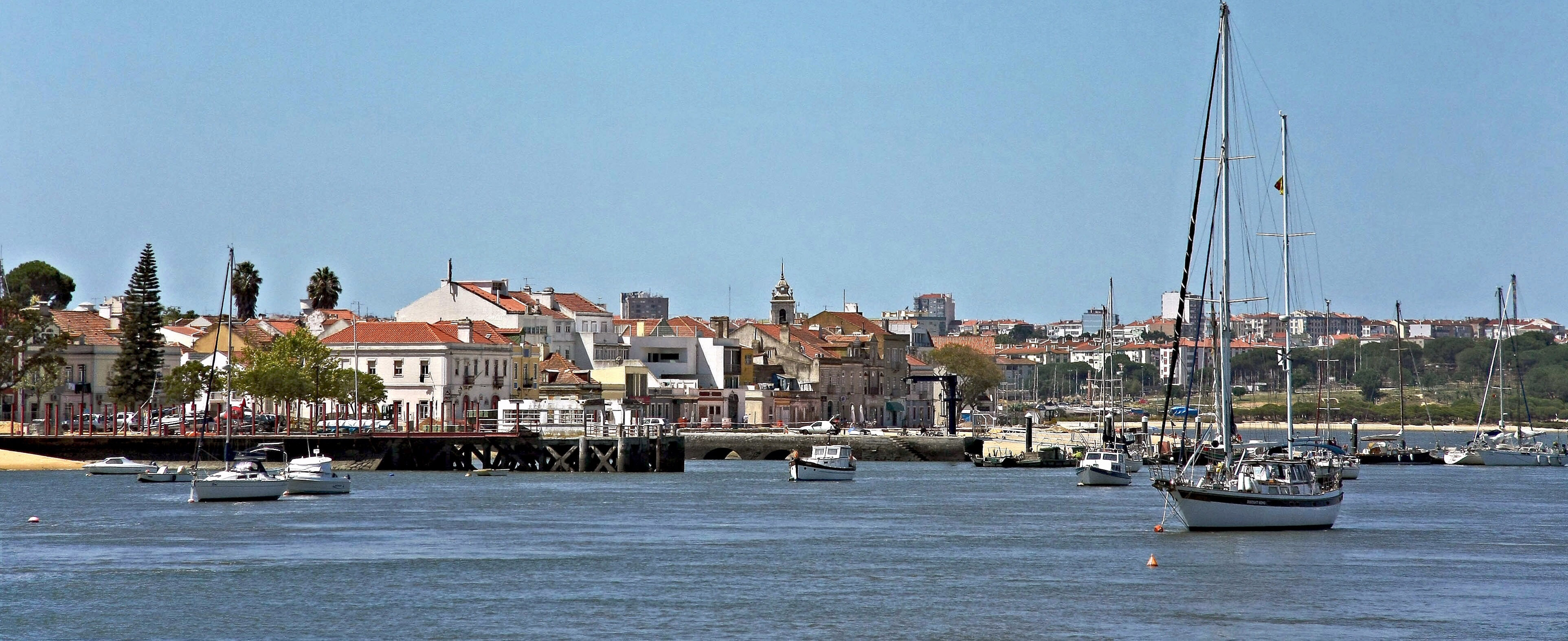 ✦ 82
✦ 82 ✦ 80
✦ 80The accommodation requirement isn't really about the apartment
Everyone treats the accommodation document as a formality: sign a lease, upload it, move on. It's the piece of the file most likely to trigger a follow-up question, mostly because applicants misjudge what the consulate is trying to verify.
A twelve-month rental agreement, a property deed, a promissory purchase contract, or in some cases a notarized hosting letter all satisfy the requirement on paper. What trips people up is mismatch between the address on the lease and everything else in the file, or a booking that looks temporary dressed up as long-term. A one-year lease signed the week before the interview, for an apartment in a city the applicant has never visited, on a listing that reads like a short-term rental with the dates stretched, gets a second look. Consulates see enough of these to recognize the pattern.
The better sequence, if you can manage it, is to visit first, or at minimum work with a local agent who can put you in a lease that looks like a lease a resident would sign, not a placeholder. If a family member or friend is hosting you instead of a formal rental, the notarized invitation needs to hold up to the same scrutiny, meaning the host's own residency and address need to check out cleanly, because the file gets evaluated as one document set, not a pile of independent proofs.
One thing worth deciding upfront: whether you're committing to that specific address for the long haul or just need something defensible to get through the visa stage. Plenty of applicants sign a year lease in a city they don't intend to stay in, planning to move once they're in-country. That's legal, but it means budgeting for two accommodation costs in year one, since breaking or letting the first lease lapse early while paying for a second place is common enough that it should be part of the financial plan, not a surprise.
The stretch between visa approval and an actual permit
Getting the D7 stamped in your passport is not the same as being a resident of Portugal, and the gap between those two moments is where a lot of people lose track of what's actually required of them.
The visa itself is an entry document. You have four months from approval to enter the country on it, and once you're there, the actual residence process starts with the immigration authority in-country, not before. That means the consulate interview and the paperwork you build for it is really phase one of a two-phase process, and the second phase, the one that produces the two-year residence permit, happens on Portuguese soil with a different authority reviewing a lot of the same documents again.
This is where people who assumed the consulate approval was the finish line get caught flat. Booking one-way flights the week the visa lands, without a plan for the in-country appointment, the temporary address you'll need for that period, or backup funds for the gap between arrival and permit issuance, is a common way to turn a straightforward process into a stressful few months. Set the AIMA appointment as early as the system allows once you land, and treat the four-month entry window as the deadline for having your Portuguese life logistically real, not aspirational: a working address, a way to receive mail, and copies of everything already translated and legalized, because the second review doesn't automatically accept what the consulate already approved.
The permit that comes out the other side is valid for two years and gets renewed from there. Anyone budgeting their first year in Portugal should build in the cost and time of this second filing as a real line item, not an afterthought buried in "immigration paperwork."
What permanent residency and citizenship actually cost you in time
On paper, five years of residence gets you to permanent residency. In practice, that clock is measured against your legal residence status, which means the sequencing matters more than the headline number suggests. Time spent waiting on the consulate, time spent between visa entry and permit issuance, and any gaps where your status lapsed can all complicate how that five-year window gets counted. The safest approach is to treat the clock as starting only once your residence permit is actually in hand, not from the date you entered the country or the date your D7 was approved.
The other number applicants underweight is the physical presence requirement. Renewing your permit and eventually qualifying for permanent status depends on actually being in Portugal for a meaningful share of the year, currently running to 183 days. That's not a formality for people who planned to keep a US address and treat Portugal as a part-time base. If your plan involves spending half the year back in the States managing a business or seeing family, you need to model that against the presence requirement before you file, not after your first renewal gets questioned.
None of this is unusually restrictive by European standards, but it does mean the D7 rewards people who are moving, not people who are testing the water with one foot still at home. If the honest plan is six months in Portugal and six months elsewhere, the timeline to permanent residency and beyond stretches out in ways that are hard to predict from the outside, and it's worth being honest with yourself about which category you're actually in before the paperwork commits you to a story you don't intend to live.
D7 versus the digital nomad route, and why the choice usually isn't close
For someone with genuinely passive income, the D7 versus Portugal's income-from-work visa track isn't really a contest. The D7 was designed for exactly this profile, retirees drawing pensions, landlords collecting rent, investors living off dividends, and the application, however document-heavy, is asking questions your income can actually answer honestly.
The comparison gets more interesting for the remote employee or freelancer earning $4,000 to $10,000 a month from active work, who technically could restructure their situation to look passive but would rather not spend six months doing it. For that person, a work-income-based route is usually the more honest fit, because it doesn't require pretending a client invoice is a dividend. The D7's minimum monthly income threshold sits well below what most remote workers already clear, which makes it tempting to force the fit anyway. Resist that. An application built on a mischaracterized income source is more fragile than one that plainly states what the money is and applies through the track meant for it, even if that track has its own friction.
Where the D7 wins outright is for anyone whose income is already passive and who wants the more established, more heavily precedented path into Portuguese residency, one with a large enough applicant pool that consulates and AIMA caseworkers have seen thousands of these files and know exactly what a clean one looks like. That familiarity cuts both ways: it's a well-worn path, but it's also one where reviewers know precisely which shortcuts get taken and where the fabricated ones tend to show up. If your income genuinely fits the mold, that scrutiny works in your favor. If it doesn't, look elsewhere first rather than trying to sand the corners off a case that was never going to fit.
Work Permissions
Application Steps
- 1
📄 Gather required documents
2-4 weeks
- 2
📋 Open Portuguese bank account
1-2 weeks
- 3
📄 Secure accommodation proof
1 week
- 4
📅 Book consulate appointment
2-4 weeks
- 5
📬 Submit visa application
Same day
- 6
⏳ Wait for visa approval
12-16 weeks
- 7
🏛️ Enter Portugal and apply for residency
1-2 weeks
- 8
🏛️ Receive residence permit
2-4 weeks
Planning a long stay? Compare international health plans for Portugal.
Compare health insuranceWe may earn a commission at no cost to you.
Compare this visa
Curated comparisons that include this route.
Frequently Asked Questions
Click any question to expand the answer.
Ready to Apply?
Work with trusted visa specialists who handle the paperwork so you can focus on your move.
Get help with this visa →* We may earn a commission if you apply through our link
At a Glance
Last verified: October 9, 2026