Poland Self-Employed (Jednoosobowa Działalność) Residency
Data updated Oct 8, 2026
Application Fee
$90
Overview
Getting the income documentation story straight before applying
The self-employed route asks you to prove something narrower than "I have money coming in." It wants evidence that the money comes from your own economic activity, invoiced under your own name, to clients who are not functioning as your employer in disguise. That distinction trips up more applicants than the income threshold itself. Someone earning $6,000 a month from a single US company, working set hours, using company equipment, answering to a manager, looks a lot like an employee who happens to invoice instead of receiving a paycheck. Polish officials reviewing a jednoosobowa działalność registration are trained to notice that pattern, because it's the same pattern used to dodge payroll taxes domestically.
The fix isn't complicated but it has to happen in the right order. Register the business activity, then build the paper trail that shows genuine client relationships, multiple sources of income where possible, and invoices that read like a freelancer's, not a ghost payroll. Applicants who register first and only afterward start assembling six months of contracts and bank statements end up scrambling to backfill a story that should have been true from day one. If you've got one dominant client, structure the contract to look like what it should be: a services agreement with deliverables and scope, not a disguised employment arrangement with a fixed monthly retainer and no defined output.
Bank statements matter here more than people expect, not because a local account is required, but because deposits need to trace cleanly back to invoices you can produce. A lump sum landing in your account with no invoice behind it, or invoices dated suspiciously close together right before the application window opens, reads as staged. Officers see enough of these applications to recognize the shape of one assembled in a hurry versus one that reflects an actual freelance practice built over time. Give yourself real runway before applying, not the minimum, so the documentation reflects a business rather than a scramble.
Eligibility Requirements
Application Fee
$90
Business Income
Business Owner · Self-Employed
Requirements Checklist
Tax Information
What Poland Taxes Once You're a Resident
Poland taxes tax residents on worldwide income, and once residency attaches there's no partial exemption for money earned elsewhere. That puts your remote salary, your freelance invoices, US brokerage dividends, capital gains, and any rent still coming in from a property back home squarely inside Polish tax scope. The personal income tax schedule runs on two bands as of 2026: 12% up to PLN 120,000 (roughly $30,000) and 32% above that. Dividends, interest, and other investment income sit outside the progressive schedule entirely and get hit with a flat 19% withholding known as the Belka tax, whether the payer is a Polish company or a US brokerage. Capital gains on securities follow the same flat 19%, and real estate gains get the same rate if you sell within five years of buying, though property held past that five-year mark, counted from the end of the acquisition year, is exempt outright.
What actually pulls you into this system comes down to where your life is centered and how much time you physically spend in the country, not your visa category. Poland doesn't extend the 90-days-in-180 grace window that applies to short-term Schengen visitors to someone running a registered sole proprietorship and living there year-round; once the business is operating and you're present, the residency clock is already running. Freelance revenue routed through your Polish registration counts as ordinary progressive income rather than its own category, so a strong invoicing year can push a real chunk of earnings into the 32% band without much warning.
Poland does run a program for people moving back, the Relief for Return, or Ulga na powrot. If you've lived abroad for at least three consecutive years and weren't a Polish tax resident during the three years immediately before returning, it cuts PIT by 50% for up to four consecutive tax years, with the exempt portion of income capped at PLN 85,528 (roughly $21,300) annually. It's written for returning Polish citizens and former long-term residents, so an American arriving for the first time without Polish citizenship or documented origin generally won't clear the eligibility bar. A second, narrower exemption for relocating specialists runs on the same PLN 85,528 cap and four-year window but requires things like a Polish Card or proven Polish origin, and it's closed to anyone who was already a Polish tax resident in the preceding three years.
Neither relief touches dividends or capital gains. Both keep hitting the flat 19% Belka tax no matter which relief applies to your earned income, and neither exempts foreign-source income broadly. If you do qualify for one, the benefit reduces progressive tax on employment income, business income, and civil law contracts only, not investment income, not pensions, not rent from a property you still own back home.
Where the IRS Still Gets Its Cut
The IRS keeps taxing worldwide income for as long as you hold citizenship, regardless of what business you've registered abroad. The Foreign Earned Income Exclusion shelters up to $132,900 of 2026 earned income, meaning freelance invoices and self-employment revenue, but it excludes dividends, capital gains, rental income, pensions, and Social Security entirely; all of that stays on your US return no matter which residency test you claim. Since Poland's top rate of 32% often exceeds what a comparable US bracket would charge, the Foreign Tax Credit tends to carry more weight than the exclusion once income moves past the mid five figures, because Polish tax already paid offsets US liability dollar for dollar on the same income rather than just excluding a slice of it.
A tax treaty exists between the US and Poland, and it matters mostly for what it doesn't do. The savings clause inside it preserves the US government's right to keep taxing its own citizens regardless of treaty language, so the treaty repositions specific income types, government pensions and certain Social Security treatment among them, rather than getting anyone out of filing. Under that treaty, US Social Security benefits paid to a Polish resident stay taxable only in the US, with no Polish PIT layered on top, which is one of the few advantages that runs in your favor for the retirement case. Private US 401(k) and IRA distributions don't get the same treatment: the treaty assigns taxing rights on private pensions to the country of residence, so Poland taxes those distributions at the progressive 12%/32% rates once you're resident there, with a credit available for whatever the US withheld.
FBAR compliance shows up here even though the residency permit itself doesn't force a Polish bank account. In practice almost nobody runs a Polish sole proprietorship without one, since payroll, rent, and daily transactions all route through local banking, and once combined foreign account balances cross $10,000 at any point in the year, FinCEN Form 114 becomes mandatory. Miss it and the non-willful penalty starts at the statutory $10,000 per violation, adjusted for inflation to roughly $16,700 for 2026, and FATCA reporting between the two countries under the 2013 Model 1 agreement means the IRS usually already knows the account exists before you file.
Three decisions in year one carry real money attached to getting them wrong. Whether you actually qualify for the Relief for Return needs an honest answer before anything gets filed, because claiming a 50% PIT reduction you don't qualify for creates a correction problem far more expensive than the advisory fee would have been. Choosing between the Bona Fide Residence and Physical Presence tests
Living in Poland
COL Index vs NYC
38.9
Monthly Cost (excl. rent)
$812
1BR Rent (City Center)
$758
Safety Index
71.0
Healthcare Index
58.0
Quality of Life Index
153.9
Time Zone
UTC+01:00
Capital
Warsaw
Population
38.0M
Official Languages
Polish
Avg Internet Speed
313 Mbps
Public Transit Quality
Good
With a budget covering rent and living costs, you'd need roughly $1,570/mo for a comfortable single-person lifestyle in Poland.See how far your money goes →
🏙️ Best Cities in Poland for Freelancers
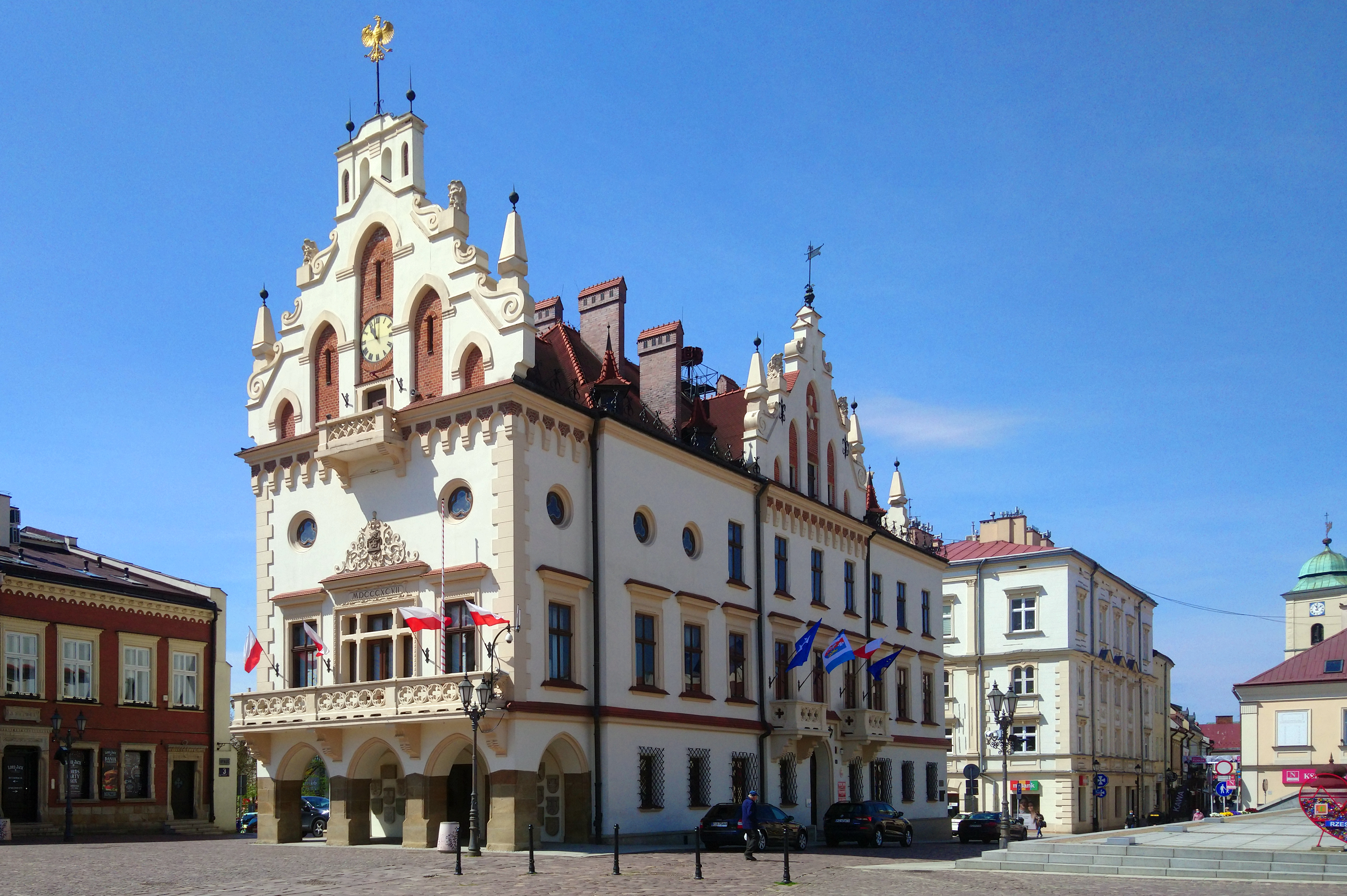 ✦ 79
✦ 79The housing requirement and how people get it wrong
The accommodation piece looks procedural until you're the one holding an Airbnb confirmation at the window and getting turned away. What the process actually wants is a lease in your name, ideally with the landlord cooperating on the registration side, because your address needs to be something you can register locally, not just something you can point to. A short-term rental booked for the appointment window, or a friend's spare room used as a mailing address without any formal agreement, creates a gap between what you've declared and what you can actually document if asked.
The sequencing mistake is treating housing as a formality to sort out after the visa is granted. It isn't. Landlords in Poland vary widely in how willing they are to put a tenant's name on paperwork that gets used for immigration purposes, and some flatly won't do it for a lease under a year. Finding that out after you've already committed to a short lease, or after you've paid a deposit on a place whose landlord turns out to be unregistered themselves, costs weeks. Line up housing that both works for your life and satisfies the paperwork before you're deep into the rest of the application, because unwinding a housing decision mid-process is far more disruptive than unwinding almost anything else in the file.
There's also a quieter issue worth sorting early: matching the address on your lease to the address you use everywhere else in the application, from the business registration to the health insurance policy. Inconsistent addresses across documents read as sloppiness at best and as something worth a second look at worst.
What actually happens after you land
Approval isn't the finish line, and the space between "the visa is approved" and "I am holding a real residence card" is where a lot of applicants lose momentum they didn't know they needed. There's no medical exam and no interview built into this process, which keeps the early stages lighter than what applicants moving to some other countries deal with, but that ease doesn't extend to what happens once you're actually in Poland. You still need to finalize the business registration in person, enroll in health insurance that meets the requirement, and get your address formally registered, and none of that happens automatically just because a permit was issued somewhere upstream.
The gap that catches people is temporal. The residence card itself takes time to produce and issue, and until it's in hand, you're operating on documentation that proves you're allowed to be in the process, not documentation that functions the same way a physical card does for things like renting long-term, opening certain services, or dealing with local bureaucracy that wants to see the card itself. Plan the weeks immediately after arrival as an administrative sprint, not a settling-in period. Health insurance needs to be active and provable, not something you're still shopping for. The business registration needs to be operating cleanly, invoices going out, nothing dormant, because a permit built on paper self-employment that shows no activity in its first months looks bad at renewal time even if nobody flags it immediately.
What the long-term path actually requires
Here's the part that changes how you should think about this whole route: this specific permit renews, but it does not itself convert into permanent residency. That matters enormously for how you plan the next several years. If your mental model is "get the freelancer permit, renew it a few times, end up with permanent status," that model doesn't match what this permit does on its own. Renewability gives you continuity, the ability to keep living and working in Poland year over year without a hard expiration forcing a restart, but continuity and a path to permanent status are not the same thing here.
What this means practically is that anyone using this visa as step one of a longer settlement plan needs to treat the permanent residency question as a separate project, not an inevitability that falls out of enough renewals. It might mean a different permit category becomes relevant down the line, or it might mean permanent status was never realistically part of this particular track and citizenship-minded applicants need to weigh that against other EU options from the outset. Either way, don't build a five-year plan on the assumption that this permit quietly upgrades itself if you just keep renewing on schedule. Ask the question explicitly, before you've sunk two or three renewal cycles into an assumption nobody confirmed.
The call against the obvious alternative
The comparison most people are actually running in their head is Poland's self-employment route against one of the more marketed digital nomad visas elsewhere in Europe, the kind with a clean income threshold and a straightforward remote-employee framing. The honest answer is that which one wins depends on what you're optimizing for, and it's not close to symmetric.
If your income comes from a single US employer and you want the path of least resistance for proving it, a visa built explicitly around remote employment for a foreign company is going to ask you fewer uncomfortable questions than a route that wants to see you functioning as a genuine freelancer with multiple income streams. Poland's route fits better for someone who already operates like a freelancer, invoicing several clients, filing as self-employed, comfortable registering an actual business entity rather than just proving a paycheck. The administrative footprint here is lighter in some respects, no medical exam, no interview, a modest application fee around $90 as of 2026, and dependents can come with you, which isn't universal across comparable options.
Where it loses is the long-term picture. If permanent residency or a citizenship track is the actual goal and not just a place to live for a few years, a visa that explicitly builds toward that status is doing something this one isn't designed to do. Choose Poland's self-employment permit because the day-to-day fit is right, the cost of living works, and EU access matters to you, not because you've assumed it quietly leads somewhere it doesn't.
Work Permissions
Application Steps
- 1
Research
Verify all requirements for this visa type and country
- 2
Gather documents
Obtain all required documents (passport, financial statements, health insurance, etc.)
- 3
Complete application
Fill out the official application form
- 4
Submit application
Submit all documents to the appropriate consulate or online portal
- 5
Pay fees
Complete payment of application and visa fees
- 6
Attend interview
If required, attend any scheduled interviews
- 7
Wait for decision
Processing times vary from weeks to months
- 8
Travel and activate
Once approved, travel to the country and complete any activation requirements
Compare this visa
Curated comparisons that include this route.
Frequently Asked Questions
Click any question to expand the answer.
Ready to Apply?
Work with trusted visa specialists who handle the paperwork so you can focus on your move.
Get help with this visa →* We may earn a commission if you apply through our link
At a Glance
Last verified: July 15, 2026