Min Monthly Income
$1,500
Processing Time
1 wk
Difficulty
Easy
Duration
12 months
Overview
Mauritius’ Premium Visa targets remote earners and retirees who can prove at least USD 1,500/month in income, with a minimum annual savings requirement of USD 18,000 (as of 2026) and no investment requirement. Income must come from abroad: remote work for non‑Mauritian clients or employers, foreign business ownership, or passive income streams like rental income and portfolio dividends held outside Mauritius. Social Security and foreign pension income do not count toward the official threshold in the program rules, and local employment is explicitly off-limits with a 0% local income cap.
The visa is issued for 12 months, renewable, with an no application fee and renewal cost of USD 0/year. Official guidance classifies it as a long-stay tourist status rather than a residence permit, so there is no separately stated physical presence requirement in the immigration rules; however, the visa is designed for people actually staying in Mauritius, not parking the status while living elsewhere. You can enter initially on a tourist visa and convert, or apply from abroad once you meet the USD 1,500/month test and other criteria like accommodation and travel/health insurance.
There is no path from the Mauritius Premium Visa directly to permanent residence or citizenship: program rules lists “Leads to PR: No” and does not disclose any years-to-PR or years-to-citizenship timeline. Long-term residents who want permanence must later switch into an Occupation Permit, a Residence Permit as Retired Non‑Citizen, or an investor category; the Premium Visa can be renewed, but relying on it for a 10-year relocation means accepting ongoing temporary status and the risk that policy terms could change between renewals.
Administrative friction is low, reflected in a Bureaucracy Score of 1.2125/5 and no application fee. No apostille, FBI background check, medical exam, or in‑person interview is required, and you do not need a local bank account to qualify. The main work is assembling clean documentation: proof of at least USD 1,500/month in foreign income, health insurance covering your full intended stay, and travel bookings, all submitted via the online Economic Development Board portal.
This setup makes most sense if, for example, you earn USD 3,000–6,000/month from a foreign employer or client base, plan to spend 6–12 months a year in Mauritius, and don’t need a PR or citizenship track. It is a poor fit if your only predictable cash flow is USD 1,400/month in Social Security or pension income that you cannot supplement to reach the USD 1,500/month threshold, or if your core plan is to work for a Mauritian employer.
Eligibility Requirements
Any nationality can apply for the Mauritius Premium Visa in principle under the current framework, with visa rules listing nationality restrictions as “all” and EDB guidance allowing applicants from non-listed countries to apply after entering on a tourist visa. Applicants holding passports from sanctioned or high-friction jurisdictions such as Iran, Syria, North Korea, or heavily sanctioned Russian or Belarusian banks can run into airline boarding issues, bank compliance blocks, or consular reluctance even where the rules do not formally bar them. Before you assemble documents or book nonrefundable tickets, confirm your eligibility and mode of application directly with Mauritius’ Passport & Immigration Office and the Economic Development Board, using their official sites and contact channels.
Min Income
$1,500
Min Savings
$1,500
Min Age
18 yrs
practical
Duration
12 months
Physical Presence
None required
Min Lease
6 months
Remote Work / Freelance · Passive / Investment Income · Business Income
1099 Contractor · Self-Employed · Business Owner
Max 0% from local sources
+100% per adult · +33.33% per child
Requirements Checklist
0 of 13 documents in hand
0%Request these while the slow items are in progress.
You only need these on the day you submit.
How and where to apply
Applications are submitted fully online via the Economic Development Board portal at edbmauritius.org/premium-visa, free of charge. You can apply from abroad (issued for 1 year starting on arrival) or in-country while on a valid tourist visa. Open to all nationalities; those not on the pre-approved list enter as tourists first.
Tax Information
Local tax regime and what it means for you
Mauritius applies a resident tax regime, and the Premium Visa sits awkwardly between visitor and resident status. Public EDB guidance clarifies that Mauritian-sourced income of a Premium Visa holder (for example, salary for work actually performed in Mauritius) is taxable, while foreign earnings spent in Mauritius via foreign debit/credit cards are not treated as remitted. visa rules, however, flags the regime simply as “resident,” meaning that once you are a tax resident, Mauritius can tax your worldwide income, with specific carve-outs like the card-spend treatment.
For a remote salary paid by a US, Canadian, or European employer into an offshore account, the core question is whether you cross the tax-residence day threshold and whether you formally remit those funds into a Mauritian bank. ETF dividends, US brokerage interest, and rental income from property abroad are foreign-source; under the published Premium Visa FAQ, those become taxable in Mauritius when you bring them into a local bank account, unless you declare that tax has already been paid in your country of origin or residence. Pension and Social Security-type income is not recognized for visa qualification purposes in visa rules, but once you are a resident, those inflows can be taxable if remitted.
On capital gains from foreign investments (for example, selling index funds or ETFs in a US brokerage), Mauritius historically does not impose a separate capital gains tax; gains are generally not taxed as such. For Premium Visa holders who are tax-resident, the controlling concept is remittance and characterization: gains kept abroad and accessed by card spend fall outside the remittance rule, while lump sums wired into a Mauritian bank could be scrutinized. Mauritius does not levy a capital gains tax on individuals, so foreign portfolio gains are generally not taxable.
Tax residency is mainly day-count based. The Premium Visa FAQ states that anyone staying more than 180 days in a calendar year needs a Premium Visa rather than a mere tourist visa, and Mauritius uses a 183-day threshold in many contexts to determine residency. Practically, if you spend over about 183 days in Mauritius in a tax year, you should assume tax residency, with registration at the Mauritius Revenue Authority, a local Tax Account Number, and annual filing obligations. Local filing deadlines and registration steps for Premium Visa holders align with general individual taxpayer rules.
A US-Mauritius tax treaty exists. That means you cannot assume a double tax treaty or totalization agreement will eliminate US tax on your Mauritian income streams or protect US Social Security and dividends; you can plan with treaty relief available, subject to verifying current treaty details via official US and Mauritian sources.
For US Citizens and Green Card Holders
US tax obligations continue regardless of your Mauritius immigration status. A Premium Visa and even Mauritian tax residency do not disconnect you from the IRS. Three main US tools matter: the Foreign Earned Income Exclusion (FEIE), Foreign Tax Credit (FTC), and foreign asset reporting.
FEIE (Form 2555) applies only to earned income (remote salary, self-employment, consulting) up to USD 132,900 as of 2026. It does not cover ETF dividends, capital gains, IRA/401(k) distributions, rental income, or Social Security. Given that the Premium Visa encourages you to live in Mauritius for 6–12 months, the Physical Presence Test (330 full days abroad in any 12‑month period) is workable if you spend almost the whole year outside the US and do some travel beyond Mauritius; the Bona Fide Residence Test is also available.
The Foreign Tax Credit (Form 1116) is valuable only if Mauritius actually taxes a given income stream at a meaningful rate. If you structure your affairs so foreign income stays offshore and is spent via cards, your Mauritian effective rate on that income can be close to 0%. In that case, the FTC gives you little or no relief; you will owe full US tax on that income. Conversely, if you become Mauritian tax-resident, wire income into a local bank, and pay Mauritian income tax, those payments can generate FTCs to offset US tax on the same income, subject to Form 1116 limitations.
FBAR (FinCEN 114) kicks in if the aggregate value of all non-US accounts (including any Mauritian bank accounts you open, plus foreign brokerage or fintech accounts) exceeds USD 10,000 at any point in the year. This is separate from FATCA Form 8938, which has higher thresholds but overlaps in scope. The Premium Visa does not require a Mauritian bank account, but many long-stayers open one for convenience; that alone is enough to trigger FBAR if combined balances cross USD 10,000, with non-willful penalties starting at approximately USD 16,700 per violation as of 2026.
For sustainable tax planning, you need two professionals: a US CPA who specializes in expat taxation and understands FEIE, FTC, FBAR, and FATCA in the context of remittance-style jurisdictions, and a Mauritius tax advisor who can guide you on residency status, remittance planning, and local filings. The USD 1,500–3,000 you spend in year one on this combined advice often pays for itself through avoided penalties, correct elections, and a structure that aligns Mauritian rules with your US obligations.
Living in Mauritius
COL Index vs NYC
35.6
Monthly Cost (excl. rent)
$586
1BR Rent (City Center)
$460
Safety Index
62.4
Healthcare Index
60.1
Quality of Life Index
138.9
Time Zone
UTC+04:00
Capital
Port Louis
Population
1.3M
Official Languages
English, French, Mauritian Creole
Avg Internet Speed
96 Mbps
Public Transit Quality
Good
With a budget covering rent and living costs, you'd need roughly $1,046/mo for a comfortable single-person lifestyle in Mauritius.See how far your money goes →
🏙️ Best Cities in Mauritius for Digital Nomads
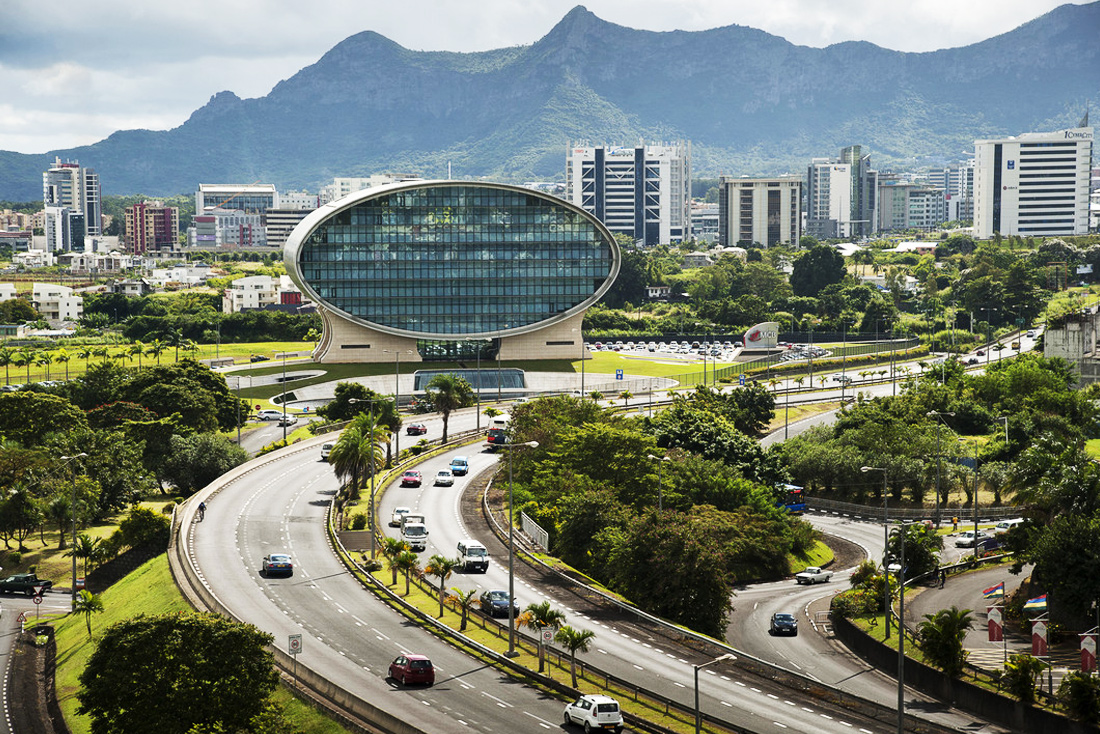 ✦ 75
✦ 75 72
72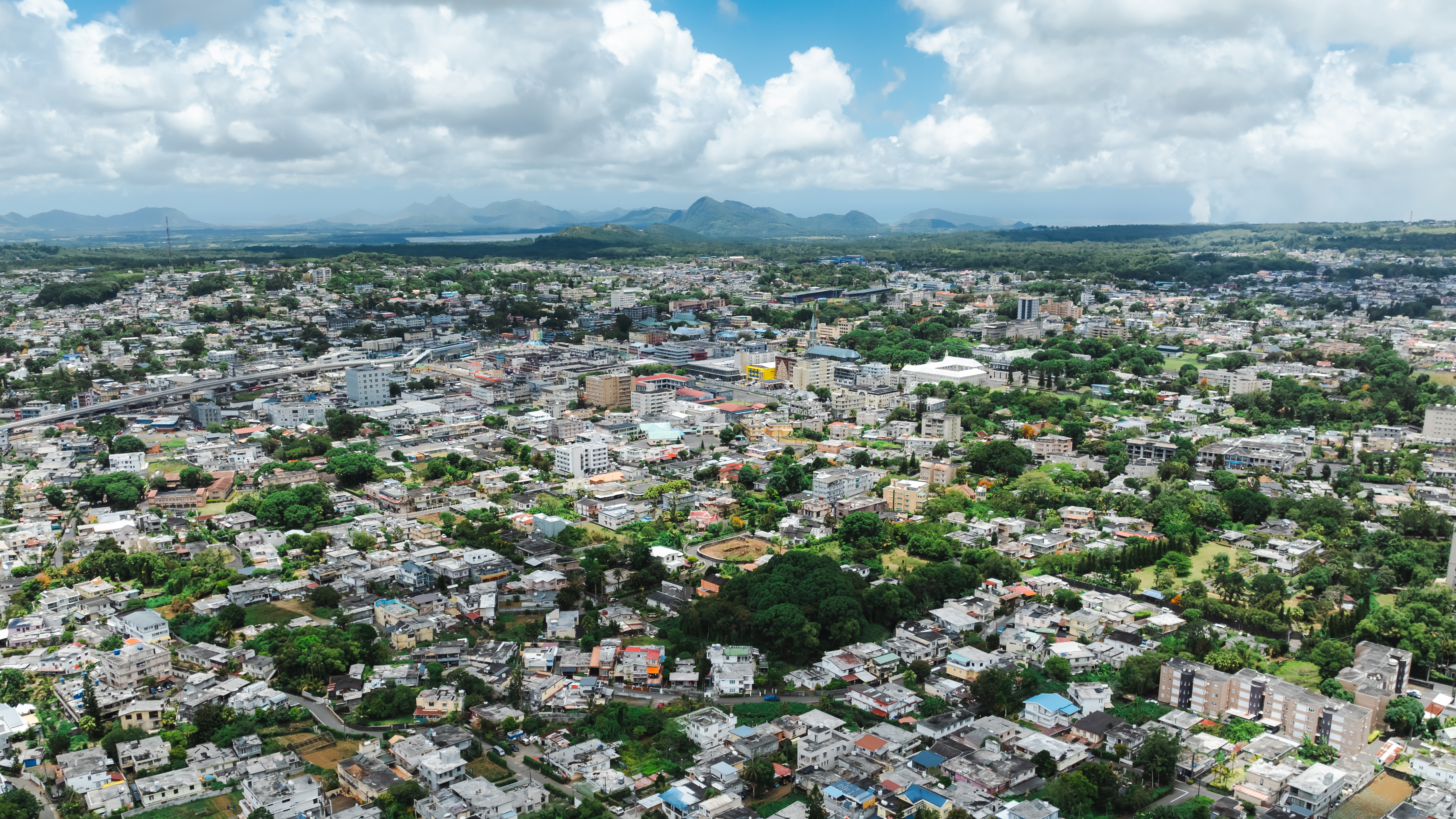 70
70Getting the income documentation story straight before applying
The application asks for bank statements or an attestation showing you meet the cost of staying in Mauritius. What that really asks for is a narrative. A single account with steady monthly credits of USD 1,500 does the trick. If you’re self-employed and your income lumps, the annual savings route becomes the easier story: USD 18,000 sitting untouched across statements, not broken into staged-looking transfers right before the screenshot. Salary slips from a single employer are simplest. Multiple clients, uneven payments, and money moving between accounts can still work, but the more you make the officer reconstruct your income, the more scrutiny you buy.
Dependents complicate the math. Adding a spouse doubles the income requirement. Adding a child adds a third more. A family of three needs to show a consistent flow of around USD 2,833 a month or the equivalent annual savings. The low baseline tempts couples to treat the premium visa as a cheap family sabbatical, but the aggregated amounts are not trivial when you have to document them clearly for a border that doesn’t know your cost of living.
Something that catches people off guard: pension income isn’t a recognized category. Retirees counting on distributions or Social Security need to use savings or other verifiable funds. If your life runs on predictable draws from a brokerage account, you want statements that show a balance, not just a history of withdrawals that could stop.
The accommodation requirement that trips up otherwise ready applications
You can’t finesse this with a flexible booking and a promise to figure it out later. The premium visa wants proof of housing for the entire period you intend to stay. If that period is a year, the rental agreement needs to cover a year, or at minimum six months (the floor for leases that count) with a plausible plan for the remainder. Hotel confirmations work only if they cover the full stretch, which almost no one does financially for twelve months.
The invitation letter route looks simpler on paper, but a host in Mauritius has to copy their own ID and be reachable for verification. A friend of a friend who hasn’t actually cleared space for you burns the application the moment the officer senses the arrangement is fictional. The safest path is a signed lease with a start date that aligns with your stated arrival, paid to the point that a receipt exists, and an address that appears in a contract, not a WhatsApp message.
Failure here is often a sequencing problem. Applicants secure the ticket and insurance first, then scramble for proof of stay. Reverse it. Lock in the accommodation early so you can book a return flight that matches the exact period you committed to, and buy travel and health insurance for that same window without gaps. An insurance policy that expires a week before your return ticket gets the same kind of side-eye a missing rental receipt does.
After approval, before you feel settled
The visa comes through online, often in under a week. You land, clear immigration, and that’s it. There’s no separate residence permit to collect, no in-person appointment to keep, no further fee to pay. For a US citizen accustomed to the bureaucratic choreography of European long-stay visas, the absence of follow-up steps is disorienting. The year starts ticking from the day you arrive, and the document you printed at home is the real thing.
What happens instead is the quiet conversion of your status into something with tax teeth. The premium visa classifies you as a tax resident. That doesn’t wait until you’ve been in the country 183 days; it attaches from day one by the terms of the visa itself. You’re expected to register with the Mauritius Revenue Authority, obtain a Tax Account Number, and file a return covering your worldwide income for the year you’re present. The tax section elsewhere on this page details the mechanics. The point here is that the administrative calm after landing masks a series of obligations that most digital nomads haven’t researched before they apply. Missing the registration window isn’t a technicality; it’s the kind of oversight that turns a free renewal into a headache.
A detail worth your attention now: the return ticket requirement. If you planned to stay the full twelve months, you showed a ticket out at the end. The day before that flight, you can renew the visa for free and the ticket problem disappears. But if you change your mind at month nine, the exit document you filed doesn’t tie you down. The visa carries no minimum physical presence, and leaving early burns nothing but the remaining months.
The renewable forever that never becomes permanent
Renewal costs nothing. There’s no cap on how many times you can extend. In theory, you can spend a decade on premium visas, filing taxes each year, never breaking the chain. In practice, the visa never leads to permanent residency. It’s a holding pattern, not a bridge. That distinction matters most for people who drift from digital nomadism into something that looks like a life: a local partner, business interests, kids approaching school age. When that shift happens, the premium visa becomes the wrong tool, and there’s no easy switchover from within the program.
The absence of a PR path also means you build zero credits toward social security or a longer-term status. You are, every year, a temporary resident with a renewal guarantee that rests entirely on the policy staying unchanged. Governments tweak remote work visa rules without much warning, and a program that charges nothing to renew leaves itself a lot of room to alter qualifying criteria later. If your timeline extends beyond a couple of renewals, you need to assume the application you’ll fill out in year four won’t be identical to today’s.
The judgment call against the obvious alternative
The conversation that leads to Mauritius usually starts with a list of warm-weather nomad visas that don’t tax worldwide income. That list is short once you eliminate options with high income floors or caps on stay length. Compared to a jurisdiction offering territorial taxation, the premium visa looks like you’re paying a USD 1,484 entrance fee for the privilege of funding the Mauritian treasury. For someone who earns well and never sees a tax bill in their current setup, that alone kills the idea.
But the calculus shifts for the person who needs a long, stable base and doesn’t mind paying income tax somewhere. If you’re already a US taxpayer and using foreign tax credits, Mauritian tax residency might not be a net loss after credits apply. Combined with low local costs, no minimum stay days, and a straightforward renewal, the visa can work better than chasing zero tax in places with housing shortages or opaque bureaucratic tangles. The decision isn’t about which country looks better on a spreadsheet; it’s about which lifestyle you’ll actually sustain for a year. The premium visa asks you to accept a financial structure that feels expensive up front, then gets out of your way. The alternative often asks you to keep proving you deserve to stay every few months. For long enough stays, the upfront cost pays for the silence.
Work Permissions
Application Steps
- 1
📋 Research eligibility and requirements
1-2 days
- 2
📄 Gather identity and financial documents
1-2 weeks
- 3
📄 Secure accommodation and insurance
3-7 days
- 4
📬 Complete online application form
1 day
- 5
⏳ Submit and await approval
2-6 weeks
- 6
🏛️ Arrive or continue stay in Mauritius
- 7
📋 Plan for renewal if staying longer
2-6 weeks
This visa requires proof of health insurance. Compare international plans before you apply.
Compare health insuranceWe may earn a commission at no cost to you.
Compare this visa
Curated comparisons that include this route.
Frequently Asked Questions
Click any question to expand the answer.
Ready to Apply?
Work with trusted visa specialists who handle the paperwork so you can focus on your move.
Get help with this visa →* We may earn a commission if you apply through our link
At a Glance
Last verified: October 9, 2026