Application Fee
$91
Difficulty
Difficult
Duration
3 months
Overview
Luxembourg’s investor residence route does not have a monthly income floor in the published requirements: the qualifying threshold is an investment of 587000 USD, and the eligible investment types are business or capital. The government page also shows the non-EU investor routes in euro terms: EUR 500,000 in an existing Luxembourg company or a new business, EUR 3 million in a management and investment structure, or EUR 20 million as a bank deposit. A reader living on ETF dividends, rental income, or pension distributions does not qualify on income alone; the file turns on the investment and the supporting evidence, not a passive-income minimum.
Residence is renewable for 60 months at a time, and the max consecutive absence is 180 days. That makes this a residence-by-application path for people who can actually spend meaningful time in Luxembourg or at least avoid disappearing for more than six months in a row. No separate physical presence requirement has been published beyond that absence cap, so the key planning number is 180 days, not a loose “split time” lifestyle assumption.
This route does not lead to permanent residence, and no timeline to permanent residence or citizenship is published. Processing time is 12 weeks. The friction is in the paper trail and the investment approval: health insurance is required, but apostille is required, FBI background check is not, medical exam is required, and interview is not. The official procedure still runs in two steps: a temporary authorisation to stay before entry, then a declaration of arrival in the commune within 3 days and a residence permit application after arrival.
This makes most sense if you already have EUR 500,000 to EUR 20 million allocated for a Luxembourg investment and want a 60-month renewable residence file with no publicly specified income test. It is a poor fit if you want a path that ends in PR or citizenship on a clearly stated timetable, because the published requirements do not give one.
Eligibility Requirements
EU citizens do not need this visa; the route is for non-EU, third-country nationals who want to invest in Luxembourg and stay more than 3 months. That means Americans, Canadians, Australians, British citizens, and other non-EU passport holders are in the target pool, while French, German, Dutch, Spanish, and other EU nationals are outside it because they already have free movement rights.
EEA nationals from Norway, Iceland, and Liechtenstein are also outside the visa’s target pool because they sit inside the EU free-movement framework for residence purposes. Switzerland is not EU or EEA, so Swiss nationals fall on the non-EU side for this program and can use the investor route if they meet the investment conditions. Post-Brexit UK passport holders are also non-EU and therefore belong in the eligible non-EU group, not the EU-free-movement group.
If someone holds dual citizenship and one of those passports is EU, the EU passport is the correct document to use; it bypasses this investor residence route entirely. That is faster and cheaper than filing as a third-country national, and it avoids the investor approval steps that Luxembourg requires for non-EU applicants. The official authority to verify against is Guichet.lu / Luxembourg’s General Department of immigration before assembling the file.
Application Fee
$91
Min Age
18 yrs
Duration
3 months
Requirements Checklist
0 of 15 documents in hand
0%These take the longest, so start them first.
Request these while the slow items are in progress.
You only need these on the day you submit.
Extra requirements for this visa
- Apostille required on official documents
- Medical examination required
How and where to apply
Apply online via Guichet.lu portal for investment project opinion from Ministry of Finance, then submit residence permit application to Luxembourg immigration authorities. Third-country nationals typically start from abroad. No in-country switch noted from tourist visa.
Tax Information
Local tax picture Luxembourg uses a resident tax regime: once you become a tax resident, Luxembourg taxes you on your worldwide income. That matters for a FIRE portfolio built from foreign ETF dividends, rental income from property abroad, and pension distributions, because those items sit inside the resident tax net rather than outside it. Remote salary from work performed while resident also falls into the local system; there is no special exclusion for foreign-source earned income under Luxembourg's resident tax regime. No special preferential tax regime applies specifically to this residence class.
Capital gains in Luxembourg depend on holding period: gains on assets held under six months are taxed as ordinary income at rates up to 42%, while gains on assets held over six months are taxed at roughly half that rate, around 21%, with a EUR 500 annual exemption. Luxembourg taxes residents on worldwide capital gains under this resident regime, and the exact treatment of foreign ETF or index-fund gains should still be checked against the asset, holding period, and local filing position with a Luxembourg adviser.
Luxembourg tax residency is triggered by spending 183 days or more in the country in a year; visa grant alone does not create tax residence. Local filing requirements follow the resident regime itself, alongside the need to obtain health insurance for the immigration file. Luxembourg and the US have an income tax treaty and a 1993 totalization agreement, which govern dividend relief, Social Security coverage, and totalization benefits on the treaty side.
For US Citizens and Green Card Holders - FEIE (Form 2555) covers earned income only: remote work, self-employment, and consulting. As of 2026, the limit is $132,900. It does not shield dividends, capital gains, pension distributions, or Social Security. - FTC (Form 1116) helps when foreign tax is actually paid. On a resident tax regime, it can offset Luxembourg tax on income that Luxembourg taxes, but it does nothing for income streams that face no foreign tax or no local tax. - FBAR (FinCEN 114) is triggered when foreign financial accounts exceed $10,000 at any point in the year, separate from FATCA Form 8938. If you hold a local Luxembourg bank account, that account belongs on the FBAR if the aggregate threshold is crossed.
This file usually calls for two professionals in year one: a US CPA who handles FEIE, FTC, and FBAR, and a Luxembourg tax adviser who can map resident filing and any income classification issues. On a cross-border portfolio, $1,500–$3,000 in first-year guidance is often cheaper than fixing missed disclosures later.
Living in Luxembourg
COL Index vs NYC
64.8
Monthly Cost (excl. rent)
$1,233
1BR Rent (City Center)
$1,973
Safety Index
65.8
Healthcare Index
75.2
Quality of Life Index
220.1
Time Zone
UTC+01:00
Capital
Luxembourg
Population
632.3K
Official Languages
German, French, Luxembourgish
Avg Internet Speed
341 Mbps
Public Transit Quality
Excellent
With a budget covering rent and living costs, you'd need roughly $3,206/mo for a comfortable single-person lifestyle in Luxembourg.See how far your money goes →
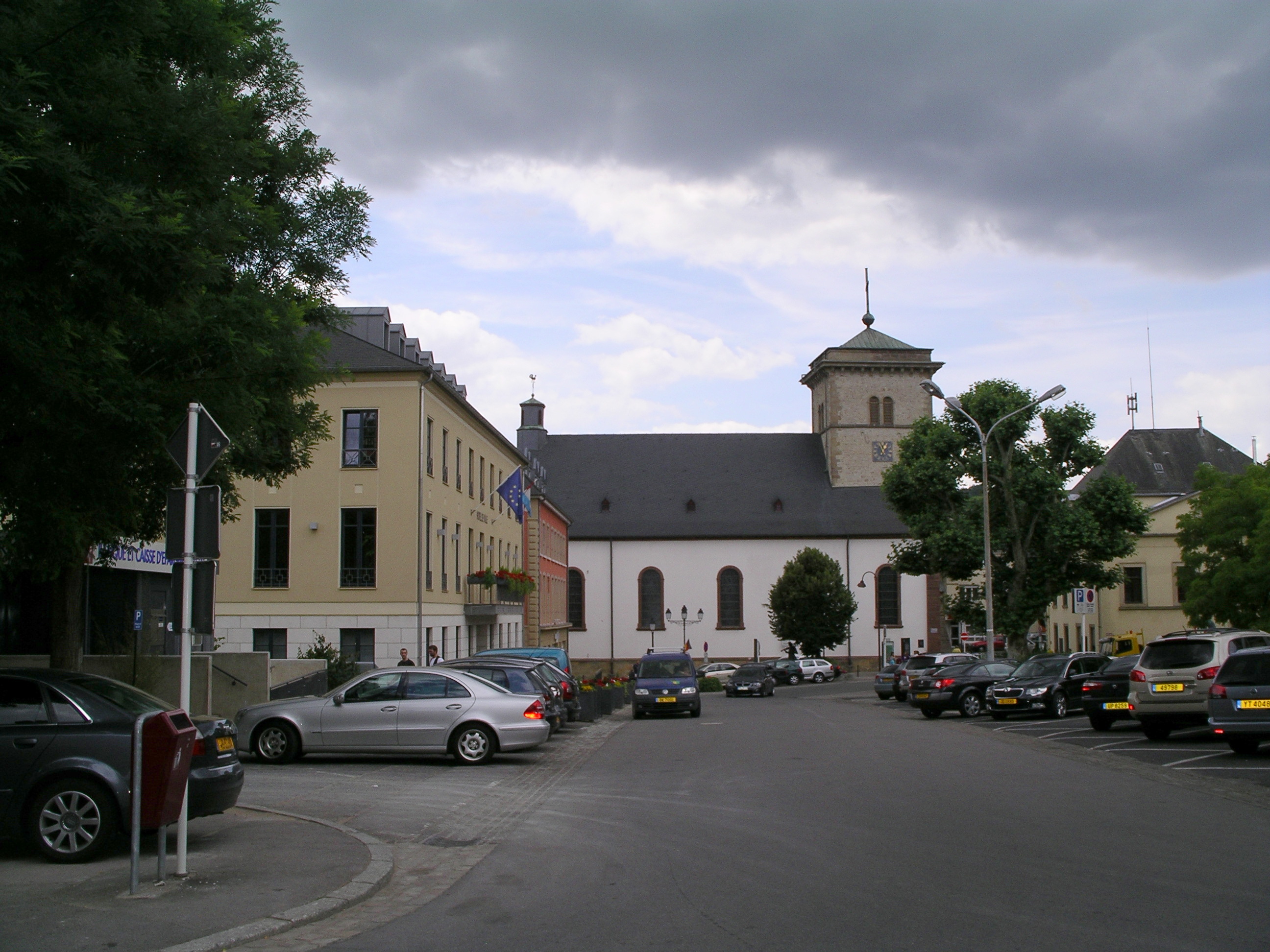
🏙️ Best Cities in Luxembourg for Investors & FIRE Seekers
 72
72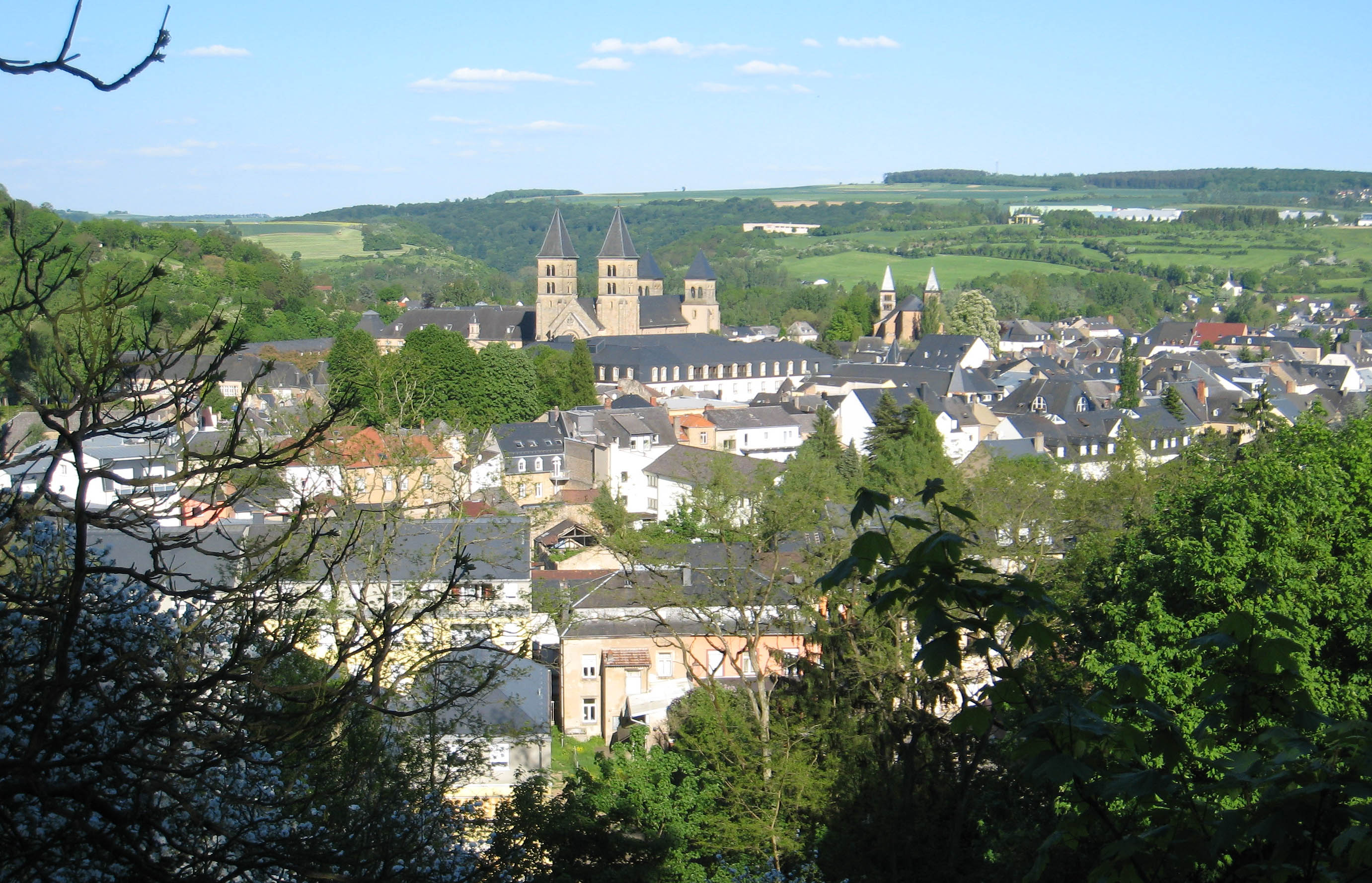 63
63 62
62 70
70The housing requirement and how people get it wrong
Proof of suitable housing sounds like a formality until you're trying to sign a lease in Luxembourg from abroad, sight unseen, in a rental market where landlords routinely want a tenant who can view the property, sign in person, and pay several months upfront. The requirement exists because the government wants evidence you have somewhere real to live, not evidence you found a workaround. A rental agreement or property deed submitted with the application needs to hold up if an official actually checks it.
The common mistake is signing a twelve-month lease before the residence permit is anywhere close to approved, on the theory that having the lease in hand strengthens the application. It can backfire two ways. If the application is delayed past the twelve-week minimum processing window, which happens often enough that it shouldn't be treated as an edge case, you're paying rent on an empty apartment. If it's denied, you're stuck breaking a lease in a market that doesn't make that easy. The better sequence is a short-term or corporate housing arrangement, three to six months, that satisfies the accommodation requirement on paper while leaving room to find something permanent once you're actually on the ground and can view properties yourself.
There's also a mismatch worth sitting with before committing to any lease at all: an accommodation good enough to satisfy an immigration officer isn't necessarily one you'd want to live in for a year. Luxembourg City rents are high enough that people default to the first place that clears the paperwork bar, then discover after arrival that a slightly longer commute or a different commune would have made more financial sense. Nothing about the application forces that mistake. It just doesn't warn against it either.
What happens after the visa gets approved
Approval of the long-stay visa is not the same as holding a residence permit, and the gap between the two trips people up because it involves steps that look bureaucratic but aren't optional. After the Ministry of Finance opinion and the visa approval, the actual sequence runs through Guichet.lu for the initial filing, then a declaration of arrival with the local commune once you're physically in Luxembourg, then the residence permit application itself, backed by the €80 (~$91) fee paid to the designated government account, as of 2026.
The part that catches people off guard is the initial permit duration. It runs three months. That's not a typo and not a placeholder, it's the actual first grant, which means the renewal conversation starts almost immediately after arrival rather than a year or two down the line. Anyone budgeting their first year around a single "get the permit and relax" milestone is planning around a milestone that doesn't exist here. The commune registration has to happen promptly after landing, and the health insurance and medical exam requirements need to be squared away before or immediately upon arrival, not treated as something to handle once you're settled. Missing the declaration of arrival window, or showing up without health coverage already arranged, stalls the residence permit step even after the visa itself cleared without issue.
None of this is presented as a single continuous approval. It's a chain of separate government touchpoints, each with its own document requirements, and the visa clearing the first one doesn't guarantee smooth passage through the rest.
What the long-term path actually requires
Citizenship eligibility lands at five years, and that number is worth taking at face value rather than assuming it converts automatically from continuous residence. What actually threatens that timeline is less dramatic than people expect: it's the presence rules quietly working against you in the background. Luxembourg's resident tax regime assumes you're actually resident, which in practice means spending something like 183 days a year in the country, and separately, the permit itself can be jeopardized by a single absence stretch of more than 180 consecutive days. Those are two different rules doing two different jobs, one about tax residency and one about maintaining the permit itself, and it's entirely possible to violate one without noticing you've violated the other.
The mistake people make is treating "I have a residence permit" as license to keep working the way they always have, splitting time between Luxembourg and wherever their business or family still is. A remote consultant who spends four months at a stretch back in the US, then returns, might feel like they're maintaining the relationship with Luxembourg. On paper, that absence stretch alone can undercut the very continuity the five-year citizenship clock depends on. There's no forgiveness built into these thresholds for people who are otherwise compliant, current on renewals, current on the €80 permit fee, current on health insurance. Presence is presence, and it gets counted literally.
What isn't worth assuming is that the residence permit converts into some fixed permanent card at a defined midpoint. It renews, and it needs to keep renewing, and the five-year mark is better understood as the point where naturalization becomes possible rather than a point where anything about the permit itself changes shape.
The capital-versus-income decision
Anyone earning $4,000 to $10,000 a month from US clients or an employer, weighing this against a straightforward income-based residence visa somewhere else in Europe, should be honest about what's actually being compared. This route asks for roughly $570,930 in committed capital, as of 2026, sitting in a Luxembourg-approved vehicle, plus a residence process with real bureaucratic weight behind it, a Ministry of Finance opinion, apostilled and translated documentation, a housing requirement that has to hold up on paper before you've seen the apartment. An income-based visa elsewhere typically asks for none of that. It asks for proof of monthly earnings and a bank balance, and the money keeps working for you rather than sitting locked into an investment vehicle to satisfy a residency condition.
The case for Luxembourg over an income-based alternative isn't really about ease of entry, because on that axis it loses. It's about what you get once you're in: a foothold in one of the most stable financial jurisdictions in the eurozone, a path to citizenship at a defined five-year mark, and a country whose passport and residency carry weight that a digital-nomad-style visa in a cheaper, more tourist-oriented country generally doesn't. If the goal is minimizing friction and cost while living somewhere pleasant on a remote income, this isn't the right door. If the goal is parking capital somewhere durable while building toward EU citizenship, and the $570,930 doesn't represent money you need working aggressively elsewhere, the calculus flips.
The honest version of this decision has less to do with country comparison charts and more to do with what the capital is for. Money that's otherwise sitting in a brokerage account earning modest returns has a different opportunity cost than money that would otherwise be reinvested in a growing business. Only one of those situations makes the Luxembourg route look like the obvious move.
Work Permissions
Application Steps
- 1
📋 Research investment project
1-2 weeks
- 2
📄 Gather core documents
2-4 weeks
- 3
📬 Apply for investment opinion
2-4 weeks
- 4
📬 Submit residence permit application
1 day
- 5
⏳ Wait for processing
12 weeks
- 6
🏛️ Collect residence permit
Same day
- 7
🏛️ Register locally post-arrival
1-2 weeks
Compare this visa
Curated comparisons that include this route.
Frequently Asked Questions
Click any question to expand the answer.
Ready to Apply?
Work with trusted visa specialists who handle the paperwork so you can focus on your move.
Get help with this visa →* We may earn a commission if you apply through our link
At a Glance
Last verified: October 9, 2026