Min Monthly Income
$2,600
Difficulty
Moderate
Duration
180 months
Overview
Kuwait’s Residency by Investment hinges less on a fixed capital number and more on two realities: you must be an investor (real estate or business) and you must meet a personal income floor of about KWD 800, reflected here as USD 2,600/month. That KWD 800 benchmark comes from the Interior Ministry rule for sponsoring family, and ROC Citizenship confirms it as the functional income requirement. Social Security and foreign pensions are not recognized as qualifying income for this visa, so a FIRE retiree would generally need portfolio withdrawals or business income at or above USD 2,600/month to be comfortable, even though the exact savings or lump-sum investment minimums are not fixed by regulation.
On the investment side, Kuwait offers long stays, up to 180 months (15 years), through real_estate or business routes, but the there is no fixed investment threshold, and the authorities explicitly evaluate cases individually under Law No. 116 of 2013 and KDIPA. That means there is no published “buy a USD X property and get a visa” threshold. Instead, KDIPA and Interior look at project quality, sector, and job creation. For planning, 10-year tracks tend to map to real estate and 15-year tracks to business establishment, but you cannot rely on a hard number in official regulations the way you can in, say, Greece’s EUR 250,000–800,000 Golden Visa bands.
The visa grants a single residence term of up to 15 years and is renewable, with a listed renewal cost around USD 977/year. There is no path to permanent residency and no timeline to citizenship, so you should treat this as a long but ultimately temporary residence right, not a stepping-stone to a Kuwaiti passport. Local work as an employee is not permitted; you are limited to roles as owner or self_employed within your approved investment structure. That makes it suitable only if your USD 2,600+/month comes from abroad or from your own Kuwait-licensed venture, not from a local payroll job.
Administrative friction is relatively low by Gulf standards: no apostille, no FBI background check, no medical exam, and no interview are listed as requirements, despite Kuwait’s reputation for tight immigration control. Health insurance is mandatory and must remain in force for the entire residence period, and you will need to document your foreign income stream clearly enough for Interior to be satisfied that you meet the USD 2,600/month threshold without relying on Social Security or traditional pensions. Processing time is not fixed, but third-party reports suggest that aligning KDIPA approval and Interior residence issuance is the real bottleneck rather than document collection.
This arrangement makes the most sense if you can show at least USD 2,600–4,000/month from foreign dividends, rental income, or business profits, are comfortable treating your capital as productive investment rather than a pure real-estate parking play, and value a 10–15-year Gulf base without needing PR or citizenship. It is a poor fit if your only predictable cash flow is USD 2,000/month of Social Security or pension payments that Kuwait does not recognize for this purpose, or if you want a clear, codified route to a second passport within a fixed number of years.
Eligibility Requirements
Any nationality can apply in principle for Kuwait’s Residency by Investment; there is no published exclusion list tied to this program. In practice, applicants from sanctioned or diplomatically sensitive states such as Iran, Syria, North Korea, Cuba, and in some periods Russia or stateless Palestinians, may encounter banking denials, security rejections, or refusal of security clearances even if the law does not explicitly bar them. Before assembling a full application and transferring capital, confirm current eligibility and any hidden security-screening constraints directly with the Kuwaiti Ministry of Interior (Residency Affairs) or through the Kuwait Direct Investment Promotion Authority (KDIPA), which are the competent authorities for investor residency.
Min Income
$2,600
Renewal Cost
$977/yr
Duration
180 months
Business Owner · Self-Employed
Requirements Checklist
0 of 9 documents in hand
0%These take the longest, so start them first.
Request these while the slow items are in progress.
You only need these on the day you submit.
How and where to apply
Applications are submitted through the Kuwait Ministry of Interior or designated online portals after making the investment. Foreign investors typically apply in-country or via Kuwaiti embassies/consulates following initial investment setup. Use KDIPA for business licensing prior to residency submission.
Tax Information
Local tax regime and what it means for you
Kuwait operates a territorial-style tax regime with no personal income tax on employment or passive income for individuals, and this applies regardless of whether you hold the Residency by Investment permit. For a visa holder, that means foreign remote salary, ETF dividends from a US or other foreign brokerage, pension distributions from abroad, and rental income from overseas property are not taxed in Kuwait under current practice. There is, however, a corporate income tax framework that applies to foreign corporate entities operating in Kuwait, so if your investment route involves a foreign-owned company under Law No. 116 of 2013, that structure, not you as an individual, may face local tax or withholding obligations.
On capital gains from foreign investments, such as selling index funds or ETFs held in a US brokerage, current Kuwaiti rules treat these as outside the local tax base for individuals, so gains are effectively exempt under the territorial approach. If your Kuwaiti investment is structured as a company, capital gains realized inside that local entity may be taxed at corporate rates, but this is a business planning question rather than a personal-income issue.
Tax residency in Kuwait is not triggered by the visa itself; it is driven by source of income and, for corporate taxpayers, by permanent establishment concepts. There is no widely applied 183-day individual income tax residence test because there is no personal income tax. Banks and other institutions can still ask for a Civil ID and treat you as locally resident for regulatory and reporting purposes even without an income tax system.
Local filing obligations for most investor-residents are minimal at the personal level: there is no annual personal income tax return. You will, however, need to maintain valid health insurance, renew your residence at a cost of about USD 977/year, and comply with any corporate registration and tax filing if you operate through a Kuwaiti entity. There is no tax treaty with the US, so there is no bilateral protection against double taxation, no treaty cap on withholding rates, and no totalization agreement to coordinate Social Security—US tax rules apply on your worldwide income without treaty relief.
For US Citizens and Green Card Holders
For US persons on Kuwait’s Residency by Investment track, the absence of Kuwaiti personal income tax does not reduce your US obligations. All worldwide income—remote salary, self-employment, dividends, capital gains, rents, pensions—remains fully reportable to the IRS. The Foreign Earned Income Exclusion on Form 2555 can shelter up to USD 132,900 (2026 limit, adjusted annually) of earned income only: remote W-2/1099 work, consulting, or self-employment tied to your labor. It does nothing for ETF dividends, capital gains, rental income, or pension payments, which are the core income streams for many FIRE and retiree investors using this visa.
To use FEIE, you must qualify under either the Physical Presence Test (330 full days outside the US in any rolling 12-month period) or the Bona Fide Residence Test, which requires establishing Kuwait as your primary, open-ended home. Because Kuwait’s visa can run 180 months and does not impose a maximum-consecutive-absence rule, many investors will rely on the Physical Presence Test while keeping flexibility to travel across the region.
The Foreign Tax Credit on Form 1116 adds little in Kuwait, because the local effective tax rate on foreign-source income is zero. With no personal income tax and no US–Kuwait tax treaty, there is no foreign tax to credit against US liabilities on your portfolio income, so your US tax bill on dividends, interest, and capital gains will look exactly as if you had never left the US. If you operate a Kuwait-registered company that pays corporate tax, credits may apply at the corporate or shareholder level, but that requires bespoke structuring advice.
FBAR (FinCEN 114) and FATCA Form 8938 still matter. Even though a local bank account is not required for this visa, many investors will open Kuwaiti accounts or hold balances in regional banks. Once the aggregate value of all non-US financial accounts exceeds USD 10,000 at any point in the year, you must file FBAR; Form 8938 thresholds start higher, based on filing status and residence, but often apply for investors with six-figure portfolios. Non-willful FBAR penalties start at a statutory USD 10,000 per violation, adjusted to about USD 16,700 as of 2026.
A US citizen using this visa should budget for two advisors: a US CPA experienced in expat taxation (FEIE, Form 2555; FTC, Form 1116; FBAR; Form 8938; and any GILTI/Subpart F exposure if you use a Kuwait or other foreign company), and a local Kuwait tax or corporate advisor to structure any KDIPA-approved business correctly. The USD 1,500–3,000 spent in year one on this combined advice usually pays for itself by avoiding FBAR and Form 5471 penalties and optimizing FEIE versus FTC elections for your specific income mix.
Living in Kuwait
COL Index vs NYC
40.4
Monthly Cost (excl. rent)
$780
1BR Rent (City Center)
$825
Safety Index
67.2
Healthcare Index
58.4
Quality of Life Index
160.6
Time Zone
UTC+03:00
Capital
Kuwait City
Population
4.3M
Official Languages
Arabic
Avg Internet Speed
274 Mbps
Public Transit Quality
Fair
With a budget covering rent and living costs, you'd need roughly $1,605/mo for a comfortable single-person lifestyle in Kuwait.See how far your money goes →
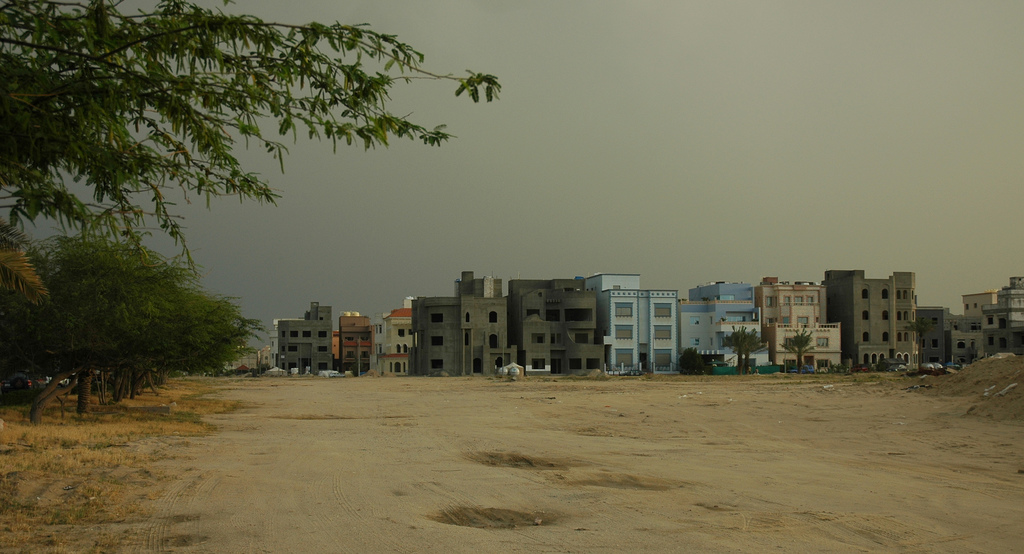
🏙️ Best Cities in Kuwait for Investors & FIRE Seekers
 60
60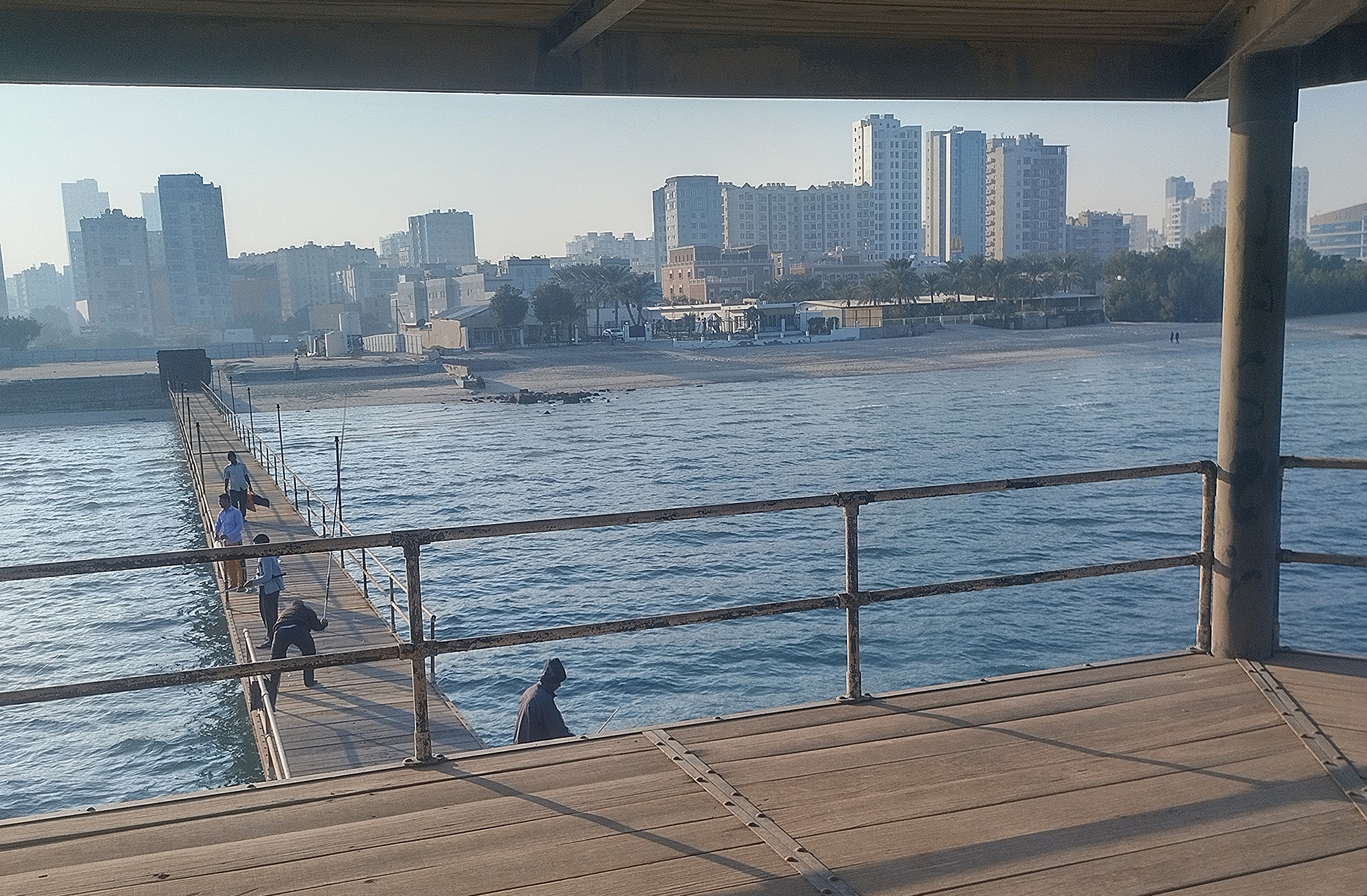 62
62 66
66Getting the income documentation story straight before applying
Most people applying to this program have never had to prove income and capital provenance at the same time, and that's where the paperwork usually goes wrong. Kuwait wants six months of bank statements showing personal financial stability, on top of a business plan that accounts for the capital you're putting into the investment entity. Those two things need to tell the same story. If your personal statements show a steady $6,500/month landing from two US clients and then a lump sum of investment capital appears out of nowhere in month five, a reviewer is going to ask where that money actually came from, and the business plan alone won't answer that.
The minimum personal income threshold sits at $2,600/month as of 2026, which is low enough that most remote earners clear it without thinking about it. The mistake is treating that number as the bar to hit rather than the floor. What actually gets scrutinized is the coherence between your personal cash flow, the capital injection into the company, and the corporate registration documents describing what that capital is for. A memorandum of association that describes a logistics operation but is backed by savings that look like six months of freelance design invoices is going to raise questions even if every individual document is technically valid.
Sequence the money before you sequence the paperwork. Get your personal accounts showing the pattern you'll need for six straight months before you start moving capital toward the Kuwaiti entity, not the other way around. Staged deposits, especially ones that show up right before the application window opens, read as exactly what they are to anyone reviewing financial history for a living. If you're funding the investment from savings rather than ongoing income, be ready to show where those savings came from too, since the business plan alone doesn't carry that weight on its own.
The accommodation requirement and where people get it wrong
The accommodation piece looks simple on the surface: hotel booking or a lease or ownership document. In practice it creates a sequencing problem that catches people who assume a Gulf residency works the way European ones do, where you can bank the housing document early and forget about it.
A hotel booking is fine to get through the initial submission, but it's a placeholder, not a housing plan. The people who run into trouble are the ones who treat the hotel reservation as satisfying the requirement indefinitely, then discover at renewal time that they need something more permanent tied to their actual presence in the country, ideally something that lines up with where the business is actually operating from. If your registered company address and your personal residence are two entirely disconnected properties with no relationship to each other, that disconnect eventually gets noticed, especially at renewal.
There's also a bank account wrinkle worth thinking through even though it isn't strictly required for the visa itself. Signing a lease in Kuwait, opening utility accounts, and generally establishing the kind of residential footprint that survives scrutiny at renewal usually goes more smoothly once you have some local banking relationship, even a modest one. Arriving on a hotel booking, securing the investment license, and then trying to find housing after the fact, all while your entity paperwork is already filed, tends to stretch out the timeline more than people expect. Line up housing that's truly tied to where you'll operate the business before you finalize the residency submission, not after you've already got a stamped visa in hand and a hotel bill you're trying to convert into something permanent.
What actually happens after you land
The order of operations here matters more than almost anything else in the process. The investment has to happen first. Business licensing runs through the Kuwait Direct Investment Promotion Authority, and that licensing step needs to be settled before the residency application goes in, not alongside it. Once the entity is licensed, the residency submission itself goes through the Ministry of Interior or its online portals, and depending on where you are in the process, that submission might happen in-country or through a Kuwaiti embassy or consulate before you've relocated at all.
The gap that trips people up is the one between having an approved investment structure and actually holding a residency permit in hand. These are handled by two different bodies with two different timelines, and there's no single office that owns the whole process end to end. Investors who assume that KDIPA approval automatically triggers residency processing on some predictable schedule are usually the ones who end up sitting in Kuwait on a business visa waiting for MOI paperwork to catch up with a company that's already operating.
There's no interview and no medical exam sitting in the middle of this, which removes two of the usual points where Gulf residency applications stall out. What's left is essentially administrative sequencing: license the entity, submit the residency paperwork with the right supporting documents attached to that now-existing entity, and then wait on an agency that moves at its own pace. Build slack into your relocation timeline for that handoff specifically, since it's the part of the process least in your control.
The long-term path and what renewal actually costs you
This is the part that changes how people should think about the whole program. There's no permanent residency track attached to this visa, at any point, regardless of how many renewal cycles you go through. That's not a technicality buried in fine print, it's the structural reality of how Kuwait treats foreign investors: you get a renewable, revocable presence tied to an active business, and it never converts into something more settled.
That reframes the renewal cost, which sits at $977, from a minor recurring fee into the actual price of staying in the game. There's no future point where that cost goes away because you've "arrived" at permanent status. Every renewal cycle is a fresh assessment of whether your business is still real, still operating, and still worth the residency attached to it. If the investment underperforms or you wind the entity down, the residency doesn't survive that decision.
For someone building a truly long-term life in the Gulf, that's worth sitting with before committing capital. This works well as a rolling business and tax-positioning tool for as long as the underlying investment makes sense, and Kuwait's territorial tax regime is a real part of that calculus, especially since there's no tax treaty with the US covering the arrangement. It doesn't work as a settlement strategy. Anyone using this as step one of an eventual citizenship plan is building on a foundation that doesn't lead there.
The judgment call against the UAE route
The UAE's long-term investor and golden visa programs are the obvious comparison point for anyone weighing Gulf options, and the honest answer is that the choice mostly comes down to what kind of business you're actually running and how much you value banking maturity over cost. Kuwait doesn't restrict this by nationality, which keeps the door open to almost anyone with a viable investment plan, and the process itself is lighter in some respects, no interview, no apostille chain to manage.
Where the UAE tends to pull ahead is in the surrounding ecosystem: more established international banking relationships, a larger expatriate business community, and licensing pathways that have been iterated on longer and are generally better understood by international advisors. Kuwait's process is newer to foreign investors in this form and less battle-tested, which means more of the friction shows up in coordination between KDIPA and the Ministry of Interior rather than in the rules themselves.
If your business truly needs a foothold specifically in the Kuwaiti market, chase Kuwait and treat the extra coordination overhead as the cost of being early. If the business could plausibly be based anywhere in the Gulf and you're choosing based on ease of banking, dependent logistics, and a more mature investor pipeline, the UAE is usually the safer default. Choosing Kuwait because it looks slightly cheaper on paper, without a real reason the business needs to sit there, is the version of this decision that tends to age badly once the renewal cycles start piling up.
Work Permissions
Application Steps
- 1
📋 Research eligibility criteria
1-2 weeks
- 2
📄 Gather financial proof
2-4 weeks
- 3
📄 Secure health insurance
1 week
- 4
📋 Make qualifying investment
1-3 months
- 5
📬 Submit residency application
Same day to 1 week
- 6
⏳ Await processing decision
not specified
- 7
🏛️ Register residency upon approval
1-2 weeks
Compare this visa
Curated comparisons that include this route.
Frequently Asked Questions
Click any question to expand the answer.
Ready to Apply?
Work with trusted visa specialists who handle the paperwork so you can focus on your move.
Get help with this visa →* We may earn a commission if you apply through our link
At a Glance
Last verified: October 9, 2026