Difficulty
Moderate
Duration
6 months
Overview
Remote workers looking at Iceland are dealing with a very narrow, clearly temporary instrument: a long-term visa explicitly capped at 6 months, non-renewable, and only for non‑EU/EEA/EFTA nationals. Official rules focus on active foreign income: employment or self‑employment with a foreign company or clients. The published government guidance requires evidence of about 1,000,000 ISK in foreign income per month, or 1,300,000 ISK when bringing a spouse/partner or children. Dividends, ETF distributions, pensions, or rental income may strengthen your overall financial profile, but they are secondary to showing a live contract or ongoing remote business.
There is no path to residence built into this status. The visa does not lead to permanent residence (PR) and its “Leads to PR: No” flag is literal: your 6‑month stay does not convert into a residence permit, and time on this visa generally does not count toward the years-to-citizenship clock. If you are thinking about a 10‑year relocation, this visa is at most a scouting tool, not a stepping stone, unlike, for example, Portugal’s D8 digital nomad residence permit that can lead to PR after 5 years.
Presence obligations and freedom of movement operate in a different way than residence permits. The duration is fixed at 6 months, and you do not get an Icelandic ID number (kennitala), so there is no concept of a per‑year presence requirement, maximum consecutive absence, or day-tracking for maintaining the status; you are either within the 6‑month window or you are not. You can leave and re‑enter during validity, but you cannot extend or roll this into a year‑round Schengen base.
On friction, bureaucracy is relatively light, reflected in the 1 / 5 Bureaucracy Score, but not zero. You must show health insurance (Health Insurance Required: Yes), document foreign work (w2, contractor, or self_employed are explicitly allowed), and submit a paper application with supporting documents. No apostille, FBI background check, local bank account, or interview is required, though a medical exam is required, which reduces both cost and lead time. For a 6‑month, non‑renewable stay, that simplicity matters.
Dependents are permitted and flagged as Dependents Allowed: Yes, but without published add‑on percentages for income. Practically, your supporting documents must show that the same foreign income stream can sustain the whole household at the Icelandic thresholds over 6 months. Local work is explicitly off the table (Local Work Permitted: No, Local Income Limit: 0% of total income), so this does not function as a soft landing to test the Icelandic job market.
This setup makes most sense if you earn something like $7,000–$10,000 per month from a foreign employer or clients, want a one‑off 6‑month Iceland stint, and have no immediate interest in residency or local work. It is a poor fit if you are living on $3,000 per month of dividends and rental income and hoping to string together multi‑year stays or pivot into Icelandic employment or PR.
Local tax picture
Iceland operates a worldwide tax regime for tax residents: employment income, self‑employment, pension distributions, dividends, and capital gains are all taxable, regardless of where the payer is located. However, this long‑term visa is explicitly framed as a temporary stay without intention to settle, and it is capped at 6 months. Tax residency is generally triggered when you stay 183 days or more in a 12‑month period; with a 6‑month visa, most remote workers will sit close to that threshold, but the formal trigger remains 183 days, not the visa grant itself.
For someone who does become Icelandic tax resident, foreign employment income from your W‑2, remote salary, or self‑employment would be taxed at Iceland’s ordinary progressive rates and social levies; foreign pension distributions and rental income from property abroad are also part of the tax base. The official visa fact sheet does not specify a special tax regime for digital nomads, nor any exemption for foreign-source income, so you should assume standard worldwide taxation applies if you cross into residency.
Capital gains on foreign investments, such as index funds or ETFs held in a US, Canadian, or other foreign brokerage, are taxed in Iceland when you are a tax resident. These gains are not exempt under territorial rules, because Iceland is not operating a territorial system, and there is no preferential non‑dom or lump‑sum regime documented for this visa. You should model for full Icelandic taxation on realized gains once resident. If you remain non‑resident by staying under 183 days, Icelandic tax should focus on Iceland‑source income only.
Tax residency is primarily day‑count driven: at 183 days in a 12‑month period, you become tax resident, regardless of the type of visa. The 6‑month duration and the explicit non‑settlement purpose make it plausible to plan stays that avoid crossing this line. There is the tax regime type for this visa is the standard resident worldwide taxation regime, with no special registration deadline in the program rules, and no requirement for a local bank account or ID number, which reduces the likelihood that short‑stay nomads get pulled into the full compliance net, provided they consciously manage days.
Local filing requirements depend on whether you cross into tax residency. There is no automatic filing obligation described for non‑residents with only foreign‑source income and no Icelandic‑source pay. Once resident, you would normally need to register with the Directorate of Internal Revenue and file annual returns, but the exact tax filing deadlines vary depending on individual circumstances, so the exact timelines have to be confirmed from Icelandic tax authority guidance at the time of your stay. You cannot assume relief on double taxation of wages, pensions, or dividends under the US-Iceland tax treaty; treaty coverage for Social Security and totalization also cannot be inferred and must be checked directly in the treaty text if it exists.
For US Citizens and Green Card Holders
US persons on this visa remain fully subject to US worldwide taxation, regardless of Iceland’s treatment. Remote salary, W‑2 wages from a US employer, and self‑employment or contractor income qualify as earned income for the Foreign Earned Income Exclusion (FEIE) on Form 2555. The 2024 FEIE limit is $126,500 of earned income per person. FEIE does not apply to ETF dividends, mutual fund distributions, capital gains from selling index funds, rental income, pension distributions, or Social Security; those remain fully taxable in the US, though you can offset some of the foreign‑tax cost with the Foreign Tax Credit.
Given that the visa formally lasts only 6 months and does not create a long‑term residence framework, most US nomads will rely on the Physical Presence Test rather than the Bona Fide Residence Test to qualify for FEIE. The Physical Presence Test requires 330 full days outside the US in any rolling 12‑month period; time in Iceland counts as foreign days just like time in any other non‑US country. Because the visa does not lead to PR and does not necessarily push you into Icelandic tax residency, it works well as one leg of a multi‑country 12‑month circuit built around maximizing FEIE coverage.
The Foreign Tax Credit (FTC), claimed on Form 1116, becomes relevant if you do trigger Icelandic tax residency or if you earn Iceland‑source income. FTC is valuable only to the extent Icelandic effective tax rates on a given income stream exceed the US rate on that stream. If you stay non‑resident in Iceland and pay 0% local tax on your foreign salary and investments, there are no Icelandic taxes to credit, and FTC does nothing for that income. If you do become resident and Iceland begins taxing your remote salary, dividends, and capital gains, Form 1116 is the main tool to prevent double taxation above US levels.
Separate from income tax, FBAR (FinCEN 114) and FATCA (Form 8938) rules kick in once your aggregate foreign account balances cross thresholds. FBAR is required when the combined maximum balance of all non‑US financial accounts (bank, brokerage, certain custodial and crypto accounts) exceeds $10,000 at any point during the calendar year. Penalties for non‑willful violations start around $10,000 per account per year. This visa does not require you to open an Icelandic bank account (Local Bank Account Required: No), but many expats do so for convenience; any such account counts toward FBAR and FATCA thresholds.
To structure this correctly, you need two professionals: a US CPA who specializes in expat taxation and understands FEIE, Form 2555, Form 1116, FBAR, and Form 8938 interactions, and an Iceland-focused tax advisor who can clarify residency triggers and filing obligations for a 6‑month digital nomad stay. The $1,500–$3,000 you spend in year one on that combined advice usually pays for itself through optimized FEIE/FTC strategy, clean reporting, and avoidance of FBAR/FATCA penalties.
EU and EEA citizens do not need this Icelandic long‑term remote work visa at all, because they benefit from free movement rights and can live and work in Iceland under internal market rules. The program explicitly targets nationals outside the EU/EEA/EFTA, which means Americans, Canadians, Australians, New Zealanders, Britons, and other non‑European passport holders sit in the eligible group, provided they are also visa‑exempt for Schengen short stays.
The main confusion points are the EEA and EFTA countries and post‑Brexit UK. Norway, Iceland, and Liechtenstein are EEA and EFTA members, and Switzerland is part of EFTA with its own agreements; citizens of these states do not need or qualify for this nomad visa route, as they have their own mobility framework. By contrast, UK citizens are now treated as non‑EU/EEA/EFTA nationals in Icelandic immigration law, so they fall into the same bucket as US and Canadian nationals for this specific program.
Dual nationals holding an EU passport (for example, US–German, Canadian–Italian, or Australian–Irish) should enter and stay in Iceland on their EU passport instead of using this long‑term remote visa. EU free movement is a stronger, cheaper, and more flexible legal basis than a 6‑month, non‑renewable digital‑nomad‑style visa and bypasses the income thresholds, non‑settlement condition, and fixed 6‑month cap entirely.
Eligibility Requirements
EU and EEA citizens do not need this Icelandic long‑term remote work visa at all, because they benefit from free movement rights and can live and work in Iceland under internal market rules. The program explicitly targets nationals outside the EU/EEA/EFTA, which means Americans, Canadians, Australians, New Zealanders, Britons, and other non‑European passport holders sit in the eligible group, provided they are also visa‑exempt for Schengen short stays.
The main confusion points are the EEA and EFTA countries and post‑Brexit UK. Norway, Iceland, and Liechtenstein are EEA and EFTA members, and Switzerland is part of EFTA with its own agreements; citizens of these states do not need or qualify for this nomad visa route, as they have their own mobility framework. By contrast, UK citizens are now treated as non‑EU/EEA/EFTA nationals in Icelandic immigration law, so they fall into the same bucket as US and Canadian nationals for this specific program.
Dual nationals holding an EU passport (for example, US–German, Canadian–Italian, or Australian–Irish) should enter and stay in Iceland on their EU passport instead of using this long‑term remote visa. EU free movement is a stronger, cheaper, and more flexible legal basis than a 6‑month, non‑renewable digital‑nomad‑style visa and bypasses the income thresholds, non‑settlement condition, and fixed 6‑month cap entirely.
Min Age
18 yrs
practical
Duration
6 months
W2 Employee (foreign employer) · 1099 Contractor · Self-Employed
Max 0% from local sources
Requirements Checklist
0 of 23 documents in hand
0%These take the longest, so start them first.
Request these while the slow items are in progress.
You only need these on the day you submit.
Extra requirements for this visa
- Medical examination required
How and where to apply
Submit paper applications by mail to Directorate of Immigration (Dalvegur 18, 201 Kópavogur, Iceland), lobby dropbox if in Iceland, or District Commissioners outside capital. You can apply from home country or while in Schengen if eligible (visa-free nationals). No online portal; visa issued post-arrival upon entry.
Tax Information
Local tax regime and what it means for remote workers
Iceland’s general tax system is residence-based and worldwide, not territorial or remittance-based. The visa data here, however, leaves the “Tax Regime Type” as not specified and the tax treaty status with the US as unknown, which matters because most remote workers on this visa assume they can dip in and out of Iceland without tax consequences. In practice, you should assume that if you become an Icelandic tax resident, Iceland can tax your worldwide income: your foreign remote-work salary, freelance income, dividends and capital gains from your US or Canadian brokerage, pensions, and rental income from property back home. This contrasts sharply with territorial systems like Panama’s, where offshore capital gains and many foreign-source earnings can remain untaxed locally.
For day-to-day planning: your remote work income from a foreign employer or clients is clearly within Iceland’s taxable base if you are resident there under local law. The same goes for pensions and Social Security payouts; there is no indication in the structured visa data of any exemption or special regime for foreign retirees. Rental income from a property you hold in the US, Canada, or Australia would also normally be taxable in Iceland if you are resident, subject to any double-taxation relief under a treaty (which is, again, flagged as unknown here). FIRE investors should plan on the default assumption that Iceland will treat dividends and interest from foreign portfolios as taxable ordinary investment income if you are considered resident.
Capital gains on foreign investments
The critical question for FIRE readers — whether Iceland taxes capital gains on foreign ETFs and index funds — is not answered in the structured data, and there is no special exemption tied to this remote worker visa. Under a standard worldwide system, Iceland would tax capital gains on the sale of foreign securities if you are a tax resident, regardless of where the account is held. That means liquidating a large chunk of VTI or VWRA in your US brokerage while resident in Iceland could create a local capital gains bill in addition to any US liability. This is the opposite of a pure territorial regime like Georgia’s, where offshore securities gains are typically outside scope.
Because the visa is designed as a short, non-renewable stay of up to 6 months, many remote workers and FIRE practitioners will try to structure their time so they do not cross the tax residence threshold. If you manage that, the practical outcome often is that Iceland does not tax your foreign capital gains at all — but this is a function of not being resident, not a feature of the visa. If you plan a year with significant portfolio rebalancing or asset sales, it’s worth coordinating the timing with your physical days in Iceland versus elsewhere.
Tax residency triggers
The structured data does not specify Iceland’s physical presence threshold or any automatic tax-residency trigger for this visa. That’s a red flag: a lot of digital nomads assume “short-term visa” equals “no tax residence,” which is not how most countries operate. Iceland, like many OECD countries, typically uses a 183-day rule as a primary trigger, but it can also look at factors like permanent home, center of vital interests, and length and continuity of stay. Since the visa allows up to 180 days in a 12‑month period, it has clearly been engineered to sit just under the classic 183-day threshold, but that doesn’t guarantee you are non-resident if other ties (housing, family, intent to stay) accumulate.
Practically, you should plan around two constraints: the visa validity (up to 6 months) and the separate, tax-law-based residence tests. The visa itself does not state that holding it automatically makes you a tax resident; tax residence is a separate question under Iceland’s revenue laws. If your global tax planning depends on staying non-resident — for example, stacking the US Foreign Earned Income Exclusion with a zero- or low-tax jurisdiction — you need an explicit answer from an Icelandic tax professional on how many days and what patterns of stay keep you clearly outside Icelandic tax residence.
Special preferential regimes
There is no indication in the structured visa data of any special preferential tax regime linked to the Iceland Long-Term Visa for Remote Workers. Unlike Portugal’s old NHR program or Italy’s flat €100,000 non-dom regime, Iceland does not advertise a named lump-sum or non-dom framework in conjunction with this visa. Remote workers here are, by default, in the ordinary tax system if they become residents. That means no special reduced rate on foreign passive income, no remittance-based exemption, and no simplified lump-sum option specifically for digital nomads.
For high-income individuals comparing options, this is a key strategic point: whereas Spain’s Beckham Law or Greece’s non-dom regime can dramatically lower the tax impact on foreign investment income, Iceland’s remote worker setup is focused on lifestyle and straightforward compliance, not tax optimization. If your tax strategy is the primary driver — for example, you are living off a $80,000–$200,000 annual withdrawal from ETFs and want to keep foreign investment income outside local tax — you will usually find more flexible regimes elsewhere.
US expat tax obligations
For US citizens and green card holders on this visa, your IRS obligations are unchanged: you are taxed on worldwide income, whether you’re in Iceland for 30 days or the full 6 months. Three US mechanisms matter most:
- FEIE via Form 2555: The Foreign Earned Income Exclusion lets you exclude up to $126,500 of foreign earned income in 2024 — wages, freelance, and self-employment income. It does NOT cover dividends, capital gains, rental income, pensions, or Social Security. If you’re a remote worker paid by a US or foreign company while physically in Iceland, that income can be “foreign earned” for FEIE purposes if you meet either the bona fide residence test or the physical presence test (330 days abroad in a 12‑month period). Short, 6‑month stays in Iceland usually only make sense as part of a broader multi-country strategy to hit that 330‑day threshold.
- FTC via Form 1116: The Foreign Tax Credit matters if you become an Icelandic tax resident and pay Icelandic income tax. Those foreign tax payments can offset your US tax on the same income. However, if you successfully avoid Icelandic tax residence and pay little or no tax there, the FTC provides no relief — you’re effectively just paying the US.
- FBAR (FinCEN 114) and FATCA (Form 8938): If your Icelandic or other foreign financial accounts ever exceed $10,000 in aggregate at any point in the year, you must file FBAR, separate from your 1040. Form 8938 kicks in at higher thresholds depending on filing status. Opening an Icelandic bank account is not required for this visa, but many people do it for convenience; that immediately brings FBAR into play for US persons.
For most US remote workers in Iceland, FEIE plus careful day-count management will be more relevant than the FTC, especially if you avoid becoming an Icelandic tax resident. But if you spend repeated seasons in Iceland and build stronger ties, you need to be ready for a world in which your remote income is taxed both in Iceland and by the IRS, with FTC smoothing the double hit.
Tax treaty status
The visa data flags Iceland’s tax treaty status with the US as unknown. That’s a planning problem, not a curiosity. In real terms, treaties often govern how pensions, Social Security, and certain investment income are taxed across borders, and they may include a totalization agreement that coordinates Social Security contributions. With an “unknown” flag, you cannot assume any of the following: exemption of US Social Security from Icelandic tax, reduced withholding rates on US dividends for Iceland residents, or clear priority rules on pension taxation.
For non-US citizens, you should perform the same analysis for your home country: many OECD states have treaties with Iceland, but the structured data here doesn’t give you a yes/no answer. Until you confirm the treaty position from official sources (both your home tax authority and Iceland’s Directorate of Internal Revenue), the conservative stance is to plan on full local tax on global income if resident and then see what relief mechanisms apply.
Local filing and registration reality
While the visa fields do not spell out registration steps or deadlines, any non-EU national who becomes a tax resident in Iceland should expect to interact with the Directorate of Internal Revenue (Ríkisskattstjóri). In practical terms, that usually means obtaining an Icelandic ID and tax number, registering your presence, and filing an annual tax return declaring your worldwide income. The “Tax Status Deadline” field is not specified here, so you should not rely on generic 30‑ or 90‑day assumptions after arrival.
Even if you intend to remain non-resident for tax purposes, it’s wise to verify with the tax office or a local advisor whether your stay triggers any reporting obligations. For example, some jurisdictions require non-residents with local-source income (say, a short-term Icelandic bank deposit earning interest) to file limited returns; others handle it via withholding only. Because the Iceland remote worker visa does not require a local bank account and bans local employment, many holders will have no Icelandic-source income at all — but this is exactly the kind of detail that should be confirmed rather than assumed.
Closing advisory
If you are making Iceland part of a larger FIRE or digital nomad strategy, the tax interplay is where most of the real money is at stake. You are potentially juggling: Icelandic residence rules, your home-country tax system, cross-border Social Security and pension rules, and US-specific reporting obligations if you’re American. The structured visa data’s gaps — no explicit tax regime type, unknown treaty status, no presence thresholds — are strong signals that you should not rely on blog-level summaries to make five- or six-figure decisions.
The practical move is to hire two separate professionals in your first year of using this visa: a US (or home-country) CPA who specializes in expats and cross-border issues, and an Iceland-based tax advisor who understands how remote workers are treated in practice. Expect to spend in the range of $1,500–$3,000 total for a solid initial plan across both sides. For anyone with $500,000–$3 million in investable assets or a six-figure remote income stream, that outlay is usually recovered quickly through optimized timing of capital gains, correct use of FEIE or foreign tax credits, and avoiding missteps that can trigger penalties or double taxation.
Living in Iceland
COL Index vs NYC
83.4
Monthly Cost (excl. rent)
$1,520
1BR Rent (City Center)
$2,333
Safety Index
74.3
Healthcare Index
67.6
Quality of Life Index
202.0
Time Zone
UTC
Capital
Reykjavik
Population
366.4K
Official Languages
Icelandic
Avg Internet Speed
467 Mbps
Public Transit Quality
Good
With a budget covering rent and living costs, you'd need roughly $3,853/mo for a comfortable single-person lifestyle in Iceland.See how far your money goes →
🏙️ Best Cities in Iceland for Digital Nomads
 61
61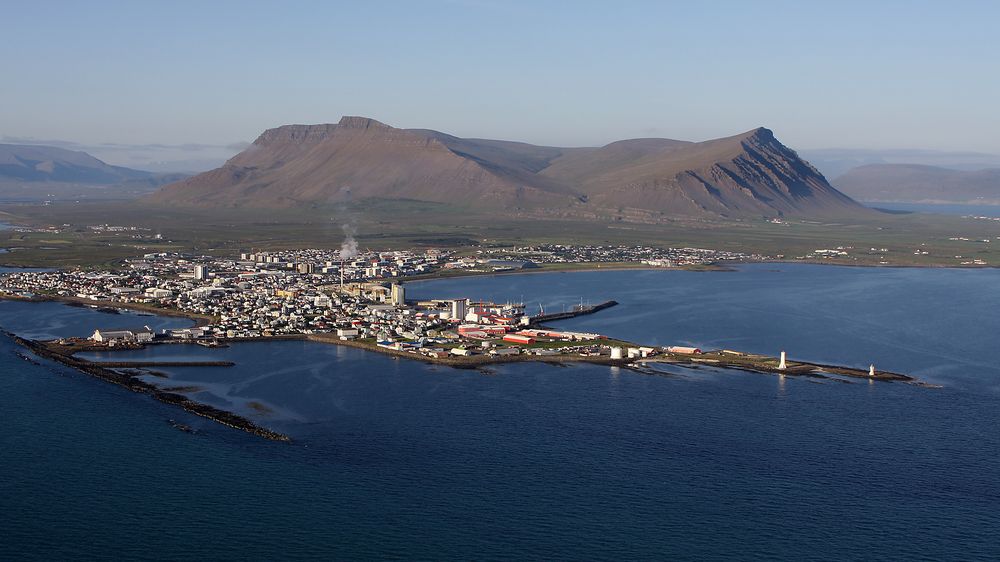 65
65 72
72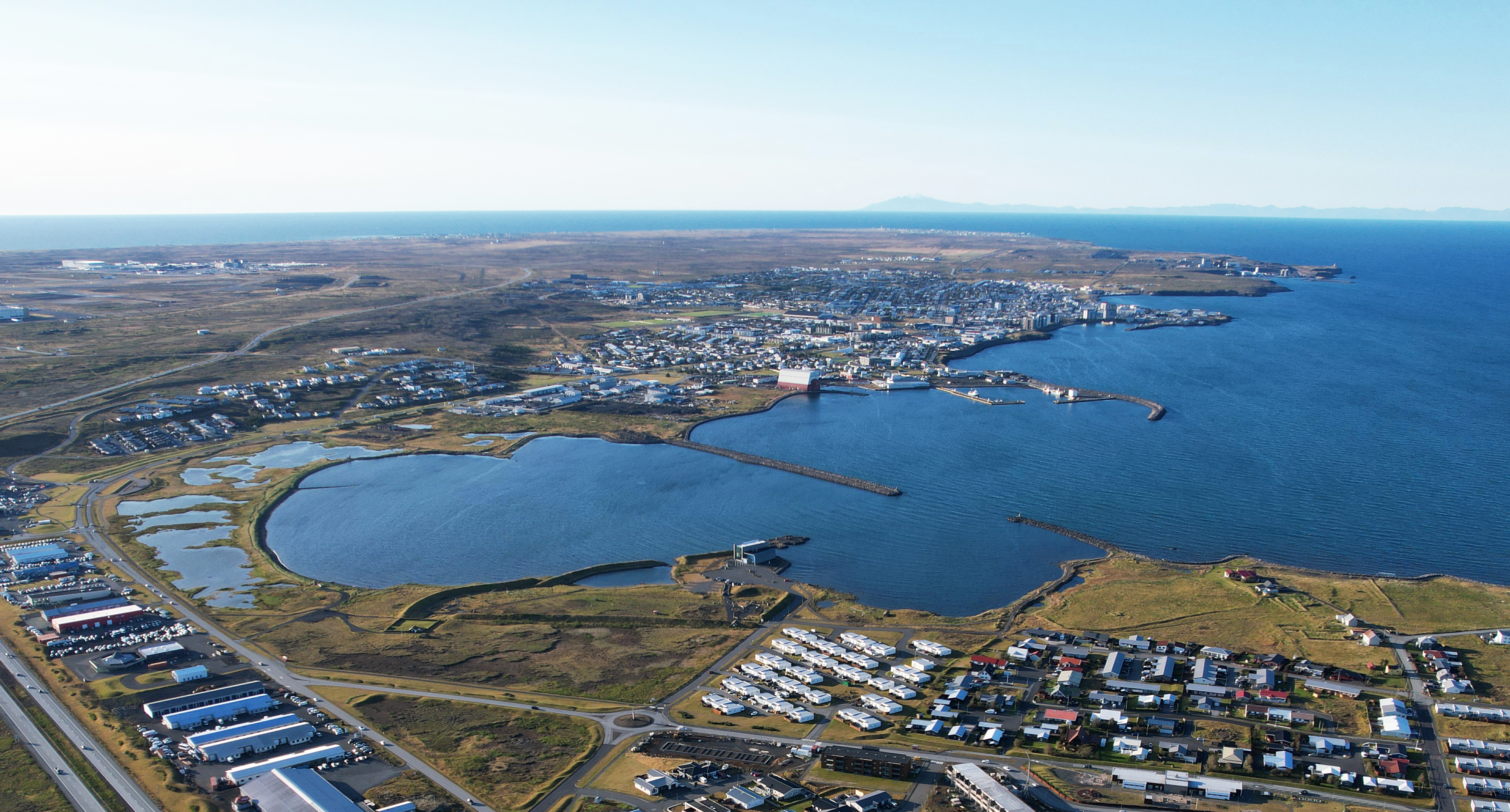 68
68The insurance detail that gets more attention than housing
There's no proof-of-accommodation requirement here, which surprises people expecting the usual lease-or-hotel-booking ask. What Iceland cares about instead is insurance, and it wants two things proven at once: territorial coverage that explicitly includes Iceland, and coverage that also holds across the wider Schengen area, with validity dates that match the requested stay. A policy that covers "Europe" in marketing language but excludes Iceland by name in the fine print is a common and avoidable rejection reason. So is a policy that expires a few weeks before the six months are up, because someone bought coverage for a shorter trip and forgot to extend it once the visa timeline solidified.
The medical exam is a separate requirement from the insurance policy, and people conflate the two more often than you'd expect. Having comprehensive health insurance doesn't satisfy the exam requirement, and the exam itself is worth arranging early rather than treating as a formality tacked onto the end of the process. Insurance certificates and exam results are two different documents doing two different jobs in the file, and submitting one without confirming the other has actually been completed is a quiet way to stall an otherwise clean application.
What happens after you land
This is one of the stranger parts of the process for anyone used to visas that arrive as a sticker in the passport before departure. The application itself gets submitted by mail, or dropped off in person if you're already in Iceland, or filed through a district commissioner outside the capital. There's no portal, no online tracking dashboard, and no digital status check to refresh obsessively. The actual visa isn't issued until you land, at the point of entry. That means you're booking flights and, in effect, committing to the move on the strength of an approval notice rather than a finished document in hand, and the paperwork gets finalized once you're standing in front of an immigration officer in Iceland.
Once you're in, the boundaries are firm. Local work isn't permitted under this category, so any income earned inside Iceland, even casual freelance work for an Icelandic client, falls outside what the visa allows. The entire six months has to run on income sourced from outside the country. And because there's no renewal mechanism, there's no bridging document to apply for when the six months start running out. The visa is the whole runway. Plan the exit before you plan the arrival.
What the long-term path actually requires
The name suggests permanence it doesn't have. This visa does not lead to permanent residency, and no amount of good behavior, tax compliance, or extended stay within the six months changes that. If the underlying goal is eventually settling in Iceland, this program isn't a first step toward that, it's a separate track entirely, and the clock resets to zero the moment you'd need to apply through a residency-oriented category instead. People sometimes assume "long-term" in the visa's name implies a bridge to something more permanent, the way certain nomad visas elsewhere convert into residency status after a few renewal cycles. Iceland's version doesn't work that way. It's long relative to a tourist stay, not long relative to a life being built.
That's worth sitting with before applying, because the emotional pull of "I'll figure out the next step once I'm there" doesn't have anywhere to go here. Anyone who leaves this visa wanting to stay in Iceland longer-term is starting an entirely new application from outside the country, under different criteria, with none of this six-month period counting toward anything.
Iceland versus a residency-track alternative
If the goal is simply to live and work from somewhere striking for half a year without the overhead of a multi-year commitment, this program is close to unbeatable for the price and the simplicity of the ask. Low fee, no interview, no local bank account requirement, straightforward paper trail. If the goal is actually building toward European residency over several years, this is the wrong tool, and no amount of income documentation changes that math.
The more logical move for someone chasing residency is a renewable digital nomad or remote-work visa elsewhere in Europe, one where each year of legal stay counts toward an eventual permanent residency application. Those programs tend to be slower to set up, heavier on documentation, and less forgiving of gaps in the paper trail than Iceland's process. But they're building toward something the Icelandic version was never designed to offer. The decision isn't which country is more appealing to live in for six months, most people can answer that instinctively. It's whether six months of clean, well-documented, dead-end time in Iceland serves the actual goal, or whether it's a detour that delays the residency clock somewhere else by however long it takes to leave and start over.
Work Permissions
Application Steps
- 1
📋 Verify eligibility and gather info
1-2 days
- 2
📄 Download and complete form L-802
1 day
- 3
📄 Collect supporting documents
1-2 weeks
- 4
📋 Pay application processing fee
1 day
- 5
📬 Submit application by mail or dropbox
1 day
- 6
⏳ Wait for processing and decision
3-4 weeks
- 7
🏛️ Enter Iceland and obtain visa
Same day
This visa requires proof of health insurance. Compare international plans before you apply.
Compare health insuranceWe may earn a commission at no cost to you.
Compare this visa
Curated comparisons that include this route.
Frequently Asked Questions
Click any question to expand the answer.
Ready to Apply?
Work with trusted visa specialists who handle the paperwork so you can focus on your move.
Get help with this visa →* We may earn a commission if you apply through our link
At a Glance
Last verified: October 9, 2026