Min Monthly Income
$5,138
Application Fee
$137
Processing Time
3-8 wks
Difficulty
Moderate
Duration
12 months
Overview
Estonia’s Digital Nomad Visa is built around one hard gate: income. You must show at least 5,138 USD per month (about 4,500 EUR), as of 2026, in gross, location‑independent earnings over the 6 months before you apply, using bank statements, contracts, and tax records. Crucially, that income has to come from active remote work: an employment contract with a non‑Estonian company, your own company registered abroad, or freelancing for clients mostly outside Estonia. Purely passive income streams (ETF dividends, bond interest, rental income, Social Security, pensions) are not what the authorities are looking for when they assess this minimum.
The visa is a long‑stay D visa valid for up to 12 months, with a stated processing time of about 4.3 weeks and a state fee of 137 USD, as of 2026. Local employment is explicitly off‑limits: you cannot work for Estonian companies or earn local employment income on this status. Employment types that do qualify include W‑2 style employees of foreign companies, contractors, business owners, and self‑employed professionals whose clients and corporate structures are outside Estonia.
Residency obligations are not fully codified in the Digital Nomad Visa marketing materials, but general Estonian tax rules kick in once you spend 183 days in the country in a 12‑month period. Cross‑border planners often use this as the de‑facto presence ceiling if they want to avoid becoming Estonian tax residents, while still taking advantage of Schengen mobility. There is no maximum consecutive absence requirement, so nothing in the program prevents you from spending substantial chunks of the year elsewhere, so long as you maintain your remote income and valid D visa.
Longer‑term migration planning benefits from knowing that this visa can lead to permanent residency, though other residency path details go beyond its basic terms. The visa’s duration is 12 months, but renewal terms, whether it can be extended in‑country, and how many years it might take to reach PR or citizenship from this status go beyond its basic terms. If you’re planning a 5–10 year relocation, you should treat the Estonia Digital Nomad Visa as a 1‑year solution that may require switching into a different residence permit later, not as a guaranteed ladder to an Estonian passport.
On the friction side, Estonia scores a low 1.25 / 5 on bureaucracy in the program rules, reflecting a lean set of formalities: no apostille requirement, no FBI background check, no medical exam, and no mandatory in‑person interview built into the program itself, plus a 4.3‑week processing timeline. The real work lies in assembling highly specific proof that your remote work is legitimate, your clients or employer are non‑Estonian, and your earnings exceeded 5,138 USD/month (as of 2026) for six straight months.
This visa makes the most sense if you’re a remote employee or freelancer earning at least 5,138 USD/month (as of 2026) from foreign clients or a foreign employer, and you want up to 12 months in the EU’s Schengen area without triggering local tax residency beyond the 183‑day mark. It’s a poor fit if your cash flow is 3,500 USD/month from index fund dividends, US rental income, or pensions and under 1,000 USD/month in active remote work, because those passive streams do not align with how Estonia tests the income requirement.
Eligibility Requirements
Any nationality can apply for Estonia’s Digital Nomad Visa in principle, as the program has no published nationality restrictions and is open on a global basis. In practice, applicants from countries under heavy EU or Estonian sanctions or banking scrutiny—such as Russia, Belarus, Iran, North Korea, and Syria—can face severe hurdles with consular appointments, background vetting, and opening EU‑based bank or payment accounts, which can make practical use of the visa difficult even if not outright prohibited in the law. Before assembling a full set of documents, confirm your specific eligibility and any sanctions‑related constraints directly with the Estonian Police and Border Guard Board (Politsei‑ ja Piirivalveamet) or the Estonian embassy/consulate that will process your D‑visa application.
Min Income
$5,138
Application Fee
$137
Duration
12 months
Physical Presence
None required
W2 Employee (foreign employer) · 1099 Contractor · Business Owner · Self-Employed
Requirements Checklist
0 of 12 documents in hand
0%These take the longest, so start them first.
Request these while the slow items are in progress.
You only need these on the day you submit.
How and where to apply
Apply at Estonian Embassy/Consulate, authorized VFS Global Visa Centers (e.g., US locations: Washington DC, New York, Chicago, Houston, San Francisco, Los Angeles), or in Estonia at Police and Border Guard Board if already legally staying. US citizens can enter visa-free for 90/180 days then apply in-country. Cannot apply from Russia/Belarus.
Tax Information
Local tax regime and what it means for you
Estonia applies a worldwide income tax regime to tax residents, with a flat 22% income tax (as of 2026) on most personal income. For Digital Nomad Visa holders who become Estonian tax residents, remote salary from a foreign employer, self‑employment income from foreign clients, pension distributions and rental income from property abroad are all, in principle, taxable in Estonia at that 22% rate. Estonia’s well‑known corporate deferral regime (no corporate tax until profit distribution) applies to Estonian companies, not to your US LLC or Canadian corporation.
If you remain a non‑resident for Estonian tax purposes, Estonia generally only taxes Estonian‑source income, which a properly structured digital nomad setup (foreign employer, foreign clients, no Estonian customers or permanent establishment) is designed to avoid. However, if you cross the 183‑day presence threshold in any 12‑month period, Estonian rules treat you as a tax resident, at which point your worldwide income is on the Estonian radar regardless of where the payer is located.
Capital gains on foreign investments (for example, selling ETFs in a US brokerage account) are taxable for Estonian tax residents at the same 22% rate (as of 2026) as other income. There is no special exemption for portfolio gains held abroad, nor a separate preferential long-term rate; the standard 22% personal income tax applies to residents. For non‑residents with no Estonian‑source gains, those trades sit outside Estonian taxation.
Tax residency is mainly day‑count driven: spending 183 days in Estonia in a 12‑month period creates tax residency. There are other technical triggers (such as having your permanent home or vital interests in Estonia), but for Digital Nomad Visa users the 183‑day rule is the key operational threshold. The visa itself does not automatically make you a tax resident on day one; it’s your actual stay pattern and life ties that matter.
Once resident, you must obtain an Estonian personal identification (isikukood) and register with the local population and tax authorities, then file annual income tax returns declaring worldwide income. Filing deadlines and registration steps follow standard annual declaration processes similar to other EU jurisdictions. Estonia and the United States have an income tax treaty aimed at avoiding double taxation, though its treatment of US‑source income, Social Security, or dividends is governed by treaty provisions, including an exemption for Social Security benefits from Estonian tax.
For US Citizens and Green Card Holders
US citizens and Green Card holders on the Estonia Digital Nomad Visa keep full US tax obligations regardless of where they live. Remote salary or self‑employment income earned while in Estonia can be partially sheltered with the Foreign Earned Income Exclusion (FEIE) on Form 2555, up to 132,900 USD for 2026. Only earned income qualifies, ETF dividends, capital gains, rental income, pension distributions, and Social Security are outside FEIE and remain fully taxable in the US. Because the visa allows a full 12‑month stay but doesn’t itself create permanent‑resident status, many nomads rely on the Physical Presence Test (330 full days abroad in any 12‑month period) rather than the more demanding Bona Fide Residence Test.
If you become an Estonian tax resident and pay Estonia’s 22% flat tax (as of 2026) on your remote earnings, the Foreign Tax Credit (FTC) on Form 1116 becomes central. FTC lets you credit Estonian income tax against your US tax on the same income streams, up to the US tax otherwise due. Where Estonia taxes income at 22% and your effective US rate is similar or lower, FTC can often eliminate most double taxation on that income. If you deliberately stay under 183 days to avoid Estonian tax residency and pay zero tax in Estonia, there is no foreign tax to credit and FTC provides no relief; all US tax is paid in full on your worldwide income.
FBAR (FinCEN Form 114) and FATCA Form 8938 remain in play once you start using Estonian or broader EU financial institutions. If the aggregate value of all non‑US financial accounts, bank, brokerage, certain fintech wallets, exceeds 10,000 USD at any point in the year, you must file FBAR, with non‑willful penalties starting at approximately 16,700 USD per violation (2026, inflation-adjusted). Form 8938 has higher thresholds but catches many FIRE portfolios once assets are shifted abroad. The Estonia Digital Nomad Visa does not publicly require a local bank account, but many residents open one in practice, putting them inside this reporting net.
For this visa, the optimal setup often involves: (1) using FEIE Form 2555 to exclude as much remote earned income as your time abroad allows, (2) layering FTC Form 1116 if you cross 183 days and Estonia taxes the same earnings at 22% (as of 2026), and (3) maintaining rigorous FBAR/FATCA compliance once you use foreign accounts. In practice, pairing a US CPA who specializes in expat taxation (for FEIE, FTC, FBAR, and Form 8938) with a local Estonian tax advisor (for residency status, registration, and annual filing) is the sensible move; the 1,500–3,000 USD you spend in year one on that guidance is often recovered through avoided penalties and better elections on housing exclusions, entity structuring, and timing of capital gains.
Living in Estonia
COL Index vs NYC
49.4
Monthly Cost (excl. rent)
$1,022
1BR Rent (City Center)
$636
Safety Index
76.3
Healthcare Index
75.5
Quality of Life Index
185.7
Time Zone
UTC+02:00
Capital
Tallinn
Population
1.3M
Official Languages
Estonian
Avg Internet Speed
94 Mbps
Public Transit Quality
Good
With a budget covering rent and living costs, you'd need roughly $1,658/mo for a comfortable single-person lifestyle in Estonia.See how far your money goes →
🏙️ Best Cities in Estonia for Digital Nomads
 69
69 71
71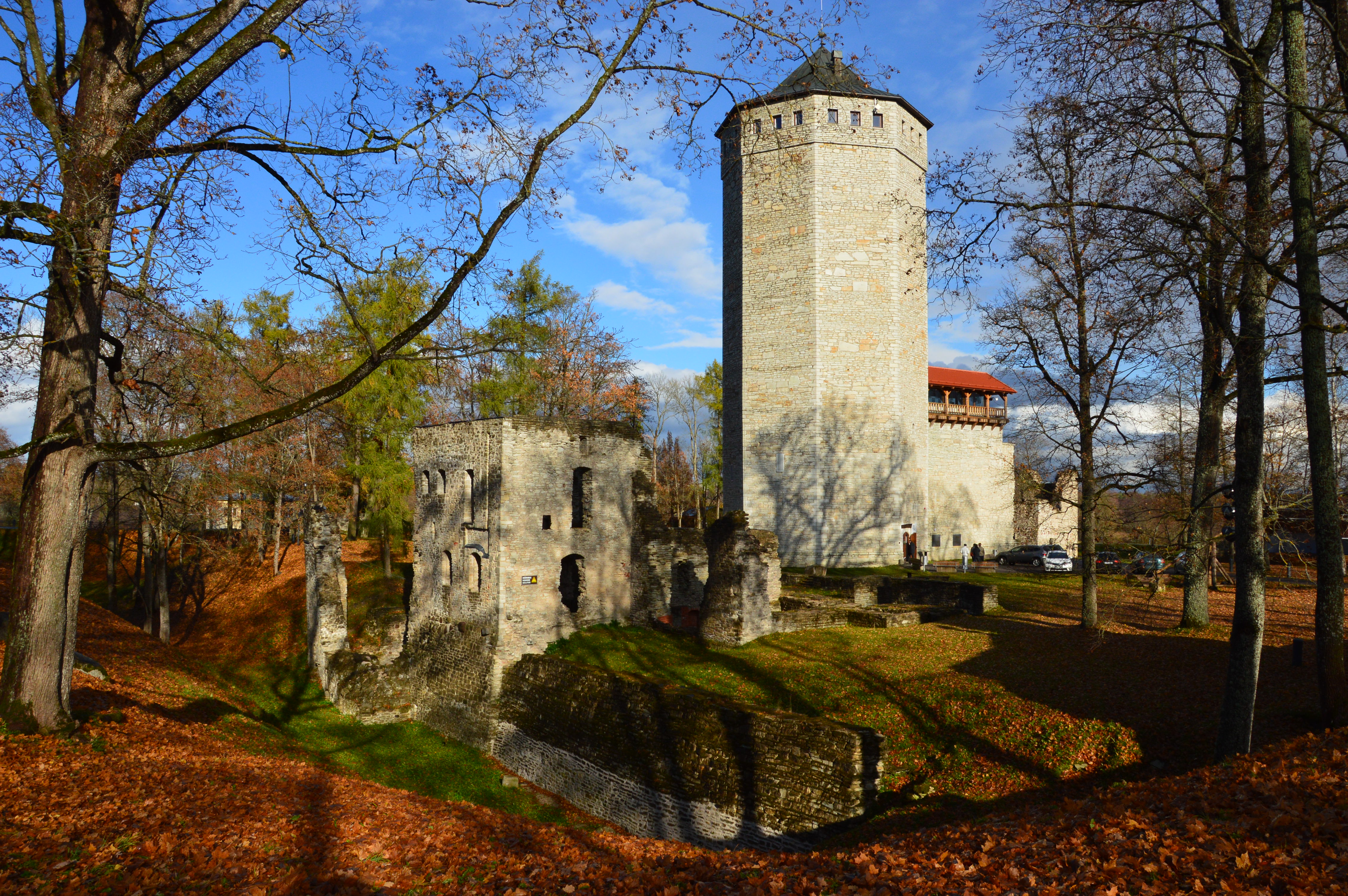 ✦ 79
✦ 79 ✦ 75
✦ 75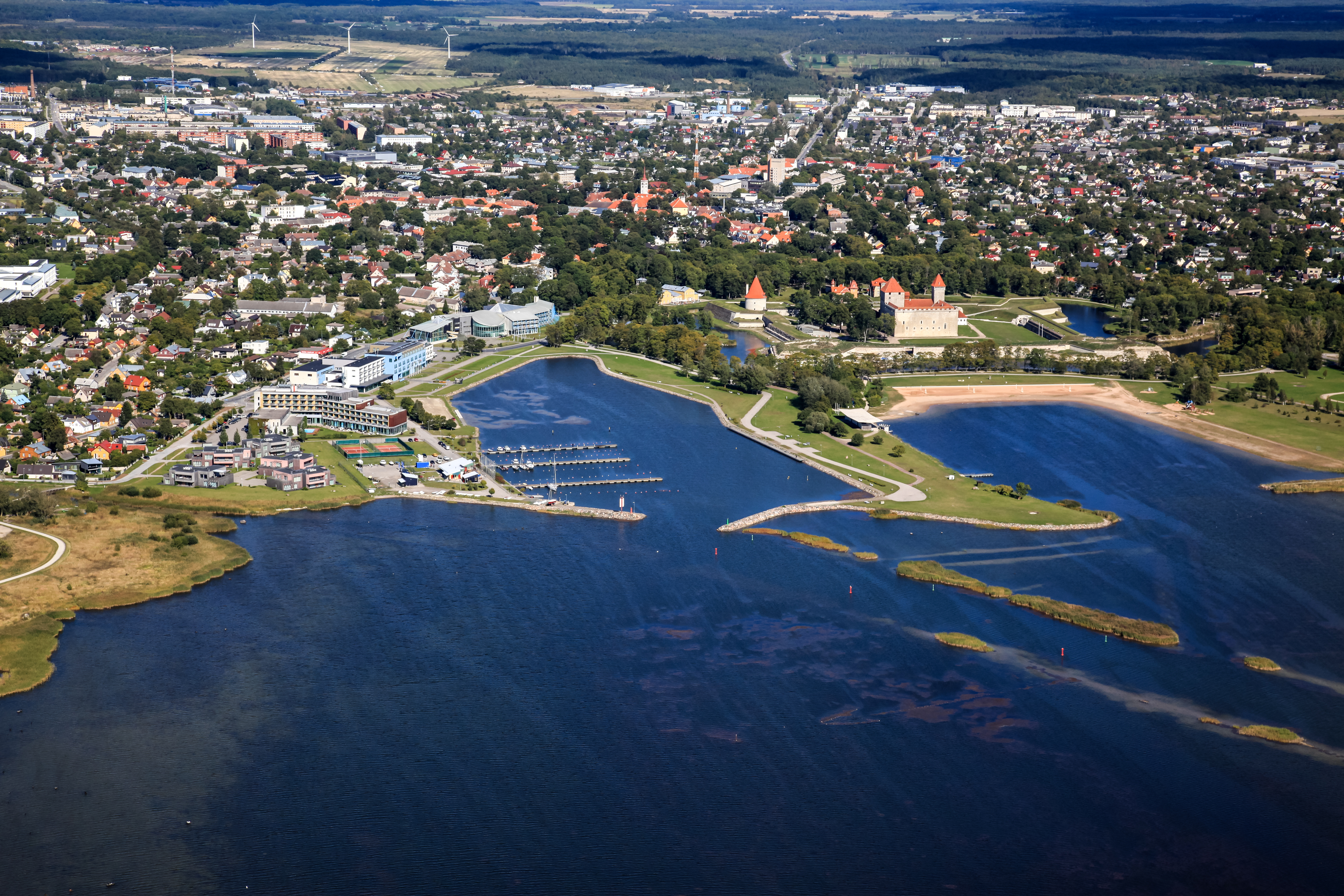 74
74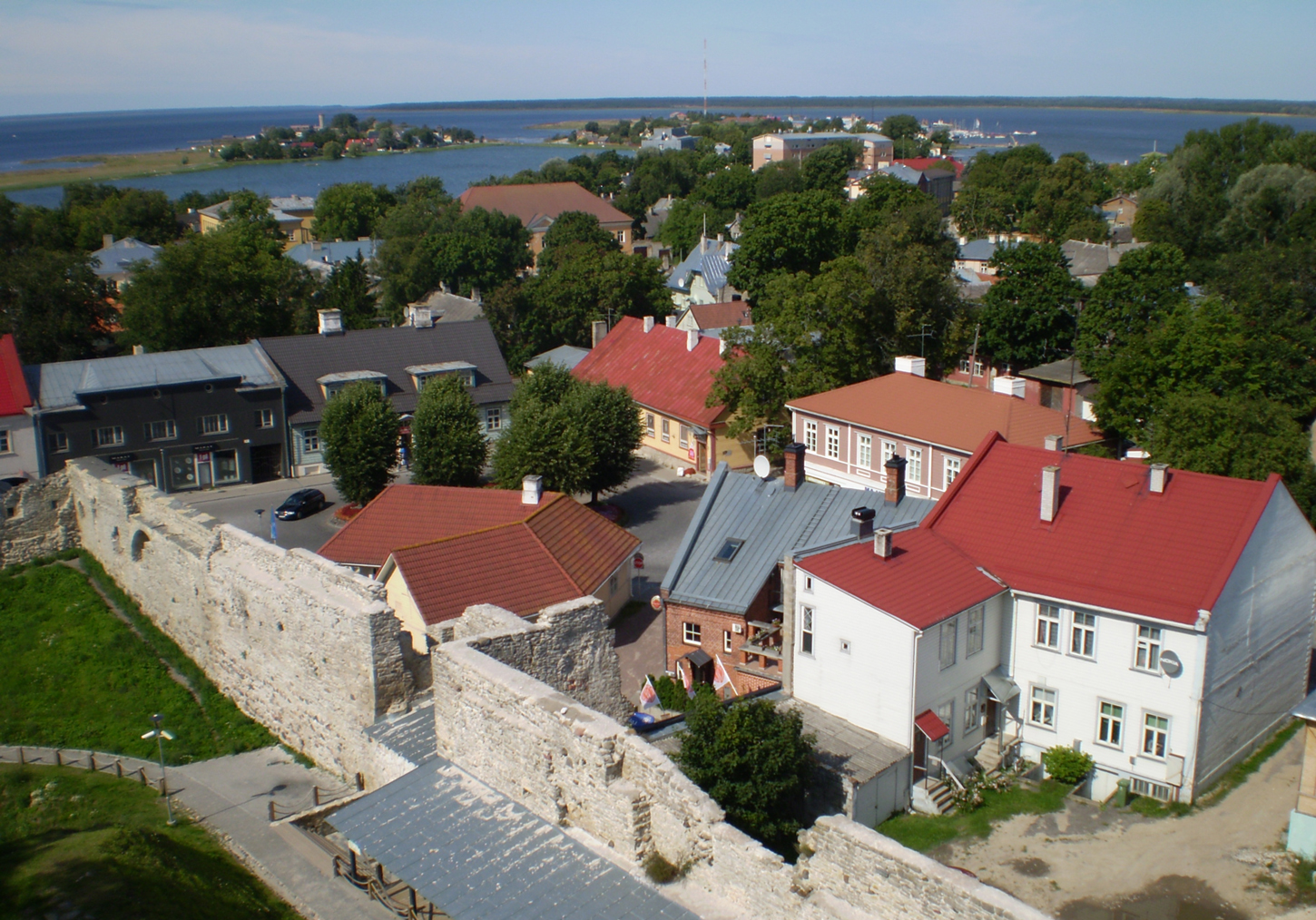 71
71The accommodation requirement and where it goes wrong
The proof of accommodation requirement looks like a formality until you actually sit down to satisfy it. A single-night hotel booking technically checks the box, but it doesn't match the story you're telling elsewhere in the application, that you intend to live and work in Estonia for up to twelve months. Officers read the file as a whole. A one-night reservation next to a cover letter describing a year of remote work reads as mismatched, even if nobody flags it explicitly.
The opposite mistake, signing a full twelve-month lease before you've even been approved, carries its own risk. Processing runs close to 4.3 weeks (as of 2026), and a lot can happen in that window. Committing to a year of rent on a property you haven't seen, in a country you haven't confirmed you'll be allowed to enter for that purpose, is a bet a lot of applicants regret making. A better middle path is a short-term rental or extended-stay booking that covers your arrival and the first several weeks, with language showing renewal is available, paired with a letter from the host or landlord that matches the dates on your application.
You don't need an Estonian bank account to satisfy any part of this application, which surprises people who assume every European residence process requires local banking upfront. That's a step you can take after arrival if you decide it's useful, not a prerequisite to filing.
What happens after you land
Because there's no interview and no medical exam built into this process, almost all of the scrutiny happens before you ever board a flight. What's left once you arrive is largely administrative rather than evaluative. If you've entered visa-free and are applying from inside Estonia, the process runs through the Police and Border Guard Board rather than a consulate, and it's worth treating that distinction as a real fork early on rather than something to figure out after you've already committed to a travel date. Applying in-country versus applying at a consulate or VFS center abroad changes your timeline and your fallback options if something in your file needs correcting.
Local work isn't permitted under this status, which is easy to overlook once you're settled and start getting approached by local clients or thinking about picking up occasional in-country work. The permit is built around the idea that your income originates outside Estonia, and that's not a detail that becomes flexible after arrival. Beyond that, there's no minimum physical presence requirement tied to keeping the permit valid, which gives genuine flexibility to people who want to travel through the Schengen area while based in Estonia on paper. That flexibility is a feature of this specific visa, not something you should assume carries over if you later move into a different residence category.
The long-term path, on paper versus in reality
It's easy to read the paperwork and assume this visa is quietly building toward something more permanent. The reality is narrower than that. This is a twelve-month remote work permit, structured around short-term flexibility rather than settlement, and the absence of any physical presence requirement is itself a signal about what the visa is actually for. A route designed to lead somewhere usually asks you to be there consistently. This one doesn't ask that at all.
If Estonia is a genuine multi-year plan rather than a one-year experiment, the more honest approach is to treat this visa as a holding pattern and start researching Estonia's standard residence permit categories separately, on their own terms, with their own income thresholds and ties requirements. Those are different applications with different logic, and assuming continuity between this permit and a longer-term one is where people lose a year they thought they were banking toward something. Renewal processes and category-switching rules shift often enough that it's worth confirming your options close to when your twelve months are actually running out, rather than assuming today's rules will hold.
The call against the obvious alternative
Compared to other European digital nomad routes, Estonia's version is fast and cheap to file: a $137 fee (as of 2026) and a processing window that lands around 4.3 weeks (as of 2026), with no interview requirement adding uncertainty to the timeline. For someone who wants to test a year of EU-based living with minimal friction and doesn't need the visa itself to double as an immigration strategy, that combination is hard to beat. You know quickly whether you're approved, the cost of finding out is low, and you're not locked into a long bureaucratic process just to get a yes or no.
Where it loses to some of the other national digital nomad programs is exactly where you'd expect: those alternatives often build in a clearer, more explicit bridge toward longer-term residency, which matters if your actual goal is settling in Europe rather than spending a flexible year working from it. If long-term residency is the real objective, it's worth weighing a country whose remote work visa is explicitly structured as a residency stepping stone against Estonia's faster, cheaper, but narrower offer. Choosing Estonia because the paperwork is lighter, when your actual goal is a five-year path to something permanent, is a mismatch between the tool and the job it's assigned to do.
Work Permissions
Application Steps
- 1
📋 Confirm eligibility requirements
1-2 days
- 2
📄 Gather required documents
1-2 weeks
- 3
📋 Complete online application form
1 day
- 4
📅 Book appointment at VFS/embassy
1-2 weeks
- 5
📬 Submit application and pay fee
Same day
- 6
⏳ Wait for processing decision
4 weeks
- 7
🏛️ Register address in Estonia
1 week
This visa requires proof of health insurance. Compare international plans before you apply.
Compare health insuranceWe may earn a commission at no cost to you.
Compare this visa
Curated comparisons that include this route.
Frequently Asked Questions
Click any question to expand the answer.
Ready to Apply?
Work with trusted visa specialists who handle the paperwork so you can focus on your move.
Get help with this visa →* We may earn a commission if you apply through our link
At a Glance
Last verified: October 9, 2026