Application Fee
$999
Processing Time
9-17 wks
Difficulty
Moderate
Path to Citizenship
5 years
Overview
El Salvador’s Golden Visa (often marketed as the Freedom Visa) is built around capital rather than income: the requirement is a US$1,000,000 investment into the economy, with at least US$1,000,000 in savings backing you. Social Security and pension income do not count for eligibility, and you are not allowed to work locally under this status. This is aimed at investors who can park seven figures, not someone qualifying on US$3,800/month of rents and ETF dividends alone.
The program charges a US$999 application fee. Sources describe investments via Bitcoin or USDT as acceptable “capital,” but the program rules only confirm that qualifying investment is capital-based, not that it must be crypto. Processing is relatively quick for a golden program: the stated range is 4–6 weeks from submission (as of 2026), assuming your due‑diligence checks and proof of funds are clean. so you should assume additional legal and government fees beyond the initial US$999.
From a settlement perspective, the visa is renewable and explicitly leads to permanent residency, with a pathway to citizenship after 5 years. Advisory sites highlight that some Bitcoin‑linked citizenship routes have no post‑citizenship presence requirement, but that is separate from maintaining residence status in the years before naturalization. Anyone planning global roaming should have a lawyer confirm how many days in El Salvador are actually needed in each of those 5 years.
Friction points are mostly financial and compliance‑related, not bureaucratic in the classic sense: the bureaucracy score is a relatively low 1.875/5, there is no requirement for an apostille, FBI background check, medical exam, local bank account, or interview. You will, however, need standard KYC/AML documentation, a clean criminal record, private health insurance, and detailed proof of the US$1,000,000 investment and savings. For many FIRE or nomad readers, assembling and explaining the source of that much capital is the real due‑diligence hurdle.
This route makes the most sense if you can actually allocate US$1,000,000 of surplus capital to El Salvador while still keeping enough liquidity to fund, for example, a US$5,000/month lifestyle across multiple countries. It is a poor fit if your net worth is under US$1,000,000 or tied up in illiquid assets such as a primary home and retirement accounts you cannot or will not liquidate, even if your ongoing income is strong.
Eligibility Requirements
Any nationality can apply in principle for the El Salvador Golden Visa, as the structured data list nationality restrictions as “all.” In practice, applicants from heavily sanctioned or high‑risk jurisdictions such as Iran, North Korea, Syria, Cuba, and in some banking contexts Russia can hit roadblocks at both the consular stage and when moving US$1,000,000 through international banks or crypto ramps, even though the law does not formally exclude them. Before assembling a full document package or wiring funds, confirm your specific eligibility and any practical banking constraints with El Salvador’s official immigration authority, the Dirección General de Migración y Extranjería.
Min Savings
$1,000,000
Min Investment
$1,000,000
Application Fee
$999
Requirements Checklist
0 of 16 documents in hand
0%These take the longest, so start them first.
Request these while the slow items are in progress.
You only need these on the day you submit.
How and where to apply
Applications are submitted directly to the El Salvador government or through authorized agents, often involving cryptocurrency payment in USDT or BTC. No specific consulate or online portal is mandated; sources indicate submission via specialists or in-country processes. You can prepare and submit from abroad before arrival.
Tax Information
Local tax regime and what it means for you
El Salvador uses a territorial tax regime for individuals, and the visa rules explicitly classify this program under a territorial system. Territorial means tax is focused on Salvadoran‑source income: wages for work physically performed in El Salvador, business profits from activities in El Salvador, and rental income from property located in El Salvador. Foreign‑source income — such as ETF dividends from a US brokerage, rental income from a condo in Canada, or pension distributions paid from Australia — is generally outside Salvadoran income tax if it is not considered local‑source.
For Golden Visa holders, this aligns with the visa’s design: local work is not permitted, so there should be no local salary. Local work is not permitted under the visa terms, but the fact that Social Security and pension income do not count for qualifying and that local work is barred implies authorities expect you to live off foreign‑source capital, investment returns, or business income generated abroad. Under a strictly territorial interpretation, those foreign passive income streams are not taxed in El Salvador, even if you are a tax resident, because they arise outside the country.
On capital gains from foreign investments (for example, selling index funds or ETFs in a US brokerage), the key question is whether El Salvador treats these as foreign‑source. Under a territorial system, gains on assets located abroad or realized via foreign intermediaries are normally foreign‑source. In practice that means capital gains on a Vanguard or iShares portfolio held in a foreign brokerage are exempt from Salvadoran income tax under territorial rules, as long as the underlying activity and assets are genuinely outside El Salvador. Gains on Salvadoran shares or assets would be Salvadoran‑source and taxed under local rules.
Tax residency in El Salvador generally hinges on physical presence (physical presence, center of vital interests, or permanent home), center of vital interests, or permanent home, but the visa rules do not disclose a specific day count or any automatic link to this visa. The Golden Visa grant by itself does not necessarily make you a tax resident; tax residency arises from how long and how substantively you live and conduct your life in the country. If you plan to spend more than half the year there, expect to be treated as tax resident and to have standard obligations, even under territorial rules.
Local filing requirements are correspondingly tied to tax residency and having Salvadoran‑source income. There is no special preferential regime name like Portugal’s NHR or Italy’s flat‑rate regime attached to this visa, and no tax status application deadline is disclosed in the visa rules. In practice, once you cross into tax residency and earn Salvadoran‑source income (for example, local bank interest or a Salvadoran rental), you would obtain a local tax ID and file annual returns. Exact forms and deadlines are set by the Ministerio de Hacienda and can change, so anyone planning meaningful presence should get local professional guidance in year one.
El Salvador does not have an income tax treaty with the United States. That means you cannot assume any relief on double taxation, reduced withholding on dividends, or Social Security coordination. For a retiree living on US pensions and Social Security, the practical implication under territorial rules is favorable locally (no Salvadoran tax on that foreign income) but treaty protection for US‑source withholding is unclear and must be checked against US law rather than relying on a bilateral treaty.
For US Citizens and Green Card Holders
US persons using the El Salvador Golden Visa still remain fully within the US tax net. The territorial regime in El Salvador does not change your obligation to file a US return and pay US tax on worldwide income. The main relief mechanism for earned income is the Foreign Earned Income Exclusion (FEIE) on Form 2555. FEIE covers only earned income from services — remote employment, self‑employment, consulting. For 2026 the exclusion limit is US$132,900 per person. It does not apply to dividends, interest, capital gains on ETFs, pension distributions, or Social Security, which are central to most FIRE and retirement portfolios.
To use FEIE you must meet either the Physical Presence Test (330 full days outside the US in any rolling 12‑month period) or the Bona Fide Residence Test (a clearly established tax residence in a foreign country for an entire calendar year). Because this Golden Visa does not require local work and does not publicly specify a strict physical presence requirement, many investors will structure their lives around the 330‑day Physical Presence Test, splitting time among El Salvador and other countries while avoiding long stays in the US. Those who truly settle in El Salvador and meet local tax residency standards might qualify under Bona Fide Residence, but that involves committing their primary home and life there.
The Foreign Tax Credit (FTC) on Form 1116 has limited utility under a territorial regime where your foreign passive income faces a 0% Salvadoran tax rate. The FTC only offsets US tax when you pay foreign income tax on the same income stream; if El Salvador does not tax your US dividends, US bond interest, or capital gains, there is no foreign tax to credit, so you pay full US tax on that income. FTC can still matter for any Salvadoran‑source income you might later earn (for example, if you change status and take local employment), but under this Golden Visa with local work prohibited, the FTC will often have limited application.
FBAR (FinCEN Form 114) and FATCA Form 8938 remain critical. FBAR is required when the aggregate value of your foreign financial accounts — including any Salvadoran bank, brokerage, or crypto custodial accounts held outside the US — exceeds US$10,000 at any point in the calendar year. Penalties for non‑willful violations start at $10,000 per violation, adjusted annually (approx $16,700 in 2026). This visa does not require opening a local bank account, but many investors will do so to handle living expenses or to hold USDT or Bitcoin through local channels, and those accounts count for FBAR and FATCA thresholds.
Given the interaction of a territorial local regime, significant foreign investment income, and ongoing US reporting, investors should budget for two advisors in year one: a US CPA specializing in expat taxation (for FEIE, FTC, FBAR, Form 8938, and any corporate or trust structures) and a Salvadoran tax advisor for local registration and filings if you become tax resident. The US$1,500–US$3,000 spent on this combined advice in the first year is typically recovered through optimized elections, avoiding double taxation where possible, and staying clear of FBAR/FATCA penalties.
Living in El Salvador
COL Index vs NYC
37.9
Monthly Cost (excl. rent)
$693
1BR Rent (City Center)
$739
Safety Index
31.4
Healthcare Index
36.9
Quality of Life Index
87.2
Time Zone
UTC-06:00
Capital
San Salvador
Population
6.5M
Official Languages
Spanish
Avg Internet Speed
151 Mbps
Public Transit Quality
Fair
With a budget covering rent and living costs, you'd need roughly $1,432/mo for a comfortable single-person lifestyle in El Salvador.See how far your money goes →
🏙️ Best Cities in El Salvador for Golden Visa Holders
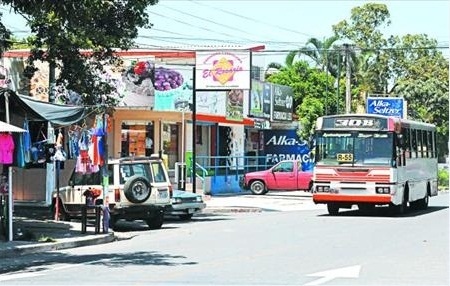 48
48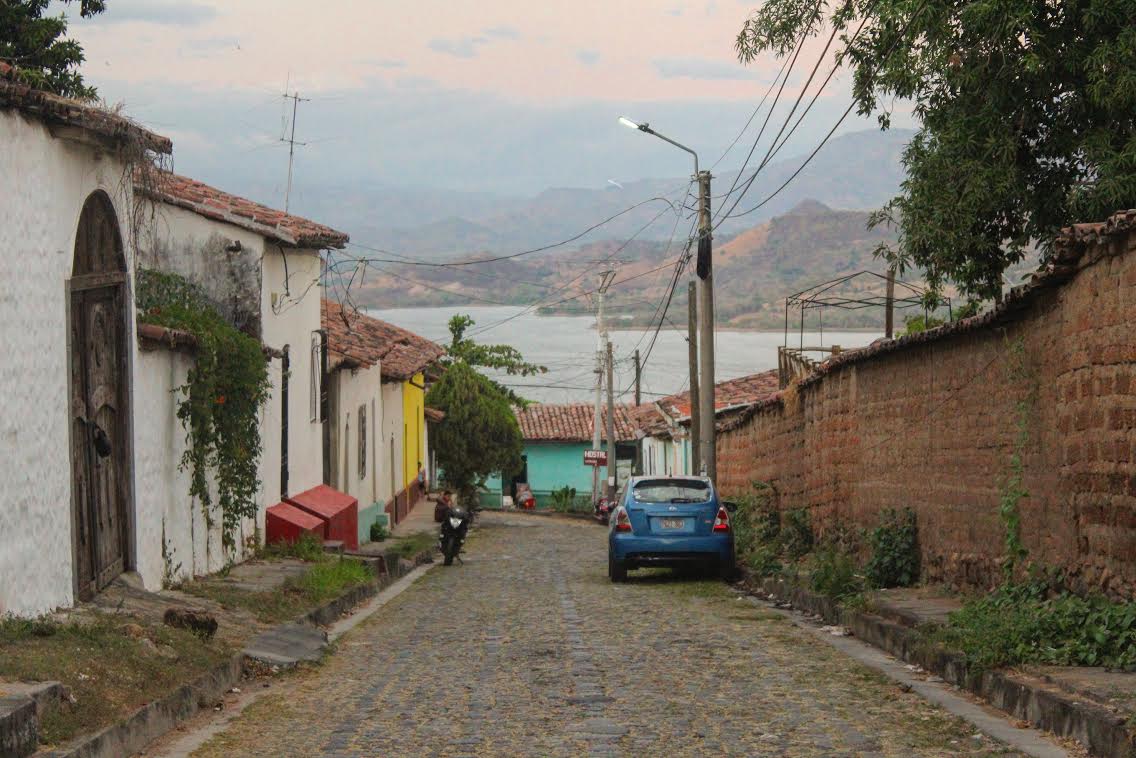 51
51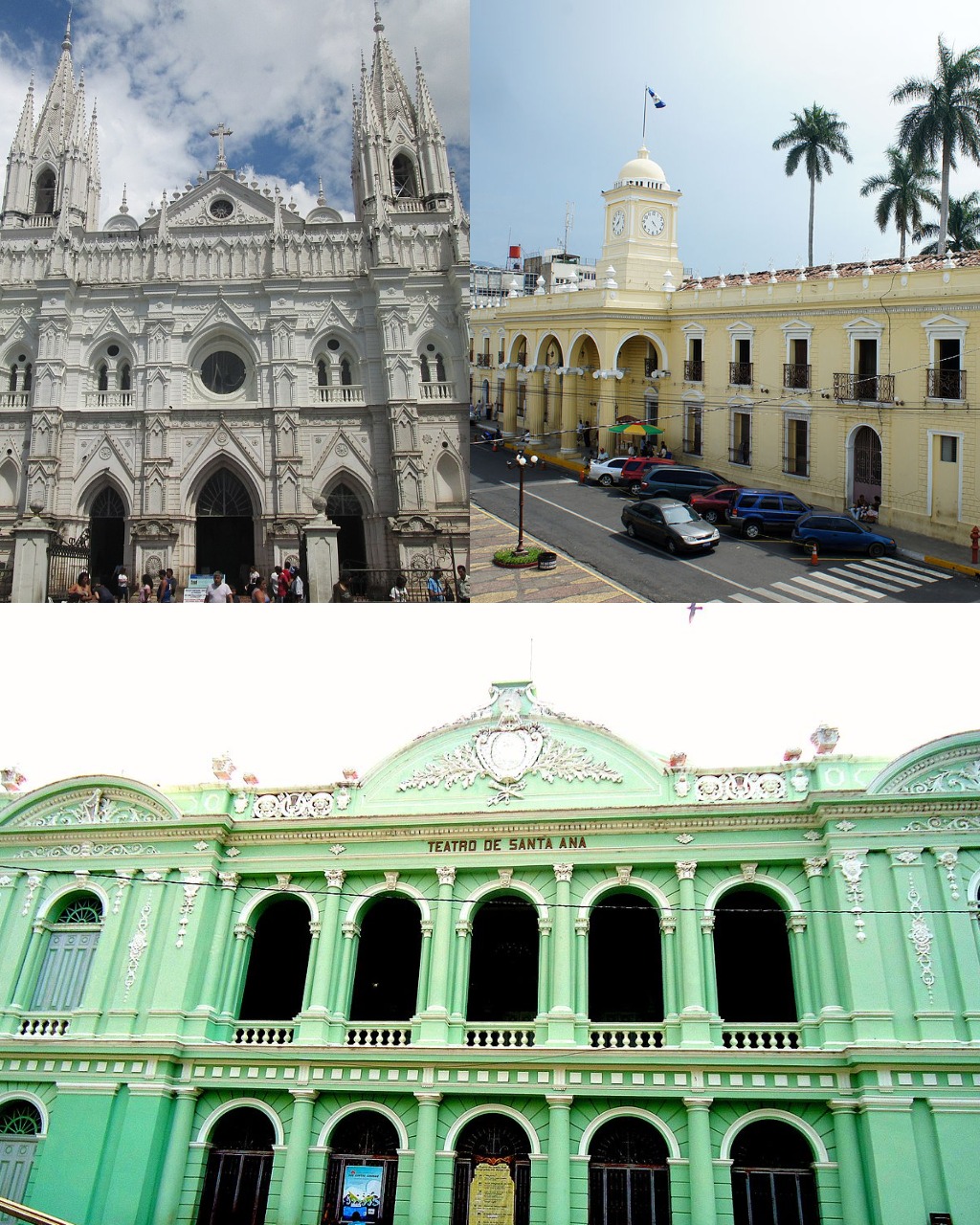 48
48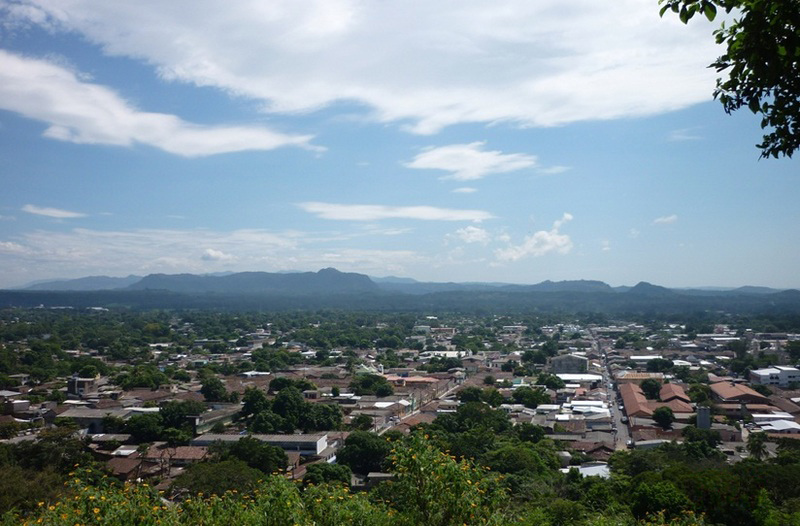 49
49 56
56 57
57The address most applicants overlook
Proof of residential address appears as a box on the checklist, and people tick it with a hotel confirmation. That paper gets rejected. The government wants a real anchor point inside El Salvador, and a booking site receipt does not signal an intention to reside. A signed twelve-month rental contract does, and a utility bill in your name seals it.
Securing a lease from abroad before you have the visa can feel like a cart-before-the-horse problem, but it is the sequence that prevents delays. Contact a local agent, sign remotely, and make the deposit. The lease becomes part of your application package, and it also gives you a physical address to list on forms and a place to land when you arrive. If you delay the lease until after approval, you extend the gap between holding an approval letter and holding a residency card, which can fray nerves.
Do not interpret the lack of a local bank account requirement as permission to skip this step. A bank statement is the easiest way to prove an address in many countries, but that path is closed here unless you voluntarily open an account. For most applicants, the rental contract plus a simple declaration of domicile is the cleanest route. Get the address locked before you press send on the application.
The paperwork after touchdown
An approved application does not grant you immediate residency. It grants you the right to show up at an immigration office, present the approval, and exchange it for a tangible permit. The gap between the two can feel administrative or it can feel interminable, depending on whether you show up with everything the officer expects.
You will need private health insurance that was active before you landed. A policy issued locally or an international plan with coverage in El Salvador works. Without it, the residency registration stalls. You will also need passport photographs and your original passport. The immigration authority will take fingerprints and capture a digital photograph. Within a few days to a few weeks, you leave with a residence card (carné de residencia) and a national identity document (DUI). The DUI matters for daily life: renting, getting a phone contract, signing up for utilities.
None of this demands a local bank account, though having one simplifies bill payments later. The investment itself must already be confirmed. You cannot land with a promise to transfer the funds. The proof of completed investment needs to sit inside the file before the card is printed. Once you hold the card, you are a renewable resident with no permission to work for a Salvadoran employer, but free to live and run a foreign income stream entirely outside the tax net.
What five years actually looks like
The visa is renewable, and it leads to permanent residency. The block between temporary and permanent usually requires holding the investment and renewing on schedule. The precise moment PR attaches is not spelled out on a single government page, but the program’s design makes it a natural outcome of sustained compliance. Once you reach that stage, the million dollars is no longer the only thing keeping you in the country.
From the date you first hold residency, a five-year clock begins for citizenship. The government’s timeline, as of 2026, promises eligibility to apply after five years. That does not mean automatic approval. A clean criminal record, continuous residence, and evidence of integration will be part of the examination. The territorial tax regime remains unchanged throughout. Whether you are a temporary resident, a permanent one, or a fresh passport holder, income sourced outside El Salvador stays outside the tax base.
The absence of a social security counting mechanism is irrelevant when local work is off the table. Your retirement contributions, your investment gains, your remote salary: none of it creates a tax liability here. That makes the five-year arc more about patience than financial recalibration. The biggest risk over that half-decade is a policy shift, and all investment migration programs carry that gamble. The advantage here is that the tax architecture has held steady through several governments, and the current administration shows no appetite for changing it.
The alternative that would make you second-guess this
A six-figure investment buys residency in a handful of other places, and a five-figure donation buys a second passport in a few Caribbean nations. Those options look cheaper on a spreadsheet, but the spreadsheet misses what happens to your foreign income afterward. A territorial tax country that gives you a clear citizenship timeline after five years is rare. Plenty of programs promise permanent residency, then tack on a decade of waiting before you can even ask for a passport. Others welcome you with low entry costs but then tax your worldwide earnings from day one.
Dependents can be included under this program, so a family move does not multiply the investment. No interview and remote submission from abroad remove the early friction. The application fee itself moves through crypto rails, which is either a convenience or a red flag depending on your view of blockchain exposure. But the result is a straightforward pipeline: four to six weeks to approval, a residency card shortly after landing, and after five years a passport that does not require renouncing anything you already hold.
What you give up is the ability to work for a Salvadoran company and the comfort of a jurisdiction with a long track record in investor passports. The program is young and the investment vehicles are fewer than you might like. If your income is already offshore and you want a place that will not touch it while handing you a second citizenship, this one sits high on a very short list.
Work Permissions
Application Steps
- 1
📋 Research program and prepare finances
1-2 weeks
- 2
📄 Collect identity and background documents
2-4 weeks
- 3
📬 Submit application with investment proof
1 week
- 4
⏳ Undergo due diligence review
4-6 weeks
- 5
⏳ Receive residency approval
Same day
- 6
🏛️ Arrive and register residency
1-2 days
Compare this visa
Curated comparisons that include this route.
Frequently Asked Questions
Click any question to expand the answer.
Ready to Apply?
Work with trusted visa specialists who handle the paperwork so you can focus on your move.
Get help with this visa →* We may earn a commission if you apply through our link
At a Glance
Last verified: October 9, 2026