Min Monthly Income
$1,636
Application Fee
$100
Processing Time
13-26 wks
Difficulty
Moderate
Duration
24 months
Overview
A solo applicant needs $1,667 per month in foreign-source income (as of 2026), and that figure also fits a remote employee, contractor, or self-employed owner as long as the money comes from outside El Salvador and the local income share stays at 0%. A practical example: $3,800/month from ETF dividends plus rental income from abroad clears the threshold, but a local Salvadoran client invoice does not count because local work is not permitted. The application fee is $100, and the published processing time is about 6 weeks.
Presence is the trade-off that matters here: El Salvador expects 183 days per year, so this is not a low-commitment “show up occasionally” permit. The visa lasts 24 months and is renewable, but the record you have to build is a residence pattern, not a vacation stamp collection. The maximum consecutive absence is not published, which makes the 183-day annual threshold the number to anchor any split-year plan around.
There is no stated path to permanent residency or citizenship in the program details, so the long-game outcome is renewal, not an automatic bridge to PR. That makes the 24-month term and renewal status the core planning variables for anyone mapping a 10-year move. Adult and child dependents are allowed, health insurance is required, and there is no local bank account requirement, an apostille requirement, no FBI background check requirement, no medical exam requirement, and no interview requirement in the published facts.
The friction is light on paper but still real in execution: you need proof of foreign income, proof of remote work or business activity, and health insurance, then you wait about 6 weeks. A clean document set matters more than an interview, because the process has no interview checkpoint to rescue a weak file. The bureaucracy score of 1.675/5 matches that profile: low procedural drag, but the 183-day residency obligation is the part that can box in people who split time between countries.
This makes most sense if you earn $1,667+ each month from non-Salvadoran sources (as of 2026) and want a 24-month base in a territorial-tax country without local employment. It is a poor fit if your plan depends on taking Salvadoran clients, staying under 183 days a year, or converting this route into a clearly defined PR track.
Eligibility Requirements
Any nationality can apply in principle for this visa. The practical friction point is not a nationality blacklist but consular and banking scrutiny: applicants from Iran, North Korea, Syria, Cuba, and Russia can run into document, payment, or account-opening problems even where the visa rules themselves do not impose a citizenship ban. Verify eligibility and current filing procedure directly with the Dirección General de Migración y Extranjería before building a full packet, because that is the authority that controls the route rather than a third-party checklist.
Min Income
$1,636
Application Fee
$100
Duration
24 months
Physical Presence
183 days/yr
Remote Work / Freelance · Business Income
W2 Employee (foreign employer) · 1099 Contractor · Business Owner · Self-Employed
Max 0% from local sources
Requirements Checklist
0 of 14 documents in hand
0%These take the longest, so start them first.
Request these while the slow items are in progress.
You only need these on the day you submit.
Extra requirements for this visa
- Apostille required on official documents
How and where to apply
Apply online or at a Salvadoran consulate in your home country ($100 fee). Upon tourist entry (90-180 days visa-free for many), you can apply in-country via General Directorate of Immigration within 120 days. Register post-arrival for residence permit conversion.
Tax Information
Local tax picture El Salvador uses a territorial tax regime. For a visa holder, that means foreign-source remote salary, contractor income, ETF dividends from a foreign brokerage, rental income from property abroad, and passive investment income tied to non-Salvadoran sources sit outside the local tax base as long as they remain foreign-source. Local work is prohibited on this visa, and the local income limit is 0% of total income, so the visa itself points away from Salvadoran-source earnings rather than toward mixed taxation.
Capital gains on foreign investments are not publicly specified in the visa rules. The safest precise reading is that foreign-source income is outside the territorial scope, but the visa page set does not disclose a specific capital gains rule for selling ETFs or index funds held abroad.
Tax residency becomes relevant at 183 days per year. The visa rules do not say whether tax residency also requires a separate registration step, so the only hard trigger available here is the day-count threshold. Tax treaty status with the US is unknown, so nothing in the published facts supports assuming treaty relief for dividends, Social Security, or retirement distributions.
For US Citizens and Green Card Holders - FEIE: Form 2555 excludes only earned income. It can cover remote wages, self-employment, and consulting income up to $126,500 for 2024. It does not cover dividends, capital gains, pension distributions, or Social Security. - On this visa, the Physical Presence Test is the cleaner fit than Bona Fide Residence if you are trying to exclude foreign-earned salary, because the visa rules give a concrete 183 days/year presence rule but not a separate tax-residency registration system. - FTC: Form 1116 only helps when foreign tax is actually paid. If Salvadoran tax on your foreign-source income is zero under territorial rules, the FTC does not shelter that income. - FBAR: FinCEN 114 is required once foreign account balances exceed $10,000 at any point in the year. That matters if you open a local bank account, although this visa does not require one.
A US expat in this visa usually needs two advisers: a US CPA who handles FEIE, FTC, FBAR, and FATCA, and a local El Salvador tax adviser who can confirm filing and residency obligations. The $1,500–$3,000 spent in year one on professional guidance can pay for itself fast if it avoids missed reporting or a bad FEIE/FTC position.
Living in El Salvador
COL Index vs NYC
37.9
Monthly Cost (excl. rent)
$693
1BR Rent (City Center)
$739
Safety Index
31.4
Healthcare Index
36.9
Quality of Life Index
87.2
Time Zone
UTC-06:00
Capital
San Salvador
Population
6.5M
Official Languages
Spanish
Avg Internet Speed
151 Mbps
Public Transit Quality
Fair
With a budget covering rent and living costs, you'd need roughly $1,432/mo for a comfortable single-person lifestyle in El Salvador.See how far your money goes →
🏙️ Best Cities in El Salvador for Digital Nomads
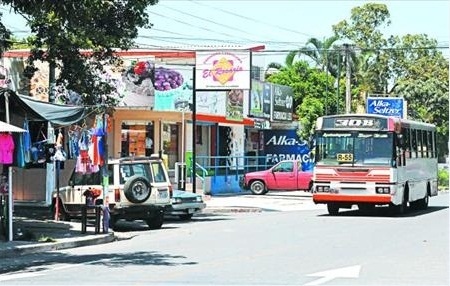 54
54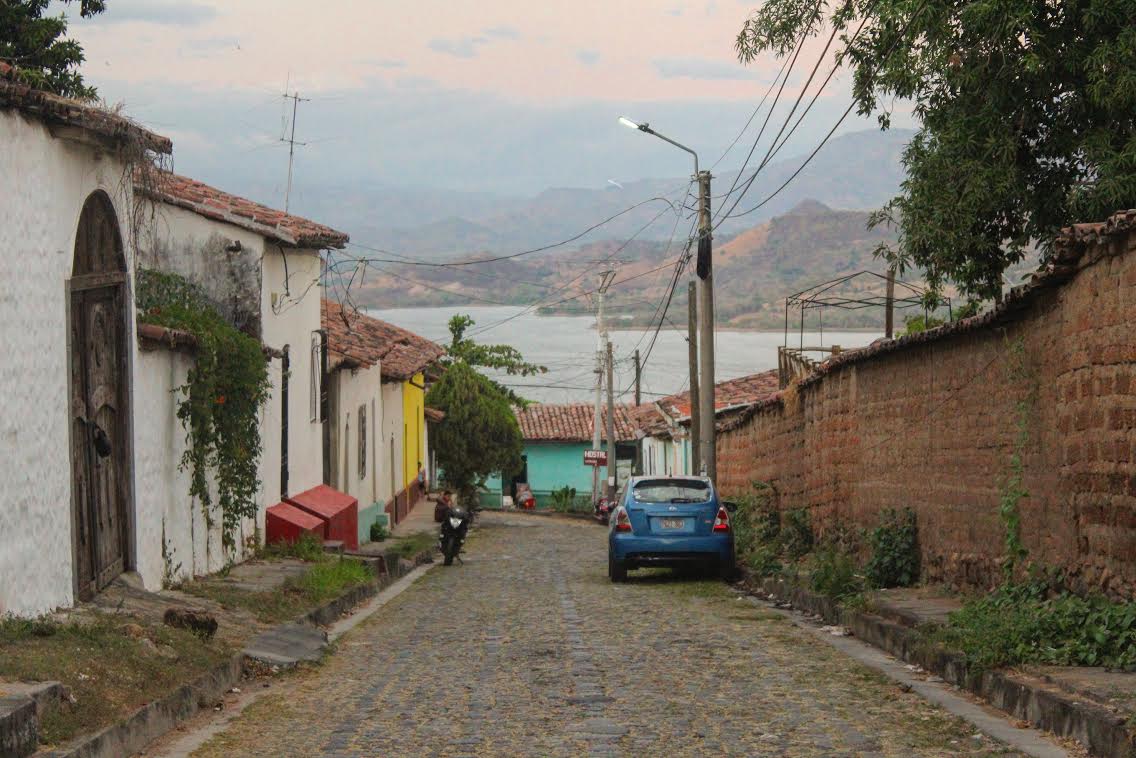 49
49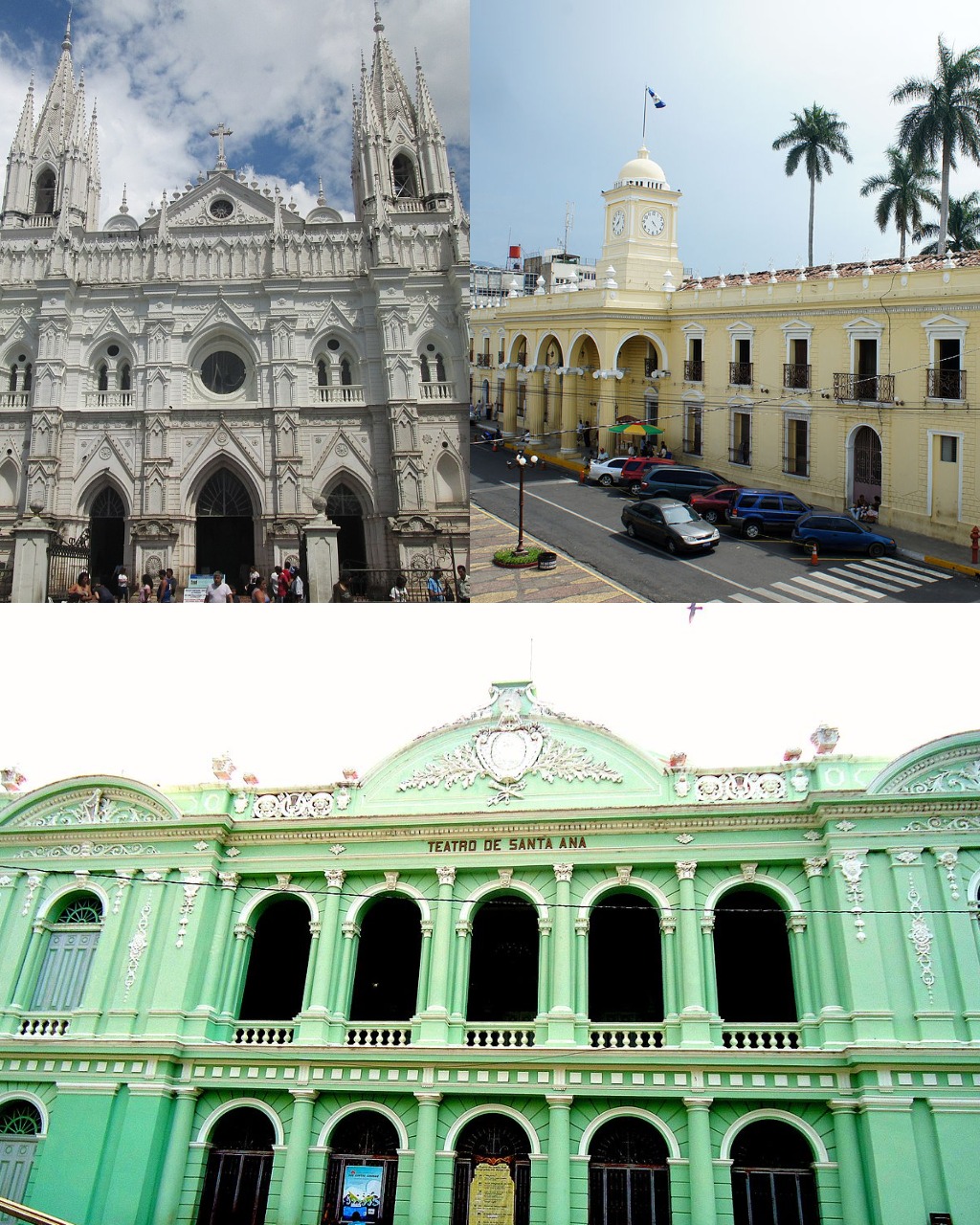 52
52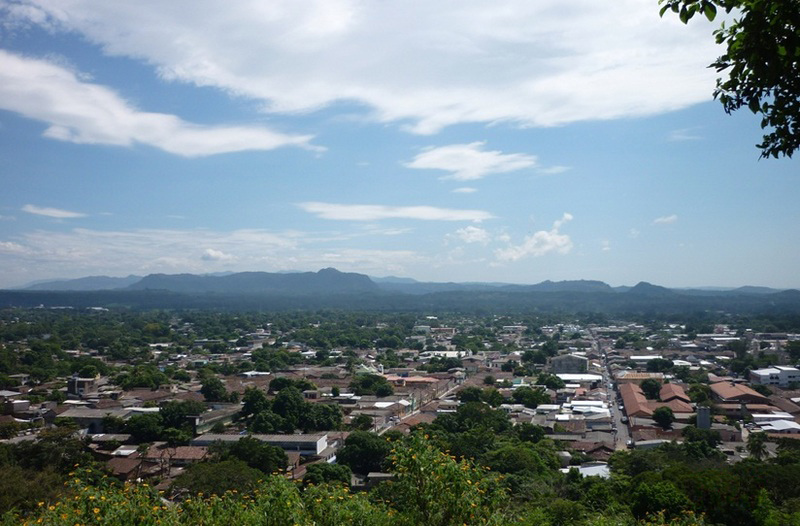 53
53 63
63 60
60Getting the income story right before you apply
The application asks for bank statements covering three to twelve months, a bank certificate confirming regular foreign income, and a sworn affidavit that you will cover your own living expenses. The documents need to tell a consistent story. If your statements show erratic deposits from a mix of PayPal, Wise, and direct client transfers, the officer reviewing your file will look for a thread that ties them to foreign work. A letter from an employer makes that easy. Freelancers with multiple income streams should assemble contracts, invoices, and a simple spreadsheet that maps deposits to clients. The affidavit is not a formality; it is a legal declaration. Vague language or a mismatch between the stated income and the bank records invites a request for more evidence, which stretches the timeline.
The threshold is $1,667 per month, so you are not proving wealth, just regularity. The bank certificate should state that the account receives foreign-sourced funds. Some banks will issue a letter with that phrasing; others will only confirm the balance and transaction volume. If your bank is uncooperative, a detailed statement with highlighted foreign transfers and a cover letter from you explaining the pattern can work, but it is weaker. The safest approach is to use an account that has received steady foreign deposits for at least six months before you apply. Sudden lump sums or a newly opened account with a single large transfer will draw scrutiny. The visa does not permit local work, so every dollar you show must trace back to a source outside El Salvador.
Translations and apostilles are not optional. Every foreign-issued document needs an official Spanish translation and an apostille or consular legalization. Criminal record certificates from your country of origin and any country where you lived in the past two years require this treatment. Gathering those before you leave saves weeks. If you arrive as a tourist and then start chasing apostilles from abroad, you risk running down the 120-day window to apply in-country. The application itself is straightforward, but the document preparation is where timelines collapse.
The 183-day rule rewrites the deal
Most digital nomad visas treat physical presence as a suggestion or a tax-residency trigger you can avoid. El Salvador’s version makes it a condition of the visa. You must be in the country for at least 183 days per calendar year. That is not a soft guideline. It means the visa is incompatible with a lifestyle that splits time between three countries. If you maintain a lease elsewhere or have family obligations that pull you away for months at a stretch, this program will not work.
The presence requirement also interacts with tax residency. Under Salvadoran law, 183 days of presence generally establishes tax residence. Because the country operates a territorial tax system, that status does not expose your foreign income to local taxation. But it does mean you may need to file a Salvadoran tax return, even if no tax is due, and it can affect how your home country treats your foreign earned income exclusion or foreign tax credits. The US, for example, still requires citizens to file and report worldwide income. The physical presence test for the Foreign Earned Income Exclusion uses a different 330-day standard, so spending exactly 183 days in El Salvador will not automatically qualify you for the exclusion. You will need to plan your days carefully if you intend to use it.
The rule also shapes your relationship with the visa renewal. Each two-year block requires you to demonstrate compliance with the presence requirement. Immigration can check entry and exit records. A renewal application that shows long absences will be denied. This is not a program you can coast on. It demands that you actually live in the country, which means finding housing, building routines, and accepting that your travel is limited to short trips. For someone who wants a stable base in a dollarized economy with no tax on foreign income, that is the point. For someone who thought this was a flexible nomad visa, it is a constraint they did not see coming.
What happens after you land
You enter El Salvador as a tourist. For many nationalities, that means a 90-day or 180-day visa-free entry. You then have 120 days to submit your application to the General Directorate of Immigration. That window sounds generous, but the clock starts ticking the moment you clear passport control. If your documents are not ready, you will burn weeks gathering translations, waiting for apostilles to arrive by courier, or correcting a bank letter that does not meet the standard. The application itself costs $100 and can be filed online or in person. After submission, processing takes at least six weeks. There is no published maximum, so you should assume it could stretch longer.
During those six-plus weeks, you remain on tourist status. You cannot work locally, and you must not overstay your tourist entry period. If your tourist admission is 90 days and processing takes 10 weeks, you will need to leave the country and re-enter, or request an extension, which adds complexity. The safer play is to enter on a 180-day stamp if your nationality qualifies, or to submit your application early enough that the tourist clock does not become a problem.
Once the visa is approved, you do not yet hold a residence card. You must register post-arrival for a residence permit conversion. That step turns the visa approval into a physical permit that proves your legal status. Until that card is in your hand, you are in a bureaucratic gap. You may need to provide additional photos, fingerprints, or updated documents. The process is administrative, not adversarial, but it requires your presence. You will visit immigration offices, wait in lines, and pay small fees. The permit is valid for 24 months from issuance, and you can renew it as long as you continue to meet the requirements. The renewal follows a similar path, so keep your documents current and your presence record clean.
No permanent residency at the end of the road
The visa does not lead to permanent residency. That is not a temporary omission or a pathway that opens after a few renewals. It is a structural feature. You can renew the permit every two years indefinitely, in theory, but each renewal resets the clock. You never accumulate time toward a permanent status. If your circumstances change and you want to stay in El Salvador long-term, you will need to switch to an entirely different visa category, such as an investor visa or a retiree visa, each with its own financial thresholds and requirements.
This changes the calculus for anyone who views a digital nomad visa as a stepping stone to a second passport or indefinite leave to remain. Countries like Portugal and Spain offer digital nomad visas that can convert to permanent residency after a set number of years. El Salvador does not. The trade-off is that those countries tax worldwide income or have higher minimums. Here, you get a clean territorial tax system and a low entry barrier, but the door stops at temporary residence. If your plan is to spend two or four years in the country and then move on, that limitation is irrelevant. If you are looking for a long-term home that can eventually lead to citizenship, this visa will not get you there, and you should start researching the alternatives from day one.
The absence of a PR path also means you should not build a life that depends on permanent status. Buying property is possible on a temporary permit, but your right to stay is always conditional. A change in government policy or a missed renewal could upend your plans. The visa is best understood as a fixed-term arrangement with a clear exit. That clarity is useful if you treat it as such.
How this stacks up against the alternatives
Central America has no shortage of residency options for remote workers, but they split along a fault line: flexibility versus commitment. Costa Rica’s digital nomad visa, for example, does not require you to stay in the country for most of the year. You can come and go. The income threshold is higher, and the tax treatment is less favorable for some, but the visa can serve as a part-time base. Panama’s friendly nations visa requires a local economic tie, not just remote income, and leads to permanent residency after a set period. Mexico’s temporary residency allows remote work but imposes tax obligations on worldwide income once you become a resident, and the financial solvency requirements are steeper.
El Salvador occupies a distinct corner. It asks for the most presence and offers the least long-term security, but it pairs that with the lowest income floor in the region and a territorial tax system that leaves foreign earnings untouched. If your income is entirely from US clients and you want to minimize tax friction while living in a dollarized economy, the combination is hard to beat. The cost of living is low, the currency risk is zero, and the application process is accessible. The price is your physical presence. You cannot treat this as a backup plan or a visa of convenience. You either move to El Salvador or you do not.
For someone earning $4,000 to $10,000 a month from remote work, the income requirement is a non-issue. The decision comes down to whether you are willing to spend the majority of the next two years in one country. If the answer is yes, and you do not need a path to permanent residency, the visa delivers exactly what it promises. If you need more mobility or a longer horizon, the alternatives are worth a harder look, even if they cost more in taxes or paperwork.
Work Permissions
Application Steps
- 1
📋 Check eligibility and prepare
1-2 days
- 2
📄 Collect required documents
1-4 weeks
- 3
📅 Book consulate appointment
1-2 weeks
- 4
📬 Submit visa application
Same day
- 5
⏳ Wait for visa approval
45 days
- 6
🏛️ Enter and register immigration
1 week
Planning a long stay? Compare international health plans for El Salvador.
Compare health insuranceWe may earn a commission at no cost to you.
Compare this visa
Curated comparisons that include this route.
Frequently Asked Questions
Click any question to expand the answer.
Ready to Apply?
Work with trusted visa specialists who handle the paperwork so you can focus on your move.
Get help with this visa →* We may earn a commission if you apply through our link
At a Glance
Last verified: October 9, 2026