Min Monthly Income
$4,670
Application Fee
$560
Processing Time
1-52 wks
Difficulty
Moderate
Duration
120 months
Path to Citizenship
10 years
Overview
Regulation 6(2) residence, marketed as the Cyprus Golden Visa, is built around two hard numbers in your case: at least €300,000 invested in qualifying assets and at least €4,510/month in secure foreign income. Income must come from outside Cyprus; local employment is not allowed under this status, so wages from a Cypriot employer or on-the-ground consulting work would break the terms. For a FIRE couple drawing $5,000/month from ETF dividends and rental income into a US or Canadian brokerage, the income hurdle is met immediately, without any need to work locally.
The €300,000 investment threshold can be met through approved investment routes, including real estate, corporate, or fund investments. The key capital requirement is committing that €300,000 into Cyprus-linked assets rather than simply holding cash. Application and renewal fees are required, so you need to budget for government charges and legal fees on top of the headline investment amount.
Residency status under this program leads straight to permanent residence from day one, Years to PR is 0, as long as you satisfy the investment and income criteria. For long-term planners, the law framework allows a path to Cypriot citizenship in 10 years; that ten-year horizon matters if you are comparing this to, say, Italy’s investor visa with a longer naturalization route. Duration of each residence card and renewal mechanics are specified as 120 months (as of 2026), and the program itself is renewable and designed as a long-term status rather than a short-stay permit.
On the residency-versus-travel trade-off, the official physical presence requirement and maximum consecutive absence are not specified in the law. Some advisory firms describe very light touch presence rules, but without a named day-count you should treat residence as a status you can maintain while keeping primary life elsewhere, subject to whatever minimum visit pattern Cyprus enforces in practice. Compared with golden visas that demand 183 days per year, this uncertainty cuts both ways: it can be highly flexible, but you need to verify the latest practice before you disappear for years at a time.
Process friction is relatively modest by regional standards, the bureaucracy score is 1.25/5, but there are still non-trivial hurdles. You must show foreign-source income of €4,510/month, maintain qualifying investments of €300,000, hold health insurance, and clear standard background checks, though an interview and apostille are required, while no FBI background check, medical exam, or local bank account are formally required. This setup makes the program attractive if you have, for example, $1,000,000 in a brokerage account generating $6,000/month and want EU PR and a 10-year citizenship track without working; it is a poor fit if your plan depends on earning $4,000/month from on-the-ground work in Cyprus or you are unwilling to lock €300,000 into a Cyprus-linked asset.
Eligibility Requirements
This program is explicitly aimed at non‑EU nationals. Citizens of any European Union or European Economic Area member state have free movement and residence rights in Cyprus and therefore do not need, and in practice cannot use, the Cyprus Golden Visa as their primary route. Americans, Canadians, Australians, New Zealanders, Britons, and other non‑EU/EEA nationals fall squarely inside the target pool, provided they meet the investment and income requirements described.
EEA nationals — from Norway, Iceland, and Liechtenstein — and Swiss citizens often wonder whether they must apply for this type of residence. For Cyprus, they are treated in line with EU free movement rules and have their own registration procedures, so they are not eligible for or expected to use Regulation 6(2) / Golden Visa residency. Post‑Brexit UK citizens, by contrast, are now third‑country nationals from the Cypriot perspective and are eligible to apply just like US or Canadian investors.
Dual nationals who hold any EU citizenship — for example, a US–Italian or Canadian–Irish dual citizen — should enter and reside in Cyprus on their EU passport and use the EU registration process rather than the Golden Visa. That route is cheaper, faster, and avoids the need to lock in $324,000 of investment purely for immigration purposes, while still giving full residence rights in Cyprus and across the EU.
Min Income
$4,670
Min Investment
$336,228
Application Fee
$560
Min Age
18 yrs
Duration
120 months
Max 3% from local sources
Requirements Checklist
0 of 20 documents in hand
0%These take the longest, so start them first.
Request these while the slow items are in progress.
You only need these on the day you submit.
Extra requirements for this visa
- Apostille required on official documents
- In-person interview required
How and where to apply
Applications are submitted to the Cypriot Civil Registry and Migration Department, typically from abroad via authorized agents or online portals as outlined in CitizenRemote steps. After approval, complete biometrics in Cyprus at a designated immigration office. Non-EU nationals apply externally; no in-country switch from tourist visa noted.
Tax Information
Local tax regime and foreign passive income
Cyprus taxes on a worldwide basis once you are a tax resident, but the visa rules you have do not disclose a named special regime or the precise rules for Golden Visa holders. For planning purposes, assume that once you cross the tax residency threshold, foreign-source income such as remote salary, ETF dividends from a US brokerage, pension distributions, and rental income from property abroad can be brought into the Cypriot tax net under normal rules. Nothing in the Golden Visa itself exempts this income; it is an immigration product, not a tax shelter.
Capital gains on foreign investments like index funds and ETFs held in a foreign brokerage are not addressed in the visa rules. Cyprus in practice has relatively favorable treatment of securities gains, but because no explicit rate or exemption is disclosed here, you cannot assume those gains are exempt or remittance-based; treat their tax status as not publicly specified and get country-specific advice before realizing large gains while resident.
Tax residency in Cyprus is not defined in the visa rules by a specific day count, but Cyprus is widely known to use day-based tests (with 183 days as a common benchmark) and sometimes alternative formulas. Because the exact trigger is not specified here, you should not rely on Golden Visa status alone to determine whether you are a tax resident; instead, track days in-country and confirm the threshold with current Cypriot law. The visa itself does not automatically make you a tax resident on approval — the trigger is physical presence under domestic tax rules.
Cyprus operates a well-known “non-dom” framework in practice, but your data set does not list any special regime, rate, or deadline applicable to Golden Visa holders, so no preferential status can be assumed from the visa rules alone.
Local filing and registration requirements are not detailed in the visa rules. In practice, once you become a tax resident, expect to need a Cypriot tax ID, registration with the Tax Department, and annual returns if you have taxable income, but the exact deadlines and thresholds are not disclosed here.
The tax treaty status with the US is marked as unknown in the visa rules. That means you cannot plan on specific treaty protections for Social Security, dividends, or interest based solely on this data; whether there is a treaty, and what it covers, needs to be checked against the actual Cyprus–US convention and any separate totalization agreement.
For US Citizens and Green Card Holders
US persons remain taxed on worldwide income regardless of where they live or what visa they hold in Cyprus. The Foreign Earned Income Exclusion (FEIE, Form 2555) can shelter up to $126,500 of earned income in 2024 — wages from a foreign employer, remote salary, or self-employment — if you meet either the Physical Presence Test (330 days outside the US in any 12-month period) or the Bona Fide Residence Test. Because the Cyprus Golden Visa does not force you to spend a specific number of days in Cyprus or leave the US, many holders who split time or keep strong US ties will end up using the physical presence route if they want FEIE at all. FEIE does nothing for ETF dividends, capital gains, pension distributions, or US Social Security.
The Foreign Tax Credit (FTC, Form 1116) offsets US tax only when you actually pay foreign income tax and the effective local rate on that specific stream is greater than zero. If Cyprus taxes your foreign dividends or rental income at meaningful rates once you are tax resident, those payments can generate credits to reduce US tax on the same income. If, under local rules and your actual presence pattern, foreign income is lightly taxed or effectively at 0%, the FTC gives you no relief; you still owe full US tax on that income.
FBAR (FinCEN 114) kicks in when the aggregate value of your non-US financial accounts — Cypriot bank accounts, brokerage accounts, sometimes certain foreign pensions — exceeds $10,000 at any point in the year. This is separate from FATCA Form 8938, which has higher thresholds but similar disclosure logic. A local bank account is not legally required for this visa per the facts, but in practice many investors open one to handle the $324,000 investment or local expenses; once you do, assume FBAR and potentially Form 8938 apply if you cross the thresholds, with non-willful penalties starting around $10,000 per missing year.
For a Cyprus Golden Visa holder with significant assets, the realistic setup is: retain a US CPA who specializes in expat taxation to optimize FEIE versus FTC and to keep FBAR/FATCA clean, and engage a local Cypriot tax advisor to clarify residency status, register for taxes if needed, and handle local filings. The $1,500–$3,000 you spend in year one on those two professionals often pays for itself in avoided penalties and better elections on how your foreign passive income is taxed across the two systems.
Living in Cyprus
COL Index vs NYC
49.5
Monthly Cost (excl. rent)
$981
1BR Rent (City Center)
$962
Safety Index
66.9
Healthcare Index
57.1
Quality of Life Index
158.5
Time Zone
UTC+02:00
Capital
Nicosia
Population
1.2M
Official Languages
Greek, Turkish
Avg Internet Speed
259 Mbps
Public Transit Quality
Fair
With a budget covering rent and living costs, you'd need roughly $1,943/mo for a comfortable single-person lifestyle in Cyprus.See how far your money goes →
🏙️ Best Cities in Cyprus for Golden Visa Holders
 71
71 67
67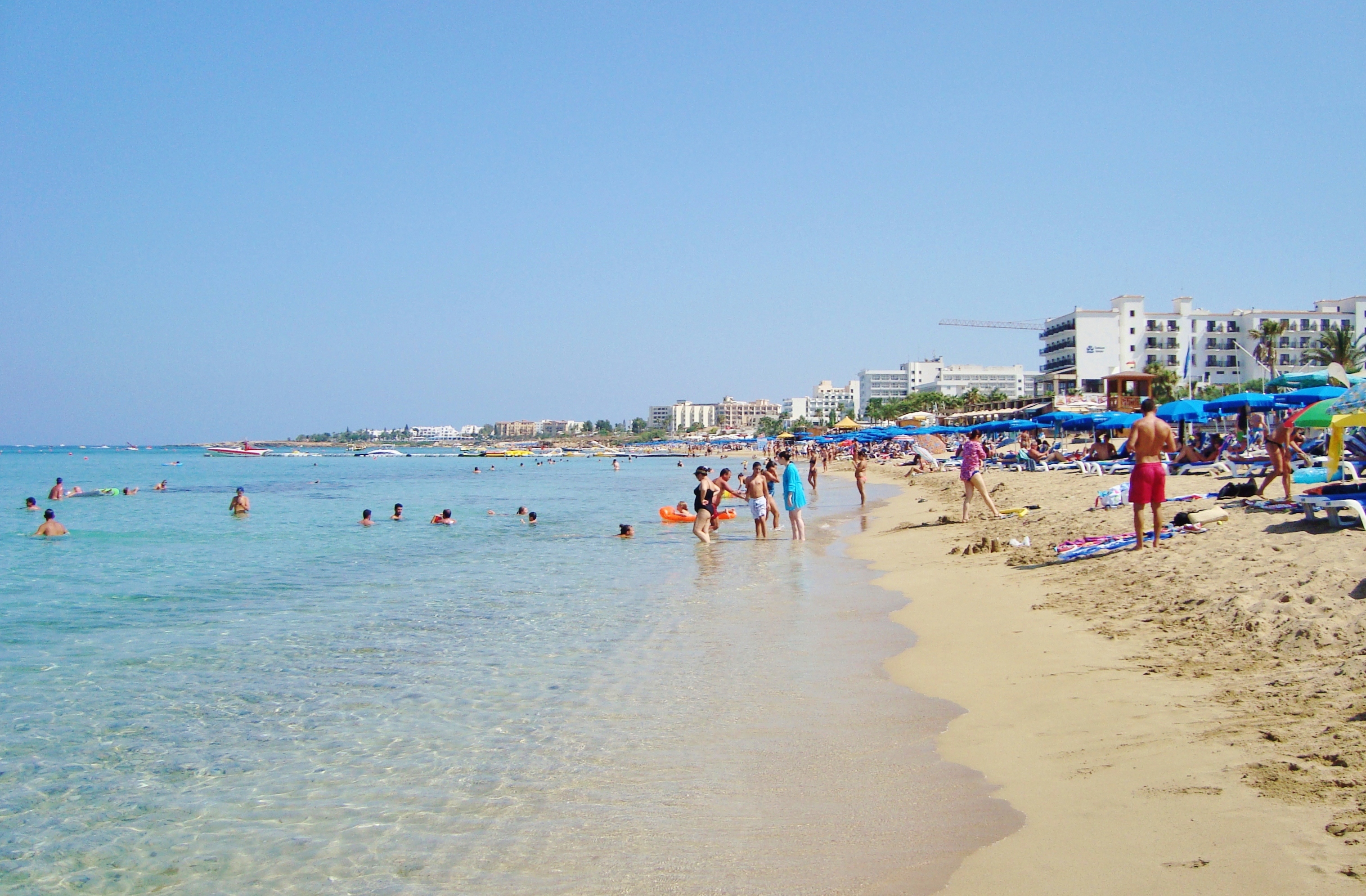 ✦ 77
✦ 77 66
66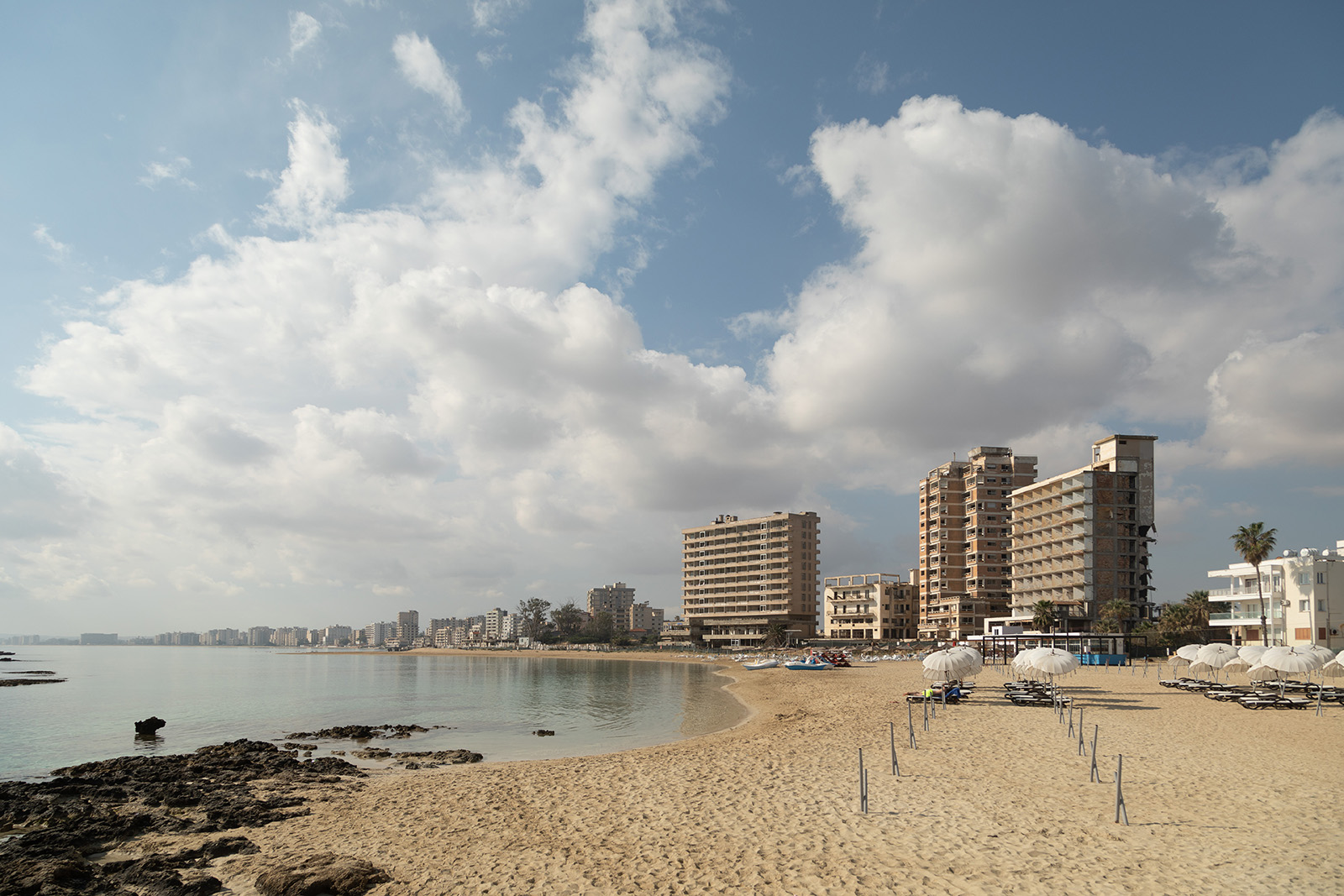 69
69The Housing Requirement and How People Get It Wrong
The rule is a real estate purchase of at least €300,000, plus the VAT that comes with it. You do not get a discount for buying two €150,000 apartments; the investment must be in a single property or, in some cases, a single development. People lose applications because they assume they can combine the value of a main residence and a holiday home. They also lose because they do not pay the full amount before applying. A contract of sale with a deposit is not enough. The money must be transferred from abroad to a Cypriot bank and reflected in the purchase price. If you are buying off-plan, the developer’s bank guarantee structure has to meet the immigration department’s standards, not just the developer’s.
The address registration that follows is often an afterthought until someone asks for it at the biometrics appointment. You need a utility bill or registered lease for the property, even if it is empty while you are abroad. Arrange that with your lawyer before you travel. Without it, your card issuance stalls.
What Happens After You Land
Your application gets submitted through a registered agent or an online portal while you are still outside Cyprus. Once it is pre-approved, you receive a letter inviting you to complete biometrics at a designated immigration office in Cyprus. This is not the final card. You will travel, give fingerprints and a photo, then wait again while the card is produced and delivered. That wait can be anywhere from a couple of weeks to a couple of months, which matters if you have already booked a one-way ticket and have no return date. You cannot collect the card by post; someone has to be physically present.
After that, you are a permanent resident, free to come and go. The health insurance policy you bought for the application must already be active on the day you land for biometrics, because the immigration office can ask for proof. If you land on a tourist visa and then try to complete the process, you will be turned away. The whole thing has to happen from outside with a separate entry for biometrics, which makes for at least two flights. Budget for that.
What Permanent Residence and Citizenship Actually Demand
On paper, permanent residence is immediate. There is no provisional period, no requirement to live in Cyprus a set number of days each year. In practice, your 10-year residence card does need renewing, and renewal will check that you still hold the qualifying property and that your income still meets the threshold. If you sold the property and did not replace it with another qualifying investment, or if your foreign income dried up, you risk losing the status.
Citizenship is a separate equation. The legal residency requirement is 10 years, which starts the day your residence card is issued. Many people move to Cyprus assuming they will simply wait it out, but a decade is a long time to maintain an unbroken foreign income stream and a property you cannot sell. If at any point you become a tax resident of another country and file there, the Cypriot authorities may see your residency as not continuous. The language requirements and other naturalisation steps that kick in at year 10 are not something you can coast through. This is not a passive citizenship path; it rewards people whose life is truly anchored in Cyprus, not those who are just holding a card.
The Judgment Call Against the Obvious Alternative
The most direct comparison is a golden visa in another EU country that also does not require much physical presence, like Greece. There, you can invest a similar sum and get a five-year renewable permit, not permanent residence. The advantage: you might pay slightly less and the application feels less capital-intensive up front. The disadvantage: you are proving your investment and income again every five years, and you still cannot work.
Cyprus gives you the immediate finality of permanent status. If you do not need that speed because you plan to actually move and integrate, a different golden visa that offers a clear route to citizenship in five or six years might be more compelling. But if your life is truly remote and you want a residency that is not tied to a renewal clock, the Cypriot model asks less of your time after the initial effort. The catch is the no-work rule, which narrows the applicant pool to people with already established, location-independent income. If your income depends on a job that might require you to switch to a local contract later, the permanent status does not help. You would need a different visa. So the decision often comes down to whether you can commit to a decade or more of passive or remote-only earnings. If the answer is yes, the Cyprus Golden Visa gets you a stable base with no future paperwork deadlines looming.
Work Permissions
Application Steps
- 1
📋 Choose investment option
- 2
📄 Gather core documents
2-4 weeks
- 3
📋 Demonstrate financial eligibility
1 week
- 4
📬 Submit application
Same day
- 5
⏳ Await review and decision
- 6
🏛️ Complete biometrics in Cyprus
1-2 days
- 7
🏛️ Maintain compliance annually
Compare this visa
Curated comparisons that include this route.
Frequently Asked Questions
Click any question to expand the answer.
Ready to Apply?
Work with trusted visa specialists who handle the paperwork so you can focus on your move.
Get help with this visa →* We may earn a commission if you apply through our link
At a Glance
Last verified: October 9, 2026