Min Monthly Income
$2,500
Application Fee
$250
Processing Time
24-52 wks
Difficulty
Moderate
Duration
24 months
Path to Citizenship
7 years
Overview
Costa Rica’s Rentista Visa targets foreigners who can live from passive income or savings rather than local work. You qualify by showing either a guaranteed passive income of at least $2,500 per month for 24 months, or by committing $60,000 into a structure accepted by Costa Rican immigration (program rules treats both as minimum savings and investment required at $60,000). Passive income here means dividends, interest, rental income, pensions, or similar streams generated outside Costa Rica; local employment income is not allowed, and you cannot work for a Costa Rican employer under this status.
The permit is granted for 24 months and is renewable, but it is not a paper-residency: to maintain status, you must spend at least 120 days per year in Costa Rica. That presence requirement matters if you intend to split time with another base like Mexico or Portugal, because dropping below roughly 4 months per year can jeopardize renewal and, with it, your permanent residency timeline. Planning around the 120-day floor is the practical constraint.
From a long-range planning perspective, this temporary residence does lead to permanent residency after 3 years and, eventually, citizenship after 7 years. For someone relocating with a 10-year horizon, that means one 2-year Rentista period, at least one renewal, then an application for permanent residency in year 3, and a citizenship decision, if desired, roughly 4 years after that. Because local work is prohibited, Rentista fits those whose $2,500+ monthly inflow or $60,000 nest egg is secure for the full multi-year arc, not just the initial 24 months.
The friction sits in both time and paperwork rather than strict financial thresholds. Official guidance pegs processing time at 52–78 weeks, so you are committing 1–1.5 years from initial filing to final approval. The application fee itself is modest at $50, but you must also arrange health insurance, document your passive income or $60,000 investment clearly, and deal with Spanish-language forms and consular or immigration appointments, though an apostille is required, while an FBI background check, medical exam, or interview are not formally required under the current program rules.
This path makes most sense if you can document at least $2,500 per month in foreign passive income or dividends and are comfortable spending 120+ days per year in Costa Rica for at least 3 years to reach permanent residency. It is a poor fit if your plan is to keep a full-time W‑2 or T4 remote job that might be interpreted as disallowed employment or if you cannot realistically be in Costa Rica for a minimum of 4 months each year.
Eligibility Requirements
Any nationality can apply for Costa Rica’s Rentista Visa in principle, as the current rules list nationality restrictions as “all,” meaning globally open eligibility. In practice, applicants from sanctioned or diplomatically sensitive countries such as Iran, North Korea, Syria, and sometimes Cuba or Russia can encounter banking compliance hurdles and additional scrutiny that make it difficult to place the required $60,000 or document the $2,500/month income in a way local banks accept. Before investing in apostilles, translations, or moving funds, confirm your specific eligibility and any practical banking constraints directly with the Dirección General de Migración y Extranjería, which is Costa Rica’s official immigration authority.
Min Income
$2,500
Min Savings
$60,000
Min Investment
$60,000
Application Fee
$250
Min Age
18 yrs
Duration
24 months
Physical Presence
120 days/yr
Passive / Investment Income
Requirements Checklist
0 of 14 documents in hand
0%These take the longest, so start them first.
Request these while the slow items are in progress.
You only need these on the day you submit.
Extra requirements for this visa
- Apostille required on official documents
How and where to apply
Apply at Costa Rica immigration offices, typically in-country after entering on a tourist visa. Consulate application in home country possible but in-country switch common for expats. Submit complete dossier with $50 fee; processing 52-78 weeks.
Tax Information
Local tax regime and what it means for you
Costa Rica operates a territorial tax regime. Under territorial rules, tax falls on income sourced in Costa Rica, not on income earned abroad. For a Rentista holder, that means U.S. or Canadian pensions, Social Security, ETF dividends from a brokerage in the U.S. or Europe, and rental income from properties outside Costa Rica are, under current law, outside Costa Rica’s income tax base. Local income, such as profits from a Costa Rican business you own or any services performed in-country for local clients, is taxable.
For FIRE-oriented investors, the key point is that foreign passive income streams used to meet the $2,500/month requirement are not taxed locally as long as they remain foreign-source. You also cannot take local employment, so there is no local salary to tax under this visa category. Pension income is recognized for qualification purposes, but when the pension is paid from abroad, it still falls under the foreign-source umbrella for Costa Rican tax.
On foreign capital gains from selling ETFs or index funds in an offshore or home-country brokerage, Costa Rica’s territorial system means these gains are generally treated as foreign-source and are therefore exempt under territorial rules. There is no disclosed special rate on such offshore gains under Costa Rica's tax law, and no indication that simply receiving the proceeds into a Costa Rican bank turns them into Costa Rican-source income.
Tax residency in Costa Rica is normally tied to physical presence and economic center of life. With this visa, you already have immigration residency, but you become a tax resident once you exceed the domestic threshold (commonly 183 days in a year on the ground) or establish Costa Rica as your main base. The visa’s 120-day presence requirement alone is below that, so some Rentista holders stay under full tax-resident status, but anyone spending closer to 6+ months per year will generally be treated as a Costa Rican tax resident, albeit within a territorial system that still ignores foreign-source income.
Local filing obligations turn on whether you are tax resident and whether you have Costa Rican-source income. A pure Rentista with only foreign dividends and pensions and no Costa Rican business or employment often has no local income tax to declare. Once you operate a local business, hold Costa Rican rental property, or cross into tax residency, you should obtain a Costa Rican tax ID, register with the tax authority, and file the annual income declaration on Costa Rican-source income by the local deadline. The Tax Treaty with the U.S. is confirmed not to exist, so you cannot assume protection on U.S. Social Security or dividends via treaty provisions; treat Costa Rica as a non-treaty jurisdiction until you confirm otherwise from primary sources.
For US Citizens and Green Card Holders
US persons under this visa remain fully taxable by the IRS on worldwide income, regardless of Costa Rica’s territorial regime. The Foreign Earned Income Exclusion (FEIE, Form 2555) applies only to earned income such as remote salary, self-employment, or consulting income up to $132,900 for 2026, indexed over time. It does not cover ETF dividends, interest, capital gains, pension distributions, or Social Security. Because Rentista status forbids local employment but allows remote work, some holders maintain a U.S. or foreign salary; if you do, you can use FEIE if you meet either the Physical Presence Test (330 full days outside the U.S. in any 12-month period, including days in Costa Rica) or the Bona Fide Residence Test as a long-term Costa Rican resident.
The Foreign Tax Credit (FTC, Form 1116) only helps when foreign tax is actually paid. In Costa Rica, foreign-source dividends, interest, and capital gains are untaxed under the territorial system, so there is no Costa Rican tax to credit against U.S. liability on that income. If you have Costa Rican-source business profits or other taxable Costa Rican income, FTC can offset U.S. tax on that specific income stream, but it does nothing to reduce U.S. tax on your foreign passive income that Costa Rica ignores.
FBAR (FinCEN 114) and FATCA (Form 8938) are unavoidable if your Costa Rican or other foreign accounts cross thresholds. FBAR kicks in once the aggregate value of all non-U.S. financial accounts exceeds $10,000 at any point in the year; penalties for non-willful violations start around $16,700 per year, per form as of 2026. Form 8938 has higher thresholds but similar disclosure logic. If you hold the $60,000 investment or maintain operating cash in local Costa Rican banks, expect to file both FBAR and, for many retirees and FIRE users, Form 8938.
To make this structure work, you need two professionals: a U.S. CPA who specializes in expat taxation and understands FEIE, FTC, FBAR, and FATCA, and a Costa Rican tax advisor who can confirm when you cross into tax residency and what local filings, if any, are triggered. The $1,500–$3,000 spent in year one on coordinated advice between those two advisors usually pays for itself in avoided penalties, correct treaty or non-treaty handling, and optimized elections on how to characterize your passive income streams.
Living in Costa Rica
COL Index vs NYC
50.1
Monthly Cost (excl. rent)
$944
1BR Rent (City Center)
$903
Safety Index
45.9
Healthcare Index
64.3
Quality of Life Index
129.4
Time Zone
UTC-06:00
Capital
San José
Population
5.1M
Official Languages
Spanish
Avg Internet Speed
212 Mbps
Public Transit Quality
Fair
With a budget covering rent and living costs, you'd need roughly $1,847/mo for a comfortable single-person lifestyle in Costa Rica.See how far your money goes →
🏙️ Best Cities in Costa Rica for Passive Income Residents
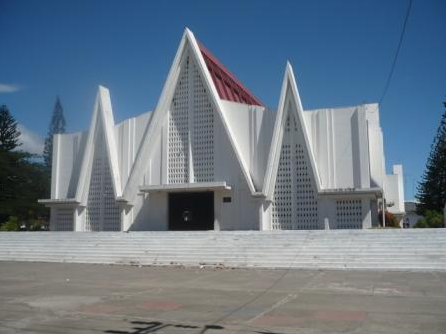 68
68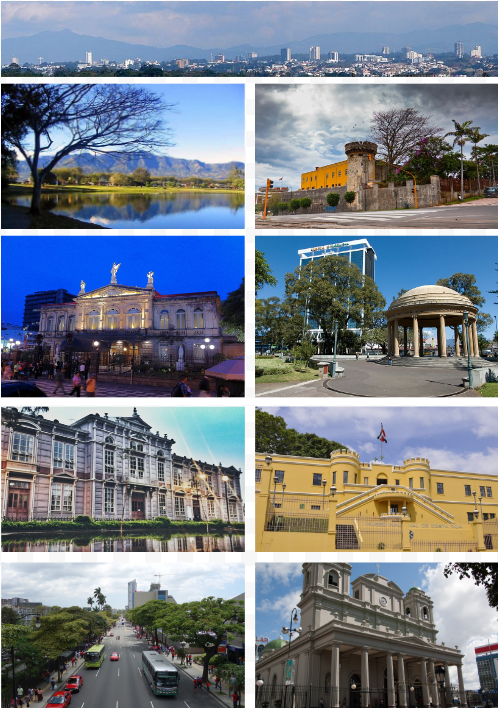 68
68Getting the income documentation story straight before applying
There are really two ways into this visa, and most of the trouble comes from mixing them. One path certifies a guaranteed monthly income of at least $2,500, the other backs that certification with a lump deposit equivalent to roughly two years of it. Pension income and qualifying social security income both count, which matters because a pension administrator's letter is a document immigration officers already know how to read. A freelancer's income, by contrast, has to be translated into something that looks the same, usually a bank reference letter or formal certification rather than a stack of invoices and screenshots.
The mistake people make is assuming raw statements are enough. A personal bank statement showing deposits is not the same as a bank issuing a certification that the income is real, ongoing, and attributable to the applicant. Immigration wants the latter, and getting a bank to produce it takes longer than most people budget for, especially with a foreign institution unfamiliar with the request. Freelancers earning from several US clients should start by asking their bank directly what kind of income letter it can issue, because the answer varies by institution and sometimes by branch.
Consistency across documents matters more than the total amount. If a police clearance lists one address and a bank letter lists another, or if a name is spelled slightly differently across a passport, a marriage certificate, and a financial document, that inconsistency becomes the reviewer's excuse to pause the file rather than approve it. None of this shows up as a formal rejection reason. It shows up as silence, a request for clarification months later, or a resubmission that resets part of the clock.
Anyone combining income sources, a small pension plus freelance work, for instance, should expect to document each stream separately and let the total add up rather than presenting one blended number. Reviewers want to see where each dollar originates, not a net figure that requires them to take the applicant's word for it.
The income guarantee deposit and how people get it wrong
The $60,000 guarantee gets treated by a lot of applicants as a savings threshold, something to simply have sitting in an account. It isn't quite that. It's a certified guarantee, tied to the same 24-month window as the initial permit, and the certifying institution needs to stand behind the number in writing. A personal savings balance that happens to clear $60,000 on the day of filing is not the same as a bank willing to certify that amount as a guarantee against the visa.
A local Costa Rican account isn't required to make this work, and that surprises people who assume they need to open one before they can even file. A recognized foreign bank can issue the certification. Where people go wrong is timing the move of funds. A large, recent deposit into an account right before applying looks exactly like what it is, money staged for a paper trail, and staged-looking deposits draw more scrutiny than money that has been sitting and seasoning for a while. The safer sequence is to consolidate funds well ahead of filing and let the account history speak for itself rather than engineering a number the week before the dossier goes in.
The other error is treating the deposit as a one-time hurdle. The guarantee needs to hold for the length of the permit, and renewal means proving the money, or the income stream backing it, is still there. Spending down the deposit right after approval because the visa is "done" creates a problem two years later that nobody warns applicants about until they're renewing.
What actually happens after you land
Most applicants enter on a tourist visa and file the residency application from inside Costa Rica rather than through a consulate abroad, which is administratively simpler but means living in a kind of limbo while the case moves. There's no interview and no medical exam required, which removes two common failure points, but the dossier itself, translated, apostilled, fingerprinted, and paid for with the $50 filing fee, has to be complete on submission because there's no in-person moment to explain a gap.
Then the wait starts, and it runs long, roughly a year to a year and a half in current processing terms. During that period there's no physical residency card yet, so day-to-day life, opening accounts, dealing with insurance, sometimes proving legal status to a landlord, happens on the strength of a receipt showing the application is in process rather than an actual permit. This is the gap that catches people off guard. Being approved and holding a usable card are two different moments, and the space between them can stretch for months even after the substantive decision is effectively made.
Once the permit issues, it's valid for 24 months, and that's when the working restriction becomes real day to day rather than theoretical. Health insurance, whether through the public system or a private policy, needs to be arranged around this point too, since holding the permit is generally tied to maintaining coverage. None of this requires local employment income, by design, but it does require someone to actually manage a household on money arriving from outside the country while local bureaucracy runs on its own schedule.
What the long-term path requires in practice
On paper, permanent residency is reachable after three years, and citizenship after seven. What that timeline doesn't advertise is the physical presence requirement running underneath it, roughly 120 days a year, which is a real anchor for anyone who imagined this as a base to be visited occasionally rather than lived in. Someone structuring their year around long stints elsewhere needs to build the calendar around this number, not the other way around, because falling short of it can complicate the residency continuity that PR eventually depends on.
Renewal at the 24-month mark isn't a formality either. The income or guarantee that got the applicant in the door has to be recertified, meaning the documentation discipline from the original application doesn't end at approval, it repeats. Anyone who let their bank relationship lapse, closed the certifying account, or let a pension letter go stale will be redoing work they thought was finished.
The three-year and seven-year figures are also legal minimums, not guaranteed calendar dates. Processing backlogs that stretch initial approval past a year mean the practical clock toward PR often starts later than people expect when they first file, and the years-to-citizenship timeline compounds on top of whatever delay happened at the entry stage. Planning around the legal minimum without padding for administrative reality is where a lot of long-term timelines quietly slip.
The judgment call against Panama
Panama's retiree and passive-income routes get raised constantly as the alternative, and the comparison usually comes down to what kind of certainty someone wants. Panama has built a reputation for faster, more retiree-friendly processing and is frequently the default suggestion for anyone with pension income specifically. Costa Rica's Rentista visa asks for more patience and more up-front capital in exchange for a residency and citizenship path with defined years attached to it, three to PR and seven to citizenship, which gives a planner something concrete to build around even if the processing queue itself is slow.
For someone whose income is truly passive and pension-based, Panama's programs are worth serious comparison on cost and speed. For someone whose income is freelance or business-derived and needs the deeper documentation the Rentista visa is built to absorb, Costa Rica's territorial tax treatment and the relative predictability of the guarantee-and-certify structure make it the steadier bet, even with the longer wait. The decision isn't really about which country is "better." It's about whether the applicant's income story is better served by a system built around pensions and fixed thresholds, or one built around certifying whatever the income actually looks like, and having the patience to sit with a slow but well-defined path once that's done.
Work Permissions
Application Steps
- 1
📋 Research eligibility and gather finances
1-2 weeks
- 2
📄 Collect identity and financial documents
2-4 weeks
- 3
📋 Prepare application dossier
1 week
- 4
📬 Submit application to immigration
Same day
- 5
⏳ Wait for processing decision
52-78 weeks
- 6
🏛️ Complete in-country registration
1-2 weeks
This visa requires proof of health insurance. Compare international plans before you apply.
Compare health insuranceWe may earn a commission at no cost to you.
Compare this visa
Curated comparisons that include this route.
Frequently Asked Questions
Click any question to expand the answer.
Ready to Apply?
Work with trusted visa specialists who handle the paperwork so you can focus on your move.
Get help with this visa →* We may earn a commission if you apply through our link
At a Glance
Last verified: October 9, 2026