Min Monthly Income
$1,000
Processing Time
12-26 wks
Difficulty
Easy
Duration
24 months
Path to Citizenship
7 years
Overview
Qualification hinges on one simple financial metric: at least 1,000 USD/month in pension income, verified as guaranteed and ongoing. Only pension-type income counts for the main applicant: Social Security, government or military pensions, private company pensions, or lifetime annuities. Rental income, stock dividends, and business profits do not qualify unless they are structured as a true pension. A FIRE couple pulling 4,000 USD/month from ETF dividends but no formal pension does not qualify, while a single retiree with 1,200 USD/month in US Social Security clears the bar immediately.
The status runs for 24 months at a time and is renewable, with no publicly specified minimum savings, investment amount, or renewal fee beyond the 50 USD application fee at the outset. To keep the status in good standing and progress toward permanent residency, you must spend at least 120 days/year physically in Costa Rica; this is a hard number that matters if you split life between, say, Costa Rica and Mexico or the US. There is no publicly specified maximum consecutive absence, but spending fewer than 120 days in-country weakens both renewals and the permanent residence timeline.
Long-term, this is a migration route rather than a pure stay-and-leave visa. After 3 years in Pensionado status you can apply for permanent residency (PR), and after 7 years in total you can apply for citizenship, subject to language and integration requirements. Someone arriving at 60 with 1,500 USD/month in pension can plan on PR at 63 and a citizenship application around 67, assuming continuous renewals and meeting the 120 days/year presence rule.
Friction is moderate rather than extreme: bureaucracy score 2.05/5 reflects that the process is structured but not effortless. You must open a local bank account, secure health insurance in Costa Rica, and assemble pension proof plus civil documents, but apostille or consular legalization of documents is required, but there is no FBI background check, medical exam, or interview according to current rules. Processing is slow enough to affect planning: 12–26 weeks is the stated range from application to approval, so a 3–6 month buffer before a planned move is realistic.
This setup makes the most sense if you have 1,000–3,000 USD/month in pension income, can actually live in Costa Rica at least 120 days each year, and care about a 3-year path to PR and 7-year path to a second passport. It is a poor fit if your income is primarily from investments or remote work rather than a formal pension, or if you want to spend only a few weeks per year in-country while keeping residency alive on paper.
Eligibility Requirements
Any nationality can apply in principle for Costa Rica’s Pensionado Visa, as the program does not formally exclude specific countries. In practice, applicants from heavily sanctioned or diplomatically strained states such as Iran, Cuba, Syria, North Korea, and in some banking contexts Russia, can run into serious hurdles with background checks, consular processing, and especially opening the required Costa Rican bank account, even though the law itself is nationality‑neutral. Before compiling your document package, confirm current eligibility and any consular nuances directly with Costa Rica’s Dirección General de Migración y Extranjería or the nearest Costa Rican consulate.
Min Income
$1,000
Min Age
45 yrs
practical
Duration
24 months
Pension / Social Security
Self-Employed · Business Owner
Requirements Checklist
0 of 16 documents in hand
0%These take the longest, so start them first.
Request these while the slow items are in progress.
You only need these on the day you submit.
Extra requirements for this visa
- Apostille required on official documents
How and where to apply
Apply in-country at the Direccion General de Migracion y Extranjeria (DGME) Plataforma de Servicios after entering on a tourist visa. Submit in person or via accredited agent; no consulate application needed. Change of category fee ($200 from sources) may apply if switching from tourist status.
Tax Information
Local tax regime and what it means for you
Costa Rica uses a territorial tax regime. In practice that means Costa Rica taxes income sourced in Costa Rica, but not foreign-source income, for both residents and non-residents. For a Pensionado holder, foreign pensions, US or Canadian Social Security, IRA/401(k) distributions, ETF dividends in a US brokerage, and rental income from property in another country are treated as foreign-source and fall outside Costa Rica’s income tax base. Local Costa Rican income, however, such as profits from a business you own in Costa Rica or local rental income, can be taxed even though local salaried work is not permitted on this visa.
Capital gains on foreign investments, such as selling index funds or ETFs in a US brokerage account, are foreign-source and, under a territorial system, are generally exempt from Costa Rican tax; these foreign gains are simply exempt rather than subject to a separate rate. By contrast, gains from selling Costa Rican real estate or a Costa Rican company can be taxed locally under domestic rules.
Tax residency in Costa Rica is normally linked to spending at least 183 days in the country within a tax year or having a center of vital interests there. The Pensionado presence rule of 120 days/year is below the classic 183-day threshold, so a minimalist user of this visa who comes in just over 120 days might not be treated as a tax resident, while someone spending 200+ days/year almost certainly will. Tax residency does not automatically turn foreign-source income into taxable income under a territorial regime, but it can trigger filing and registration obligations.
Registration and filing requirements vary for each Pensionado, but once you are considered a tax resident and have Costa Rican-source income or economic activity, expect to: obtain a local tax ID with the Dirección General de Tributación, and file annual returns on Costa Rican-source income by the standard local deadlines. Those living in Costa Rica on foreign income alone, with no local earnings or business, often have minimal local filing, but this is practice rather than a codified exemption.
Costa Rica has no income tax treaty with the US, and no Social Security totalization agreement exists either. That means you cannot assume a bilateral income tax treaty or Social Security totalization agreement exists to prevent double taxation or coordinate benefits. For foreign pensions and US Social Security that remain foreign-source for Costa Rican purposes, the presence or absence of a treaty is less critical locally, but it still matters for US-side rules and potential withholding.
For US Citizens and Green Card Holders
US citizens and Green Card holders remain fully taxable by the US on worldwide income, even as Costa Rica applies territorial taxation. Nothing about Pensionado status changes US obligations. Remote work, consulting, or self-employment income from non-US clients while you reside in Costa Rica is foreign earned income and can be sheltered using the Foreign Earned Income Exclusion (FEIE) via Form 2555 up to 132,900 USD for 2026. FEIE does not apply to dividends, capital gains, pension or IRA distributions, or Social Security, those remain fully taxable to the US regardless of how Costa Rica treats them.
Qualifying for FEIE under this visa is more straightforward under the Physical Presence Test (330 full days outside the US in any 12‑month period) than the Bona Fide Residence Test, because Pensionado requires at least 120 days/year in Costa Rica but allows extensive travel elsewhere. A FIRE retiree who no longer has earned income will not use FEIE; their focus is on correct US reporting of foreign pensions (if any), investment income, and account disclosures.
Foreign Tax Credits (FTC) via Form 1116 only offset US tax when you pay income tax abroad on the same income. Under Costa Rica’s territorial regime, foreign-source pensions, US dividends, and US capital gains face a 0% Costa Rican tax rate, so there is no foreign tax to credit. In that common Pensionado scenario, the FTC does not reduce US liability on those streams. FTC can matter if you generate Costa Rican-source income, for example from a local company you own, and pay Costa Rican tax on it.
FBAR (FinCEN 114) kicks in once the aggregate value of your non-US financial accounts exceeds 10,000 USD at any point in the year. Because this visa requires a local bank account, most Pensionado holders will cross that threshold at some stage. FBAR is separate from FATCA Form 8938, which can apply at higher thresholds depending on filing status and residence. Non‑willful FBAR penalties start at roughly 16,700 USD per violation as of 2026, adjusted from the $10,000 statutory base, so ignoring a modest Costa Rican checking account is expensive.
In practice, you need two distinct advisors: a US CPA specializing in expat taxation who understands FEIE, FTC, FBAR, and FATCA for a Costa Rica resident, and a Costa Rican tax professional who can confirm when you become a local tax resident and whether you must file locally. The 1,500–3,000 USD spent in year one on this combined guidance generally pays for itself through avoided penalties, correct treaty/credit positions where available, and optimizing whether you rely more on FEIE or FTC over time.
Living in Costa Rica
COL Index vs NYC
50.1
Monthly Cost (excl. rent)
$944
1BR Rent (City Center)
$903
Safety Index
45.9
Healthcare Index
64.3
Quality of Life Index
129.4
Time Zone
UTC-06:00
Capital
San José
Population
5.1M
Official Languages
Spanish
Avg Internet Speed
212 Mbps
Public Transit Quality
Fair
With a budget covering rent and living costs, you'd need roughly $1,847/mo for a comfortable single-person lifestyle in Costa Rica.See how far your money goes →
🏙️ Best Cities in Costa Rica for Retirees
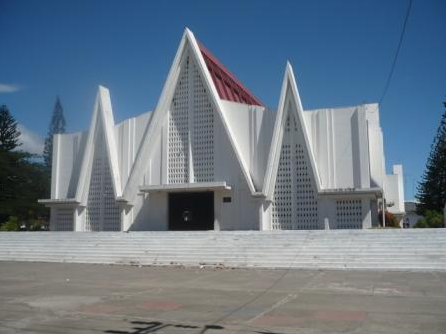 68
68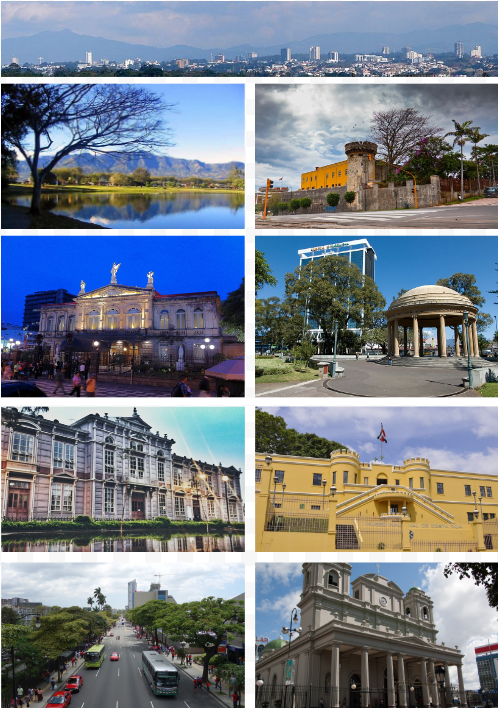 68
68The accommodation question nobody frames correctly
There's no lease or deed requirement written into this visa, and that leads a lot of applicants to treat housing as something to sort out after arrival, almost incidentally. That's a mistake, because two other requirements quietly force the housing question earlier than people expect. You need a local bank account to receive and demonstrate ongoing pension deposits, and opening one in Costa Rica generally means showing a residential address the bank is willing to accept. You also need to be physically present enough to satisfy the residency expectations tied to keeping the permit valid, which means treating Costa Rica as an actual home base from early on, not a place you visit periodically while the application processes.
The practical sequencing problem is this: renting long-term without a residency document in hand is possible but limits your options, since many landlords want to see either an existing cédula or a clear applicant status before signing anything beyond a short-term arrangement. Applicants who show up on the tourist entry, book six months of short-term rentals while the file processes, and then negotiate a proper lease once the permit is closer to approved tend to have an easier time than those who try to lock in a permanent address on day one. The bank account, meanwhile, is worth opening as early as the paperwork allows, because Costa Rican banks can be slow and inconsistent with foreign pensioners regardless of how clean your documentation is, and you don't want that step sitting on the critical path in the final weeks before your file is decided.
What actually happens after you land
The process starts with a tourist entry, not a consular visa. There's no interview and no application to file before you arrive, which surprises people used to countries that require the whole file to be approved before departure. Once in the country, the application goes in person, or through an accredited agent, at the DGME's service platform, and this is where the apostilled, translated file finally gets submitted as a package rather than assembled piecemeal.
From there, expect a stretch of genuine limbo. Processing runs from around twelve weeks on the fast end to twenty-six weeks in slower periods, and during that window you're neither a tourist in the conventional sense nor a resident, you're a pending applicant whose legal status depends on the file moving through the queue. If your tourist status expires before the application is fully in process, there may be a category-change fee involved to formalize your status as an in-process applicant rather than someone overstaying a tourist entry. This is a detail worth confirming with whoever is handling your file locally, because the fee and the exact trigger for it depend on timing that varies by case.
Once approved, the first permit issued runs for two years, and that document, not the approval notice, is what actually lets you open accounts, register for services, and function as a resident rather than someone waiting on a resident. The gap between "approved" and "holding the card" can still run weeks longer, since production and delivery of the physical residency document lags the approval decision itself. Nobody functions as a full resident the day the approval comes through, so plan around that lag rather than being surprised by it.
The long-term path looks cleaner on paper than it runs in reality
Three years of maintaining the Pensionado status puts you in range for permanent residency, and seven years total puts citizenship on the table. Both of those numbers assume something that's easy to overlook when you're reading requirements from a distance: continuous, unbroken maintenance of the underlying status, not just three or seven years of having once qualified.
That means renewing the permit on schedule every time the two-year cycle comes up, keeping the pension verification current so it doesn't lapse into something that looks, on paper, like income that quietly stopped, and satisfying whatever physical presence expectations apply to your particular permit category year over year. People who spend long stretches outside the country, whether for family reasons or simply because retirement often means more travel, not less, sometimes find that the clock they thought was running toward permanent residency wasn't running at full speed, or reset in a way they didn't anticipate. This isn't a technicality worth losing sleep over if you're building a life centered in Costa Rica. It becomes a real problem for people who want the eventual residency or citizenship status as an option while actually living somewhere else most of the year.
The other practical wrinkle: because this visa doesn't permit local work, your financial picture during those years has to stay entirely external. Anyone tempted to pick up local consulting, property management, or a small business on the side to fill the time needs to understand that doing so under this status is not a gray area, it's outside what the visa allows, and it can complicate the very renewals that get you to permanent residency.
Costa Rica versus the other pension-based option most retirees consider
Panama's retiree visa is the comparison that comes up constantly, and for good reason, it's marketed relentlessly to the same audience. The honest way to frame the choice isn't which country is more generous on paper, it's which set of trade-offs you'd rather live inside for the better part of a decade.
Costa Rica's Pensionado track ties everything to a verified pension income and processes the application entirely in-country after a tourist entry, with no interview standing between you and approval. That structure rewards people who are comfortable being patient residents-in-waiting for several months, running errands and building a life on tourist footing while the file moves. If your pension documentation is unambiguous and you're not in a rush, that's a low-friction way to end up with residency that leads somewhere concrete. Panama's pension-based route has historically leaned on different qualifying thresholds and a different mix of local benefits, and for retirees whose income sits close to the minimum or who want broader in-country perks attached to retiree status, it's worth pricing out seriously rather than defaulting to Costa Rica because it's the more talked-about option among expats already living there.
Where Costa Rica pulls ahead for most people in this income range is the path forward. A defined three-year route to permanent residency, with citizenship in view after seven, gives you something to plan a decade around rather than a status you renew indefinitely without a clear next step. If the endpoint matters as much as the years leading up to it, that's the harder number to walk away from.
Work Permissions
Application Steps
- 1
📋 Verify pension eligibility
1-2 days
- 2
📄 Gather identity documents
1-2 weeks
- 3
📄 Obtain pension certification
2-4 weeks
- 4
🏛️ Open local bank account
1-3 days
- 5
📋 Pay application fee
Same day
- 6
📬 Submit application
1 day
- 7
🏛️ Enroll in CCSS health system
1-2 weeks
- 8
⏳ Wait for approval
12-26 weeks
- 9
🏛️ Collect DIMEX card
Same day
This visa requires proof of health insurance. Compare international plans before you apply.
Compare health insuranceWe may earn a commission at no cost to you.
Compare this visa
Curated comparisons that include this route.
Frequently Asked Questions
Click any question to expand the answer.
Ready to Apply?
Work with trusted visa specialists who handle the paperwork so you can focus on your move.
Get help with this visa →* We may earn a commission if you apply through our link
At a Glance
Last verified: October 9, 2026