Application Fee
$250
Processing Time
65 wks
Difficulty
Moderate
Duration
24 months
Path to Citizenship
7 years
Overview
What this visa actually asks of you
The Inversionista route is built for someone who already has capital sitting somewhere, not someone whose case rests on a paycheck. You need USD 200,000 (roughly that in your own currency, converted at whatever your bank charges you the day you wire it) parked in a qualifying vehicle: real estate, a registered business, or listed securities. That's the whole mechanism. There's no monthly salary requirement doing the real work here, no employer letter, no invoice history from clients. The tradeoff is capital lockup in exchange for speed and simplicity relative to routes that make you prove recurring income year after year.
This matters because a lot of people in the $4,000-$10,000/month remote income bracket look at this visa, see the word "investor," and assume it's a bigger, better version of the income-based options. It isn't. It's a different instrument entirely. If your case is built on freelance income or a US salary, you're probably a better fit for a residency category that evaluates income, not one that evaluates a lump investment. This one fits someone who has already sold a business, inherited money, or built up a portfolio and wants to convert some of that capital into a legal foothold in the country rather than earn their way in.
The two things that most change your odds aren't the size of the investment (you either have it or you don't) but how cleanly you can document where it came from and how quickly you can get every foreign document through the apostille chain before you file. Consulates and immigration officers in this category spend more time asking "where did this money originate" than "how much is it." Source-of-funds problems, not investment-size problems, are what stall these files for months. The other lever is sequencing: moving money into the qualifying vehicle before the paperwork trail exists to prove it was investment capital, rather than after, creates headaches that take much longer to unwind than to avoid.
Local work isn't permitted on this permit, so factor that into your planning if you were hoping to freelance locally while your investment matures. This is a residency-by-capital play, and it rewards people who treat it that way from the start.
Eligibility Requirements
Min Investment
$150,000
Application Fee
$250
Duration
24 months
Physical Presence
180 days/yr
Business Owner · Self-Employed
Requirements Checklist
Tax Information
How Costa Rica Taxes What You Actually Earn
Costa Rica runs a territorial system, not a worldwide one, and that single design choice shapes nearly everything about your first year as an Inversionista resident. Tax residency itself triggers once you spend 180 days inside the country in a calendar year. Once you cross that line, the Costa Rican system asks one question only: did this income originate here? The Inversionista category already bars you from local employment, so almost everything funding your life, whether it's a US brokerage account, a rental property back home, or dividends from a US-listed fund, is foreign-source by definition, and foreign-source income sits entirely outside Costa Rica's tax base. Freelance revenue from US clients, foreign brokerage gains, rental income from a house you still own stateside: none of it shows up on a Costa Rican return, as of 2026.
What does get taxed is anything Costa Rica considers locally sourced. Dividends paid by a Costa Rican company carry a 15% withholding tax, reduced to 5% if the shares trade on the Bolsa Nacional de Valores. Capital gains on Costa Rican assets, real estate and shares alike, are taxed at a flat 15% under Law 9635, in effect since July 2019, with a cost-basis step-up for anything you held before that date. Real property sales also carry a separate 2.25% transfer tax on top of the gains tax. Costa Rican-source employment or business income, if you ever generate any through a local entity, runs on progressive brackets from 0% up to CRC 929,000 (about $1,770), rising through 10%, 15%, and 20% bands to a top rate of 25% above CRC 4,880,000 (about $9,300) a year, but for an Inversionista holder barred from working locally, those brackets rarely come into play.
There's no dedicated tax regime built for investor-category residents, and no registration window to miss here. The territorial exemption isn't a perk you apply for, it's the standing rule for every resident regardless of visa type, which is actually the more useful way to think about it: Pensionado and Rentista holders get the same blanket exclusion on foreign pensions and passive income that you get on foreign investment income, because Costa Rica isn't carving out a special deal for expats, it's just not taxing foreign-source money at all. The only preferential mechanic in the code is the reduced 5% dividend withholding for BNV-listed shares, and it's open to any shareholder, not something tied to your residency category. If you're structuring investment income through Costa Rican vehicles, confirm current eligibility for that reduced rate with a local advisor before you assume it applies.
What the IRS Still Wants From You
None of the above moves your US filing obligation. Citizens and green card holders owe the IRS on worldwide income no matter where they live, and Costa Rica's territorial exemption changes nothing about that. The Foreign Earned Income Exclusion shelters up to $132,900 of earned income for the 2026 tax year, but earned income means wages or freelance revenue from active work, and the Inversionista structure specifically forbids you from working locally. If you're still billing US clients as a freelancer while resident here, the exclusion applies to that revenue; it does nothing for dividends, capital gains, rental income, pensions, or Social Security, all of which remain fully taxable on your US return regardless of what Costa Rica does with them. A housing exclusion of roughly $7,200 can stack on top if you qualify under either the bona fide residence test or the 330-day physical presence test, the latter measuring days outside the US generally, not days inside Costa Rica specifically, so short border runs on a tourist stay don't break the count.
The Foreign Tax Credit does less work for this visa category than people expect. FTC only offsets US tax where Costa Rica has already taxed the same income, and since most of what funds an investor visa is foreign-source, Costa Rica typically taxes none of it, leaving no credit to claim. The exception is the income Costa Rica does reach: the 15% withholding on Costa Rican company dividends, or the 15% capital gains tax on Costa Rican real estate or shares, both generate a foreign tax you can credit against the matching US liability. There is no income tax treaty between the United States and Costa Rica, so there's no treaty positioning to lean on and no savings clause softening anything; whatever double taxation exposure exists gets absorbed by FTC or it doesn't get absorbed at all.
The Inversionista visa doesn't itself force you into a Costa Rican bank account, but daily life here usually does, from residency renewals to routine bill payments through SINPE. The moment your combined balances across Costa Rican accounts exceed $10,000 at any point in the year, FinCEN Form 114 becomes mandatory, and the FBAR obligation runs independently of whether the visa required the account in the first place. The non-willful penalty is a statutory $10,000 per violation, adjusted for inflation each year, putting the 2026 figure at roughly $16,700. FATCA reporting on Form 8938 can apply on top of that once account values cross their own thresholds.
The decisions that go expensive here are narrow and specific. If you retain any US-client freelance income while resident, the choice between the bona fide residence test and the physical presence test changes how much of that income the exclusion actually shelters, and getting the test wrong in year one is hard to unwind retroactively. If you're holding pre-2019 Costa Rican assets, get the cost-basis step-up documented before you sell, not after. And once a Costa Rican account crosses the FBAR threshold, treat the filing as automatic rather than discretionary. A first-year advisory engagement running somewhere between $1,500 and $3,000 is the going rate for someone who can walk through all three before you've already made the mistake.
Living in Costa Rica
COL Index vs NYC
50.1
Monthly Cost (excl. rent)
$944
1BR Rent (City Center)
$903
Safety Index
45.9
Healthcare Index
64.3
Quality of Life Index
129.4
Time Zone
UTC-06:00
Capital
San José
Population
5.1M
Official Languages
Spanish
Avg Internet Speed
212 Mbps
Public Transit Quality
Fair
With a budget covering rent and living costs, you'd need roughly $1,847/mo for a comfortable single-person lifestyle in Costa Rica.See how far your money goes →
🏙️ Best Cities in Costa Rica for Investors & FIRE Seekers
 ✦ 83
✦ 83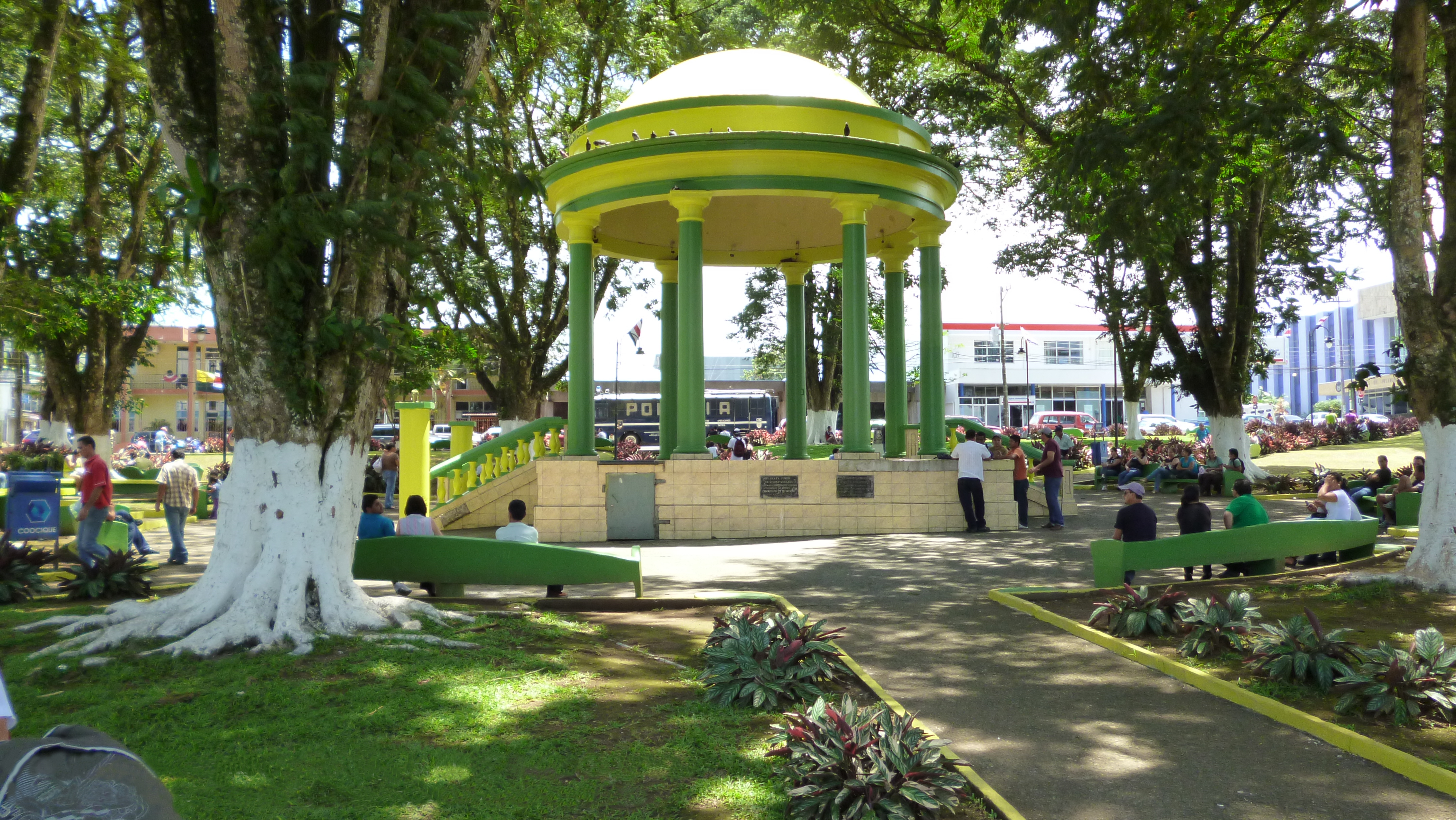 ✦ 80
✦ 80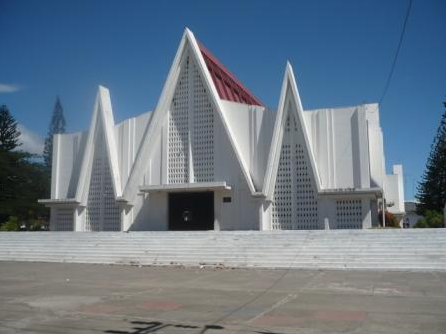 ✦ 75
✦ 75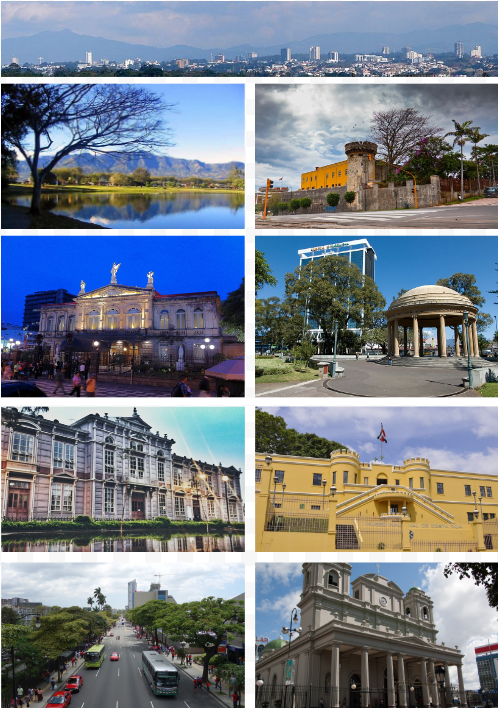 ✦ 80
✦ 80Getting the source-of-funds story straight before applying
For this category, "income documentation" is really a misnomer. What immigration wants is a clean, provable line from wherever your money originated to the account or entity where it landed as a qualifying Costa Rican investment. That line needs to survive apostille and translation, and it needs to survive scrutiny into fund origin, not just fund existence.
The mistake people make most often is treating the investment step and the application step as sequential when they should be treated as one coordinated event. Someone sells a property or liquidates a brokerage account, wires the money into Costa Rica, buys the real estate or opens the business, and only then starts assembling the residency file. By that point the wire records, sale documents, and entity paperwork exist in different formats, different currencies, sometimes different names if a spouse or holding company was involved, and stitching that into a single coherent narrative after the fact is far harder than building the file alongside the transaction.
It's also worth being honest about what doesn't count here. Pension income isn't recognized in this category, and neither is a monthly social security payment, no matter how well-documented. If your financial picture includes those as a meaningful piece of your net worth story, understand they carry no weight in this specific file. The case rises or falls on the qualifying investment and the funds trail behind it. If you're a retiree who happens to have $200,000 in liquid capital but the bulk of your monthly cash flow is a pension, this visa can still work, but the pension itself contributes nothing to the application. It's there for your own budgeting, not for the officer reviewing your case.
One more thing that trips people up: the fee structure and document list feel deceptively light (a USD 250 application fee, no medical exam, no interview), which leads some applicants to under-invest in the source-of-funds package because the rest of the process looks so lean. That's backwards. The lean parts are lean precisely because the burden is concentrated in proving the money is real, legitimate, and yours.
The address and residency file, not a housing checkbox
There's no separate "prove you have a place to live" hurdle bolted onto this visa the way some countries require a signed lease before they'll look at anything else. But you still need a physical Costa Rican address on file for the residency card process, and how people arrive at that address is where things get sloppy.
If your qualifying investment is real estate, this part solves itself somewhat naturally, though the property you bought as your investment vehicle and the property you actually live in don't have to be the same thing, and conflating them causes confusion in the file. If your qualifying investment is a business or securities, you're sourcing a residential address separately, often before you've spent meaningful time in the country, which means renting sight-unseen or leaning on a short-term arrangement that then needs to be updated once you're actually settled.
The practical error is treating the address on the application as a formality rather than as a data point that gets checked against later. When you eventually move toward permanent residency, continuity of address, or at least a plausible explanation for its absence, becomes part of the picture immigration is building of your actual presence in the country. Filing an address that turns out to be a mailbox service or a friend's apartment you never stayed in doesn't sink the initial application, but it creates a thread that can unravel later when presence and continuity start mattering more than paperwork.
Landing with an approval and what the permit actually gives you
Approval gets you an initial permit good for 24 months, and that's the document that matters day to day, not the approval letter itself. Health insurance is required and needs to be active, generally through the national system or an accepted private policy, before or immediately after you're issued the card. There's no medical exam to clear and no FBI background check to chase down for this category, which removes two of the slower-moving pieces that trip up applicants in other residency programs. There's also no interview built into the process, so the file itself has to do all the talking.
The gap that catches people off guard isn't the approval-to-permit step, since that part is relatively mechanical once the file clears. It's the stretch after the permit is issued, when you're technically resident but still operating on documents that expire in two years and require active management. Nothing here converts automatically. Renewal, and eventually the move toward permanence, requires you to keep proving the qualifying investment is still in place and hasn't been sold off, restructured, or quietly wound down. People who treat the 24-month card as a finish line rather than a checkpoint end up scrambling near the renewal date to reassemble evidence that the investment obligation is still being met.
Processing itself is worth planning around rather than reacting to. Timelines for this category run anywhere from roughly seventeen weeks on the fast end to well over a year on the slow end, and which end you land on has more to do with document completeness on first submission than with anything you can do once the file is in queue. Build your moving timeline around the slow end, not the fast one.
The three-year and seven-year numbers, and what sits between them
Permanent residency becomes available after 3 years, citizenship after 7. Both numbers look clean on a checklist and both hide the same operational requirement underneath: you have to actually be present in the country for a meaningful part of each year, with a rough threshold around 180 days, and you have to keep the qualifying investment intact the entire time. Nobody rescinds a visa for a short trip home, but a pattern of extended absence, combined with a thinning or liquidated investment, is exactly the profile that gets a renewal or PR application questioned.
The three years to PR is faster on paper than what a lot of income-based categories require elsewhere in the region, and that speed is real. What isn't obvious from the number alone is that maintaining eligibility for three straight years means your $200,000 is doing double duty: it's the qualifying asset and it's the thing you have to keep proving hasn't moved. Selling the investment property at year two because a good offer came in, without lining up a replacement that satisfies the same category, resets the clock in ways that are expensive to discover late.
Citizenship at year seven is a longer horizon than most people applying for this visa are actually planning around when they file. Most people in this bracket are thinking in terms of the permit, then PR, and treating citizenship as a someday decision rather than a target. That's a reasonable way to approach it, since the requirements for maintaining status through year three look nothing like a seven-year commitment. But it's worth knowing going in that the two milestones aren't on the same planning horizon, and building your five-year plan around PR rather than citizenship will keep expectations realistic.
Costa Rica's investor route against the obvious alternative
For someone with $200,000 in liquid capital wondering whether to put it into Costa Rican residency or look at Panama's investor categories or a European golden-visa-style program instead, the honest answer depends on what you're optimizing for. Costa Rica's version doesn't require you to jump through an interview, doesn't demand a medical exam, and keeps the fee structure light at the application stage, which makes the process itself less friction-heavy than several comparable programs in the region. The tradeoff is that Costa Rica doesn't let you work locally on this permit, so if part of your plan involves eventually operating a business you're physically running day to day, this category isn't built for that, and you'd need to be honest about whether a different visa class fits that ambition better.
Where Costa Rica tends to win the comparison isn't the investment threshold, since $200,000 is comparable to what several regional programs ask for. It's the path afterward: a defined three-year runway to permanent residency is faster than what many comparable capital-based routes offer, and the absence of a certificate of coverage requirement or mandatory local bank account removes friction that other countries build into their process almost reflexively. If your priority is capital preservation with a straightforward legal upgrade to permanence, and you're not counting on working inside the country while you wait, this is a reasonable place to put the money. If working locally matters to you, that single restriction should end the comparison before the investment threshold ever becomes the deciding factor.
Work Permissions
Application Steps
- 1
Research
Verify all requirements for this visa type and country
- 2
Gather documents
Obtain all required documents (passport, financial statements, health insurance, etc.)
- 3
Complete application
Fill out the official application form
- 4
Submit application
Submit all documents to the appropriate consulate or online portal
- 5
Pay fees
Complete payment of application and visa fees
- 6
Attend interview
If required, attend any scheduled interviews
- 7
Wait for decision
Processing times vary from weeks to months
- 8
Travel and activate
Once approved, travel to the country and complete any activation requirements
Compare this visa
Curated comparisons that include this route.
Frequently Asked Questions
Click any question to expand the answer.
Ready to Apply?
Work with trusted visa specialists who handle the paperwork so you can focus on your move.
Get help with this visa →* We may earn a commission if you apply through our link
At a Glance
Last verified: October 9, 2026