Application Fee
$230
Processing Time
2-6 wks
Difficulty
Moderate
Duration
36 months
Overview
A USD 36,000 qualifying business investment is the entry point for the Colombia Business Investor Visa (M-6), and the file lives or dies on whether the investment can be traced through corporate records and bank evidence. This is not a salary-based route: so a retiree living on dividends or a remote worker with ETF income is not being judged on cash flow, only on the business investment and the supporting paper trail. Local work is permitted, and dependents are allowed.
The residency side is light on day-count rules in the published rules: while the maximum consecutive absence is 180 days. That matters for anyone splitting time between Colombia and another base, because a single long exit can collide with the absence cap even when the visa remains renewable. Renewable is yes, and the visa leads to permanent residency after 5 years.
The friction is documentary rather than conceptual. Colombia requires health insurance and a local bank account, and an apostille, FBI background check, medical exam, or interview under the published facts. The most common failure pattern is inconsistency: the amount and timing shown in the company certificate, accountant support, and bank trail must match. If one document says USD 36,000 and another implies a different amount or date, the case invites extra requests.
This makes most sense if you are putting USD 36,000 into a Colombian business and can show that capital moving cleanly through the company and banking records. It is a poor fit if your plan is to qualify through passive income alone or if your money trail is messy enough that the investment cannot be reconciled across documents.
The local tax picture Colombia does not publish a special investor-only tax regime for this visa in the published rules, so the practical starting point is ordinary Colombian tax residency rules. The key trigger in the third-party sources is 183 days in a calendar year: once you cross that line, you become a Colombian tax resident and the worldwide-income rule can apply. For a US retiree, that means foreign rental income, ETF dividends, pension distributions, and remote salary can all fall into the local filing net once residency attaches. Non-residents are taxed only on Colombia-source income.
This page should not claim a special exemption or a special rate for foreign capital gains. Colombia also requires a local bank account for this visa, which creates a visible footprint for tax registration and account reporting.
For US Citizens and Green Card Holders - FEIE uses Form 2555 and only covers earned income: remote work, self-employment, and consulting up to the 2024 limit of USD 126,500. - FEIE does not cover dividends, capital gains, pension distributions, or Social Security. - If you spend 330 days in any 12-month period outside the US, the Physical Presence Test is the cleaner fit here; the 183-day Colombian tax threshold means you can hit US FEIE eligibility without necessarily avoiding Colombian tax residency. - FTC uses Form 1116 and only helps when Colombian tax is actually paid on the same income stream; if Colombia taxes foreign passive income at zero or if treatment is not yet established, the credit does little. - FBAR, FinCEN 114, applies when foreign financial accounts exceed USD 10,000 at any point in the year; the required local bank account makes this filing more likely, not less. - A US CPA focused on expat taxation plus a Colombian tax advisor for registration and filing is the right two-person setup; USD 1,500–USD 3,000 in year one can be cheaper than fixing FEIE, FTC, FBAR, and local residency errors later.
Eligibility Requirements
Any nationality can apply in principle under the published facts. The practical friction point is not eligibility by passport but external screening: applicants from Iran, North Korea, Syria, Cuba, and Russia can run into consular or banking obstacles even when the visa rules themselves do not bar them. Verify eligibility and document expectations with Colombia’s Ministry of Foreign Affairs before assembling a full package.
Application Fee
$230
Duration
36 months
Max Absence
180 days
Requirements Checklist
0 of 15 documents in hand
0%These take the longest, so start them first.
Request these while the slow items are in progress.
You only need these on the day you submit.
Extra requirements for this visa
- Apostille required on official documents
How and where to apply
Apply online via the Colombian Ministry of Foreign Affairs (Cancilleria) portal or Migración Colombia system from anywhere, including inside Colombia on a tourist visa. No consulate appointment needed. After approval, handle in-country registration upon arrival.
Tax Information
Part 1 — Local tax picture Colombia’s visa rules do not identify a special investor-only regime, so the relevant baseline is the ordinary Colombian residence system. The critical threshold in the published material is 183 days in a calendar year: once you cross that line, you are treated as a Colombian tax resident. That changes the scope from Colombia-source income only to worldwide income, which pulls in remote salary, foreign rental income, ETF dividends from a foreign brokerage, and pension distributions. Non-residents are taxed only on Colombia-source income.
For foreign capital gains on index funds or ETFs held offshore, the applicable rate is 15% for assets held over two years, and ordinary income rates for shorter periods. The correct statement from the available record is that the local tax treatment of those gains is subject to a 15% rate for assets held over two years and ordinary income rates for shorter periods. Colombia does require a local bank account for this visa, which makes local registration and ongoing account visibility part of the tax picture.
Colombia does not have an income tax treaty with the United States. That means this page cannot claim relief for dividends, Social Security, or pension flows under a listed treaty article, and it cannot assume a totalization agreement either.
For US Citizens and Green Card Holders - FEIE (Form 2555) covers earned income only: remote employment, self-employment, and consulting, up to USD 132,900 for 2026. - FEIE does not cover dividends, capital gains, pension distributions, or Social Security. - The Physical Presence Test, at 330 days in any 12-month period, is the more realistic FEIE path for someone living part-time in Colombia, because the visa rules do not give a separate exemption from Colombian tax residency after 183 days. - FTC (Form 1116) only has real value when Colombian tax is paid on the same income stream at a rate that can offset US tax. If Colombia treats foreign passive income favorably or does not tax it as expected, the FTC gives little or no shelter. - FBAR (FinCEN 114) is triggered when foreign account balances exceed USD 10,000 at any point in the year. The required local bank account makes this filing directly relevant. - The practical setup is a US CPA who handles expat FEIE/FTC/FBAR work and a Colombian tax advisor who handles residency registration and local filings; USD 1,500–USD 3,000 in year one often pays for itself through avoided penalties and better elections.
Living in Colombia
COL Index vs NYC
26.0
Monthly Cost (excl. rent)
$728
1BR Rent (City Center)
$446
Safety Index
39.1
Healthcare Index
68.6
Quality of Life Index
108.8
Time Zone
UTC-05:00
Capital
Bogotá
Population
50.9M
Official Languages
Spanish
Avg Internet Speed
220 Mbps
Public Transit Quality
Good
With a budget covering rent and living costs, you'd need roughly $1,174/mo for a comfortable single-person lifestyle in Colombia.See how far your money goes →
🏙️ Best Cities in Colombia for Investors & FIRE Seekers
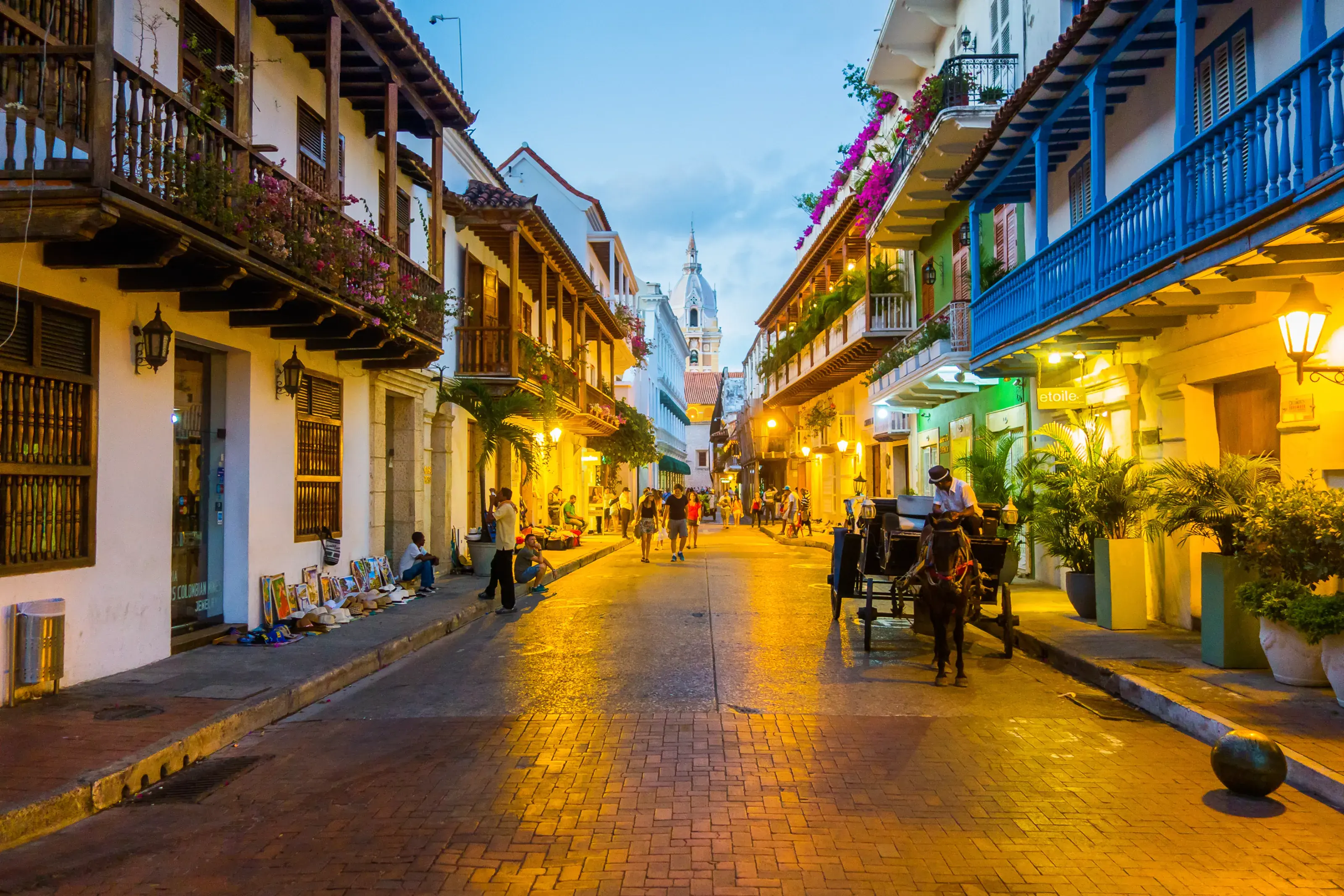 ✦ 76
✦ 76 73
73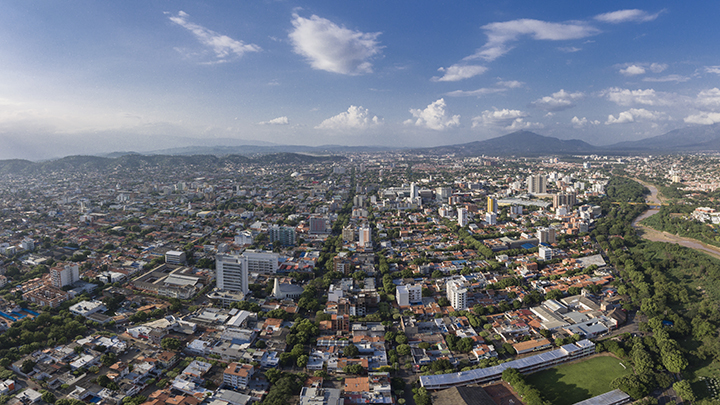 71
71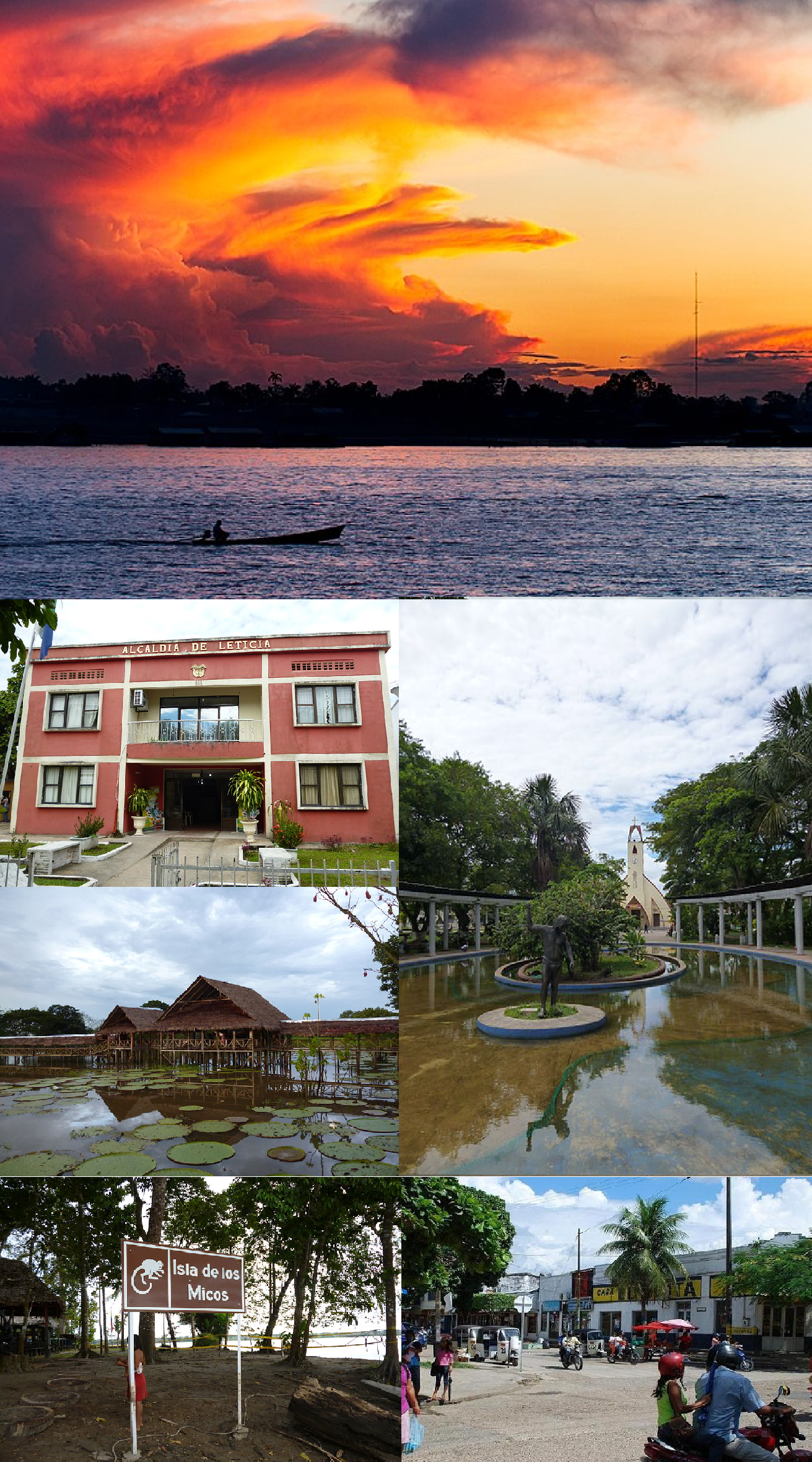 71
71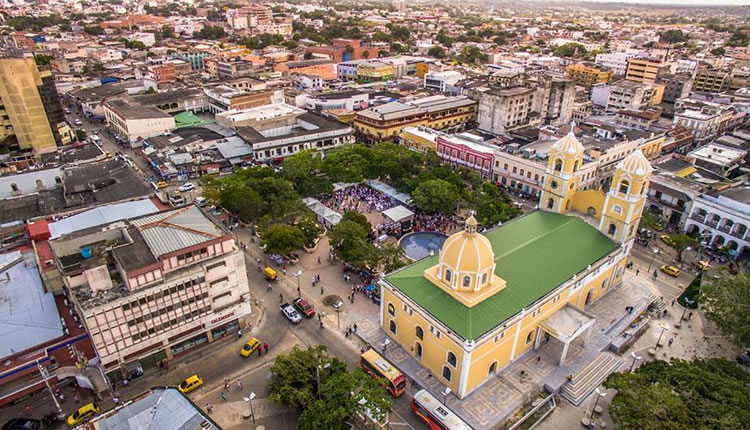 73
73 71
71Getting the investment documentation right before you apply
The application portal will ask for a set of documents that all point to one question: is the money actually in a Colombian company and registered with the central bank? You need to answer that before you pay the $230 study fee. Too many applicants incorporate a company, transfer funds, and file the visa application in that order, only to find that the Banco de la República registration certificate takes weeks to arrive and the visa officer will not proceed without it. The better sequence is to incorporate the company, open the local bank account, deposit the investment capital, get the foreign investment registered, and only then apply for the visa. The registration certificate is the linchpin. Without it, the share certificates and Chamber of Commerce registration look like a promise, not proof.
Foreign-issued corporate documents need an apostille and an official Spanish translation. That includes any documents showing the source of funds or the existence of a parent company abroad. A cover letter explaining the investment, its purpose, and your role in the company is required, and it is the one place where you can connect the dots for the officer. Do not assume they will infer that a share certificate from a Colombian SAS proves a qualifying investment. Spell out the amount, the registration number, and how the funds were used. If the investment was made in stages, include bank statements that trace each transfer into the Colombian entity.
The qualifying investment threshold is $43,819 as of 2026. That figure is not prorated for partial ownership. If you own 50% of a company, the total investment in that company still needs to meet the threshold, not just your share. People who structure a joint venture with a local partner sometimes miss that and get a rejection letter. The investment must be in a for-profit business, not real estate held for personal use, and the company must have a tax ID (NIT). If you are buying into an existing business, you will need the amended share registry and the updated Chamber of Commerce certificate showing your stake. The visa officer will compare the date of that registration with the date of the Banco de la República certificate. A gap of more than a few weeks raises questions.
The local bank account requirement is not just a formality
The visa rules require a Colombian bank account, and that requirement is not about paying fees. It is about proving the investment funds entered the country through the financial system. Banco de la República will only issue the foreign investment registration certificate once the capital is in a local account. Without that certificate, the visa application cannot move forward. So the bank account has to be opened early, often before you have a cedula, which is the circular problem that trips up first-time applicants.
Some banks will open a non-resident account with your passport and a reference from the company you are investing in. Others will ask for a pre-visa registration or a letter from a Colombian accountant. The process varies by bank and by branch. You will likely need to visit in person, and you should budget a few days for that if you are applying from abroad and flying in on a tourist visa. The account does not need to hold the entire investment amount indefinitely, but it must show the funds at the time of registration. Once the certificate is issued, you can deploy the capital into the business. The bank statements you submit with the visa application should match the amounts on the registration certificate exactly. Any discrepancy, even a rounding difference from exchange rate fluctuations, can trigger a request for clarification that adds weeks to the processing time.
If you are investing through a foreign entity that already has a Colombian subsidiary, the bank account may already exist. In that case, the documentation trail still needs to show the capital injection from the foreign parent to the Colombian entity and the corresponding registration. The visa officer is looking for a clear chain: foreign funds, local bank, central bank registration, corporate ownership. A missing link anywhere in that chain will stall the application.
What happens after approval: the gap before you hold a real cedula
The visa approval comes through the online portal, usually within two to six weeks of a complete application. That approval is a PDF, not a physical card. If you applied from outside Colombia, you now need to enter the country. If you applied from inside on a tourist visa, you are already here. Either way, the next step is an in-country registration with Migración Colombia. Until that registration is complete, you do not have a cedula de extranjería, and without the cedula, you cannot open certain accounts, sign long-term leases, or register with the health system in your own name.
The registration process requires presenting the approved visa resolution, your passport, and proof of health insurance that covers Colombia. The insurance requirement is checked at this stage even if the consulate did not ask for it during the application. A travel policy will not satisfy the official; you need a plan that meets the minimum coverage standards for a resident visa. After biometrics and a photograph, the cedula is issued, typically within a couple of weeks. Until you hold that card, your ability to function as a resident is limited. You can still operate the business, but administrative tasks like getting a local driver's license or registering a vehicle will wait.
The initial permit is valid for 36 months. The clock on that starts from the date of the visa resolution, not the cedula issuance. If you delay the registration by a month, you lose that month of validity. The visa also comes with a 180-day maximum consecutive absence rule. If you leave Colombia for more than 180 days at a stretch, you risk losing the visa. That matters for people who plan to manage the business remotely while traveling. The registration step is not complicated, but it is the point where people who assumed the approval email was the finish line realize they have another administrative lap to run.
The five-year path to permanent residency
The M-6 visa leads to permanent residency after five years of continuous stay. That five-year count starts from the date of the first visa issuance. You will need to renew the visa at least once, since the initial permit is only 36 months. Renewal requires showing that the business remains active and that you still hold the qualifying investment. If the company has been dissolved or the investment withdrawn, renewal will be denied. In practice, that means keeping the company in good standing with the Chamber of Commerce, filing annual tax returns even if they are zero, and maintaining the central bank registration. The renewal process is lighter than the initial application, but it is not automatic. You must apply before the current visa expires.
The 180-day absence rule applies each year. If you break it, the continuity of residency resets, and the five-year clock starts over. People who split their time between Colombia and the US often miscalculate this, counting calendar years instead of rolling 365-day periods. The safest approach is to limit any single trip to under 180 days and to track entry and exit stamps carefully. Once you reach five years, you apply for a resident visa (type R), which grants indefinite stay and does not require renewal. Permanent residency also removes the investment maintenance requirement. You can sell the business or close it without losing your status. Citizenship is a separate process with its own timeline and language requirements, but permanent residency is the endpoint for most people on this visa.
The path sounds straightforward on paper. In practice, the five years demand that you stay engaged with the business and the country. The visa does not require you to generate a profit or hire employees, but a dormant company that exists only on paper can attract scrutiny at renewal. Showing some activity, even minimal, keeps the file clean.
How this visa compares to other Colombian residency routes
If you have the capital, the M-6 offers a combination that other Colombian visas do not: work authorization, a direct path to permanent residency, and no ongoing income verification. The pensionado visa, by contrast, ties your stay to a monthly pension or annuity and forbids local employment. The digital nomad visa, where available, is temporary and does not lead to residency. A migrant visa based on a local job offer requires an employer sponsor and binds you to that employer. The M-6 lets you own the vehicle. You control the investment, and you can work for yourself or anyone else.
The judgment call comes down to whether you want to deploy around $44,000 into a Colombian business or keep that capital liquid and instead qualify through monthly income. For someone earning $6,000 a month from US clients, the income route might seem easier on paper. But income thresholds change, and proving foreign income every year creates a recurring administrative burden. The M-6 front-loads the paperwork and then leaves you alone. If the business is real, even a small consultancy or a stake in a local cafe, the visa becomes a byproduct of something you were already doing. If the business is a fiction, the renewal risk is not worth it.
The alternative of investing the same amount in another Latin American country often comes with higher thresholds or slower processing. Colombia's online application and the ability to file from within the country on a tourist visa remove the consulate bottleneck that plagues many investor visas. The processing time of two to six weeks is fast by regional standards. For someone who wants to move quickly and has a clear business plan, the M-6 is a pragmatic choice. The main thing that goes wrong is not the investment amount but the documentation sequence. Get the registration certificate early, and the rest falls into place.
Work Permissions
Application Steps
- 1
📋 Make business investment
- 2
📄 Gather required documents
1-4 weeks
- 3
🏛️ Open local bank account
1-2 days
- 4
📬 Submit online application
Same day
- 5
⏳ Wait for review process
- 6
📬 Pay visa issuance fee
1-2 days
- 7
🏛️ Register visa in Colombia
1 week
Compare this visa
Curated comparisons that include this route.
Frequently Asked Questions
Click any question to expand the answer.
Ready to Apply?
Work with trusted visa specialists who handle the paperwork so you can focus on your move.
Get help with this visa →* We may earn a commission if you apply through our link
At a Glance
Last verified: October 9, 2026