Application Fee
$71
Processing Time
2-13 wks
Difficulty
Easy
Duration
6 months
Overview
Canada’s digital nomad setup has no published minimum income, no savings floor, and the application fee is $71 (as of 2026), so a $3,800/month freelancer or remote employee can’t be screened out on a numeric threshold. The hard line is work status: local work is not permitted, local income must stay at 0% of total income, and the allowed earning streams are contractor/self-employed income from remote_work or business activity. Social Security and pension income do not count toward eligibility here.
The residence trade-off is simple: the visa duration is 6 months and renewal is allowed, but there is no minimum physical presence requirement and no maximum consecutive absence limit. That makes it workable for people who want a seasonal base in Canada without locking themselves into a day-count regime. It also means the visa can lead to permanent residency.
The friction is light on paper: health insurance is required, but no local bank account, apostille, FBI background check, medical exam, or interview is required. Processing time varies, which leaves the real bottleneck as proving that all income comes from outside Canada and that no Canadian clients, customers, or employment relationship exist.
This makes the most sense if you earn $4,000 a month from foreign clients, want up to 6 months in Canada, and have no plan to convert that stay into PR. It is a poor fit if you need Canadian-source income, want a resident-status pathway, or need a visa that recognizes Social Security or pension income as qualifying income.
Eligibility Requirements
Any nationality can apply in principle under this program, because the eligibility list is all nationalities rather than a restricted country club. The practical friction point is not nationality-based eligibility but admissibility and banking: applicants from Iran, North Korea, Syria, Cuba, and Russia can run into consular, payment, or documentation obstacles even when the rule set does not formally bar them.
For border and visa adjudication, the official source to verify is Immigration, Refugees and Citizenship Canada (IRCC). Check IRCC’s current visitor and digital-nomad guidance before building a file, because a clean legal yes is not the same thing as a smooth application in every passport category.
Application Fee
$71
Duration
6 months
Remote Work / Freelance · Business Income
1099 Contractor · Self-Employed
Max 0% from local sources
Requirements Checklist
0 of 20 documents in hand
0%These take the longest, so start them first.
Request these while the slow items are in progress.
You only need these on the day you submit.
How and where to apply
Apply online via the official IRCC portal from anywhere, including your home country. Visa-required nationals submit Temporary Resident Visa (TRV); others get eTA. No in-country application switch from tourist visa specified; extensions possible after arrival.
Tax Information
Local Tax Picture Canada’s tax regime for this visa is resident-based, not territorial. That matters because resident taxation can reach worldwide income once Canadian tax residency starts, including remote salary, ETF dividends from a foreign brokerage, rental income from property abroad, and other foreign-source investment income. The exact point at which Canadian tax residency begins depends on residential ties and length of stay rather than a single fixed trigger date. The practical consequence is that this visa can be low-friction at the border while still carrying real tax exposure if a longer stay and residential ties push you into Canadian tax residency.
For foreign investments, Canada does not offer a special exemption for capital gains on ETFs or index funds. Under a resident regime, foreign capital gains fall into the taxable base once residency applies; Canada includes 50% of capital gains in taxable income, taxed at progressive rates that combine to roughly 24% to 27% at the top marginal level depending on province. The tax treaty with the US is marked yes, which means Canada and the US have an income tax treaty, but that does not erase Canadian filing or US reporting on its own. No local bank account is required by this visa, so there is no mandatory account-opening step tied to the immigration application.
For US Citizens and Green Card Holders - FEIE: Form 2555 only helps with earned income, so it can shelter remote work, self-employment, or consulting income if you qualify under the Physical Presence Test or Bona Fide Residence Test. The 2026 exclusion limit is $132,900. It does not cover dividends, capital gains, pension distributions, or Social Security. - FTC: Form 1116 becomes useful only when Canadian tax is actually paid on the same income stream. Because this visa’s tax regime is resident-based, the foreign tax credit can matter if Canada taxes the income and the US also reaches it, but it does nothing for income that remains untaxed locally. - FBAR: FinCEN 114 is required when foreign financial accounts exceed $10,000 at any point in the year, separate from FATCA Form 8938. Non-willful penalties start at a statutory $10,000 per violation, inflation-adjusted annually (approximately $16,700 as of 2026).
For a US filer, the useful combination is a US CPA who handles FEIE/FTC/FBAR for expats and a Canadian tax advisor who can pin down residency, registration, and first-year filing obligations. On a visa like this, $1,500–$3,000 spent in year one on professional guidance can pay for itself in avoided penalties and better elections.
Living in Canada
COL Index vs NYC
58.7
Monthly Cost (excl. rent)
$1,026
1BR Rent (City Center)
$1,305
Safety Index
54.3
Healthcare Index
68.7
Quality of Life Index
166.4
Time Zone
UTC-08:00
Capital
Ottawa
Population
38.0M
Official Languages
English, French
Avg Internet Speed
380 Mbps
Public Transit Quality
Excellent
With a budget covering rent and living costs, you'd need roughly $2,331/mo for a comfortable single-person lifestyle in Canada.See how far your money goes →
🏙️ Best Cities in Canada for Digital Nomads
 ✦ 82
✦ 82 ✦ 85
✦ 85 ✦ 84
✦ 84 ✦ 87
✦ 87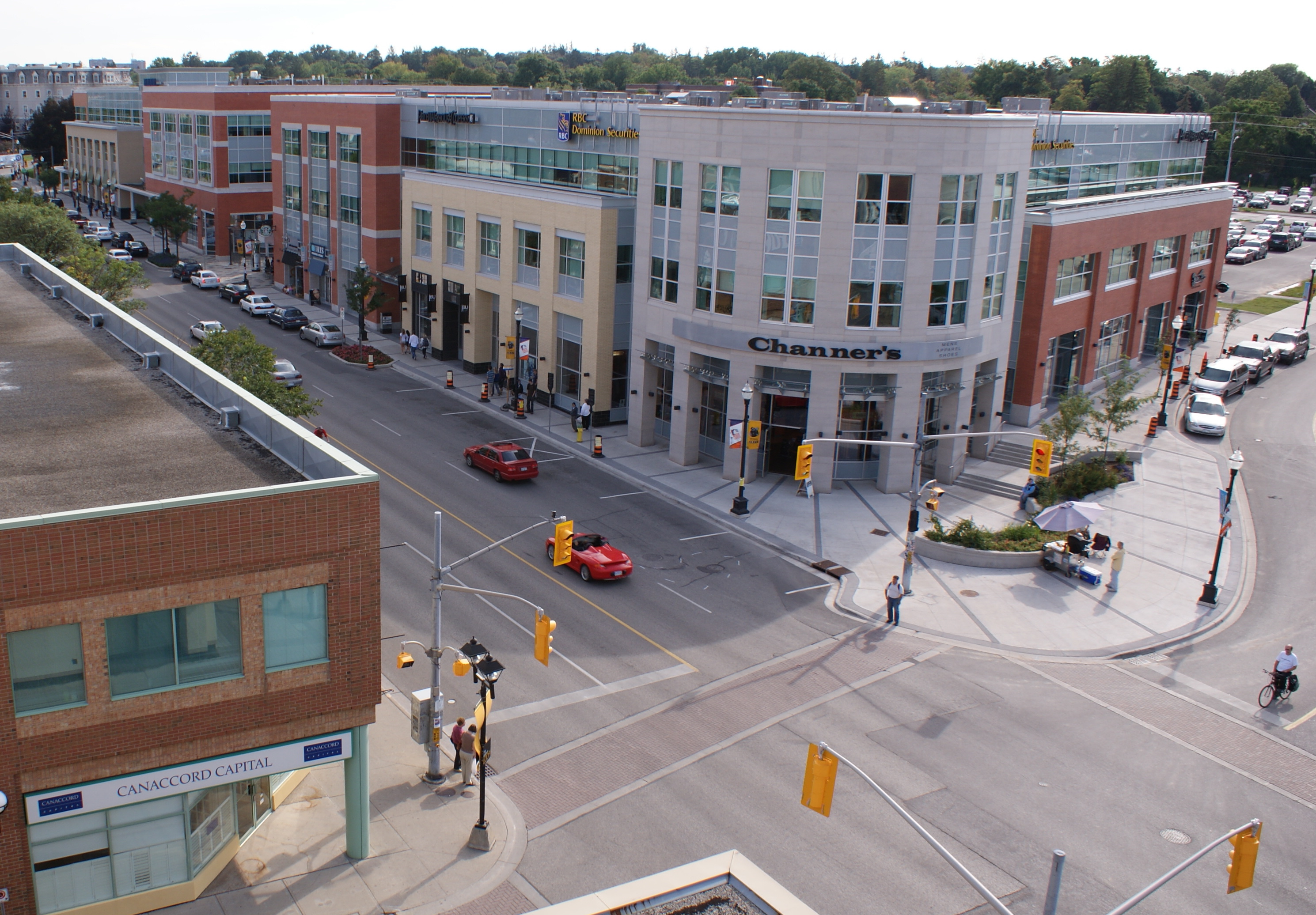 ✦ 85
✦ 85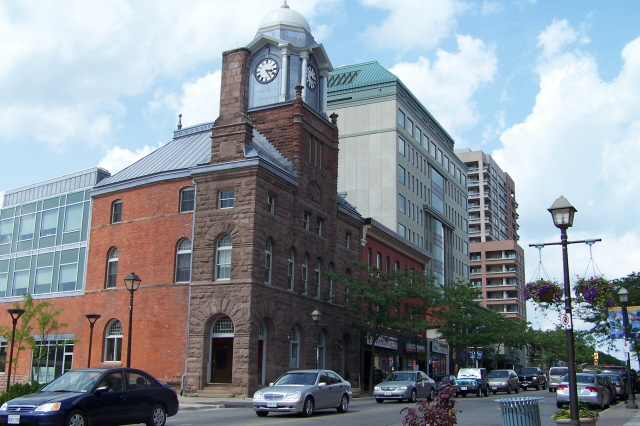 ✦ 84
✦ 84Getting the income story straight before you apply
The document list looks straightforward until you try to assemble it and realize the employer letter is the piece most likely to sink you. IRCC wants confirmation that the work is performed for a non-Canadian entity, and a huge number of employer letters, especially ones HR departments generate from a template, don't say that anywhere. They confirm employment, salary, sometimes a start date, and nothing about where the work is performed for. Ask for the specific language before you submit anything, not after a request for more information comes back.
Freelancers face a different version of the same problem. Business registration and client contracts are meant to establish that the income comes from outside Canada, but contracts alone don't show the money actually moving. Recent invoices paired with matching bank deposits do that work. The gap that gets flagged most often is a mismatch between contract dates and payment dates, or a bank statement that shows one large deposit right before applying rather than a pattern stretching across the requested window. Officers reviewing self-employment income are looking for consistency more than size. A steady $5,000 a month reads better than three months of erratic numbers that happen to average out to something impressive.
Sequencing matters here more than people expect. Pull bank statements and tax documents first, because if there's a gap or an inconsistency, you want to find it before an employer letter locks you into a story the bank records don't quite support. Building the employment or client documentation last, once you know what the financial picture actually shows, avoids having to go back and re-request paperwork from an employer who's already slow to respond the first time.
The accommodation requirement, and where people overbuild it
The accommodation proof accepted here is loose by design, a hotel booking, an Airbnb reservation, a lease, or a letter from someone hosting you. That looseness leads to a common overcorrection: applicants book and prepay six months of housing to look serious, thinking more commitment reads as more credible. It usually doesn't, and it creates a new problem. A visitor application that shows six months of prepaid Canadian housing alongside thin evidence of ties back home starts to look less like a temporary visit and more like a relocation, which is exactly the framing this category depends on avoiding.
The better approach is proportionate: book the first few weeks or the first month somewhere verifiable, and let the rest be addressed by a general statement of intended dates rather than a paid-in-full commitment. If accommodation is arranged through a personal contact rather than a booking platform, the letter from that person needs to say plainly what it's confirming, dates, address, and the relationship, because vague invitation letters get treated with more suspicion than a plain hotel confirmation would.
One thing that trips up applicants who've done this before in other countries: Canada doesn't require a rental agreement or a fixed address to be locked in before the visa is issued, and trying to lock one in anyway, out of habit from a different country's process, mostly just spends money and time you don't need to spend yet.
What happens after you land and the six-month clock
Approval gets you in the door, not a fixed stay. The application itself runs through the standard IRCC channel, either a temporary resident visa or an eTA depending on nationality, and there's no built-in switch from that status into something else once you've arrived. What you land with is what you have, and the six-month window starts from entry, not from approval.
The border officer at entry still makes an independent call, and an approved visa or valid eTA doesn't fully settle that. This matters more for remote workers than for typical tourists, because the honest answer to "what will you be doing here" involves working, even if the employer is elsewhere, and a border officer unfamiliar with the remote-work allowance can create friction that a well-prepared letter usually resolves quickly but not always painlessly.
Extensions happen from inside Canada, and the mechanism is filing before the current status runs out rather than expecting anything automatic. People treat the six-month mark as soft because renewal is technically possible, then discover that the timing has to be managed deliberately, with the extension filed while still inside the country and while status is still valid, not after it's lapsed. Local work isn't permitted under this status at any point, which is easy to forget if a short-term Canadian gig gets offered while you're already there and settled in.
The long-term path is a separate application, not a graduation
The framing that gets repeated is that this route leads somewhere permanent, and it can, but not by accumulation. Time spent in Canada on a visitor-based remote work arrangement doesn't function like time spent on an actual work permit tied to a Canadian employer. It doesn't build toward the kind of Canadian work experience that economic immigration programs are built to reward, and it doesn't create a file that quietly upgrades itself the longer you stay.
What it does is let someone spend real time in the country, get a workable sense of a city, and decide with better information whether to pursue an actual immigration stream afterward. Anyone serious about staying needs to treat that as a second, independent project, one built on its own criteria, its own documentation, and its own timeline, started from scratch rather than as a continuation of the visitor period. The mistake is assuming the visitor stay itself is step one of a longer sequence. It's closer to a research trip that happens to pay for itself through remote income, useful for making the real decision, but not a rung on the ladder toward permanence.
Canada versus staying a tourist, or going to Portugal instead
Here's the honest version of the comparison people actually need. Against simply entering Canada as a tourist and working remotely without applying for anything at all, this route buys you very little extra beyond documentation that makes intent explicit and gives border officers language to point to if questioned. If you already qualify for a plain tourist entry and your stay is short, the extra paperwork may not earn its keep.
Against a country running an actual dedicated digital nomad program with its own permit card, minimum income floor, and defined renewal path, Canada's version is looser and less formal in both directions. That looseness cuts two ways. It's easier to qualify for on paper, since there's no separate program with its own eligibility bar to clear, but it also gives you less to stand on if something goes wrong, since you're leaning on a visitor category rather than a purpose-built status with its own protections and expectations.
The decision that actually matters is about intent, not documents. If Canada is a genuine long-term target and the remote income is just the way of affording the trial period, this is a reasonable low-cost way to test it before committing to a real immigration process later. If the goal is simply somewhere to work remotely for a few months with minimal friction, a country with a defined nomad visa and a longer initial term will likely serve better, since you won't be renewing from inside the country every six months just to keep the arrangement alive.
Work Permissions
Application Steps
- 1
📋 Research visitor visa eligibility
1-2 days
- 2
📄 Gather proof of remote employment
1-2 weeks
- 3
📄 Obtain health insurance coverage
1-3 days
- 4
📬 Complete online IRCC application
1 day
- 5
⏳ Wait for processing decision
10 days - 2 months
- 6
🏛️ Travel to Canada on approval
- 7
📬 Apply for extension if needed
1-2 months
This visa requires proof of health insurance. Compare international plans before you apply.
Compare health insuranceWe may earn a commission at no cost to you.
Compare this visa
Curated comparisons that include this route.
Frequently Asked Questions
Click any question to expand the answer.
Ready to Apply?
Work with trusted visa specialists who handle the paperwork so you can focus on your move.
Get help with this visa →* We may earn a commission if you apply through our link
At a Glance
Last verified: October 9, 2026