Min Monthly Income
$2,000
Application Fee
$150
Difficulty
Easy
Duration
12 months
Overview
Belize’s Qualified Retired Persons Program is built around one clean financial hurdle: at least $2,000/month in foreign-source retirement income, plus a minimum of $24,000 in savings and a $24,000 capital-based investment (which in practice is usually just demonstrating those funds rather than buying a specific asset). Social Security and foreign pensions count, along with other passive income; local employment income does not. A US or Canadian retiree pulling $2,500/month from Social Security and IRA distributions meets the $2,000/month requirement on paper, but anything you do for pay in Belize is off-limits because local work is explicitly prohibited and local income is capped at 0% of your total.
Day-to-day, this is a light-residency program rather than a full relocation mandate. To maintain status, you only need to be physically present in Belize for 30 days per year. That suits someone splitting time between Belize and, say, Florida or Ontario, using Belize as a 1–3 month winter base. Unlike regimes that require 183+ days, this structure lets you keep your primary life, doctors, and social circle in your home country while still enjoying QRP perks.
On paper, the permit is issued for 12 months at a time and is renewable; in practice, the program is designed with a residency path in mind. Current rules state that it leads to permanent residency after 1 year, although details on the precise transition mechanics and any interaction between QRP status and standard immigration categories vary. If your long game is a Belize passport, you should treat this as a stepping-stone, not the endpoint.
Bureaucratic friction is modest: a $150 application fee in USD, no apostille, no FBI background check, and no interview. The main practical hurdles are opening the required local bank account in Belize and assembling foreign proof-of-income documentation that satisfies both your home bank and the Belize Tourism Board. Processing times vary, so you cannot reliably back-calculate a move date from an application date; plan to float on 90-day tourist entries if you want to be on the ground while things are pending.
This structure makes most sense if you are 45+ with at least $2,000/month of predictable foreign pension, Social Security, or passive income, intend to spend 1–3 months per year in Belize, and want a light-touch residency that can lead to PR after 1 year. It is a poor fit if your income is mainly from active remote work, you need the legal right to earn from clients while in Belize, or you cannot commit to the 30 days/year presence requirement.
Eligibility Requirements
Any nationality can apply in principle for Belize’s Qualified Retired Persons Program; the rules do not limit eligibility by passport. In practice, applicants from sanctioned or politically sensitive jurisdictions such as Iran, Syria, North Korea, Cuba, or Russia can run into banking compliance barriers when opening the required Belize bank account, and consular scrutiny may be much higher even if the law allows them to file. Before investing time in collecting documents, confirm your specific eligibility and any current policy issues directly with the Belize Tourism Board, which administers the program, and with the nearest Belize consulate or embassy.
Min Income
$2,000
Min Savings
$24,000
Min Investment
$24,000
Application Fee
$150
Renewal Cost
$25/yr
Min Age
45 yrs
Duration
12 months
Physical Presence
30 days/yr
Pension / Social Security · Passive / Investment Income
Max 0% from local sources
Requirements Checklist
0 of 15 documents in hand
0%These take the longest, so start them first.
Request these while the slow items are in progress.
You only need these on the day you submit.
How and where to apply
Applications for the Belize QRP are submitted to the Belize Tourism Board (BTB), which can be done from abroad or once in Belize on a tourist visa. Use the online form available through the BTB website or mail the package directly. No consulates are involved; BTB handles all processing centrally.
Tax Information
Local tax regime and what it means for you
Belize operates a territorial tax system, and the QRP is structured around foreign income. Under a territorial regime, only income sourced in Belize is within the local tax net; foreign-source income is generally outside it. For a QRP holder, the key is that your qualifying $2,000/month and above should be foreign: US or Canadian Social Security, foreign pensions, IRA/RRSP distributions, ETF dividends from a US brokerage, and rental income from property in your home country are all foreign-source and therefore not taxed in Belize under territorial rules.
What you cannot do under this visa is earn Belize-source income: local employment is prohibited and local income must be 0% of your total. That prohibition is as important as the tax regime. Remote salary from a foreign employer, paid into a foreign or Belizean account, is economically active income and not what the QRP was built for, even though the territorial system would otherwise tend to ignore foreign-source earnings.
For FIRE investors, capital gains on foreign investments (for example, selling a US-based index fund in a US brokerage account) fall outside Belize’s tax scope under territorial rules; those gains are exempt locally as long as the income is foreign-source. If you ever hold Belize real estate or Belize company shares, gains there are a different story because those would be Belize-source.
Tax residency in Belize, as in many countries using territorial systems, is generally triggered by physical presence tests such as spending 183+ days per year in-country, not by simply holding a QRP card. Since the QRP only requires 30 days/year, many users will not cross typical tax-residency thresholds unless they choose to base themselves in Belize most of the year. Local registration and filing obligations for QRP participants vary by individual circumstance, but with no Belize-source income and minimal time on the ground, exposure is limited.
Belize does not have an income tax treaty with the United States. That means you cannot assume a double-tax treaty exists to reduce withholding on US dividends or provide treaty-based protection on pensions; you will be taxed by the US according to default domestic rules. There is also no widely cited US–Belize totalization agreement for Social Security, so you should expect US Social Security contributions and benefits to follow standard US rules without Belize coordination.
For US Citizens and Green Card Holders
For US persons, the QRP’s big appeal is that Belize’s territorial system does not tax your US-source income, but the IRS still does. Nothing about this visa changes your obligation to file a US return annually. The Foreign Earned Income Exclusion (FEIE, Form 2555) covers only earned income (remote salary, self-employment, consulting) up to $132,900 for 2026; it does not apply to Social Security, pensions, dividends, interest, or capital gains. Since the QRP is explicitly for pension and passive income and bans local work, many users will have little or no earned income to shelter with FEIE. If you do keep some remote work while physically in Belize, you could use FEIE under either the Physical Presence Test (330 days abroad in any 12-month period) or the Bona Fide Residence Test if you relocate and spend the majority of the year outside the US.
The Foreign Tax Credit (FTC, Form 1116) only helps when foreign taxes exceed or at least offset US taxes on the same income. Under a territorial system where Belize does not tax your foreign-source Social Security, pensions, or portfolio income, there is often no Belize income tax to credit. That means your US liability on those streams remains fully payable; the FTC cannot reduce US tax on income that is untaxed in Belize.
FBAR (FinCEN 114) becomes relevant as soon as you open the required local bank account in Belize. If your aggregate foreign financial accounts (Belize bank accounts plus any other non-US accounts) exceed $10,000 at any point in the year, you must file an FBAR electronically with FinCEN. This is separate from your tax return and from FATCA Form 8938, which has higher thresholds but overlaps in information. Non-willful FBAR penalties start at a statutory $10,000 per violation, inflation-adjusted to about $16,700 as of 2026, so ignoring a Belize account because it feels small is dangerous.
A US retiree using the QRP should plan on working with two professionals: a US CPA who specializes in expat taxation (for FEIE/FTC decisions, FBAR, FATCA, and treatment of pensions and brokerage accounts) and a Belize tax advisor who understands QRP status and when, if ever, local registration is required. The $1,500–$3,000 spent in year one on this advice commonly pays for itself via avoided penalties, correct FBAR/FATCA filings, and optimized elections on how you classify and time your income.
Living in Belize
COL Index vs NYC
41.4
Monthly Cost (excl. rent)
$822
1BR Rent (City Center)
$477
Safety Index
30.4
Healthcare Index
54.1
Quality of Life Index
100.4
Time Zone
UTC-06:00
Capital
Belmopan
Population
397.6K
Official Languages
Belizean Creole, English, Spanish
Avg Internet Speed
87 Mbps
Public Transit Quality
Poor
With a budget covering rent and living costs, you'd need roughly $1,299/mo for a comfortable single-person lifestyle in Belize.See how far your money goes →
🏙️ Best Cities in Belize for Retirees
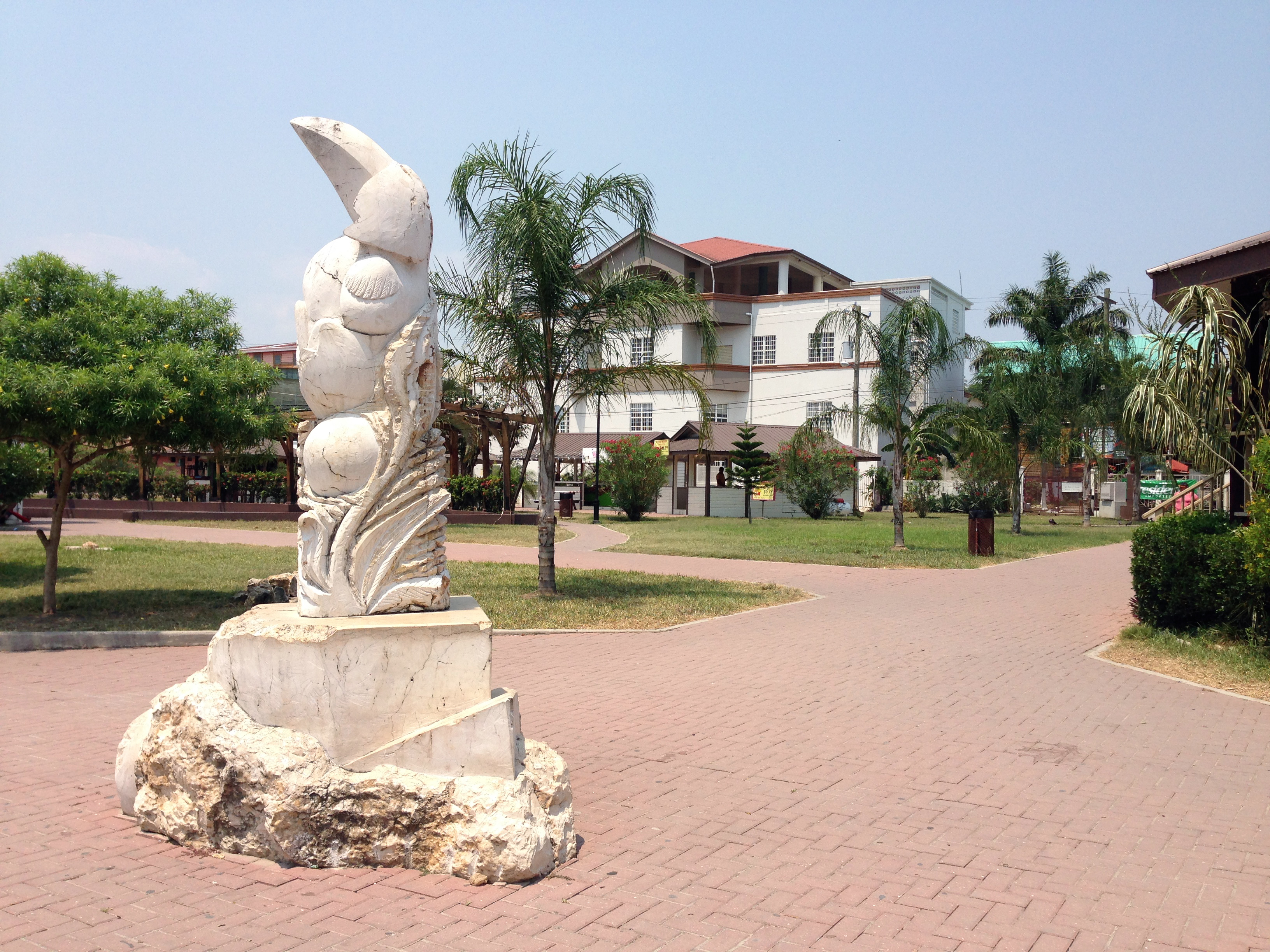 69
69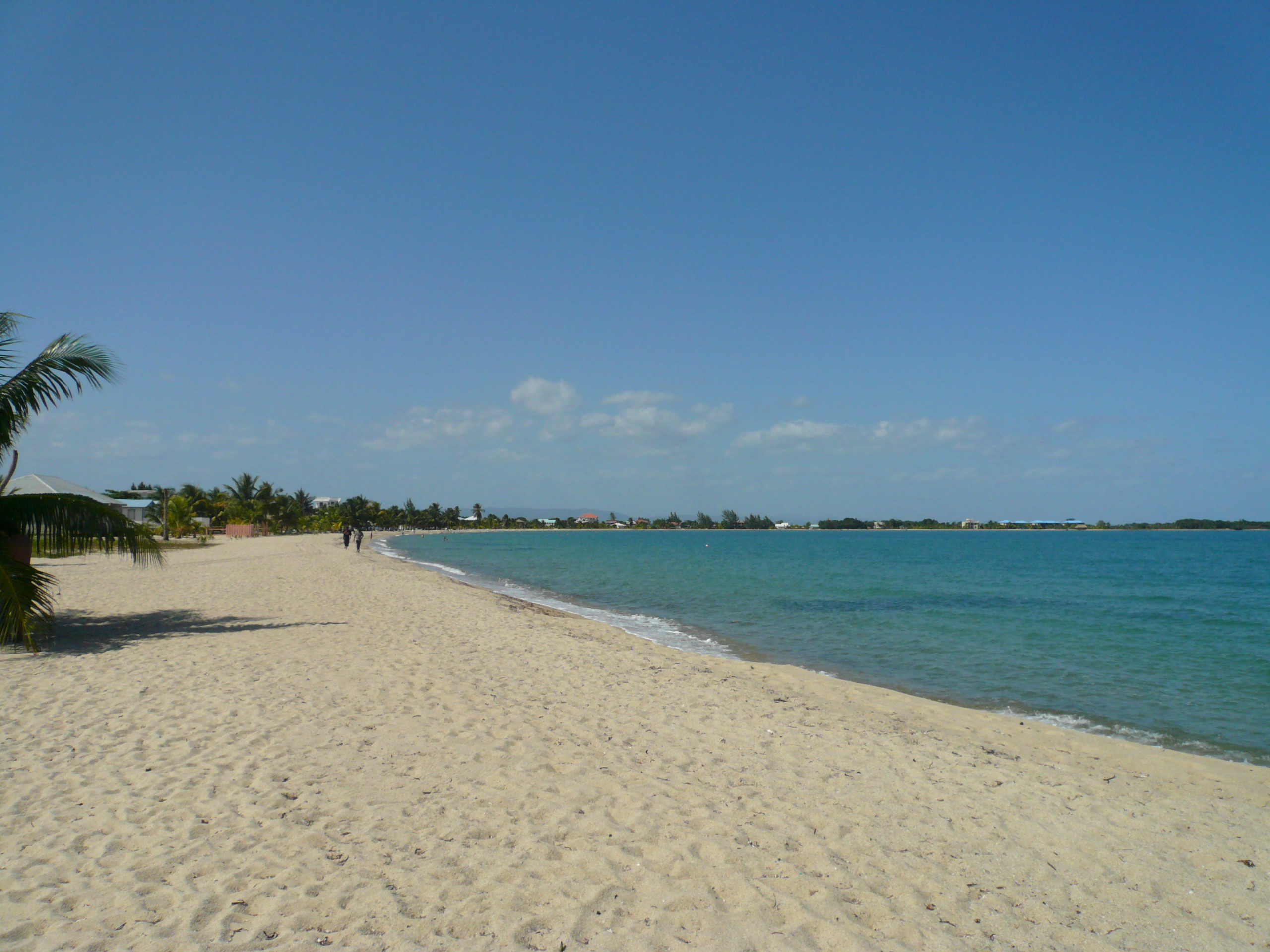 58
58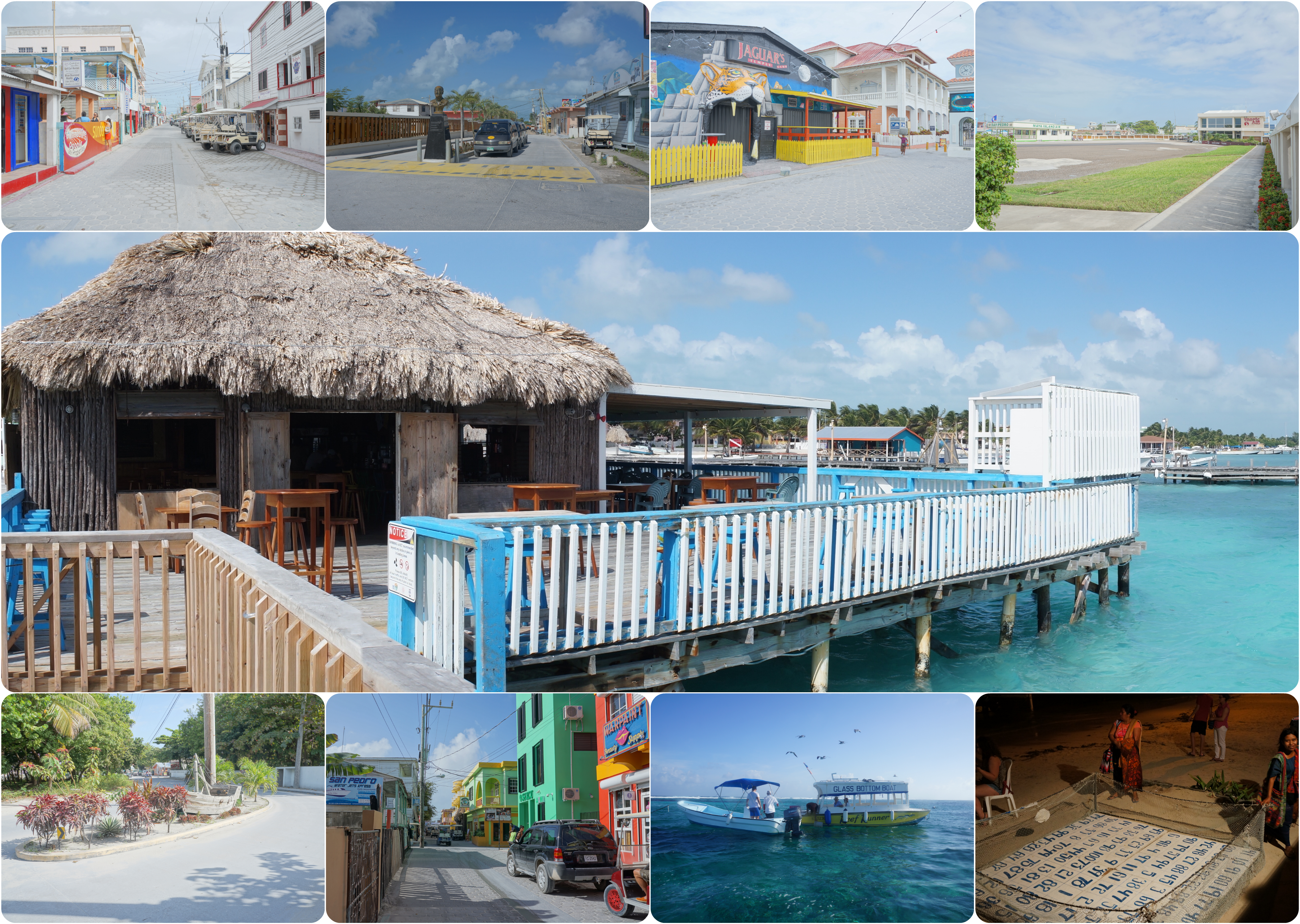 69
69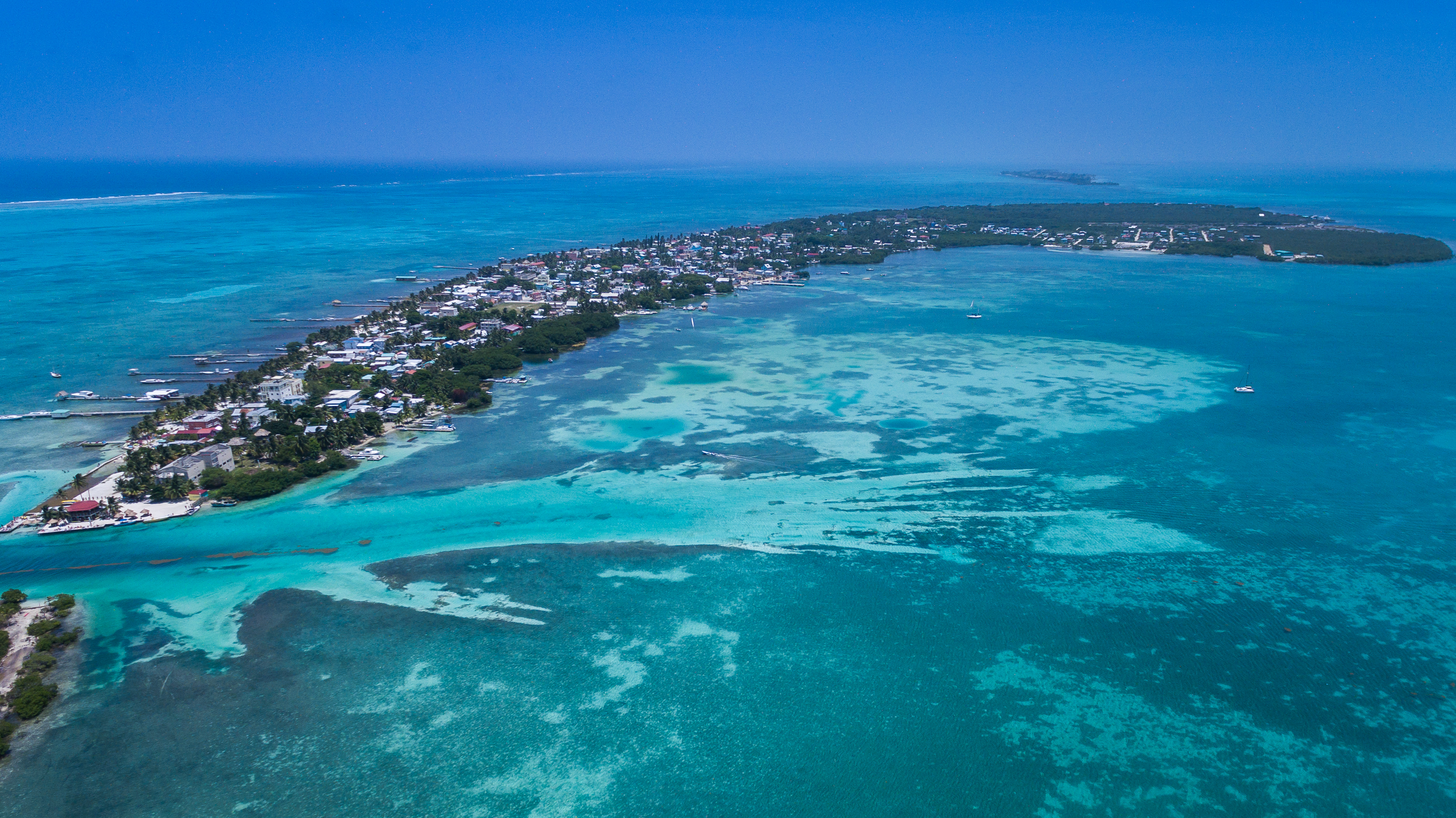 55
55 63
63 69
69The bank account and the 30 day rule
Two requirements get underweighted because neither sounds hard on its own: you need a Belize bank account receiving your income, and you need to be physically present in the country for 30 days a year to keep your status current. Individually neither is much. Together, and combined with the fact that Belize banks run their own compliance checks independent of what BTB wants, they're where renewals quietly stall.
The problem is that a Belize bank's onboarding requirements for a foreign retiree don't always map one to one onto what the QRP application asks for. BTB doesn't require apostilled documents, which keeps the visa paperwork itself relatively light, but a bank doing its own due diligence on a new account holder may ask for things the visa process never mentioned. Applicants who treat the bank account as a formality to sort out once they arrive sometimes find it takes longer than the visa did.
The 30-day presence requirement is generous compared to residency rules that demand you live somewhere full time, and that's deliberate: this program is built for people who want a foothold, not a full relocation. But generous isn't the same as automatic. Thirty days a year is easy to hit if you're deliberate about it and easy to miss if you're not, particularly in the first year when the account is new and you haven't yet built a rhythm of trips. Treat the first year's calendar as something to plan around the deposit schedule and the presence requirement together, not as two separate boxes to check whenever convenient.
What happens after you land
Approval gets you an initial status valid for 12 months, and keeping it going after that costs USD 25 a year to renew, which is about as close to nominal as a renewal fee gets. There's no interview built into the process, and applications can be filed from outside the country or from inside Belize on a tourist visa, with everything routed through the Tourism Board rather than a consulate. That centralization is a genuine convenience: one office, one set of instructions, no guessing which embassy handles what.
The part people underestimate is what the 12-month window actually asks of them. It isn't a grace period before "real" residency kicks in, it's the working structure of the program itself, renewed annually for as long as you hold the status. There's no local work permitted under any circumstance, and no local income allowed either, which is the flip side of the low financial bar to get in: the government isn't trying to compete with its own labor market, it's trying to bring in money that already exists elsewhere and keep it flowing in from outside.
Dependents go through the identical document stack, passport, birth certificate, medical documentation, police clearance, which means a couple or a family applying together isn't filling out one application, it's filling out several in parallel. That's worth planning for at the start rather than discovering it halfway through gathering notarized copies.
The one year path to permanent residency, and what it doesn't tell you
Becoming eligible for permanent residency after a single year on QRP status is fast by almost any regional standard, and it's one of the strongest arguments for choosing this program over alternatives. But eligibility and outcome aren't the same thing. Reaching the one-year mark makes you eligible to apply, not automatically approved, and the gap between those two is where a paper timeline and a lived one start to diverge.
The thing worth sitting with before you build a life plan around a one-year PR timeline is that the program only requires 30 days a year of physical presence to maintain QRP status, while permanent residency applications in most countries want some demonstration of actual ties, not just paperwork continuity. Nothing here says PR review will scrutinize your presence beyond the minimum, but anyone treating this as a guaranteed 12-month path to full residency without spending meaningful time in the country is making an assumption the program itself doesn't promise. If long-term settlement is truly the goal, spending closer to that 30-day floor as a bare minimum rather than a target is worth thinking through now.
Nationality restrictions don't factor in here, the program is open regardless of citizenship, which removes one variable that complicates plenty of other retirement visas elsewhere.
The judgment call against Panama's Pensionado route
Anyone comparing Belize seriously against Panama's Pensionado program is usually comparing two different philosophies rather than two versions of the same visa. Panama's pensionado track has historically leaned on a lower minimum pension figure paired with a dense set of local discounts once you're in, aimed at retirees who plan to live there full time and spend accordingly. Belize's QRP does the opposite: a straightforward monthly or annual income figure, minimal presence obligation, no permission to work locally, and a fast nominal track toward permanent residency for those who do want to convert.
The honest way to frame the decision is around what you want your presence in the country to be. If the plan is to actually live somewhere full time, integrate, and lean on local systems, Panama's built-in retiree benefits start to matter more than Belize's lighter footprint. If the plan is closer to a legal foothold, a place to spend part of the year with English as the working language and a straightforward route to permanent status, Belize's structure fits that better than a program built around full-time residents.
Neither is more legitimate than the other, they're built for different behavior. What matters is being honest with yourself about how many days a year you actually intend to be there, because that single number changes which of these two programs is doing the job you actually need done.
Work Permissions
Application Steps
- 1
📋 Verify eligibility criteria
1-2 days
- 2
📄 Gather identity documents
1 week
- 3
📄 Prepare financial proof
1-2 weeks
- 4
📋 Complete QRP application form
1 day
- 5
📬 Submit to Belize Tourism Board
- 6
⏳ Await approval decision
not specified
- 7
🏛️ Arrive and finalize residency
1-2 days
- 8
🏛️ Import duty-free goods
within 12 months
- 9
🏛️ Renew annually after year 1
not specified
Planning a long stay? Compare international health plans for Belize.
Compare health insuranceWe may earn a commission at no cost to you.
Compare this visa
Curated comparisons that include this route.
Frequently Asked Questions
Click any question to expand the answer.
Ready to Apply?
Work with trusted visa specialists who handle the paperwork so you can focus on your move.
Get help with this visa →* We may earn a commission if you apply through our link
At a Glance
Last verified: July 15, 2026