Difficulty
Difficult
Duration
60 months
Overview
Non‑EU freelancers and founders cannot just show up in Belgium and start billing; they need the Belgium Self‑Employed Professional Card, which doubles as the core work authorization behind a D visa and residence. No minimum monthly income or investment amount has been published, but the program requires at least 24,900 USD in savings and a 153 USD application fee. In practice, regional authorities (like Brussels Economy and Employment) scrutinize a business plan (capped at about 20 pages in Brussels) and the economic benefit of your activity, not just passive wealth, so a FIRE portfolio alone is not enough, you must frame an actual self‑employed activity.
The card is issued as a self‑employment authorization, not a generic residence permit: employment types allowed are strictly self_employed, meaning you work as a freelancer, sole proprietor, or active company director. Local work is expressly permitted under this route, but only for the professional activities listed on the card; salaried employment is outside its scope. The initial authorization often comes on a probationary basis for about 60 months (5 years) (matching the 60-month duration in the requirements), with the possibility of renewal beyond that, but there is no publicly specified minimum monthly income or local income cap, the economic utility assessment and your financial projections de facto set the bar.
From a residency perspective, Belgium ties the validity of the professional card to your right of residence for stays over 90 days, but this visa does not specify a hard physical presence requirement or a maximum consecutive absence. If you plan to split time between, say, Belgium and Portugal or Thailand, you are operating without a published day‑count rule in the program rules, so you must plan assuming standard EU practice (183‑day tax‑residency threshold) while recognizing that the migration rules for card renewal are not quantified nationally as of 2026. This uncertainty is one of the reasons the bureaucracy score here is only 1 / 5 and the overall editorial score is 2.3 / 5.
On the long‑term path, this route clearly allows renewal (“Renewable: Yes” for an initial 60-month (5-year) period), but nothing in the published rules confirm whether it leads to permanent residence or citizenship, nor how many years would be required. There is no specified timeline for years to PR, years to citizenship, or whether time on this status counts fully, so a 10‑year relocation plan cannot assume a Belgian passport at the end without separate legal analysis. Renewal costs are also not set nationally as of 2026, though Brussels separately quotes 90 EUR per year of card validity, creating another budgeting grey area when you convert between EUR and the 153 USD application fee listed.
Friction points are real: while there is no requirement for an apostille, FBI background check, medical exam, or in‑person interview, you still must produce a criminal record extract and medical certificate for the D visa under federal rules, and coordinate between the regional authority issuing the professional card and the federal Immigration Office issuing the visa. Processing time is not fixed nationally as of 2026, which, combined with the business‑plan review and economic‑benefit test, makes this a difficult route to time precisely for a move tied to a lease or school calendar.
This setup makes the most sense if you are, for example, a consultant or specialist with at least 24,900 USD in liquid savings, ready to generate self‑employed income from Belgian or international clients and willing to justify your activity’s benefit to a specific region over an initial 60-month (5-year) period. It is a poor fit if you want to live off a 4% withdrawal from a 1,000,000 USD brokerage account, avoid any structured business activity, and still expect a clear, disclosed path to Belgian permanent residence or citizenship within a fixed number of years.
Eligibility Requirements
Nationals of EU member states do not use the Belgium Self‑Employed Professional Card at all; they rely on free movement and freedom of establishment rules to register locally as self‑employed. The same exemption applies to citizens of the wider European Economic Area (EEA) and Switzerland, so anyone outside the EU/EEA/Swiss group — including Americans, Canadians, Australians, New Zealanders, and most Asian, African, and Latin American nationals — falls into the non_eu pool that actually needs this card to work for themselves in Belgium.
The edge cases are the EEA states (Norway, Iceland, Liechtenstein), Switzerland, and post‑Brexit United Kingdom. Belgium treats all three EEA states and Switzerland as exempt from the professional card requirement, just like EU nationals, based on EU/EEA agreements and bilateral arrangements. UK citizens, however, lost EU free‑movement status with Brexit; in Belgium they are third‑country nationals for this purpose and must follow the same professional card route as US or Australian applicants if they want to be self‑employed.
Dual nationals who hold any EU citizenship (for example, US–Irish, Canadian–Italian, Australian–German) should enter and register in Belgium using their EU passport instead of applying as a third‑country national. That route bypasses the professional card requirement entirely in most cases, is faster and cheaper to implement, and aligns with Belgium’s legal obligations on free movement and establishment for EU citizens.
Duration
60 months
Self-Employed
Requirements Checklist
0 of 31 documents in hand
0%These take the longest, so start them first.
Request these while the slow items are in progress.
You only need these on the day you submit.
How and where to apply
Submit professional card application to the regional economy ministry where you plan to base activities, e.g., Brussels Economy and Employment for Brussels-Capital (online/form or in-person). After approval, apply for D visa at Belgian embassy/consulate in your home country if staying over 90 days. Upon arrival, collect card at designated company counter; no in-country switch from tourist visa noted.
Tax Information
Local tax regime and what it means for you
Belgium uses a worldwide resident tax regime for individuals, not a territorial or remittance system. Once you are considered Belgian tax resident, Belgium can tax your global income: earned income from self‑employment in Belgium, remote consulting for foreign clients, foreign pension distributions, ETF dividends from a US or Canadian brokerage, and rental income from property abroad. This visa is tagged with “Tax Regime Type: resident”, so a successful professional card holder who actually lives in Belgium should assume their self‑employment income and foreign passive income fall within Belgian tax scope, subject to progressive rates and social security.
Capital gains on foreign investments are a key FIRE issue. Belgium is unusual in that many private portfolio gains are treated as non‑taxable when realized outside a professional trading activity, but this nuance is not captured in the structured visa rules. Because the published requirements does not specify a rate or exemption for capital gains on foreign index funds or ETFs, you must treat the tax treatment as not publicly specified here. For a large brokerage account generating both dividends and periodic rebalancing gains, that uncertainty is material enough that a local advisor should review your exact asset mix.
Tax residency for this visa type hinges on your actual residence and days in Belgium, but the visa data does not disclose a threshold like 183 days or a special trigger tied to the card itself. In practice, long‑stay D visa holders residing more than half the year in Belgium commonly become tax resident, yet the precise day count and tie‑breaker rules are not specified in this dataset. There is also no public information here on the tax status registration deadline or the first‑year filing deadline, beyond the classification as a resident regime.
There is no special named preferential regime (such as Portugal’s NHR or Italy’s flat‑tax non‑dom) associated with the Belgium Self‑Employed Professional Card in the provided facts, so you should not assume any flat‑rate or exemption structure on foreign passive income.
Local filing obligations are not detailed in the visa rules, but a resident‑type regime implies you will need to register with the Belgian tax authority, obtain a national number, and file an annual personal income tax return declaring self‑employment income and foreign‑source income. Exact deadlines and registration steps are not specified here and must be confirmed locally once you register your address.
The tax treaty status with the US is marked as “unknown” in the visa rules, even though Belgium and the US do have an income tax treaty and a separate totalization agreement in reality. Because this dataset flags it as unknown, you cannot rely on treaty relief details here for US Social Security, dividends, or interest; any optimization around double taxation must be built from the actual treaty text, not from this summary.
For US Citizens and Green Card Holders
US citizens and green card holders using the Belgium Self‑Employed Professional Card remain fully subject to US taxation on worldwide income, regardless of Belgium’s resident regime. Three US tools matter: the Foreign Earned Income Exclusion (FEIE), the Foreign Tax Credit (FTC), and foreign account reporting.
For FEIE, you use Form 2555 to exclude up to 126,500 USD of earned income in 2024 — meaning your Belgian or cross‑border consulting and freelancing profits from self‑employment, not your ETF dividends, capital gains, US pension distributions, or Social Security. This visa is designed for self_employed work, so many holders will have significant earned income that can qualify. If you spend nearly all of the year abroad while building a life in Belgium, the Physical Presence Test (330 days in a foreign country in a 12‑month period) and the Bona Fide Residence Test (establishing a home in Belgium) are both plausible; which works better depends on how much time you plan to spend outside Belgium in other countries.
Form 1116 for the Foreign Tax Credit becomes important once you are Belgian tax resident and paying Belgian tax on your self‑employment and possibly your foreign passive income. The FTC only helps to the extent Belgian effective tax rates on specific income streams exceed the corresponding US tax; if Belgium taxed some foreign capital gains at 0% but fully taxed dividends, you could claim credits only on the taxed portion. Because this dataset does not detail Belgian rates or treaty overrides, you must model both systems’ rates before relying on the FTC to fully eliminate double taxation.
FBAR (FinCEN 114) and FATCA Form 8938 are unavoidable once you hold Belgian accounts. If your aggregate foreign financial accounts — Belgian current account, savings, brokerage, and business accounts — exceed 10,000 USD at any point in the year, you must file FBAR, with non‑willful penalties starting at 10,000 USD per violation. Form 8938 has higher thresholds but substantial penalties too. The visa rules do not require a local bank account explicitly, but self‑employment and local billing in Belgium almost always imply opening one, making FBAR/FATCA relevant for most US holders.
For this visa, you need two types of advisers in year one: a US CPA who specializes in expat taxation (FEIE vs FTC strategy, Forms 2555, 1116, FBAR, 8938), and a Belgian tax professional to handle registration and resident filing. The 1,500–3,000 USD you are likely to spend upfront generally pays for itself through correctly structured self‑employment, avoided filing penalties, and optimized use of FEIE and credits over the first few high‑income years abroad.
Living in Belgium
COL Index vs NYC
56.5
Monthly Cost (excl. rent)
$1,097
1BR Rent (City Center)
$991
Safety Index
50.6
Healthcare Index
75.9
Quality of Life Index
169.3
Time Zone
UTC+01:00
Capital
Brussels
Population
11.6M
Official Languages
German, French, Dutch
Avg Internet Speed
138 Mbps
Public Transit Quality
Excellent
With a budget covering rent and living costs, you'd need roughly $2,088/mo for a comfortable single-person lifestyle in Belgium.See how far your money goes →
🏙️ Best Cities in Belgium for Freelancers
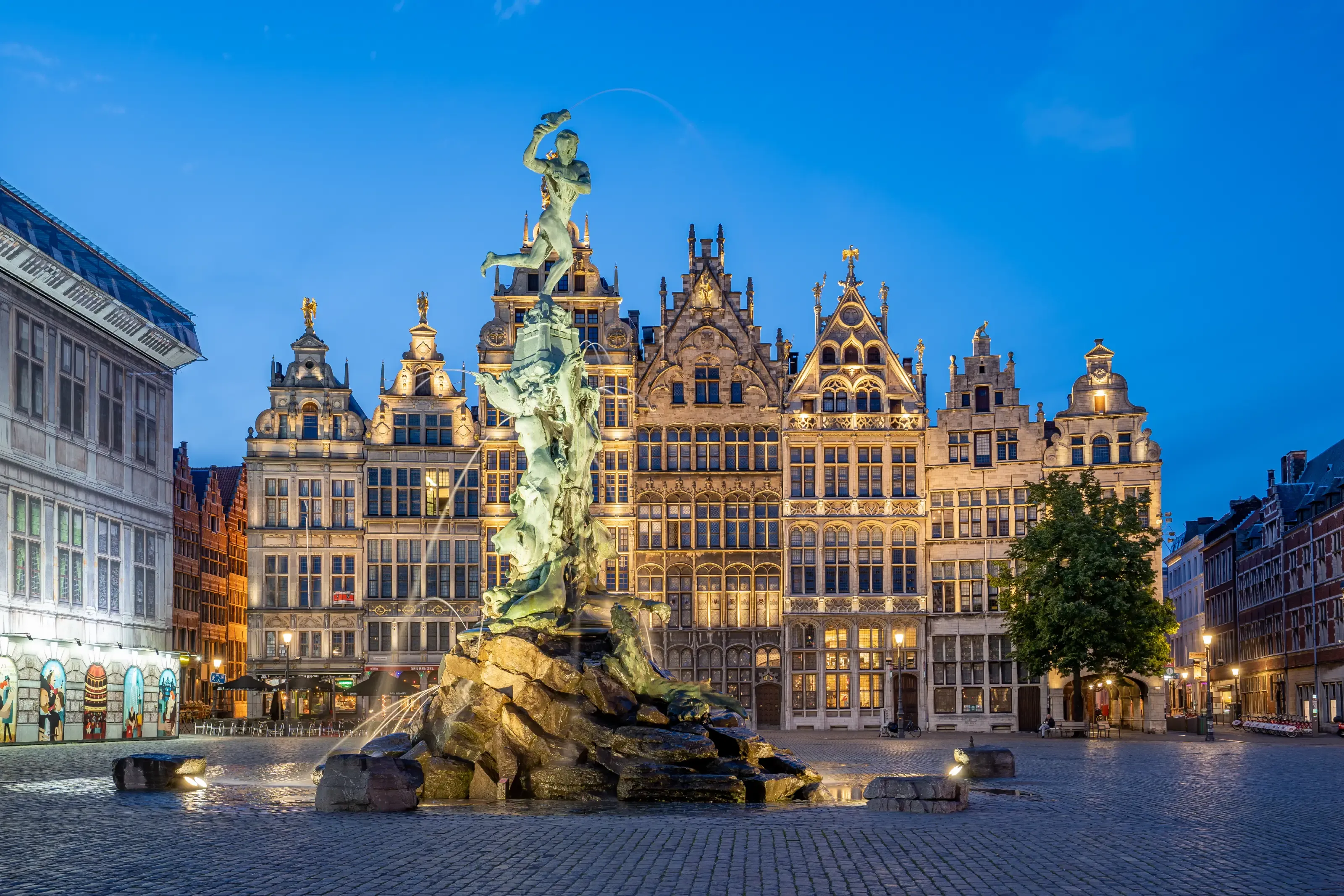 ✦ 83
✦ 83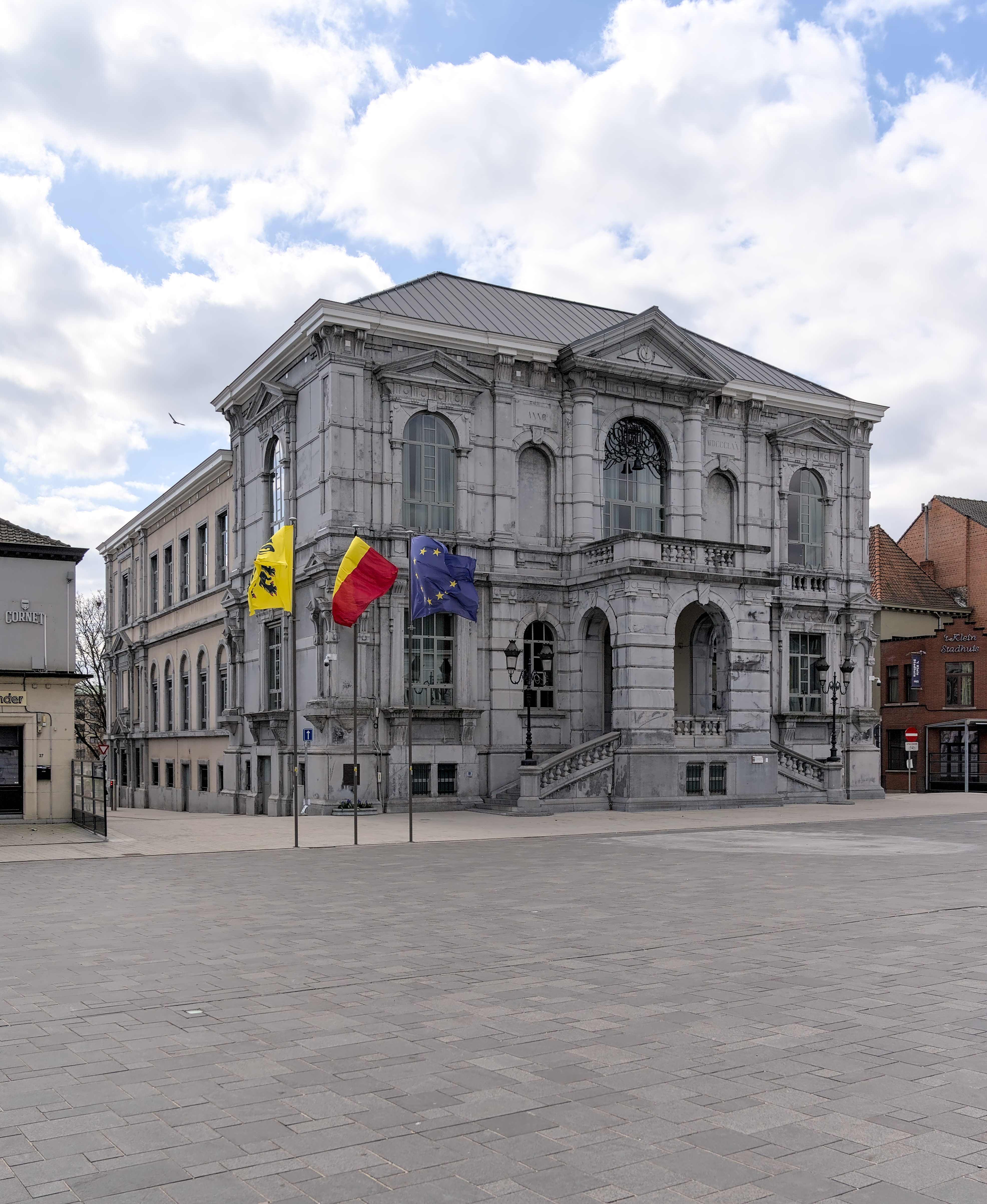 ✦ 79
✦ 79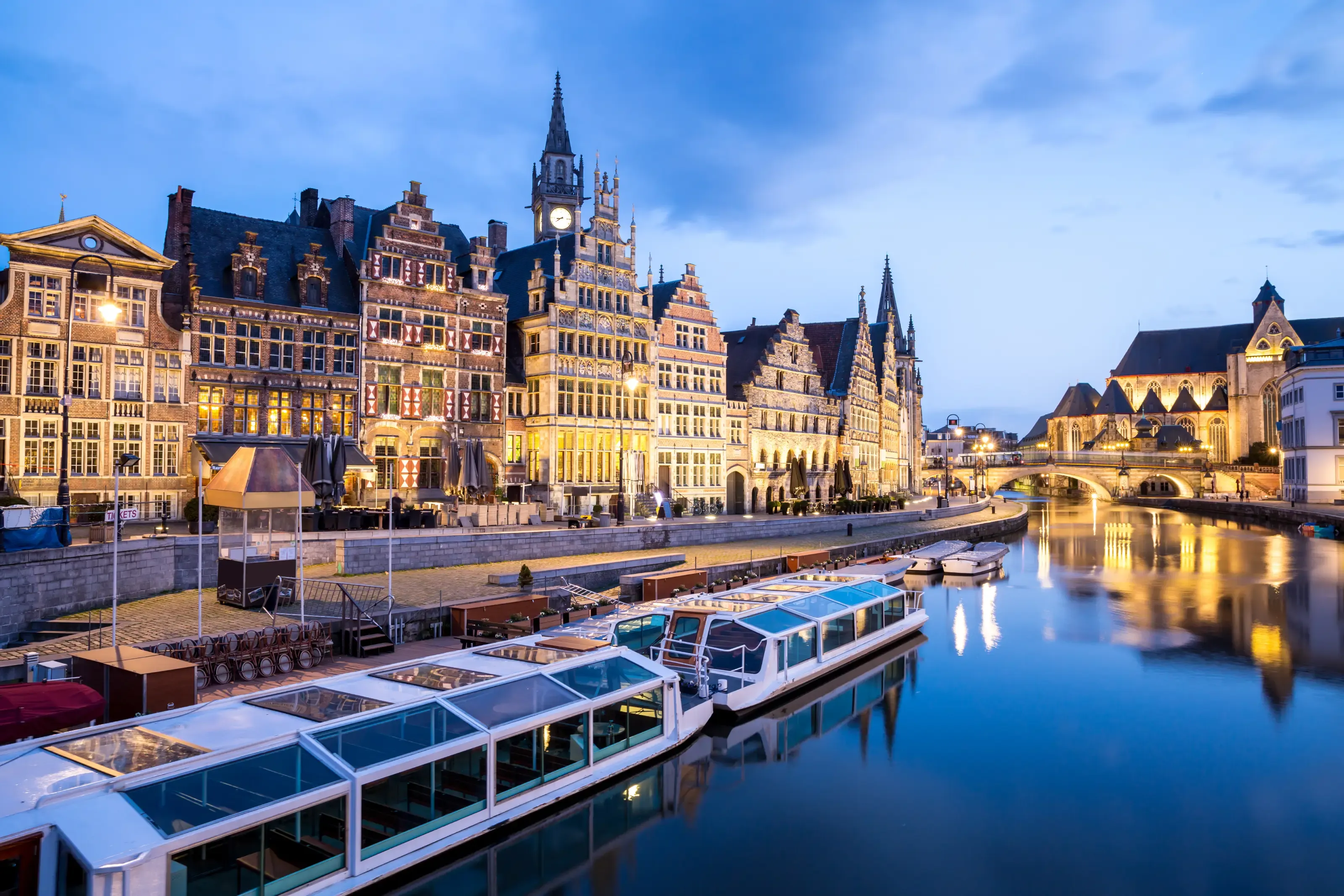 ✦ 82
✦ 82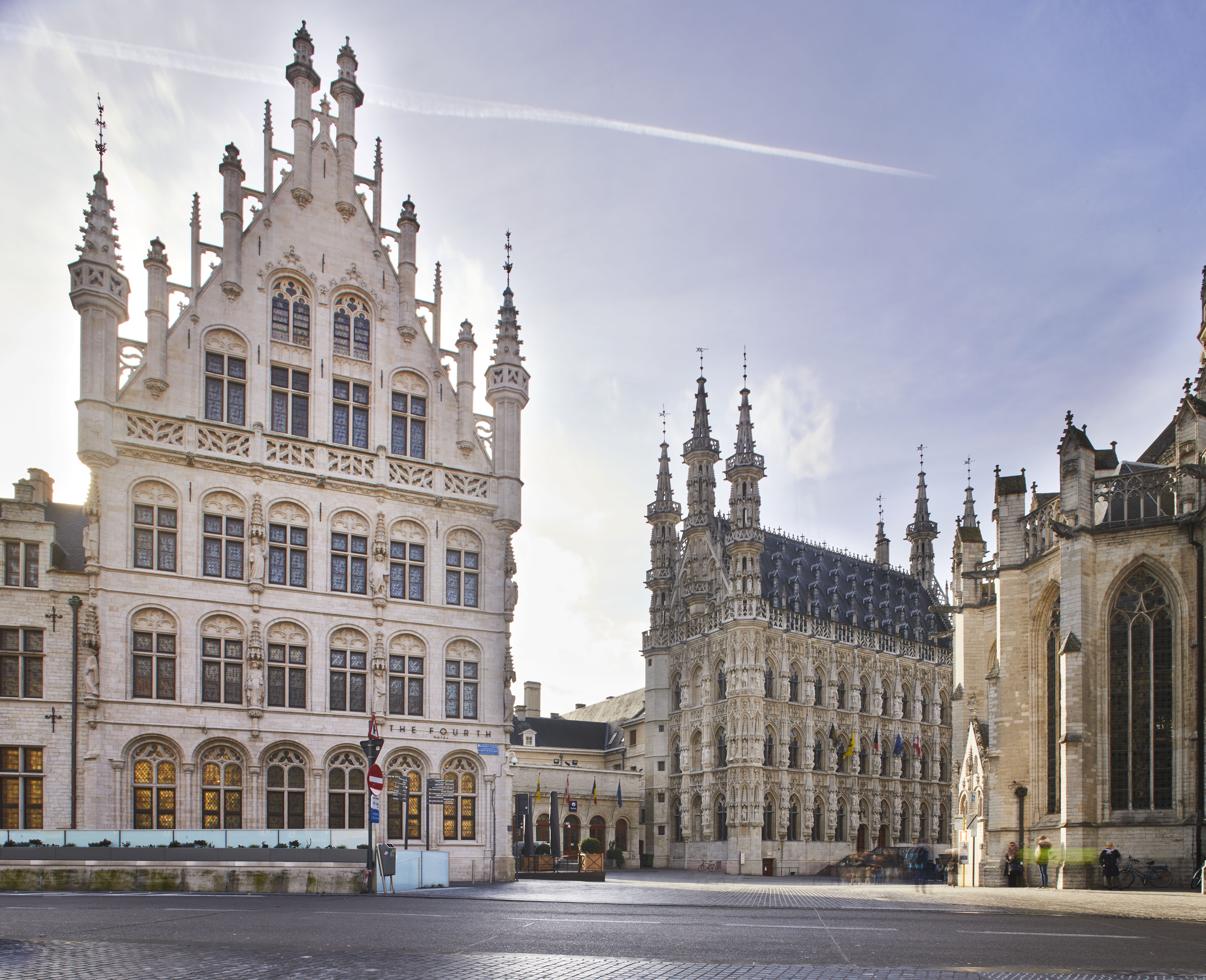 ✦ 87
✦ 87 ✦ 78
✦ 78The housing and accommodation requirement, and how people get it wrong
Accommodation doesn't enter the picture at the professional card stage, it becomes relevant once the card is approved and you're applying for the D visa at a consulate back home. That sequencing catches people off guard. They assume they need a signed Belgian lease before submitting the professional card application, so they either commit to a rental sight-unseen months before they have any approval, or they stall the whole process waiting to sort housing first when nothing in the professional card review actually requires it yet.
The cleaner order is to let the professional card approval come through first, then handle accommodation as part of the D visa file. A hotel booking or a lodging attestation is enough to satisfy that step, it doesn't need to be a year-long lease. Signing a long lease from another continent, on a place you've never seen, based on photos, is where people get burned, either the unit doesn't match the listing or the landlord isn't accustomed to registering a domicile for someone who hasn't arrived yet. A short-term arrangement, an Airbnb with a formal booking confirmation or a few weeks in a serviced apartment with a lodging attestation, does the job for the visa and buys time to find something real once you're on the ground and can register at the commune properly.
The registered business address is a separate matter and gets conflated with personal accommodation more than it should. A virtual office or a coworking membership with a registered address can satisfy the business address requirement while your personal housing search runs on its own timeline. Keeping those two threads separate saves a lot of unnecessary pressure on finding permanent housing before you've even landed.
What actually happens after the card is approved
Approval of the professional card is not the finish line, it's the document that unlocks the next application. Once the regional authority approves it, or issues an approval decision, the next move is applying for the D visa at the Belgian embassy or consulate in your home country if you'll be staying more than 90 days. There's no route to convert a tourist stay into this status once you're already in Belgium, so the sequence has to run in that order: professional card approval abroad, D visa application abroad, then travel.
At the D visa stage, the file adds a few things the professional card review didn't ask for, proof of sufficient funds for the stay itself, travel health insurance if the consulate requires it, and a medical certificate. People sometimes treat the D visa as a formality once the professional card is in hand, and mostly it is, but it's still a separate adjudication with its own document list, and missing the health insurance or funds proof at this stage is a common reason for delay even after the harder professional card review has already cleared.
Arrival itself is anticlimactic by design. You collect the card at a designated company counter rather than at the airport or a general immigration office, which means confirming that location before you fly matters more than people expect, since showing up at the wrong counter with limited Dutch or French and no appointment wastes a day you don't get back.
The renewal path and what it actually asks of you
The initial card runs for five years, which is long enough that people stop thinking about renewal until it's close, and that's usually a mistake. Renewal isn't a formality stapled onto an existing approval, it asks for an updated business plan and, more consequentially, two years of tax returns, proof of no outstanding tax debts, proof of registration with a self-employed social insurance fund, and proof of no debts to social security. That's a materially different bar than the forward-looking projections the first application leaned on. By renewal time, the ministry wants to see that the business you projected actually happened, or evolved into something that still clears the subsistence threshold.
This is where the discipline of staying current on Belgian tax filings and social insurance contributions from year one pays off, because scrambling to reconstruct two years of clean records in the months before a renewal deadline is a much worse position than filing properly as you go. The card being renewable is a real feature, but it rewards people who treated the first five years as an actual operating period rather than a stay-of-execution to be dealt with again later.
What the card doesn't hand you directly is a mapped route to permanent settlement. It's a work and residence authorization tied to running a qualifying self-employed activity, and it needs to be renewed on that basis for as long as the underlying business continues to meet the threshold. Anyone thinking about this as a long-term relocation should plan around continuous, clean renewals rather than assuming a fixed date where the requirements fall away.
The decision against the more common alternative
For a lot of US freelancers evaluating Europe, the instinct is to compare this against a country offering a straightforward digital nomad or passive-income residence permit, something that doesn't require standing up a Belgian business entity or writing a liquidity forecast at all. That comparison is fair, and for someone who wants to keep working for existing US clients with minimal structural change, a passive-income-style permit elsewhere will almost always be the lower-friction path. Belgium's card is built for people actually establishing a self-employed operation on Belgian soil, complete with a registered business, its own tax exposure, and social insurance obligations, not for someone who wants residency while their income and business stay entirely elsewhere.
The trade worth naming honestly: Belgium asks for more upfront construction, a real business plan, projected local revenue, a registered address, ongoing social insurance affiliation, but in exchange gives local work authorization and a path that treats you as an actual participant in the Belgian economy rather than a visitor with a longer visa sticker. If the goal is central-EU access, a truly local business presence, and a willingness to build something that looks like a Belgian company on paper and eventually in practice, this fits. If the goal is preserving an existing US-based freelance operation with as little local entanglement as possible, the honest answer is that this isn't the low-friction option, and pretending otherwise on the application, projecting a Belgian client base that doesn't and won't exist, is exactly the kind of file a reviewer has seen enough times to spot.
Work Permissions
Application Steps
- 1
📋 Research regional requirements
1-2 weeks
- 2
📄 Gather application documents
2-4 weeks
- 3
📬 Submit to regional authority
- 4
⏳ Await regional decision
not specified
- 5
📅 Apply for D visa at embassy
2-4 weeks
- 6
🏛️ Arrive and collect card
Same day
- 7
🏛️ Register as self-employed
1-2 weeks
Compare this visa
Curated comparisons that include this route.
Frequently Asked Questions
Click any question to expand the answer.
Ready to Apply?
Work with trusted visa specialists who handle the paperwork so you can focus on your move.
Get help with this visa →* We may earn a commission if you apply through our link
At a Glance
Last verified: October 9, 2026