Min Monthly Income
$4,167
Processing Time
1 wk
Difficulty
Easy
Duration
12 months
Overview
Remote workers looking at Barbados need to start with the income rule: you must earn at least USD 50,000 per year, which matches the program rules minimum of USD 4,167/month. That income has to come from remote work for entities outside Barbados; local work on the island is explicitly not allowed, and Social Security, pension income, pure rental income, or ETF dividends on their own do not count toward the threshold. The online form asks you to certify this income level rather than upload detailed proof, but the legal requirement is clear: foreign-source earned income of at least USD 50,000 over the 12‑month visa period.
The stamp runs for 12 months and is renewable, with the initial fee set at USD 2,000 for an individual and a renewal cost of USD 3,000/year as of 2026 (as of 2026). You can come and go freely during those 12 months; there is no minimum physical presence requirement in Barbados and no cap on how long you can be out of the country, which matters if you are juggling another tax residency or family base. In practice, immigration expects you to actually reside there, but there is no named “183‑day” or similar threshold in the Welcome Stamp rules themselves.
This is not a residency ladder: program rules flags that it does not lead to permanent residency and does not specify any years-to-citizenship track tied to the visa. You can renew successive 12‑month periods (current policy extends the program at least through 31 December 2026), and if you later want permanence you would move into Barbados’ standard immigrant status or work/residence permit frameworks, which require a separate application process and usually more than 5 years of ordinary residence before citizenship becomes realistic.
On friction, the program scores a very low 1.175/5 on bureaucracy because the document burden is light: no apostille, no FBI background check, no medical exam, and no in‑person interview. You apply online, upload a passport bio page and basic relationship proofs for dependents, and show evidence or certification of private health insurance for the 12‑month period. Local bank accounts are not required by law, though some people choose to open an external or foreign currency account once in Barbados for convenience.
This setup makes most sense if you have at least USD 4,167/month in ongoing remote work income (W‑2, contractor, or business owner), are happy to pay a USD 2,000 upfront fee plus USD 3,000 per renewal year as of 2026, and value 12 months of tax‑free foreign earnings in Barbados without any PR commitment. It is a poor fit if your USD 4,000–6,000/month lifestyle is funded primarily by rental income, dividends, pensions, or Social Security, because those do not satisfy the program’s earnings test and local employment to close the gap is prohibited.
Eligibility Requirements
Any nationality can apply for the Barbados Welcome Stamp in principle; visa rules list nationality restrictions as “all,” and Barbados Digital confirms that anyone meeting the income, remote‑work, and insurance requirements is eligible. In practice, applicants from sanctioned or high‑risk jurisdictions such as Iran, North Korea, Syria, and Cuba, as well as some Russian applicants facing banking and payment‑processing blocks, can run into de‑facto barriers even though the law does not automatically exclude them. Before compiling documents or paying third‑party fees, verify your individual eligibility and any security‑screening issues directly with the Barbados Immigration Department or through the official portal at barbadoswelcomestamp.bb.
Min Income
$4,167
Renewal Cost
$3,000/yr
Min Age
18 yrs
practical
Duration
12 months
Physical Presence
None required
Remote Work / Freelance
W2 Employee (foreign employer) · 1099 Contractor · Business Owner · Self-Employed
Max 0% from local sources
Requirements Checklist
0 of 8 documents in hand
0%These take the longest, so start them first.
Request these while the slow items are in progress.
You only need these on the day you submit.
How and where to apply
Apply fully online via the official portal at https://www.barbadoswelcomestamp.bb/apply/. No need for consulates or in-country immigration offices; submit electronically from anywhere before arrival. Approval allows entry within 12 months; renewals also online.
Tax Information
Local tax treatment for Welcome Stamp holders
Barbados runs a worldwide tax system in general, but Welcome Stamp holders sit under a specific statutory carve‑out in the Remote Employment Act, 2020. Under that Act, someone on this 12‑month visa who works remotely for an overseas employer or their own foreign business “will not be subject to income tax in Barbados” on that remote employment income and is treated as non‑resident for income tax while on the stamp. That means your USD 4,167+/month foreign salary, contractor income, or self‑employment profits that qualify you for the visa are not taxed by Barbados, even if you spend the full year on the island. Local employment and local‑source business income are not allowed under this visa, so local taxable income should be zero.
For FIRE readers, the law is focused on employment income. Dividends from ETFs in a US or Canadian brokerage, interest on foreign bonds, and rental income from property abroad are not being targeted under the Remote Employment regime; in practice, Welcome Stamp holders are treated as non‑resident and do not file Barbados returns, so those streams are not brought into the Barbados tax net while you remain on this status. Capital gains on foreign investments, including selling index funds or ETFs held in a foreign brokerage, are therefore effectively exempt in Barbados for Welcome Stamp holders, because you are classified as a non‑resident with no local filing obligation under the program.
Barbados’ normal tax residency rules (based on days in country and ordinary residence) are overridden by the Remote Employment Act for stamp holders: you are deemed not tax resident even if present more than 183 days in a year. There is no day-count threshold within this special regime; the operative condition is holding a valid Welcome Stamp and working only for non‑Barbadian entities. If you switch to another status (for example, immigrant status or a standard work permit) after a few years, ordinary residency rules apply and Barbados can then tax worldwide income at progressive rates.
Local filing obligations for Welcome Stamp holders are minimal. You do not register for Barbadian income tax, you do not have payroll withholding or social security contributions, and there is no annual income tax return as long as you stay within the remote‑work‑only scope. Some stamp holders obtain a local Tax Identification Number via the TAMIS system to interact with government services or banks, but that does not create tax liability by itself. Barbados does have an income tax treaty with the US outside this visa, but because Welcome Stamp holders are explicitly non‑resident for local tax, the treaty rarely drives outcomes on day‑to‑day remote salary or portfolio income.
For US Citizens and Green Card Holders
US citizens and green card holders on the Barbados Welcome Stamp still face full US worldwide taxation. The fact that Barbados treats you as a tax non‑resident with zero local income tax means the Foreign Earned Income Exclusion (FEIE) on Form 2555 becomes your primary tool on the employment income that qualifies you for the stamp. As of 2026 the FEIE limit is USD 132,900 of earned income (wages, contractor income, self‑employment profits) per person. Dividends, capital gains, interest, pension distributions, and Social Security are not eligible for FEIE and remain fully taxable in the US.
Because Welcome Stamp holders are explicitly non‑resident for Barbadian tax but can spend 12 straight months on the island, most will rely on the Physical Presence Test for Form 2555: 330 full days outside the US in any rolling 12‑month period, counting your days in Barbados as foreign days. The Bona Fide Residence Test is less useful here because the visa is time‑limited to 12‑month chunks and does not itself create an open‑ended residence framework, though someone renewing repeatedly could, in practice, pair that with a more permanent Barbadian status later.
The Foreign Tax Credit (FTC) on Form 1116 has limited value in this specific regime. Barbados charges 0% local income tax on your remote employment income under the Remote Employment Act, and Welcome Stamp holders do not pay Barbados tax on foreign passive income either. With a 0% foreign effective rate, there are no meaningful foreign tax credits to claim against your US liability on salary, dividends, or capital gains. FEIE (and, for higher earners, strategic use of the foreign housing exclusion/deduction) is therefore the main relief for remote work income, and there is no foreign credit shield for your brokerage income.
FBAR (FinCEN 114) and FATCA Form 8938 still matter. If you open a Barbados external or foreign currency account and your aggregate non‑US account balances ever exceed USD 10,000 during the year, you must file FBAR electronically with FinCEN; non‑willful penalties start around USD 16,700 per violation as of 2026 (inflation‑adjusted from the $10,000 statutory base). Form 8938 has higher thresholds (for many single expats abroad, USD 200,000 at year‑end), but a substantial brokerage plus local accounts can trigger it. The visa does not require a local bank account, yet many people open one, which makes US reporting a live issue.
The practical move is to assemble a small team: a US CPA who specializes in expat returns and knows how to combine Form 2555, Form 1116, FBAR, and FATCA with a 0% host‑country tax environment, and a Barbados tax advisor who understands the Remote Employment Act, local TIN registration, and what would change if you later move to immigrant status. The USD 1,500–3,000 you spend in year one on this advice is usually recovered via optimized FEIE/housing elections, avoiding double taxation on side gigs, and steering clear of five‑figure FBAR and accuracy‑related penalties.
Living in Barbados
COL Index vs NYC
70.0
Monthly Cost (excl. rent)
$1,330
1BR Rent (City Center)
$883
Safety Index
54.3
Healthcare Index
59.8
Quality of Life Index
130.5
Time Zone
UTC-04:00
Capital
Bridgetown
Population
287.4K
Official Languages
English
Avg Internet Speed
50 Mbps
Public Transit Quality
Fair
With a budget covering rent and living costs, you'd need roughly $2,213/mo for a comfortable single-person lifestyle in Barbados.See how far your money goes →
🏙️ Best Cities in Barbados for Digital Nomads
 ✦ 75
✦ 75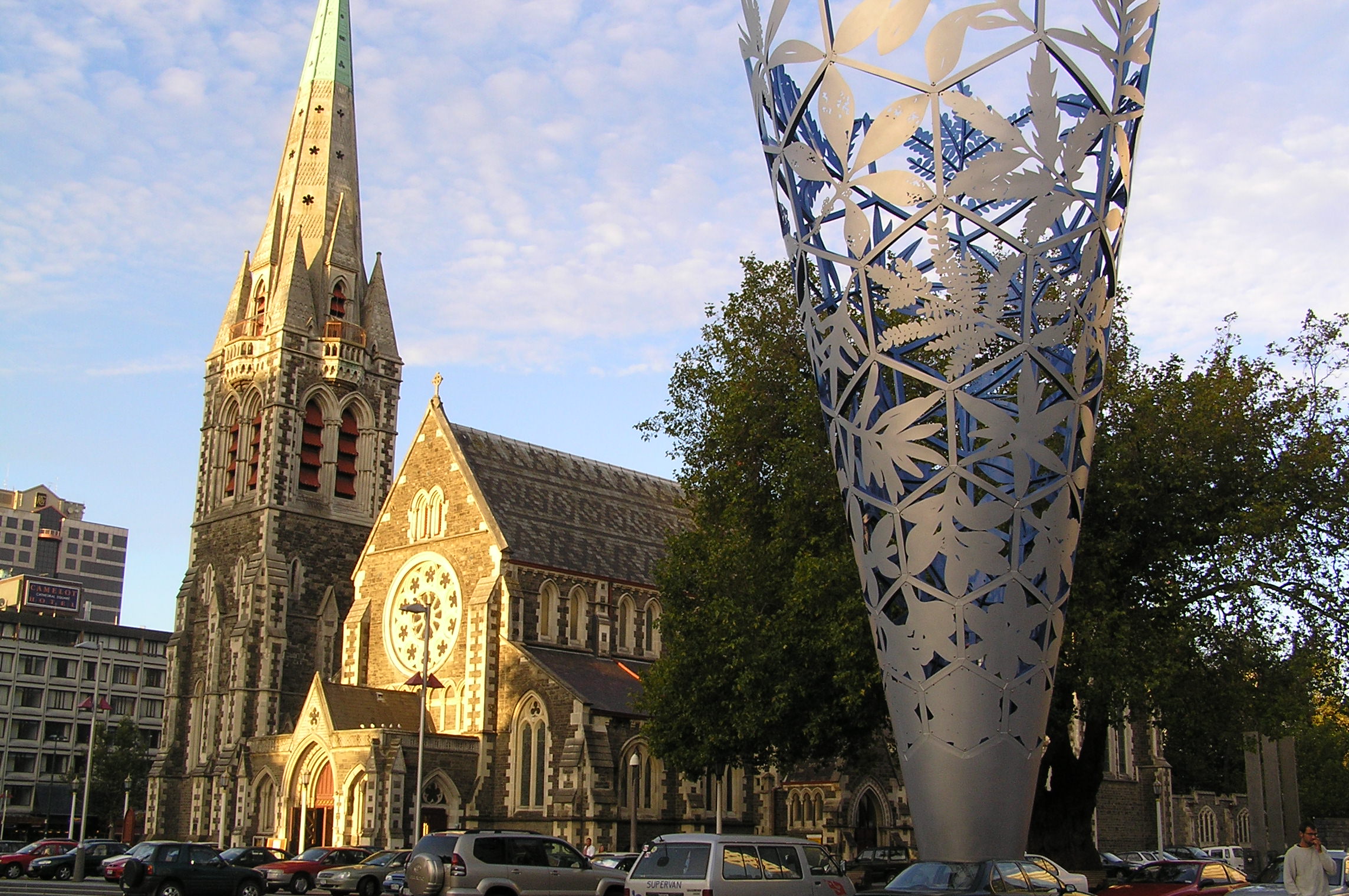 70
70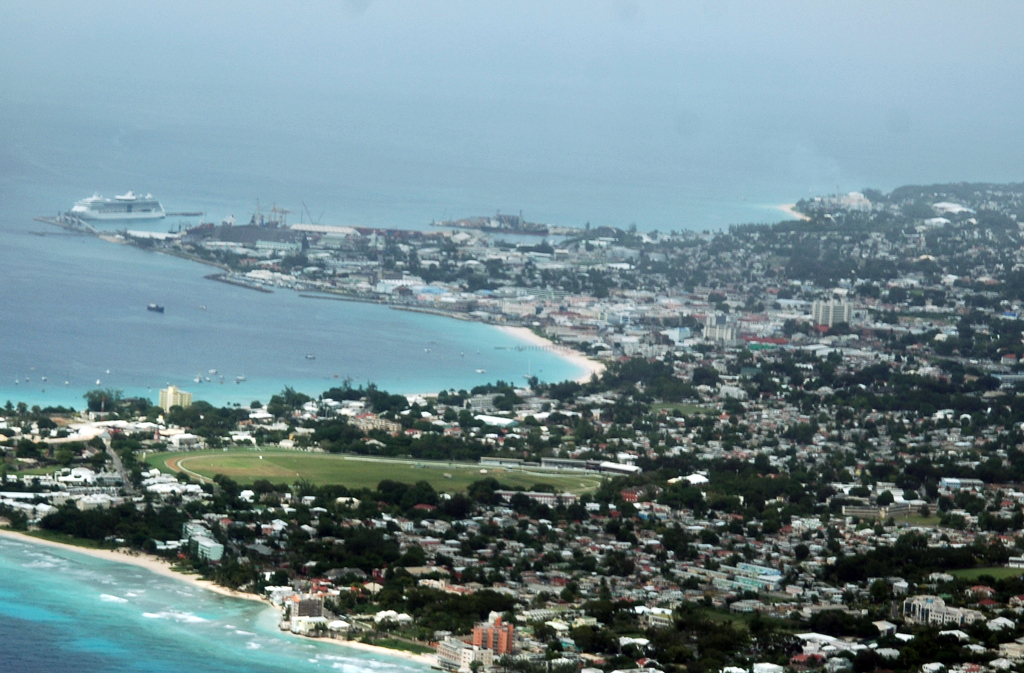 ✦ 79
✦ 79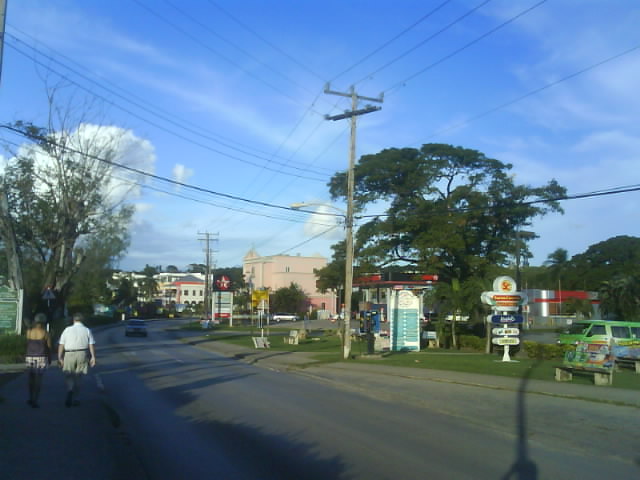 56
56The housing decision nobody tells you how to sequence
There's no accommodation document to produce for this application, no lease to notarize, no landlord letter required before submission. That absence changes the order of operations in a way that trips people up in both directions. Some applicants assume they need housing locked in before they apply and spend weeks hunting for a long-term rental from abroad, sight unseen, before they've even confirmed approval. Others go the opposite way, wait until they land to think about housing at all, and end up burning the first month of a twelve-month permit in short-term rental pricing that erodes the cost advantage that drew them to Barbados in the first place.
The better order is: apply first, since approval typically comes back within a week, then use the gap between approval and travel, which can run up to twelve months, to secure housing on the ground or through a local contact rather than a booking platform. Health insurance still has to be arranged before submission and needs to cover the intended stay, and insurers sometimes want an address or at least a general region, so it helps to have a rough housing plan even without a signed lease. What doesn't help is treating the housing search as part of the visa process itself. It isn't, and conflating the two just slows down the one step that's actually time-sensitive.
Families bring a slightly different housing calculus. Dependents are permitted on the same status, but a two-bedroom in a tourist-facing area prices very differently than the same footprint in a residential parish, and the income threshold doesn't flex based on household size. Anyone bringing a spouse and kids should model the actual monthly housing cost against take-home income before committing, because the visa's income floor is calibrated to the applicant, not to what a family of four needs to live comfortably on the island.
What happens between approval and actually being able to stay
This is one of the cleaner versions of this process precisely because there isn't a second act. Approval comes through the online portal, usually within a week and sometimes within a few days, and it's granted as a right to enter within twelve months rather than a status that starts ticking immediately. There's no medical exam, no in-country immigration office visit, no separate permit to collect on arrival. What you're approved for on the portal is functionally what you land with.
That simplicity is also where people misjudge timing. Because entry is allowed any time within a twelve-month window after approval, some applicants sit on an approved status for months without triggering anything, then arrive and act as though the twelve-month permit clock starts from approval date rather than from actual entry. It doesn't. The initial permit runs twelve months from when you're in the country under it, so someone who gets approved in January and doesn't move until October has effectively banked most of that window rather than spent it.
The other place people get caught out is assuming the online nature of the process means it's informal. It isn't. Renewal happens through the same portal, but it comes with its own cost, close to $3,000, and its own documentation refresh. Anyone treating the first twelve months as a trial run without lining up the paperwork for renewal three or four months out is setting up a scramble right when the original permit is expiring. There's no local work authorization at any point in this, initial or renewed, so the entire arrangement depends on income continuing to originate from outside Barbados for as long as the status is held.
The long-term path is less settled than it looks on a form
Barbados renews this status rather than converting it into something else automatically, and renewal itself is a real financial event, not a formality, running close to $3,000 each cycle. That's a meaningful ongoing cost to factor into a multi-year stay, on top of housing and insurance, and it's easy to underweight if you're only pricing out the first year.
Where this gets truly uncertain is the jump from renewable temporary status to something more permanent. If long-term residency or citizenship is part of the plan rather than a nice-to-have, that path deserves independent verification with Barbadian immigration counsel before anyone builds a five-year plan around it, because a visa designed around remote income and no local work rights is a different animal from an immigration track designed to naturalize people. Treating them as the same pipeline is the most common planning mistake with this kind of program, not just in Barbados but anywhere a fast, low-friction remote-work visa exists alongside a slower, separate residency system.
The call against a mainland alternative
The obvious comparison for someone weighing this is a European remote-work or passive-income visa, Portugal's or Spain's programs being the usual reference points people bring up. The Barbados version wins on speed and friction: no interview, no medical exam, processing measured in days rather than months, and the entire application handled from a laptop with no consulate visit anywhere in the process. For someone who wants to be earning from the US and living somewhere warm within a matter of weeks, that's a real advantage, and it's hard to overstate how much friction gets removed by not having to schedule an in-person appointment at all.
What it doesn't give you is a straightforward residency ladder. A European program built around eventual permanent residency and citizenship gives you a clearer multi-year map, even if the up-front process is slower and heavier on documentation, apostilles, and in-country steps. Barbados asks for less paperwork and less waiting, but it also recognizes less income, since neither pension nor social security counts toward the threshold, which quietly rules it out for a chunk of the retiree population that a European passive-income visa is built to serve.
The decision comes down to what you're optimizing for. If the goal is to get out of a US work setup and into a lower-friction base fast, with the flexibility to leave when it stops making sense, Barbados does that better than almost anything comparable. If the goal is a country you're building toward staying in permanently, the slower European route is doing something Barbados isn't really designed to do, and no amount of paperwork speed changes that difference.
Work Permissions
Application Steps
- 1
📋 Research eligibility and gather info
1-2 days
- 2
📄 Prepare required documents
3-7 days
- 3
📬 Submit online application
1 day
- 4
⏳ Wait for processing and decision
5-7 days
- 5
📬 Pay visa fee upon approval
1 day
- 6
🏛️ Travel to Barbados
- 7
🏛️ Settle in and comply with terms
- 8
📋 Apply for renewal if staying longer
1-2 weeks
This visa requires proof of health insurance. Compare international plans before you apply.
Compare health insuranceWe may earn a commission at no cost to you.
Compare this visa
Curated comparisons that include this route.
Frequently Asked Questions
Click any question to expand the answer.
Ready to Apply?
Work with trusted visa specialists who handle the paperwork so you can focus on your move.
Get help with this visa →* We may earn a commission if you apply through our link
At a Glance
Last verified: October 9, 2026