Min Monthly Income
$10,638
Processing Time
1-2 wks
Difficulty
Moderate
Duration
6 months
Overview
Bahrain’s Golden Visa targets people who can either show substantial passive income or commit real estate capital, with concrete thresholds that rule many early-stage nomads out. For the retiree / investor track, you’re looking at a minimum monthly income of about $10,638 as of 2026 (USD 10,638/month from pensions, annuities, rental income, or portfolio withdrawals). Pension income is explicitly recognized, so a retired couple drawing $3,000/month in Social Security plus $2,500/month in IRA/401(k) distributions clears the bar; someone living on $3,800/month in foreign dividends and rent does not. Alternatively, the investment route requires at least $345,745 in qualifying real estate as of 2026 in Bahrain, and only real estate qualifies as an accepted investment type.
Residence rights are generous once you qualify, but this is not a “never set foot here” paper residency. The permit runs for 6 months and is renewable, but you must spend 90 days per year in Bahrain as of 2026 to keep it valid. That means about one quarter of each year in-country, which works for someone splitting time between, say, Bahrain and Europe or Southeast Asia, but breaks the model for a true global roamer cycling through 6–8 countries a year. The only hard number to plan around is the 90 days/year requirement.
From a status perspective, you are effectively granted permanent residency on day one: the visa does not lead to PR. Renewal beyond the first 6-month term is allowed as long as you continue to meet the qualifying conditions (maintaining the $10,638/month income as of 2026 and/or $345,745 property as of 2026). Bahrain has no formal citizenship-by-investment track, and naturalisation remains discretionary, so anyone planning on a Bahraini passport as an exit strategy is betting on a process without a fixed timeline.
On paperwork, Bahrain ranks relatively low-friction by regional standards, reflected in a Bureaucracy Score of 1.55/5. No apostille, FBI background check, or in-person interview are required per the program rules. Health insurance is mandatory, but a local bank account is not, which simplifies onboarding for FIRE retirees who prefer to keep most assets in US, Canadian, Australian, or EU institutions. Application fees run about $13.30 and renewal fees cost about $795 as of 2026, so budget a buffer beyond the investment / income itself for government fees, document translations, and professional help.
This structure makes the most sense if you’re a pensioner or FIRE investor with at least $10,638/month in verifiable offshore income as of 2026 or $345,745 earmarked for Gulf real estate as of 2026 and you’re willing to spend 90 days each year in Bahrain as of 2026 to cement a long-term base. It is a poor fit if your passive income is closer to $3,000–$4,000/month, you don’t want to lock six figures into Bahraini property, or your lifestyle depends on being in continuous motion without committing a quarter of each year to one jurisdiction.
Eligibility Requirements
Any nationality can apply for Bahrain’s Golden Visa in principle; the program is not formally restricted by citizenship according to the current rules. In practice, applicants from sanctioned or diplomatically sensitive jurisdictions such as Iran, Syria, North Korea, Cuba, and certain Russian or Belarusian nationals may encounter banking refusals, enhanced security checks, or de facto rejection even where the law does not explicitly ban them. Before assembling a full document package or wiring funds for a $345,000 property purchase, verify current eligibility and any informal constraints directly with Bahrain’s Nationality, Passports & Residence Affairs (NPRA) or through the official Golden Residency portal operated by the Ministry of Interior.
Min Income
$10,638
Min Investment
$345,745
Renewal Cost
$795/yr
Min Age
21 yrs
Duration
6 months
Physical Presence
90 days/yr
Requirements Checklist
0 of 18 documents in hand
0%These take the longest, so start them first.
Request these while the slow items are in progress.
You only need these on the day you submit.
How and where to apply
Apply fully online via the official Bahrain government portal at services.bahrain.bh/wps/portal/GoldenResidency_en or goldenresidency.gov.bh. No consulate or in-person requirement initially; accessible from anywhere. After approval, complete in-country steps like CPR issuance upon arrival.
Tax Information
Local tax regime and what it means for you
Bahrain runs a territorial tax regime, which for individuals means most foreign-source income is outside the local tax net. For a Golden Visa holder living on foreign pensions, US/Canadian/Australian brokerage dividends, or rental income from property back home, that income is generally not taxed in Bahrain as long as it’s considered foreign-source. There is no broad personal income tax on salaries either, though social insurance contributions can apply to local employment.
Local-source income is treated differently. Salary from a Bahraini employer, consulting or business profits generated in Bahrain, and rental income from Bahraini real estate are within the domestic tax and regulatory system. Because the Golden Visa allows local work, anyone taking a job or operating a business in Bahrain needs to assess payroll, social insurance, and any sector-specific levies, even though headline “income tax” is absent.
For FIRE readers worried about portfolio turnover: capital gains on foreign investments (for example, selling index funds or ETFs in a US or European brokerage) are generally exempt under territorial rules because they arise outside Bahrain. Gains on Bahraini assets, such as flipping a $345,000 local property, are in principle local-source; Bahrain does not levy a standard personal capital gains tax, but you should check transaction-specific charges such as registration fees or potential corporate tax if you structure holdings through a company.
Bahrain uses physical presence to determine tax residence in practice, with the common 183-day threshold as the key reference, even though individuals face minimal income tax. Golden Visa holders spending 90 days/year to maintain residency will often stay below 183 days and thus may avoid being treated as full tax residents; those choosing to base themselves in Bahrain for most of the year will cross the 183-day line and can be viewed as Bahrain-resident for treaty and administrative purposes.
Local filing and registration requirements for individuals are light because there is no comprehensive personal income tax return system akin to the US Form 1040 or Canada’s T1. However, if you work locally or run a Bahraini business, you’ll interact with the tax and social insurance authorities for employer registrations, VAT (where applicable), and other filings. There is no fixed tax status deadline, so you should treat employment or business setup as the trigger to ask your employer or advisor what registrations are needed.
Bahrain does not have an income tax treaty with the US. That means you cannot rely on a comprehensive income tax treaty or a Social Security totalization agreement to fix double taxation or social security overlaps. In practice, because Bahrain does not tax your foreign passive income, the absence of a treaty hurts less than in high-tax countries, but you also lack treaty-based protections (for example, reduced US withholding on certain payments) that you might have in Portugal or Italy.
For US Citizens and Green Card Holders
US persons under this visa remain taxable by the US on worldwide income, regardless of Bahrain’s territorial regime. Three US mechanisms matter most: the Foreign Earned Income Exclusion (FEIE), Foreign Tax Credit (FTC), and foreign asset reporting (FBAR / FATCA).
FEIE, claimed on Form 2555, applies only to earned income – remote salary, W-2-type income from a foreign employer, or self-employment/consulting income – up to $132,900 for 2026 (indexed annually). It does not cover dividends, capital gains, rental income, pensions, or Social Security. Given Bahrain’s structure – 90 days/year required but no obligation to be there full-time – many Golden Visa holders will not meet the Physical Presence Test (330 days abroad in a 12‑month period) unless they balance Bahrain with other non-US locations. Long-term movers who spend almost the entire year outside the US, primarily in Bahrain, might eventually rely on the Bona Fide Residence Test once they are clearly settled as residents.
The Foreign Tax Credit, via Form 1116, offsets US tax only when you pay foreign income tax on the same income stream. Because Bahrain’s territorial regime and lack of broad personal income tax mean a 0% local rate on your foreign dividends, rental income, and capital gains, there is no foreign tax to credit against US liability on those items. FTC becomes relevant only if you earn local Bahraini income that is somehow taxed or if you also pay tax to other countries (for example, source-country withholding on dividends or rental income).
FBAR (FinCEN Form 114) kicks in when the aggregate value of your non-US financial accounts exceeds $10,000 at any point in the year – even for a single day. This includes Bahraini bank accounts, brokerage accounts, and possibly certain cash-value insurance products. Form 8938 (FATCA reporting) can also apply at higher thresholds. A local bank account is not required for the Golden Visa, but many residents open one for practical reasons; doing so exposes you to FBAR/FATCA compliance, with non-willful penalties starting at $16,700 per violation as of 2026.
For a US citizen using Bahrain as a low-tax base while living off $5,260+/month in portfolio income, the US return remains the primary tax constraint. You’ll want two advisors in year one: a US CPA specializing in expat taxation to navigate FEIE vs FTC, treaty gaps, FBAR, and Forms 2555/1116/8938, and a Bahrain-based tax or corporate advisor to handle any local business, employment, or VAT questions. The $1,500–$3,000 you spend up front usually pays for itself via optimized US elections and avoidance of FBAR/FATCA penalties.
Living in Bahrain
COL Index vs NYC
48.3
Monthly Cost (excl. rent)
$811
1BR Rent (City Center)
$878
Safety Index
62.8
Healthcare Index
64.2
Quality of Life Index
140.6
Time Zone
UTC+03:00
Capital
Manama
Population
1.7M
Official Languages
Arabic
Avg Internet Speed
202 Mbps
Public Transit Quality
Fair
With a budget covering rent and living costs, you'd need roughly $1,689/mo for a comfortable single-person lifestyle in Bahrain.See how far your money goes →
🏙️ Best Cities in Bahrain for Golden Visa Holders
 72
72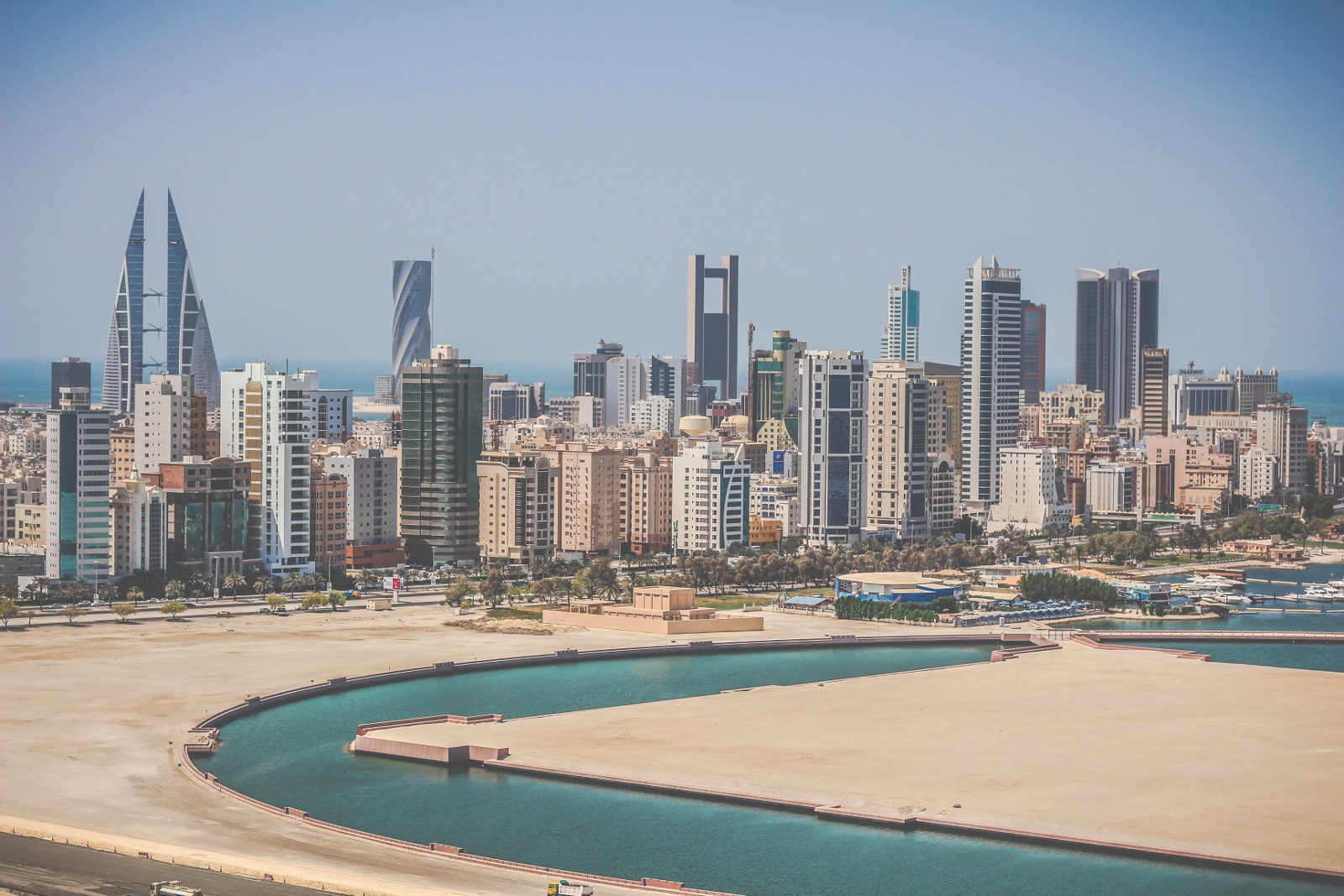 ✦ 78
✦ 78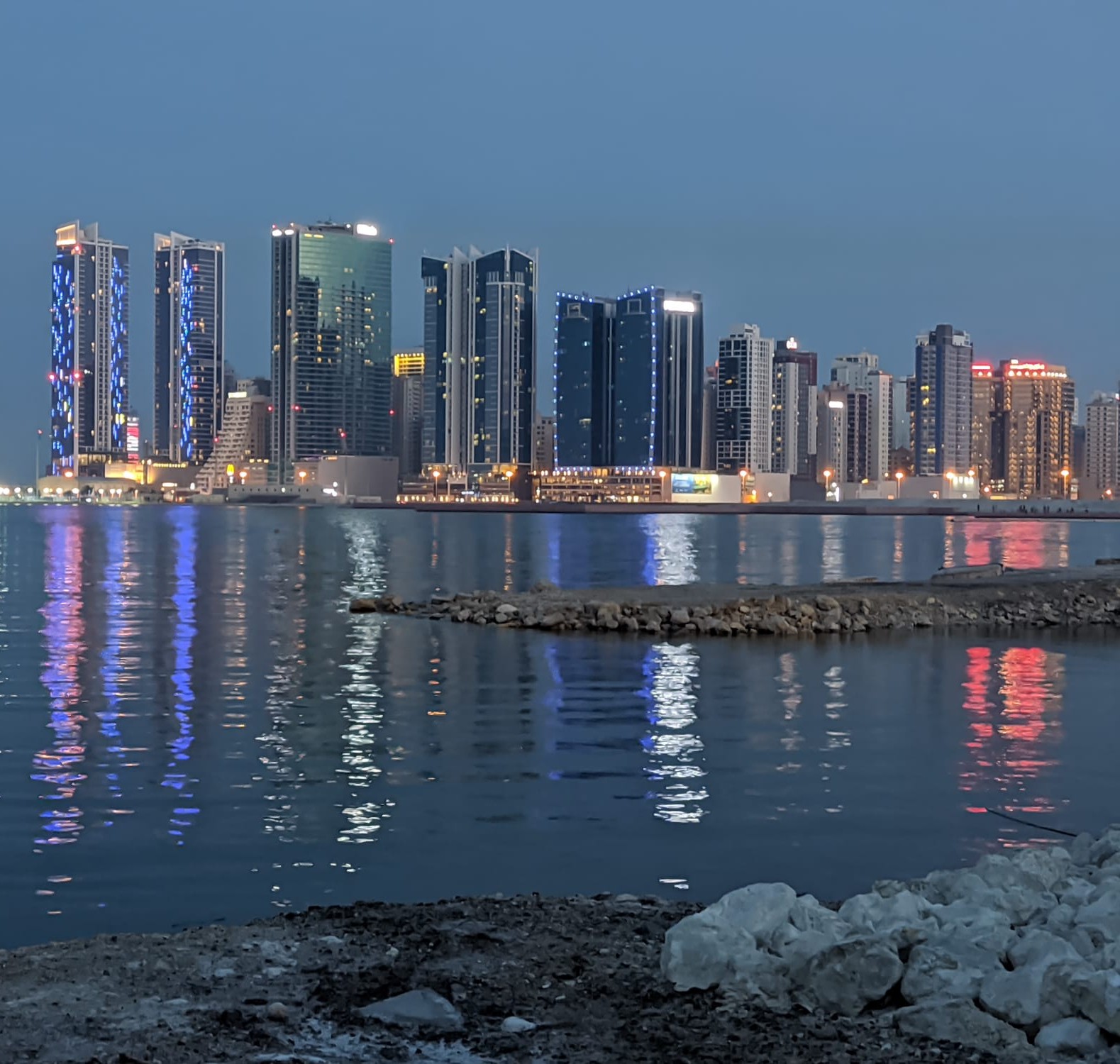 71
71The medical certificate that doesn’t stall your file
No full medical examination is required. The checklist calls for a medical report or medical fitness certificate. In practice, that means a short form filled out by a licensed doctor confirming you have no communicable diseases that pose a public health risk. For most applicants this takes fifteen minutes at a clinic. The danger is submitting a generic “fit to work” letter that does not mention the absence of the specific conditions Bahrain screens for. A good certificate names tuberculosis, hepatitis B, and HIV explicitly and states the results of any corresponding tests, even if those tests were done elsewhere. If the wording is vague, the system often issues a conditional approval that expires before you can get the right document.
The health insurance certificate must come from a Bahraini provider or an international plan with a Bahraini network. That detail matters before you land. Some applicants get a policy from a well-known global insurer only to find the plan does not appear in the government portal’s dropdown. Have your broker confirm the policy code is registered with the National Health Regulatory Authority. You cannot fix this from a hotel room on arrival day. The application portal asks for a valid insurance certificate number. If it does not authenticate on the first try, the status pauses and you lose the pace the system otherwise offers.
The gap between an approval screen and an actual residency card
The online application processes fast. You will likely have a decision in one to two weeks. The letter you receive then is a pre-approval that allows you to enter Bahrain and complete the in-country steps that turn it into a real permit. That initial permit lasts six months. During those months you need to obtain a Central Population Registry number, the CPR, which is the resident identity key for everything from a bank account to a tenancy contract. The CPR issuance itself is procedural once you have the approval, but it requires a physical presence in Bahrain. You cannot do it from abroad.
The 90-day physical presence requirement within the year is tethered to maintaining the residency, not just the permit. If you treat Bahrain as a flag of convenience and leave, the renewal gets harder. The system records entry and exit, and the renewal window asks for evidence of continuous ties. Applicants who spend exactly 90 days and no more often find the renewal request met with questions about employment continuity or local ties. The people who renew without friction are the ones who treat the presence rule as a floor to exceed, not a target to hit.
Renewal costs $795 each time. That cost sits on top of the application fee of about $13.30. The permit structure means you pay the renewal fee soon after the initial six months, and then on an annual rhythm if you stay. The residency itself is permanent from the start, but the permission to reside is what gets renewed. That distinction trips people up. Your status as a permanent resident is fixed; the document proving it requires upkeep.
When PR starts on day one, what’s the real commitment
Immediate permanent residency is the feature that separates this visa from nearly every other golden program. There is no multi-year wait, no intermediate conditional status. From the day your permit is stamped, you hold PR. That gives you the right to work, to bring dependents, and to access services as a resident. The catch is the renewability of the permit itself. Permanent residency status does not mean the permit lasts forever without action. You must continue to meet the income or investment criteria at each renewal, not just at the start. If your income drops below BHD 4,000 in the run-up to a renewal, the renewal stalls.
The territorial tax system adds a structural benefit over time. Income earned outside Bahrain is not taxed. For someone earning a US salary, that means you keep income tax obligations where they already exist and add nothing in Bahrain. There is no tax filing for foreign-sourced funds. That clarity holds only as long as your income does not get sourced through Bahraini clients or a local entity you set up. If your freelance work gradually takes on local contracts, the tax picture changes, and you need local accounting advice before the first invoice goes out.
The absence of a citizenship pathway does not bother most holders because PR delivers the practical rights they came for. But it means your long-term strategy is about stability of renewals, not a one-time transaction. The investment route at BHD 130,000, roughly $345,745, anchors residency to an asset and removes income volatility from the renewal conversation. If your earnings are high but lumpy, the property option can act as a backstop even if the income route was the initial one.
The judgment call against the UAE alternative
Choosing Bahrain over the UAE’s residency programs boils down to one trade-off that gets overlooked in the tax headlines. The UAE Golden Visa grants five or ten years of residency but no immediate permanent status. You are never truly settled in the legal sense. Bahrain gives you PR from the moment the card is in your hand. For someone who wants to stop managing visa strategies and just have a home base for a decade, that legal stability outweighs the larger scale of the UAE’s cities. The difference shows up in mundane moments: opening a bank account, signing a mobile contract, registering a car. The PR holder rarely gets asked for additional proof of status. The long-term resident on a renewable visa encounters more friction.
The income threshold in Bahrain is explicit and high, but it does not require a pre-existing employer in the country. The UAE’s self-sponsored pathways can demand a larger upfront deposit or a local salary that ties you to an employer. If your income already comes from US clients, Bahrain takes your existing structure without asking you to rewire it. That keeps the application timeline short and the documentation burden on documents you already have. The processing speed, one to two weeks, often becomes the deciding factor for someone with a window closing on a lease or a family move.
The cost of living, the scale of opportunity, and the quality of healthcare tilt toward the UAE for many, and those are real considerations. But if the criterion is legal finality and the minimum viable residency bureaucracy, Bahrain’s immediate PR is a category that the UAE programs do not match. The gap narrows only when you need a citizenship route, which neither country offers through their golden frameworks.
Work Permissions
Application Steps
- 1
📋 Check eligibility online
1 day
- 2
📄 Gather required documents
1-2 weeks
- 3
📋 Register on portal
Same day
- 4
📬 Submit issuance request
1 day
- 5
⏳ Wait for processing
5-10 days
- 6
🏛️ Receive visa and CPR
Same day
- 7
🏛️ Apply for work permit if needed
1-2 days
Compare this visa
Curated comparisons that include this route.
Frequently Asked Questions
Click any question to expand the answer.
Ready to Apply?
Work with trusted visa specialists who handle the paperwork so you can focus on your move.
Get help with this visa →* We may earn a commission if you apply through our link
At a Glance
Last verified: October 9, 2026