Application Fee
$249
Processing Time
~3 wks
Difficulty
Difficult
Duration
24 months
Overview
Austria’s so‑called Digital Nomad / Freelancer route in practice is the Red‑White‑Red Card for Self‑employed Key Workers, aimed at non‑EU founders and freelancers whose activity has a macroeconomic benefit for Austria. There is no publicly specified monthly income threshold in the official rules, but you must demonstrate a sustained transfer of investment capital of at least €100,000 (program rules: US$100,000 capital investment required) or create/secure jobs, transfer know‑how, or introduce new technology. Pure portfolio income (ETF dividends, bond coupons) alone will not satisfy this; the authorities want to see a real self‑employed business plan and capital at risk in Austria.
Local employment is not permitted under this status: the Red‑White‑Red Card you receive is tied to the self‑employed activity described in your application, and program rules explicitly list local work as “No” and employment type as “self_employed.” You can invoice foreign clients or run a non‑Austrian online business from Austria, but if you later decide to take a local job, you must switch to a different Red‑White‑Red category (e.g., Very Highly Qualified Worker or Other Key Worker). There is no publicly specified limit on local income because you are not supposed to be earning employee income locally at all under this card.
On approval you receive a Red‑White‑Red Card valid for 24 months, matching the program rules duration of 24 months and renewable status “Yes.” This card is a real residency permit, not a long‑stay Schengen visa. After a “completed total settlement period of two years,” Austrian law allows conversion to a longer settlement permit, and program rules confirm that this route leads to permanent residency after 2 years. Austrian naturalization in practice takes substantially longer; treat this as a medium‑term residency and PR play, not a fast passport.
From a paperwork perspective, the friction is front‑loaded into proving macroeconomic benefit. In addition to a valid passport and health insurance (program rules: health insurance required = Yes), you must present a detailed business plan, evidence of the €100,000+ investment or job creation, qualifications, and any needed trade licences. The migration.gv.at guidance also mentions that many authorities ask for a recent criminal record extract, though program rules list “FBI background check: No” and “Apostille required: No,” which removes two pain points for US and Canadian applicants. The application fee is US$249 as of 2026.
Physical presence parameters are not publicly specified (no day count and no maximum consecutive absence), even though you are expected to be actually running the business from Austria for the authorities to see ongoing macroeconomic benefit. Processing time is at least 3 weeks as of 2026, so planning a 3-6 month runway is prudent when timing moves or lease commitments. This structure makes most sense if you can comfortably deploy US$100,000 into an Austrian business and live on at least US$3,000–US$4,000/month from that business or foreign clients while targeting PR in 2 years; it is a poor fit if your FIRE plan relies on staying fully invested in index funds and you’re unwilling to tie six‑figure capital into an active venture.
Eligibility Requirements
Citizens of EU and EEA countries have free movement and do not need the Austria Digital Nomad / Self‑employed Key Worker Red‑White‑Red Card at all; this route exists for “third‑country” nationals, meaning anyone who is not an EU/EEA citizen. That includes Americans, Canadians, Australians, New Zealanders, Britons post‑Brexit, and most Asian, African, and Latin American nationalities. Norwegians, Icelanders, and Liechtensteiners fall under EEA free movement and should not apply under this program, while Swiss citizens have their own bilateral arrangements and similarly bypass this card. Dual nationals who hold any EU citizenship (for example, Italian‑US, German‑Canadian, Irish‑Australian) should enter and reside using their EU passport, as that path is faster, cheaper, and avoids the investment and macroeconomic‑benefit scrutiny entirely.
Min Investment
$100,000
Application Fee
$249
Duration
24 months
Self-Employed
Requirements Checklist
0 of 21 documents in hand
0%These take the longest, so start them first.
Request these while the slow items are in progress.
You only need these on the day you submit.
How and where to apply
You must lodge your application in person at the competent Austrian embassy or consulate in your home country or country of residence. After legal entry to Austria and during legal stay (such as on a tourist visa), you may alternatively submit your application directly with the competent residence authority in Austria (Provincial Governor/Landeshauptmann, Regional Administrative Authority/Bezirkshauptmannschaft, or Local Administrative Authority/Magistrat) in the state where you plan to live. The consulate or residence authority will forward your application to the Public Employment Service (AMS) for macroeconomic benefit evaluation.
Tax Information
Local tax regime and what gets taxed
Austria applies a worldwide taxation system to tax residents. If you are resident in Austria on this self‑employed Red‑White‑Red Card, the Austrian tax office expects you to report global income: freelance/consulting profits, remote salary, rental income from US or Canadian properties, dividends from ETFs in a foreign brokerage, and interest from foreign bank accounts. There is no special non‑dom or lump‑sum regime attached to this visa; the tax regime type is the standard resident worldwide system.
Self‑employment and business income are taxed at progressive personal income tax rates. Pension distributions and Social Security from abroad are generally treated as ordinary income under Austrian rules, though there are no special tax concessions for Social Security income under this visa. If you structure your Austrian presence as a corporation, Austrian corporate tax will also come into play, but that is a business‑planning question rather than a visa feature.
On capital gains from foreign investments such as index funds or ETFs, Austria’s worldwide system means these gains are taxable once you are resident. This is not a territorial or remittance‑based exemption; by default foreign portfolio gains are pulled into the Austrian tax net. Foreign portfolio gains are taxed at Austria's flat 27.5% capital gains rate (as of 2026), so treat them as fully taxable in Austria once resident.
Tax residency usually hinges on having a habitual abode or spending more than 183 days in Austria within a tax year. The visa itself does not automatically make you a tax resident on the grant date; the 183‑day presence threshold and establishment of a main home are the key triggers. There is no presence requirement disclosed for maintaining the card, but if you actually live in Austria for most of the year to run your self‑employed activity, you should assume tax residency from that year onward.
On arrival, expect to obtain a tax ID (Steuernummer) and register with the tax authority once you commence local self‑employed activity. Residents normally file annual income tax returns; deadlines depend on whether you file electronically or via a tax advisor, but the crucial point is that there is no automatic exemption from filing just because income is foreign‑sourced.
Austria has a comprehensive bilateral income tax treaty with the US, covering items like dividends, interest, royalties, and some pension income, and there is a separate totalization agreement for Social Security. Practically, this means double taxation is mitigated through reduced withholding and foreign tax credits, but the treaty does not eliminate Austrian tax on your foreign income once you are resident.
For US Citizens and Green Card Holders
US citizens and green card holders remain fully taxable by the US on worldwide income even after moving to Austria on this self‑employed Red‑White‑Red Card. The Austrian move changes your local tax position; it does not sever US filing obligations.
For earned income from remote work or your Austrian‑based self‑employment, the Foreign Earned Income Exclusion (FEIE) on Form 2555 can shelter up to US$132,900 of earned income per person for 2026. It does not apply to ETF dividends, interest, capital gains, pension distributions, or US Social Security. Given this visa is built around genuine relocation and a 2‑year path to permanent residency, many holders will qualify under the Bona Fide Residence Test once they have established Austria as their main home; in earlier years, the Physical Presence Test (330 full days abroad in a 12‑month period) may be the only route to FEIE.
Foreign Tax Credits (FTC) via Form 1116 become central once you are an Austrian tax resident, because Austria taxes worldwide income. If your effective Austrian rate on self‑employment profits, rental income, or portfolio income is higher than the US rate, FTCs can offset US tax on those streams. If Austria taxes a particular item at 0% (for example, if some income remains non‑taxable locally under specific rules), the FTC gives no shelter and the US will tax it fully.
FBAR (FinCEN 114) reporting kicks in once the aggregate value of your non‑US financial accounts exceeds US$10,000 at any point in the year, regardless of whether the accounts generate income. If you open an Austrian business or personal bank account to run your self‑employed activity or satisfy practical banking needs, it counts toward this threshold. FATCA Form 8938 additionally applies above higher asset thresholds. Non‑willful FBAR penalties start around US$16,700 per year as of 2026, so ignoring these forms is expensive.
For this visa, the optimal setup usually combines: FEIE or FTC on self‑employment income, FTC on Austrian tax paid on investment income, and clean FBAR/FATCA reporting on Austrian accounts. The smartest move is to retain two specialists: a US CPA who focuses on expat taxation (FEIE, FTC, FBAR, FATCA interplay) and a local Austrian Steuerberater for registration, residency‑year planning, and annual filings. The US$1,500–US$3,000 you spend in year one on this advice is usually recovered quickly through avoided penalties, correct treaty use, and structuring your business and withdrawals in a tax‑efficient way.
Living in Austria
COL Index vs NYC
60.7
Monthly Cost (excl. rent)
$1,223
1BR Rent (City Center)
$1,003
Safety Index
70.5
Healthcare Index
77.9
Quality of Life Index
192.9
Time Zone
UTC+01:00
Capital
Vienna
Population
8.9M
Official Languages
German
Avg Internet Speed
200 Mbps
Public Transit Quality
Excellent
With a budget covering rent and living costs, you'd need roughly $2,226/mo for a comfortable single-person lifestyle in Austria.See how far your money goes →
🏙️ Best Cities in Austria for Digital Nomads
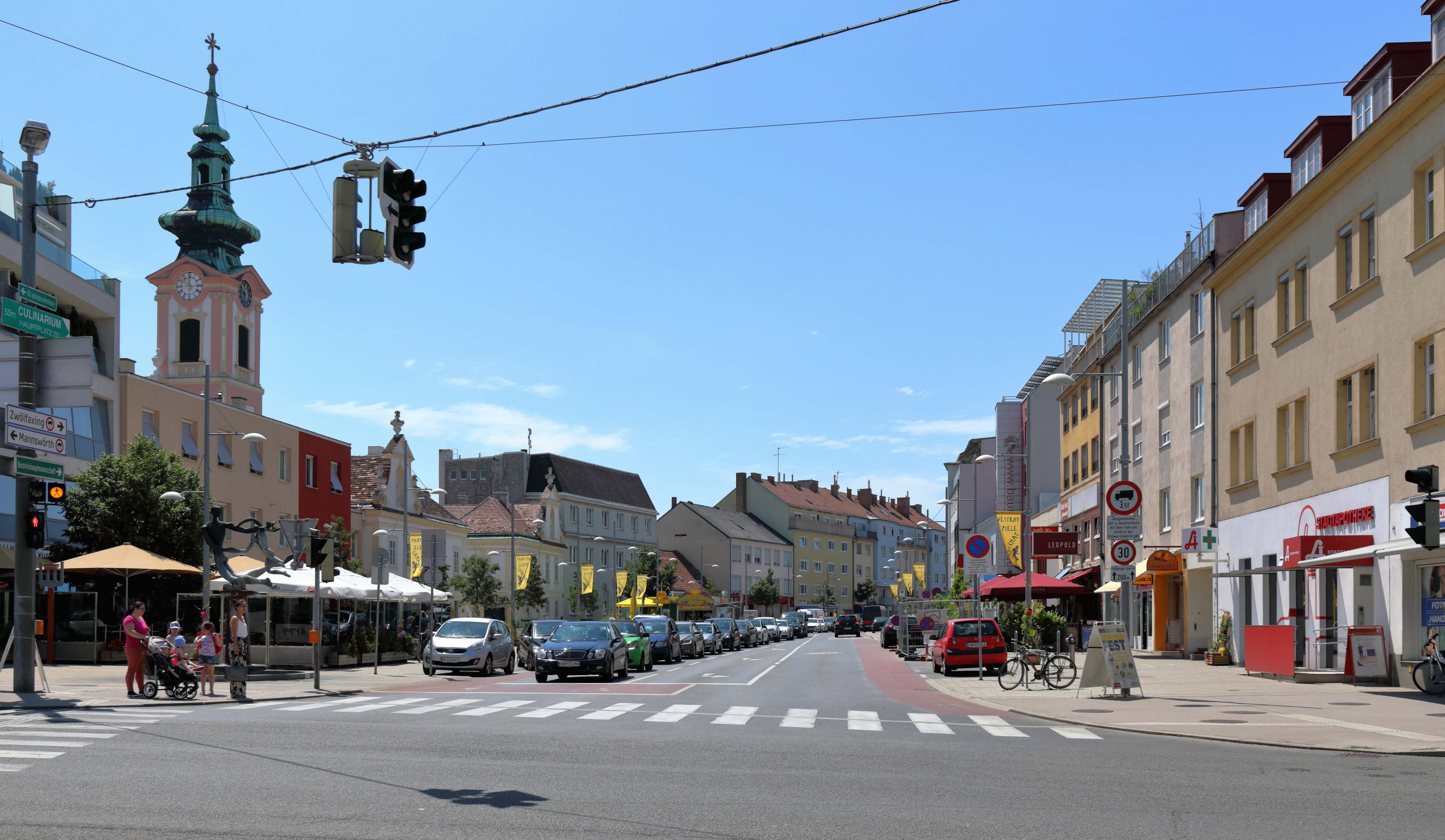 ✦ 80
✦ 80 ✦ 84
✦ 84 ✦ 82
✦ 82 ✦ 80
✦ 80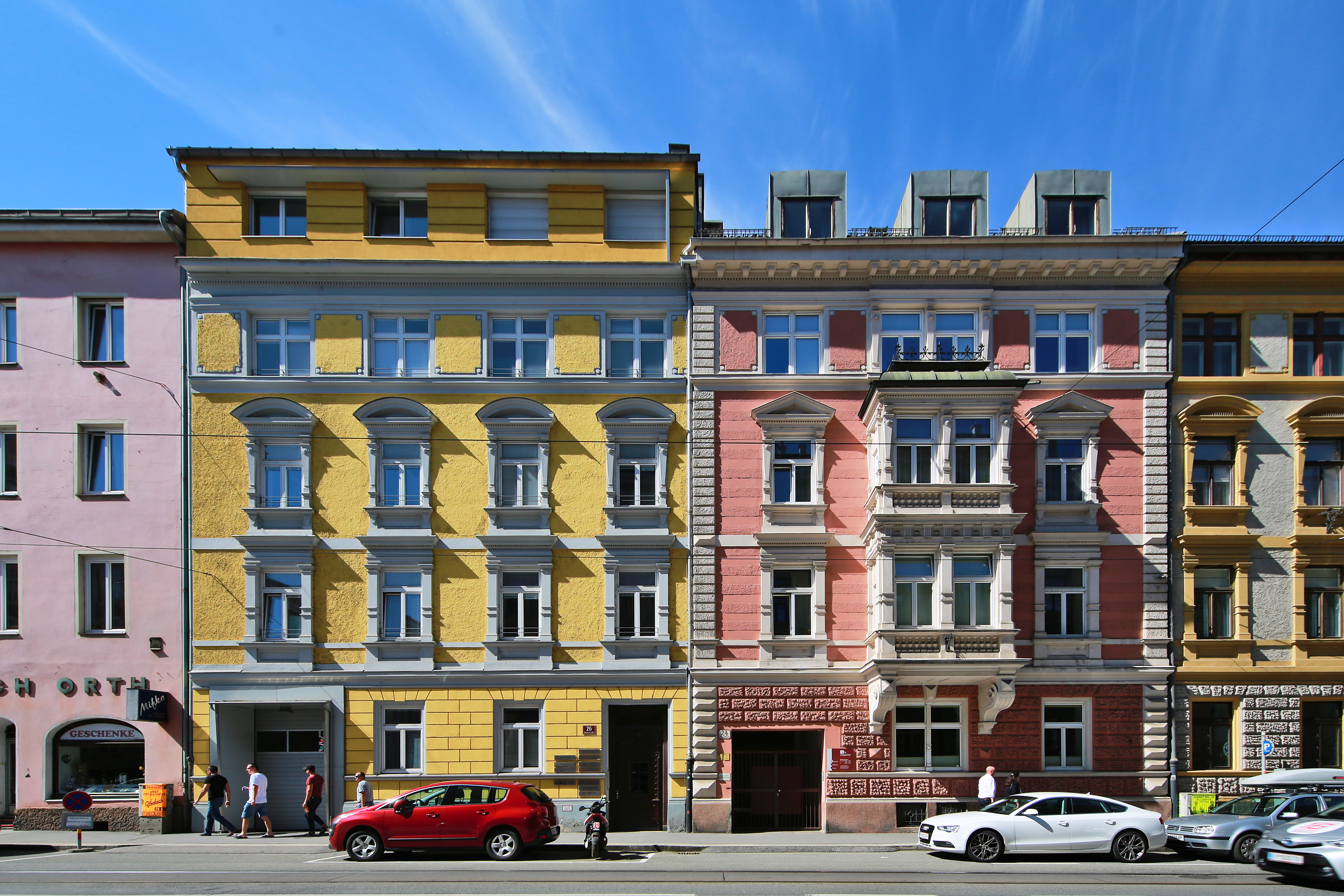 ✦ 85
✦ 85The accommodation requirement is a timing trap, not a paperwork one
On paper this looks like the easiest box to check: a rental agreement or a hotel booking. In practice it's where a lot of applicants either overcommit or undercommit at the wrong moment.
Overcommitting looks like signing a twelve-month lease before you have any approval at all, on the theory that a landlord will want proof of a stable arrangement. Processing runs a minimum of three weeks and the outer edge isn't fixed, so you could be paying rent on an empty Austrian apartment for a couple of months while your file sits with a caseworker. Undercommitting looks like submitting a hotel booking that covers a week, which technically satisfies the accommodation requirement on paper but signals to whoever's reviewing the file that you haven't actually planned to live there.
The better sequencing is usually a short-term arrangement, a sublet or extended-stay booking of a few months, that proves you have somewhere to land without locking you into a lease before you know the outcome. Landlords in Austria are also, generally, cautious about renting to someone without an established local income history, which self-employed applicants don't have yet by definition. Some will ask for guarantors or larger deposits specifically because "freelancer" reads as unstable income even when the underlying business is solid. Building that friction into your timeline, rather than discovering it a week before your appointment, saves a lot of scrambling.
The gap between an approved application and an actual residence card
Approval is not the finish line, and treating it as one is how people end up stuck in Austria on an expiring tourist visa waiting for a document that hasn't shown up yet.
You can lodge the application at an Austrian consulate in your home country, or if you're already in Austria legally, on a tourist stay, you can file it directly with the residence authority in whichever province you plan to live: the Provincial Governor's office, the district administrative authority, or the local magistrate's office, depending on where you land. Either way, the file gets forwarded to the Public Employment Service for its economic-benefit review before anything moves forward. There's no interview built into this process, which removes one layer of unpredictability, but it also means the entire case rests on the paper you submitted, with no chance to explain anything in person if a reviewer has questions.
The practical gap shows up after a positive decision. Getting word that your application has been approved is not the same as holding a residence card in hand. You can't take on local employment under this permit at all, which matters if you were planning to bridge income with anything local while the administrative machinery catches up. People who filed locally after entering on a tourist visa sometimes assume the transition into permit-holder status happens automatically once approval comes through. It doesn't. There's a further step of collecting the actual document from the local authority, and until that happens you're not yet operating on the legal footing the permit is meant to give you.
What the path to permanent settlement actually asks of you
The initial permit runs for twenty-four months, and it renews, which is more generous than a lot of digital nomad routes that cap out at one or two years with no obvious next step. That renewability is the real value of this visa over the tourist-visa-adjacent options some other countries offer: Austria is telling you upfront that this can become a long-term base if the underlying business keeps working.
What doesn't show up as clearly on paper is that renewal isn't passive. The case for your permit was built on a specific business, a specific set of clients, a specific plan. If that business changes shape substantially between renewal cycles, drops to a single client, or stops looking like the thing you originally pitched, you're not renewing the same file, you're re-arguing it. People who treat the two-year mark as a formality, assuming the first approval carries all the weight, sometimes find the renewal conversation harder than the original application because their business now looks thinner on paper than it did the first time around.
The longer-term path toward settlement exists and is built into the structure of the permit rather than being a separate application you have to hunt for. But getting there depends on continuity: sustained self-employment activity, income that holds up year over year, and a business that still resembles what got approved in the first place. This isn't a visa where you get in and then coast on remote income for years without touching the underlying work. The economic-benefit logic that got you in the door doesn't disappear after year one, it just gets checked less often.
Austria versus the easier income-threshold visa next door
The honest comparison isn't between Austria and some other Alpine country, it's between Austria's business-benefit model
Work Permissions
Application Steps
- 1
📋 Research visa requirements and consulate location
1-2 weeks
- 2
📄 Prepare detailed business plan and financial documentation
2-4 weeks
- 3
📄 Obtain health insurance covering all risks
1 week
- 4
📄 Compile and organize complete application package
1 week
- 5
📬 Submit application at Austrian embassy or consulate
Same day
- 6
⏳ Await AMS macroeconomic benefit assessment
3 weeks
- 7
📬 Receive visa D approval and apply for entry visa
2-4 weeks
- 8
🏛️ Collect Red-White-Red Card in Austria
Same day
- 9
🏛️ Register with Austrian tax authority and establish business
1-2 weeks
- 10
🏛️ Maintain compliance during 24-month Red-White-Red Card period
24 months
- 11
📬 Apply for settlement permit after 24 months
2-4 weeks
This visa requires proof of health insurance. Compare international plans before you apply.
Compare health insuranceWe may earn a commission at no cost to you.
Compare this visa
Curated comparisons that include this route.
Frequently Asked Questions
Click any question to expand the answer.
Ready to Apply?
Work with trusted visa specialists who handle the paperwork so you can focus on your move.
Get help with this visa →* We may earn a commission if you apply through our link
At a Glance
Last verified: October 9, 2026