Retire Abroad Emergency Preparedness: Crisis Planning for Expats
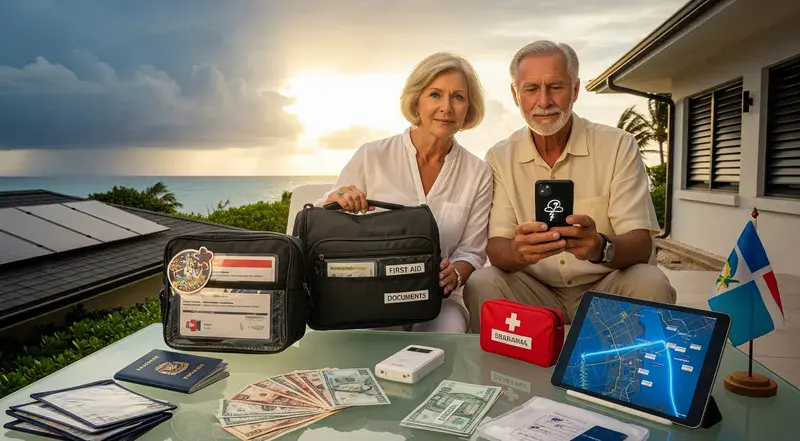
The alarm pierced through Alana's peaceful morning routine in her beachfront villa in Thailand. Within minutes, local authorities were announcing a mandatory evacuation due to an approaching Category 4 typhoon. As she grabbed her emergency go-bag—something she'd prepared years earlier when she first decided to retire abroad—she felt grateful for the crisis planning that now seemed less like paranoia and more like wisdom. 🌪️

While most retirees abroad focus on the sunny side of international living—lower costs, better healthcare, exotic adventures—the reality is that retiring overseas comes with unique emergency preparedness challenges that domestic retirees never face. From natural disasters in unfamiliar territories to political upheavals that can trap expats, medical emergencies without family support nearby, to evacuation scenarios that require split-second decisions, the risks are real but entirely manageable with proper planning.
This comprehensive guide will transform you from a vulnerable expat into a prepared international retiree who can weather any storm—literally or figuratively. You'll discover how to create bulletproof emergency plans, build local support networks, prepare for medical crises, understand evacuation procedures, and develop the confidence that comes from knowing you're ready for anything your retirement abroad adventure might throw your way.
Why Emergency Preparedness Is Critical When You Retire Abroad
Retiring abroad means trading familiar emergency systems for foreign ones. While your hometown fire department knows your street layout and your family doctor has your medical history, international retirement requires building entirely new safety nets in environments where language barriers, different legal systems, and unfamiliar bureaucracies can turn manageable emergencies into serious crises.
The Unique Risks of International Retirement
Geographic Vulnerabilities: Many popular retirement destinations are located in regions prone to specific natural disasters. Mexico faces hurricanes and earthquakes, Southeast Asian countries experience monsoons and typhoons, while Central American retirement havens deal with volcanic activity and flooding. Understanding your chosen destination's risk profile is the first step in comprehensive emergency preparedness.
Political and Economic Instability: Countries that offer attractive retirement benefits—low costs, favorable exchange rates, relaxed visa requirements—sometimes experience political volatility. What starts as peaceful protests can escalate quickly, affecting everything from banking systems to transportation networks. Having contingency plans for political unrest isn't pessimistic; it's practical.
Healthcare System Dependencies: Medical emergencies abroad often require navigating unfamiliar healthcare systems while potentially dealing with language barriers and insurance complications. Unlike domestic emergencies where family members can advocate for you, international medical crises may find you isolated and vulnerable. Understanding how international health insurance compares to domestic coverage becomes critical when planning emergency medical response strategies.
Communication and Documentation Challenges: Emergency situations can disrupt internet and phone services, making it difficult to contact family, access funds, or prove your identity and legal status. Physical documents become crucial when digital systems fail.
The Peace of Mind Dividend
Comprehensive emergency preparedness doesn't just protect you—it enhances your retirement abroad experience. Knowing you can handle whatever comes your way allows you to embrace adventures, explore remote areas, and integrate more deeply into local communities without the underlying anxiety that plagues unprepared expats.
Natural Disaster Preparedness for International Retirees
Natural disasters abroad require preparation that goes far beyond what domestic retirees face. You're dealing with unfamiliar warning systems, evacuation routes you've never practiced, and emergency services that operate differently than back home.
Understanding Your Destination's Natural Disaster Profile
Seasonal Risk Patterns: Research your retirement destination's seasonal disaster patterns thoroughly. Hurricane season in the Caribbean runs June through November, monsoon season in Southeast Asia typically spans May through October, and earthquake activity in places like Costa Rica can occur year-round but has peak periods.
Local Warning Systems: Every country has different emergency alert systems. In Japan, the J-Alert system sends immediate notifications for everything from missiles to tsunamis. New Zealand uses the Emergency Mobile Alert system for severe weather and geological events. Download and configure these apps before you need them.
Evacuation Zone Mapping: Identify your exact evacuation zone and multiple evacuation routes from your retirement location. Print physical maps—GPS and mobile data often fail during disasters. Practice driving these routes during different times of day and weather conditions.
Building Your Disaster Response Kit
Your international disaster kit needs to account for potentially longer response times and the possibility of being cut off from familiar support systems.
Emergency Kit Category | Essential Items for Retirees Abroad | Special Considerations |
|---|---|---|
Documentation | Passport copies, visa documents, medical records, insurance policies, bank account info | Store in waterproof containers, keep digital copies in cloud storage |
Communication | Satellite communicator, battery-powered radio, portable chargers, local emergency contact list | Include family contact info in home country and local emergency services |
Medical Supplies | 30-day medication supply, first aid kit, medical device batteries, prescription documentation | Account for medications not available locally, include medical alert bracelet |
Financial Resources | Cash in local currency, emergency credit cards, hidden emergency fund | Local banks may be closed for extended periods during disasters |
Basic Survival | Water purification tablets, non-perishable food, flashlights, batteries, warm clothing | Climate-specific gear based on your retirement destination |
Creating Your Personal Disaster Response Plan
The 72-Hour Rule: Assume you'll be on your own for at least 72 hours after any major disaster. This is particularly crucial for retirees abroad, as international emergency assistance takes longer to mobilize. Your plan should cover food, water, shelter, medical needs, and communication for this minimum period.
Communication Protocol: Establish a clear communication plan with family back home. Designate one person as your primary contact who will relay information to other family members. Consider using social media check-in features and international messaging apps that work when traditional phone lines are down.
Shelter-in-Place vs. Evacuation Decisions: Know the difference between situations requiring shelter-in-place versus evacuation. Generally, hurricanes and flooding require evacuation, while earthquakes and volcanic ash often mean staying put. Pre-decide your personal risk tolerance and evacuation triggers.
Political Instability and Civil Unrest Response Planning
Political volatility can escalate quickly in any country, but as a foreign retiree, you face additional challenges including restricted movement, asset access limitations, and potential targeting as a wealthy foreigner.
Monitoring Political Climate
Early Warning Systems: Subscribe to multiple information sources including local news, international media, embassy alerts, and expat community networks. The US State Department's Smart Traveler Enrollment Program (STEP) provides alerts for American retirees, while other countries offer similar services for their citizens abroad.
Social Media Monitoring: Local social media often provides real-time updates faster than traditional media. Follow trusted local journalists, government officials, and expat groups on platforms popular in your retirement destination. However, verify information through multiple sources before acting on it.
Embassy and Consulate Relationships: Register with your home country's embassy or consulate immediately upon retiring abroad. Maintain current contact information and understand their services and limitations. Embassies can provide evacuation assistance but cannot protect private property or guarantee safe passage in all situations.

Safe Room and Asset Protection Strategies
Physical Security Measures: Identify a safe room in your residence with multiple exit routes, reinforced doors, communication equipment, and emergency supplies. This room should be interior-facing to avoid street-side windows and should contain copies of all important documents.
Financial Asset Diversification: Maintain financial resources in multiple forms and locations. Keep emergency cash in local currency and US dollars, maintain accounts in your home country, and consider precious metals or other easily transportable value stores. Avoid keeping all assets in local banks during periods of political tension.
Property Protection Protocols: Develop relationships with trusted local contacts who can monitor your property if you need to leave quickly. Consider property management services that specialize in expat properties and understand evacuation scenarios.
Evacuation Decision Matrix
Create specific criteria for making evacuation decisions before emotions and fear cloud your judgment:
Level 1 - Monitor: Protests or political tension exists but remains peaceful. Continue normal activities while staying informed and prepared.
Level 2 - Prepare: Violence has occurred or appears imminent. Prepare evacuation materials, confirm exit routes, and notify family of potential departure.
Level 3 - Execute: Immediate threat to foreign residents or infrastructure. Execute evacuation plan immediately.
Medical Emergency Preparedness for Expat Retirees
Medical emergencies abroad combine the stress of health crises with the complexity of foreign healthcare systems, language barriers, and potential isolation from family support networks.
Building Your International Medical Support Network
Healthcare Provider Relationships: Establish relationships with multiple healthcare providers before you need them. This includes a primary care physician, specialists for any chronic conditions, a preferred hospital, and a dental care provider. Schedule regular check-ups to maintain these relationships and ensure continuity of care.
Medical Translation Services: Identify medical translation services or bilingual healthcare advocates in your area. Many international retirement destinations have services specifically for expat communities. Program these contacts into your phone and keep written contact information in your emergency kit.
Medical Tourism Networks: Many popular retirement destinations have well-developed medical tourism industries. Connect with these networks early—they often provide comprehensive support services including transportation, accommodation for family members, and care coordination.
Essential Medical Documentation and Preparation
Comprehensive Medical Records: Maintain detailed medical records including vaccination history, surgical records, medication lists with generic names, allergy information, and emergency contact preferences. Store these both digitally and physically, with copies in your home country and retirement destination.
Medication Management: Work with your healthcare providers to ensure continuous access to essential medications. This includes understanding generic alternatives available locally, identifying compound pharmacies for specialized medications, and maintaining relationships with pharmacies in both countries.
Medical Power of Attorney: Establish medical power of attorney documents that are legally valid in your retirement country. This may require working with local attorneys to ensure proper documentation and witnessing requirements.
Emergency Medical Response Planning
Medical Emergency Action Plan: Create detailed plans for different types of medical emergencies. Include preferred hospitals, insurance contact information, medication lists, emergency contacts, and specific instructions for chronic conditions. Share these plans with trusted local contacts and family members.
Medical Evacuation Insurance: Standard health insurance often doesn't cover medical evacuation to your home country, which can cost hundreds of thousands of dollars. Research medical evacuation insurance options that cover your specific retirement location and health needs. For comprehensive comparisons of healthcare abroad versus US coverage, understanding these gaps is essential for proper emergency planning.
Family Notification Protocols: Establish clear protocols for notifying family members of medical emergencies. Include multiple contact methods, time zone considerations, and decision-making hierarchies for medical choices when you cannot advocate for yourself.
Evacuation Planning and Emergency Exit Strategies
Sometimes the best crisis response is leaving quickly. Effective evacuation planning requires understanding your legal obligations, transportation options, asset protection, and re-entry procedures.
Legal and Documentation Requirements
Visa and Residency Obligations: Understand how emergency evacuation affects your legal status in your retirement country. Some residency visas require minimum stay requirements that emergency evacuation might violate. Research legal protections for emergency departures and procedures for maintaining your residency status. Common visa violations and enforcement issues can be exacerbated during emergency situations, making advance planning crucial.
Exit Documentation: Always maintain current passports and any required exit documentation. Some countries require exit visas or tax clearance certificates before departure. Keep these requirements current and understand expedited procedures for emergency situations.
Asset and Property Obligations: Know your legal obligations regarding property and assets if you evacuate. This includes property management requirements, tax obligations, bank account maintenance, and power of attorney arrangements for handling affairs in your absence.
Transportation and Logistics
Multiple Exit Route Planning: Identify at least three different ways to leave your retirement location: commercial air travel, land border crossings, and sea transport. Each method has different advantages depending on the type of emergency.
Transportation Provider Relationships: Establish relationships with reliable transportation providers including taxi services, private car services, and charter flight companies. Program multiple contacts into your phone and maintain written contact information.
Emergency Travel Funding: Maintain dedicated emergency travel funds in easily accessible forms. Emergency flights can cost significantly more than planned travel, and credit cards may not work during infrastructure disruptions.
Re-entry and Recovery Planning
Home Country Re-entry: Plan for temporary or permanent return to your home country including housing arrangements, healthcare provider contacts, and financial account access. Consider maintaining minimal financial and social connections specifically for emergency return scenarios. Understanding the comprehensive comparison between retiring abroad versus staying in the US helps inform these backup planning decisions.
Recovery and Return Procedures: Develop plans for returning to your retirement destination after an emergency evacuation. This includes property inspection procedures, utility restoration, documentation replacement, and legal status restoration.
Communication Strategies During Emergencies
Communication failures turn manageable emergencies into life-threatening situations. International retirees need redundant communication systems that work across different infrastructure scenarios.
Primary Communication Systems
Satellite Communication Devices: Invest in satellite communication devices that work independently of local infrastructure. Options include satellite phones, personal locator beacons with messaging capabilities, and satellite internet devices. These tools can be expensive but provide reliable communication when traditional systems fail.
Local Communication Networks: Understand local communication systems including emergency radio frequencies, community alert systems, and neighborhood communication networks. Many expat communities maintain informal communication systems through WhatsApp groups or community bulletin boards.
Multi-Platform Digital Communication: Use multiple digital communication platforms to reach family and emergency contacts. Different platforms may remain functional during different types of emergencies. Include international messaging apps, social media check-in features, email systems, and traditional phone services.
Emergency Contact Management
Create comprehensive emergency contact lists that include:
Family and Personal Contacts: Primary family contact, secondary family contact, close friends, neighbors in home country, and personal attorney or financial advisor.
Local Support Network: Trusted local friends, property managers, healthcare providers, legal representation, and utility providers.
Official Emergency Services: Local police, fire, medical services, embassy or consulate, insurance company emergency numbers, and bank fraud hotlines.
Professional Services: Evacuation insurance provider, medical evacuation service, travel insurance, and emergency travel booking services.
Tools & Resources for International Retirement Emergency Planning
Before finalizing any emergency preparedness plans for your retirement abroad, these specialized tools can help you evaluate risks, plan responses, and optimize your preparedness strategy:
Assess Your Destination's Risk Profile: Use our Country Search Tool to compare emergency preparedness factors, natural disaster risks, and political stability across different retirement destinations 🔍
Calculate Emergency Fund Requirements: The Geographic Arbitrage Savings Calculator helps determine how much emergency funding you'll need based on your retirement location's cost structure and risk factors 💰
Plan Your Retirement Security Timeline: Our FIRE Calculator includes emergency preparedness costs in your international retirement budget planning 📊
Evaluate Your Emergency Readiness: Take the Expat Readiness Quiz to identify specific emergency preparedness areas to strengthen before retiring abroad ✅
Understand Legal Requirements: Explore Visa Pathways to understand how emergency evacuation might affect your retirement visa status and legal obligations 📋
Research Destination-Specific Risks: Browse our Country Directory for detailed emergency preparedness information specific to your retirement destination 🌍
Optimize Financial Emergency Planning: The FIRE Procrastination Calculator shows the cost of delaying emergency preparedness planning for your international retirement 📈
Protect Your Retirement Income: Use our Dividend Portfolio Shield to evaluate how emergency scenarios might affect your retirement income streams and develop protective strategies 🛡️
Additional emergency preparedness resources include consulting with international insurance specialists who understand expat retirement needs, connecting with expat community groups in your chosen destination for local emergency planning insights, and working with legal professionals who specialize in international residency requirements and emergency evacuation procedures.

Building Local Support Networks and Community Resources
Your strongest emergency preparedness asset is a network of trusted local contacts who understand both your needs as a retiree and the local emergency response systems.
Expat Community Integration
Formal Expat Organizations: Join established expat organizations in your retirement destination. These groups often maintain emergency contact lists, coordinate group responses to emergencies, and share critical local information during crises. Organizations like American Legions abroad, international clubs, or country-specific expat associations provide structured support networks.
Informal Community Connections: Build genuine friendships with both expat and local communities. Personal relationships often prove more valuable during emergencies than formal services. Your local friends understand cultural nuances, language barriers, and informal resources that can be crucial during crisis situations.
Professional Service Networks: Develop relationships with local professionals including attorneys, accountants, property managers, and healthcare providers who specialize in serving the expat retirement community. These professionals often have experience managing emergency situations for international retirees.
Local Emergency Resource Mapping
Healthcare Facility Networks: Map multiple healthcare options including public hospitals, private hospitals, specialty clinics, and emergency medical services. Include facilities with English-speaking staff, international insurance acceptance, and specialized geriatric care.
Transportation and Evacuation Resources: Identify local transportation resources including airports, bus terminals, taxi services, and rental car agencies. Include emergency transportation services and medical transport providers that can handle international transfers.
Financial and Legal Support: Locate multiple banking facilities, ATMs, money transfer services, legal aid organizations, and emergency financial services. Include institutions that specifically serve international residents and understand expat financial needs.
Ready to Rewire your Life?
Sign up to receive updates and insights.
By submitting your email address, you will receive a free subscription to RA Postcards and special offers from Rewire Abroad and our affiliates. You can unsubscribe at any time, and we encourage you to read more about our Privacy Policy.
Technology and Digital Preparedness Tools
Modern emergency preparedness relies heavily on technology, but international retirees need systems that work across different countries, languages, and infrastructure scenarios.
Essential Emergency Apps and Software
Multi-Platform Communication Apps: Install multiple communication apps that work internationally including WhatsApp, Telegram, Signal, and Skype. Each app has different strengths and may remain functional when others fail during infrastructure disruptions.
Translation and Language Tools: Download offline translation apps including Google Translate with offline language packs, medical translation apps, and emergency phrase apps specific to your retirement destination's language.
Navigation and Transportation: Install offline GPS navigation apps with downloaded maps of your area, public transportation apps for your retirement location, and ride-sharing apps that operate locally.
Financial and Banking Apps: Set up mobile banking for both local and home country accounts, international money transfer apps, cryptocurrency wallets for alternative financial access, and digital payment systems popular in your retirement destination.
Digital Document Management
Cloud Storage Systems: Maintain encrypted cloud storage with all essential documents accessible from any internet connection. Include passport copies, insurance policies, medical records, financial account information, and emergency contact lists.
Local Device Backups: Keep digital copies of essential information on local devices including smartphones, tablets, and portable storage devices. These provide access when internet connectivity is unreliable or unavailable.
Physical Document Backup: Despite digital convenience, maintain physical copies of the most critical documents in waterproof, portable storage. Include passport copies, medical information, emergency contact lists, and local currency.

Financial Emergency Preparedness for International Retirees
Financial emergencies abroad can be more complex than domestic situations due to currency fluctuations, international banking restrictions, and limited access to familiar financial institutions.
Diversified Financial Access Strategy
Multiple Currency Holdings: Maintain emergency funds in both local currency and US dollars (or other stable international currency). Local currency provides immediate access to essential services, while stable foreign currency protects against local economic instability.
International Banking Relationships: Maintain active banking relationships in both your retirement country and home country. Include local banks for daily needs and international banks that provide services across multiple countries for emergency access. Be aware of potential banking issues that Americans face abroad, as these can be magnified during emergency situations when quick financial access becomes critical.
Alternative Financial Access: Consider alternative financial access methods including precious metals, cryptocurrency holdings, prepaid international cards, and money transfer service relationships that can provide emergency funding access.
Emergency Financial Protection Strategies
Building robust financial emergency systems requires understanding how different crisis scenarios can impact your retirement abroad finances. Whether you're managing emergency funds or protecting assets during currency instability, diversification across multiple financial access points provides crucial security.
Financial Emergency Type | Protection Strategy | Implementation Steps |
|---|---|---|
Banking System Disruption | Multiple bank relationships, cash reserves, international money transfer accounts | Open accounts with 2-3 different local banks, maintain 1-month expenses in cash, establish Western Union or similar transfer accounts |
Currency Devaluation | Foreign currency holdings, precious metals, international investment accounts | Keep 20% of emergency funds in stable foreign currency, consider precious metal allocation, maintain investment accounts in stable countries |
Account Access Problems | Backup debit/credit cards, emergency contact protocols, power of attorney arrangements | Keep backup cards from different banks, establish banking power of attorney, maintain emergency bank contact information |
Medical Financial Emergencies | Medical evacuation insurance, international health insurance, medical emergency funds | Purchase evacuation insurance, maintain international health coverage, keep medical emergency fund separate from other savings |
Insurance Portfolio Optimization: Review all insurance policies for international coverage including health insurance, property insurance, liability coverage, and evacuation insurance. Many domestic policies don't provide adequate international coverage, requiring specialized international policies.
Estate Planning Considerations: Update estate planning documents for international residence including wills valid in your retirement country, international power of attorney arrangements, beneficiary designations on international accounts, and inheritance tax planning across multiple jurisdictions. For comprehensive guidance on international tax planning and estate considerations, understanding how emergency situations can affect your estate planning becomes particularly important for international retirees.
Creating Your Personal Emergency Response Manual
Consolidate all your emergency preparedness planning into a comprehensive personal manual that serves as your crisis response guide.
Manual Structure and Organization
Quick Reference Section: Create a one-page quick reference with the most critical emergency information including emergency service numbers, embassy contact information, medical conditions and medications, emergency contacts, and evacuation decision criteria.
Detailed Response Procedures: Develop step-by-step procedures for different emergency scenarios including natural disasters, political instability, medical emergencies, and evacuation situations. Include decision trees that help you determine appropriate responses based on situation severity.
Resource Directory: Maintain comprehensive contact lists including local emergency services, healthcare providers, transportation resources, legal and financial services, family and emergency contacts, and professional service providers.
Legal and Financial Information: Document all legal status information, financial account details, insurance policies, property ownership information, and power of attorney arrangements. Include both digital and physical storage locations for important documents.
Manual Maintenance and Updates
Regular Review Schedule: Review and update your emergency manual every six months or after any significant changes in your situation, local conditions, or legal requirements. Include family members and trusted local contacts in review processes.
Testing and Practice: Regularly test emergency procedures including communication systems, evacuation routes, and emergency contact protocols. Practice scenarios help identify gaps in your planning and improve response effectiveness.
Feedback and Improvement: After any emergency situation or practice scenario, review your response effectiveness and update procedures based on lessons learned. Include feedback from family members, local contacts, and emergency service providers when possible.
Your Action Plan for Comprehensive Emergency Preparedness
Transforming from an unprepared expat into a crisis-ready international retiree requires systematic implementation of emergency preparedness strategies. Start with the most critical elements and build comprehensive coverage over time.
Immediate Action Items (Complete Within 30 Days)
Documentation and Communication: Gather all essential documents, create digital and physical backup copies, establish emergency contact lists, and register with your embassy or consulate.
Basic Emergency Kit Assembly: Purchase essential emergency supplies including first aid kit, flashlights, batteries, emergency food and water supplies, and communication devices.
Local Resource Identification: Research local emergency services, healthcare facilities, evacuation routes, and expat community resources in your retirement area.
Medium-term Preparedness Goals (Complete Within 90 Days)
Financial Emergency Preparation: Establish emergency funds in multiple currencies, verify international insurance coverage, and set up alternative financial access methods.
Support Network Development: Join expat organizations, establish local friendships, and develop relationships with key service providers including healthcare, legal, and financial professionals.
Comprehensive Planning: Create detailed emergency response procedures, practice evacuation routes, and test communication systems with family and emergency contacts.
Long-term Preparedness Optimization (Ongoing)
Regular Review and Updates: Maintain current emergency plans, update documentation, and adapt procedures based on changing local conditions or personal circumstances.
Skill Development: Learn basic first aid, improve local language skills, understand local emergency systems, and develop practical emergency response capabilities.
Community Leadership: Consider taking leadership roles in expat emergency preparedness efforts, sharing knowledge with other international retirees, and contributing to community emergency planning initiatives.
Real-World Emergency Preparedness Success Stories
Learning from other international retirees who have successfully navigated emergency situations provides practical insights and confidence-building examples for your own preparedness efforts.
Hurricane Evacuation Success - Caden's Experience in Belize: When Hurricane Lisa approached Belize's coast in 2022, Caden had already prepared evacuation plans including multiple transportation options, document storage systems, and temporary accommodation arrangements. His preparedness allowed him to evacuate safely within six hours of the emergency declaration and return to minimal property damage after the storm passed.
Medical Emergency Response - Sage's Experience in Thailand: A severe cardiac event required Sage to navigate Thailand's healthcare system while coordinating with family in the United States. Pre-established relationships with English-speaking healthcare providers, comprehensive medical documentation, and medical evacuation insurance enabled successful treatment and recovery without the financial devastation that often accompanies international medical emergencies.
Political Instability Navigation - River's Experience in Ecuador: During Ecuador's 2019 civil unrest, River's emergency preparedness planning enabled safe shelter-in-place procedures while maintaining communication with family and monitoring evacuation options. Diversified financial access and strong local relationships provided security during the two-week crisis period.
Comprehensive Crisis Management - Phoenix's Experience in Philippines: A typhoon followed by extended power outages tested all aspects of Phoenix's emergency preparedness system. Backup communication systems, diversified financial access, community support networks, and comprehensive supply storage enabled not just survival but assistance to less-prepared neighbors during the extended recovery period.
Emergency preparedness isn't about living in fear—it's about creating the confidence and security that allows you to fully embrace your retirement abroad adventure. When you know you can handle whatever challenges arise, you're free to explore, integrate, and enjoy the incredible opportunities that international retirement provides. Whether you're following comprehensive strategies for Americans retiring overseas or planning specific destination moves, the peace of mind that comes from comprehensive preparation is perhaps the greatest retirement benefit of all. 🌟
Your international retirement should be filled with discovery, growth, and joy. With proper emergency preparedness, you can pursue all of these experiences while knowing you're protected, prepared, and ready for whatever your retirement abroad journey brings your way.