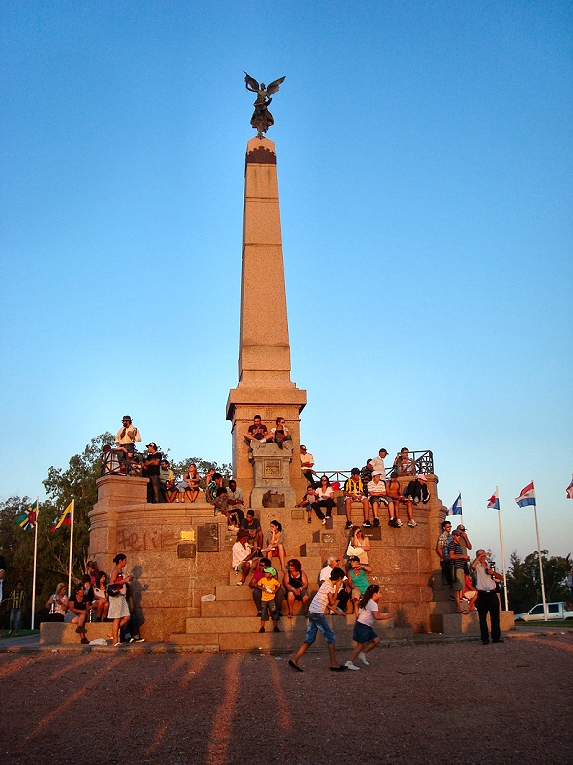
Las Piedras functions as Montevideo's bedroom suburb, with most employment tied to the capital's service, finance, and light manufacturing sectors. Few major employers operate directly here; residents typically commute to Montevideo for office jobs, retail, or construction work. The local economy revolves around small businesses, supermarkets, and service providers catering to the residential population. Real wages track Uruguay's national average—solid by regional standards but modest globally.
Rent runs $410/month for a one-bedroom in the center, roughly 40% cheaper than central Montevideo. Route 5 connects you to the capital in 20–30 minutes by bus or car; public transit is functional but infrequent outside peak hours. Healthcare is accessible: the public hospital Dr. Alfonso Espínola handles emergencies, and private clinics like CRAMI exist, though serious cases often route to Montevideo. Spanish is essential—English penetration is minimal. Bureaucracy for residency follows Uruguay's standard process: straightforward but slow, requiring patience with government offices.
Summers are hot and humid (80–90°F); winters mild (50–60°F). Food is standard Uruguayan—beef-heavy, decent produce, limited international variety. The expat community is tiny compared to Montevideo; social life centers on local bars, football matches (Juventud de Las Piedras has genuine local passion), and family-oriented weekends. This city suits remote workers seeking affordable suburban calm and easy Montevideo access, not those wanting cosmopolitan nightlife or a large English-speaking network.
Estimate the cost of moving to Las Piedras, Uruguay
Get a free moving cost estimate for moving to Las Piedras, Uruguay. Takes 10 seconds.
How much are you shipping?
When are you moving?
Powered by Sirelo. Free quotes from international movers.
🏚️ Cost of Living
💰 Budgets and Costs
$818/mo, one person, rent included
Selected: budget lifestyle
Las Piedras on a budget budget comes to about $818 a month for one adult, with $320 of that going to rent. Beyond rent the estimate covers $172 on groceries, $52.00 on dining out, $49.00 on entertainment and lifestyle, $180 on utilities and connectivity and $45.00 on transport.
Rent
$320/mo
1BR outside the centre
Groceries
$172/mo
75% of mid-range grocery spend
Dining out
$52.00/mo
4 inexpensive meals
Entertainment & lifestyle
$49.00/mo
1 cinema trip, 8 cappuccinos
Utilities & connectivity
$180/mo
utilities, mobile, internet
Transport
$45.00/mo
Monthly pass
Budgets (excl. rent)
Single person$498/mo
Excludes rent. The total above is all-in, rent included.
$1,014/mo, one person, rent included
Selected: mid-range lifestyle
Las Piedras on a mid-range budget comes to about $1,014 a month for one adult, with $320 of that going to rent. Beyond rent the estimate covers $229 on groceries, $131 on dining out, $109 on entertainment and lifestyle, $180 on utilities and connectivity and $45.00 on transport.
Rent
$320/mo
1BR outside the centre
Groceries
$229/mo
Staples basket scaled to a full month
Dining out
$131/mo
10 inexpensive meals
Entertainment & lifestyle
$109/mo
gym, 2 cinema trips, 12 cappuccinos
Utilities & connectivity
$180/mo
utilities, mobile, internet
Transport
$45.00/mo
Monthly pass
Budgets (excl. rent)
Single person$694/mo
Excludes rent. The total above is all-in, rent included.
$1,335/mo, one person, rent included
Selected: comfortable lifestyle
Las Piedras on a comfortable budget comes to about $1,335 a month for one adult, with $410 of that going to rent. Beyond rent the estimate covers $321 on groceries, $209 on dining out, $170 on entertainment and lifestyle, $180 on utilities and connectivity and $45.00 on transport.
Rent
$410/mo
1BR in the centre
Groceries
$321/mo
140% of mid-range grocery spend
Dining out
$209/mo
6 inexpensive meals + 6 mid-range meals
Entertainment & lifestyle
$170/mo
gym, 4 cinema trips, 20 cappuccinos
Utilities & connectivity
$180/mo
utilities, mobile, internet
Transport
$45.00/mo
Monthly pass
Budgets (excl. rent)
Single person$925/mo
Excludes rent. The total above is all-in, rent included.
Estimates for one adult, built from this city's average prices and the usage shown for each tier. Your spending will differ with how often you eat out and where you live.
A 1BR in the center runs about $410/mo. If your income is in another currency, bank FX fees add up. A multi-currency account can cut that cost.
Las Piedras is a genuinely safe city for expats, with a strong sense of community and low violent crime. Daytime walking is unremarkable and safe; nighttime strolls in residential areas are generally fine, though like any city, isolated areas after dark warrant caution. The city's reputation matches reality—it's one of Uruguay's safer departments, and residents report feeling secure in daily routines.
Petty theft and opportunistic crime are the main concerns rather than violent offenses. Avoid displaying expensive jewelry, phones, or cameras in crowded areas. Scams targeting foreigners are rare but possible; use registered taxis or ride-apps rather than hailing cabs. Solo female travelers report feeling comfortable here; standard urban awareness applies. The neighborhoods around the city center are well-lit and populated.
Uruguay has minimal political instability and reliable police presence. Corruption is low by regional standards, and the justice system functions reasonably well. Las Piedras benefits from Uruguay's overall stability and strong institutions. For an American considering relocation, this is a genuinely low-risk choice—safer than many U.S. cities and free from the security concerns that plague other Latin American destinations.
🏥 Healthcare
Good
Public Hospitals
Yes
Private Clinics
Yes
English-Speaking Doctors
Limited
See how Las Piedras's healthcare compares with Artigas
🌤️ Climate
Climate Zones
Subtropical
Summer Temp
24°C
Winter Temp
10°C
Humidity
72%
Air Quality Index
35
Annual Rainfall
986 mm
Best Months
AprMaySepOct
Climate Notes
Las Piedras has a temperate subtropical climate with warm, humid summers (December-February) and mild winters (June-August), featuring moderate rainfall year-round and occasional cold fronts.
💻 Digital Nomad
Avg Internet Speed
45 Mbps
Internet (monthly)
$45/mo
Coworking Availability
Limited
Coworking Spaces Nearby
0
Digital Nomad Score
62/100
Community Notes
Las Piedras offers a charming small-town atmosphere with proximity to Montevideo.
While technically in Montevideo, Zonamerica is a free trade zone easily accessible from Las Piedras. Regus provides reliable infrastructure, meeting rooms, and a professional environment, ideal for those needing a structured workspace near Las Piedras.
Sinergia has multiple locations in Uruguay, including one in Montevideo, which is accessible from Las Piedras. It offers a vibrant community, events, and various membership options, making it a good choice for networking and collaboration.
See how Las Piedras's digital nomad life compares with Artigas
🧳 Expat Life
English Proficiency
Limited
Expat Community
Very Few
Top Neighborhoods
Centro
Banks Nearby
6
ATMs Nearby
0
Expat Life Notes
A bedroom community of Montevideo known for its wine heritage. Very local atmosphere.
Pros
✓ Near the capital
✓ Wine culture
✓ Very low cost
Cons
✗ High safety concerns
✗ Limited English
✗ Basic amenities
🏘️ Neighborhoods in Las Piedras
Areas of Las Piedras that expats often consider.
Conditions can change from one block to the next, and these descriptions are general guides, not safety assessments. Before choosing where to stay or live, check current travel advisories, talk to people who live there, and visit in person if you can.
Centro
Bustling commercial and civic heart
The city center is where you'll find shops, restaurants, and government buildings. It's a lively area, but can be noisy and crowded. While not particularly expat-focused, it offers convenient access to everything and a truly local experience. Public transport is readily available.
San Isidro
Quiet residential family neighborhood
San Isidro is a more residential area, offering a quieter pace of life. It's primarily inhabited by local families. While not geared towards expats, it provides a more authentic Uruguayan experience and potentially lower living costs. You'll likely need a car or rely on public transport to get around.
Villa Cristina
Relaxed, suburban, growing area
Villa Cristina is a developing area on the outskirts of Las Piedras. It's a more affordable option, but lacks the amenities and walkability of the city center. It's ideal for those seeking a quiet, suburban lifestyle and don't mind relying on a car or public transport.
Barrio Obelisco
Traditional working-class neighborhood
Barrio Obelisco is a traditional working-class neighborhood with a strong sense of community. It's a very local area with limited English spoken. Rent can be more affordable here, but it may require a higher level of Spanish proficiency and cultural adaptation.
La Estación
Historic, transportation hub, evolving
Centered around the train station, La Estación is an area undergoing revitalization. It offers a mix of older buildings and newer developments. While not specifically expat-focused, its proximity to transportation and evolving character might appeal to some. Expect a mix of residential and commercial activity.
Page 1 of 2
Could living/working in Las Piedras cut years off your work life?
With a 1-bedroom in the center at $410/mo, your FIRE number here might be much lower than you think.
Las Piedras has a population of approximately 61,306 people.
A single person can expect to spend around $1,025 per month in Las Piedras, including rent. A 1-bedroom apartment in the city center costs approximately $410/month.
The nearest airport to Las Piedras is MVD, approximately 3.5km away.
Las Piedras is considered relatively safe, with a safety index of 72.0. As with any city abroad, expats should research specific neighborhoods before committing to a location.
Las Piedras has an average internet speed of 45 Mbps. It is considered a well-established digital nomad destination.
Rarely. Spanish fluency is practically mandatory for daily life—healthcare, bureaucracy, and social interaction. Younger professionals may speak some English, but don't count on it. Montevideo, 30 minutes away, has better English penetration if you need it.
Thin locally. Most employment is in Montevideo—finance, tech, tourism, education. If you're not remote, expect a daily commute or plan to relocate to the capital. Las Piedras works best for digital nomads, freelancers, or retirees, not job seekers.
Las Piedras has a subtropical climate, not temperate. It features warm summers and mild winters with rainfall spread across the year.
While Las Piedras doesn't have dedicated coworking spaces like you'd find in larger cities, some cafes offer reliable Wi-Fi and a comfortable environment for remote work. Consider exploring options in nearby Canelones or even Montevideo for more formal coworking setups.
Uruguay offers several visa options for Americans, including a tourist visa (up to 90 days), a temporary residency visa (for work or study), and a permanent residency visa. The most common path for retirees is the passive income visa, requiring proof of sufficient monthly income.
Internet speed in Las Piedras is generally reliable for most remote work tasks. You can expect download speeds of around 20-50 Mbps, which is sufficient for video calls and online collaboration. Check with your specific provider for guaranteed speeds in your area.
Public transportation in Las Piedras is primarily buses, which are affordable and connect you to other parts of the city and nearby towns. Taxis and ride-sharing services are also available, but less common. Many expats find owning a car helpful for exploring the surrounding countryside.
Uruguay has a good healthcare system, with both public and private options. In Las Piedras, you'll find local clinics and hospitals. Many expats opt for private health insurance (mutualista) for broader coverage and shorter wait times. English-speaking doctors may be limited, so learning some basic Spanish is helpful.
Las Piedras is known for its historical landmarks, including the Plaza de Las Piedras and the Museo de la Uva y el Vino (Grape and Wine Museum). The city also has a vibrant local market and is close to several wineries and vineyards. Day trips to Montevideo and the coast are easily accessible.
Groceries in Las Piedras are generally cheaper than in the US, with the overall cost of living at 34.5 percent of NYC's. A mid-range restaurant meal for one costs around $10 to $20 USD, and monthly grocery costs for a single person average about $410 without rent.
The expat community in Las Piedras is smaller than in Montevideo or coastal cities like Punta del Este. However, you can connect with other expats through online forums and social media groups. Many expats in Uruguay are welcoming and willing to share their experiences.
As a US citizen, you're still required to file US taxes even when living abroad. The Foreign Earned Income Exclusion (FEIE) can help you exclude a certain amount of your foreign-earned income from US taxes. You may also need to report foreign bank accounts (FBAR) if they exceed a certain threshold.
Las Piedras has a very low cost of living with a 1BR apartment in the city center averaging $410 per month. The city has a safety index of 72 and a walkability score of 70, making it a safe and accessible option for budget-conscious expats.
You can transfer money to Uruguay through various methods, including bank transfers, online platforms like Wise (formerly TransferWise), and international money transfer services. ATM fees can vary depending on the bank, so it's best to check with your bank and the local ATM before withdrawing cash. Using a credit card for purchases can sometimes be more cost-effective.
Las Piedras can be a viable option for early retirement on a budget of $2000 USD per month, especially if you're willing to embrace a simpler lifestyle. You'll need to be mindful of your spending and potentially supplement your income with remote work or investments. Rent, groceries, and healthcare will likely be your biggest expenses.
Cost-of-living and visa updates for Las Piedras and the rest of Uruguay. Free with RA Postcards.
By submitting your email address, you will receive a free subscription to RA Postcards and special offers from Rewire Abroad and our affiliates. You can unsubscribe at any time, and we encourage you to read more about our Privacy Policy.