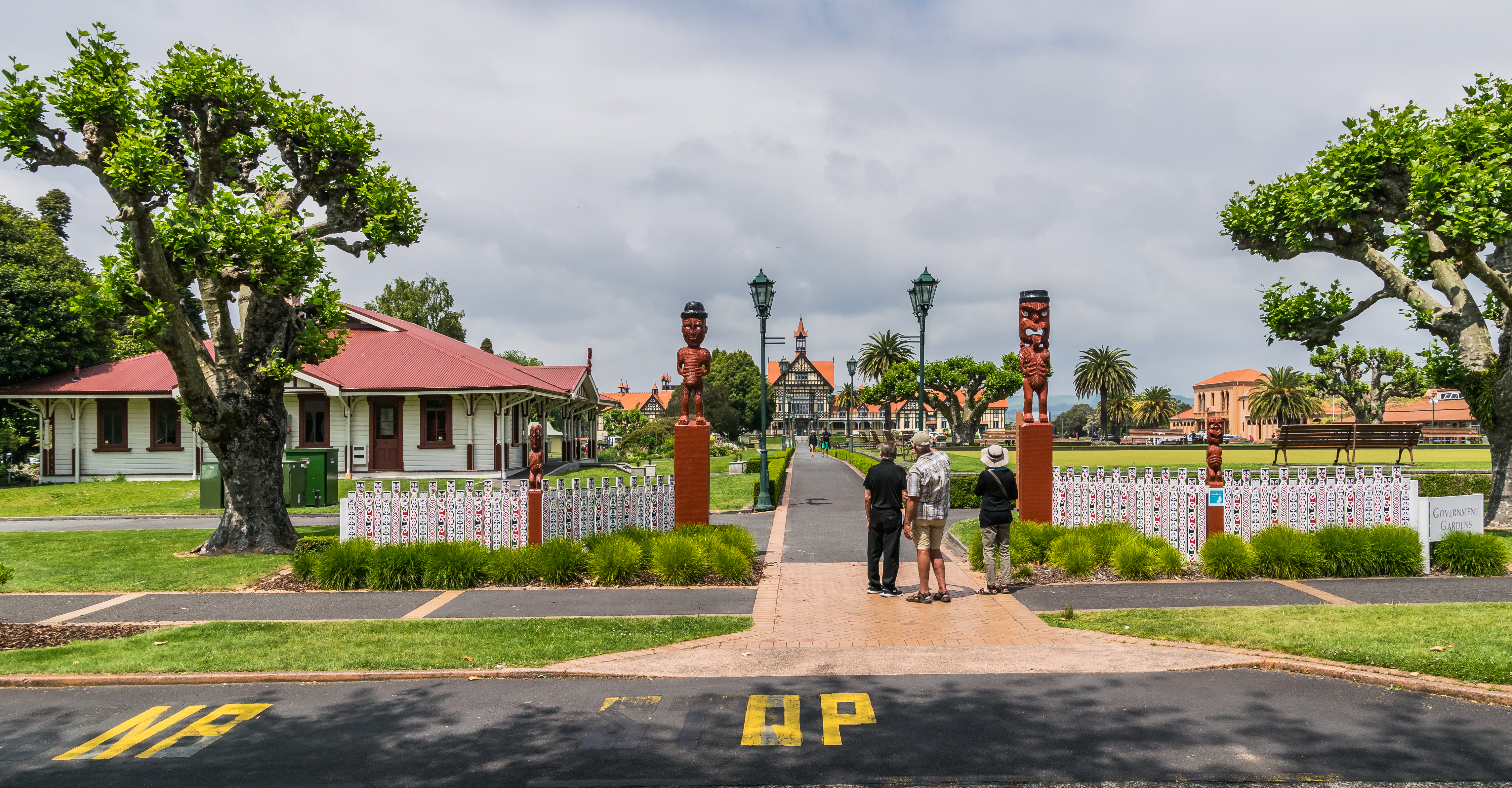
Tourism dominates Rotorua's economy almost entirely—geothermal attractions, Māori cultural experiences, and adventure activities (mountain biking, lakeside lodges) drive most employment. The city is New Zealand's 13th largest urban area but punches above its weight as a regional hub; hospitality, retail, and tour operations employ the majority. Work here means either joining the tourism machine or commuting to Tauranga (45 minutes). Remote work is viable if you have your own income; local job creation is seasonal and tourism-dependent.
Rent for a 1-bedroom city center runs $1,114/month—expensive for a regional NZ city, but cheaper than Auckland or Wellington. Transport requires a car; public transit is minimal. Healthcare access is solid through Rotorua Hospital and private clinics, though specialists may require travel. The real friction: the hydrogen sulphide smell (rotten eggs) is constant and inescapable—you adapt or you don't. Bureaucracy is standard NZ; visa and residency processes are straightforward if you qualify.
Rotorua's climate is mild year-round, but the geothermal stench defines daily life. Food scene is tourist-oriented; quality cafes and restaurants exist but cater to visitors. Weekends mean hiking, mountain biking, kayaking on the lakes, or soaking in natural hot pools. The expat community is small and transient—mostly working holiday visa holders and tourism workers. This city suits remote workers who love outdoor recreation, don't mind the smell, and want affordable NZ living outside major metros.
Estimate the cost of moving to Rotorua, New Zealand
Get a free moving cost estimate for moving to Rotorua, New Zealand. Takes 10 seconds.
How much are you shipping?
When are you moving?
Powered by Sirelo. Free quotes from international movers.
🏚️ Cost of Living
💰 Budgets and Costs
$927/mo, one person, rent included
Selected: budget lifestyle
Rotorua on a budget budget comes to about $927 a month for one adult, with $554 of that going to rent. Beyond rent the estimate covers $100 on groceries, $45.00 on dining out, $34.00 on entertainment and lifestyle, $135 on utilities and connectivity and $59.00 on transport.
Rent
$554/mo
1BR outside the centre
Groceries
$100/mo
75% of mid-range grocery spend
Dining out
$45.00/mo
4 inexpensive meals
Entertainment & lifestyle
$34.00/mo
1 cinema trip, 8 cappuccinos
Utilities & connectivity
$135/mo
utilities, mobile, internet
Transport
$59.00/mo
Monthly pass
Budgets (excl. rent)
Single person$373/mo
Excludes rent. The total above is all-in, rent included.
$1,088/mo, one person, rent included
Selected: mid-range lifestyle
Rotorua on a mid-range budget comes to about $1,088 a month for one adult, with $554 of that going to rent. Beyond rent the estimate covers $133 on groceries, $112 on dining out, $95.00 on entertainment and lifestyle, $135 on utilities and connectivity and $59.00 on transport.
Rent
$554/mo
1BR outside the centre
Groceries
$133/mo
Staples basket scaled to a full month
Dining out
$112/mo
10 inexpensive meals
Entertainment & lifestyle
$95.00/mo
gym, 2 cinema trips, 12 cappuccinos
Utilities & connectivity
$135/mo
utilities, mobile, internet
Transport
$59.00/mo
Monthly pass
Budgets (excl. rent)
Single person$534/mo
Excludes rent. The total above is all-in, rent included.
$1,463/mo, one person, rent included
Selected: comfortable lifestyle
Rotorua on a comfortable budget comes to about $1,463 a month for one adult, with $676 of that going to rent. Beyond rent the estimate covers $186 on groceries, $269 on dining out, $138 on entertainment and lifestyle, $135 on utilities and connectivity and $59.00 on transport.
Rent
$676/mo
1BR in the centre
Groceries
$186/mo
140% of mid-range grocery spend
Dining out
$269/mo
6 inexpensive meals + 6 mid-range meals
Entertainment & lifestyle
$138/mo
gym, 4 cinema trips, 20 cappuccinos
Utilities & connectivity
$135/mo
utilities, mobile, internet
Transport
$59.00/mo
Monthly pass
Budgets (excl. rent)
Single person$787/mo
Excludes rent. The total above is all-in, rent included.
Estimates for one adult, built from this city's average prices and the usage shown for each tier. Your spending will differ with how often you eat out and where you live.
A 1BR in the center runs about $675.98/mo. If your income is in another currency, bank FX fees add up. A multi-currency account can cut that cost.
Rotorua is genuinely safe for daily life, with a relaxed small-city atmosphere where most expats feel comfortable walking around during daylight and early evenings. The city has good police presence and locals are generally friendly. However, it's not crime-free—petty theft and vehicle break-ins occur, so standard precautions apply. The Safety Index of 78 accurately reflects a low-crime environment compared to most Western cities.
Common issues include car theft from rental vehicles, package theft, and opportunistic shoplifting rather than violent crime. Avoid displaying valuables in parked cars, and be cautious in the Gisborne Road and Ranolf Street areas after dark. Solo female travelers report feeling safe overall, though standard urban awareness applies. Drink-related incidents occur on weekends in the city center, but these rarely affect residents who stay aware of their surroundings.
New Zealand has stable governance, reliable police, and virtually no political instability or corruption concerns. Rotorua is a safe choice for American expats seeking a genuine small-city lifestyle. The main consideration is that it's geographically isolated and has limited healthcare facilities compared to Auckland or Wellington, so factor that into your decision. For someone prioritizing personal safety, this city delivers.
Rotorua has a temperate oceanic climate with mild summers (December-February around 20°C) and cool winters (June-August around 8°C), featuring frequent rainfall year-round and geothermal activity that influences local weather patterns.
💻 Digital Nomad
Avg Internet Speed
125 Mbps
Internet (monthly)
$45/mo
Coworking Availability
Moderate
Coworking Spaces Nearby
1
Digital Nomad Score
81/100
Community Notes
Rotorua offers unique geothermal experiences with excellent amenities for nomads.
Located on Fenton Street, Regus offers a professional environment with private offices and coworking spaces. It's a reliable option with good amenities, suitable for those needing a structured workspace in the central business district.
While not strictly a coworking space, the Rotorua Library offers free Wi-Fi and a quiet environment for focused work. Located centrally, it's a budget-friendly option for digital nomads who don't require a dedicated desk or meeting rooms.
The Rotorua Lakes Council building offers free Wi-Fi and public spaces that can be used for working. It is located centrally and provides a quiet, professional environment.
See how Rotorua's digital nomad life compares with Taupo
🧳 Expat Life
English Proficiency
Widely Spoken
Expat Community
Medium
Top Neighborhoods
Lynmore, Springfield
Banks Nearby
10
ATMs Nearby
15
Expat Life Notes
The geothermal tourism capital of NZ. While touristy, it has a high-quality lifestyle for those into mountain biking and culture.
Pros
✓ Stunning nature
✓ Māori culture capital
✓ Mountain biking heaven
Cons
✗ The 'Rotorua smell' (sulfur)
✗ Tourist crowds
✗ Variable safety in some suburbs
🏘️ Neighborhoods in Rotorua
Areas of Rotorua that expats often consider.
Conditions can change from one block to the next, and these descriptions are general guides, not safety assessments. Before choosing where to stay or live, check current travel advisories, talk to people who live there, and visit in person if you can.
Central Rotorua
Bustling tourist and commercial hub
The heart of Rotorua, offering easy access to shops, restaurants, and the lakefront. Expect higher prices and more tourist activity. Walkable, with good bus connections, but can be noisy during peak season.
Glenholme
Quiet residential family area
A well-established residential area with a mix of families and retirees. Close to the Rotorua Golf Club and a short drive to the city center. Offers a more peaceful environment, but requires a car for convenient access to amenities.
Springfield
Affordable suburban family living
A more budget-friendly option located southwest of the city center. Popular with families due to its schools and parks. Requires a car or reliance on public transport to reach the city center, but offers good value for money.
Owhata
Relaxed lakeside community vibe
Located on the eastern shores of Lake Rotorua, offering beautiful lake views and a relaxed atmosphere. A mix of permanent residents and holiday homes. Requires a car for most errands, but provides a tranquil setting away from the city bustle.
Lynmore
Upscale leafy residential area
An affluent suburb known for its larger properties and proximity to the Redwoods Forest. Offers excellent walking and biking trails. More expensive than other areas, but provides a high quality of life and a sense of exclusivity.
Ngongotaha
Small town charm, lakeside living
Located on the shores of Lake Rotorua, a short drive north of Rotorua city. Offers a more relaxed, small-town atmosphere with stunning lake views. More affordable than central Rotorua, but requires a car for convenient access to amenities and employment opportunities.
Page 1 of 2
Could living/working in Rotorua cut years off your work life?
With a 1-bedroom in the center at $676/mo, your FIRE number here might be much lower than you think.
Rotorua has a population of approximately 58,500 people.
A single person can expect to spend around $1,690 per month in Rotorua, including rent. A 1-bedroom apartment in the city center costs approximately $676/month.
The nearest airport to Rotorua is ROT, approximately 1km away.
Rotorua is considered relatively safe, with a safety index of 78.0. As with any city abroad, expats should research specific neighborhoods before committing to a location.
Rotorua has an average internet speed of 125 Mbps. It is considered a well-established digital nomad destination.
Yes. It's constant, especially near geothermal areas and on humid days. Most people adapt within weeks, but it's not a minor detail—visit first. Some find it unbearable; others barely notice after a month.
Not locally—Rotorua's job market is tourism-focused. You'll need your own income (remote work, freelancing, savings). The city is affordable enough to support this if you're earning in USD/GBP/EUR.
Small and transient. Most expats are working holiday visa holders (18–30) in hospitality, not long-term settlers. If you're seeking a tight expat network, you won't find it here—you'll need to build friendships through outdoor activities and local spots.
Generally, Rotorua is more affordable than most major US cities. Rent for a decent 2-bedroom apartment can range from NZ$1,500 to NZ$2,500 per month, groceries are slightly cheaper, and dining out is comparable, especially at tourist-oriented restaurants. You can definitely stretch your US dollars further here.
Rotorua is generally safe, but like any city, some areas are less desirable. It's best to avoid walking alone late at night in the central city area, especially around Pukuatua Street. Ask locals for up-to-date advice on specific neighborhoods before committing to a long-term rental.
While a car is convenient for exploring the surrounding region, Rotorua has a decent public bus system, Cityride, that covers most of the city. Cycling is also popular, but be aware of the hilly terrain in some areas. Taxis and ride-sharing services are readily available but can be expensive.
New Zealand doesn't have a specific retirement visa. However, Americans can explore options like the Investor Visa or the Parent Retirement Resident Visa, both of which have significant financial requirements. The Long-Term Visitor Visa allows stays up to 9 months, renewable for a total of 18 months, but doesn't grant residency.
Rotorua has a public hospital and several private clinics offering a good standard of care. You'll easily find English-speaking doctors and specialists. Consider private health insurance to avoid long wait times for non-emergency procedures, as the public system can be strained.
Rotorua generally has reliable internet, with fiber optic connections available in many areas. Expect download speeds of 50-100 Mbps, sufficient for most remote work tasks. Check the internet infrastructure at your specific address before committing to a rental.
Major New Zealand banks like ANZ, BNZ, and Westpac have branches in Rotorua. Opening a bank account is relatively straightforward with the right documentation (passport, proof of address). Services like Wise (formerly TransferWise) offer competitive exchange rates for international money transfers.
Rotorua has a temperate climate with warm summers and mild, wet winters. Pack layers, as the weather can change quickly. Summers (December-February) are ideal for outdoor activities, while winters (June-August) can be chilly and damp. Bring waterproof clothing year-round.
While Rotorua doesn't have a plethora of dedicated coworking spaces like larger cities, some cafes offer suitable environments for remote work. Check out local business hubs or shared office spaces for more formal options. The Rotorua Library also provides free Wi-Fi and a quiet workspace.
As a US citizen, you're still required to file US taxes even while living abroad. The Foreign Earned Income Exclusion (FEIE) can help you exclude a certain amount of your foreign-earned income from US taxes. Also, be aware of FBAR reporting requirements for foreign bank accounts exceeding $10,000.
Rotorua is very English-friendly, and you'll have no trouble communicating in daily life. The locals are generally welcoming and helpful. The pace of life is slower and more relaxed than in many US cities, offering a good balance between urban amenities and access to nature.
Retiring on $3,000 USD (approximately NZ$5,000) per month in Rotorua is possible but requires careful budgeting. You'd likely need to rent a smaller apartment outside the city center and be mindful of your spending on dining out and entertainment. It's definitely more feasible than in many Western countries.
Rotorua is famous for its geothermal activity, so visiting Te Puia, Wai-O-Tapu, and Polynesian Spa are must-dos. Explore the Redwood Forest, go mountain biking, or take a scenic helicopter tour. Don't miss experiencing a traditional Māori cultural performance and hāngi (earth oven cooking).
Cost-of-living and visa updates for Rotorua and the rest of New Zealand. Free with RA Postcards.
By submitting your email address, you will receive a free subscription to RA Postcards and special offers from Rewire Abroad and our affiliates. You can unsubscribe at any time, and we encourage you to read more about our Privacy Policy.