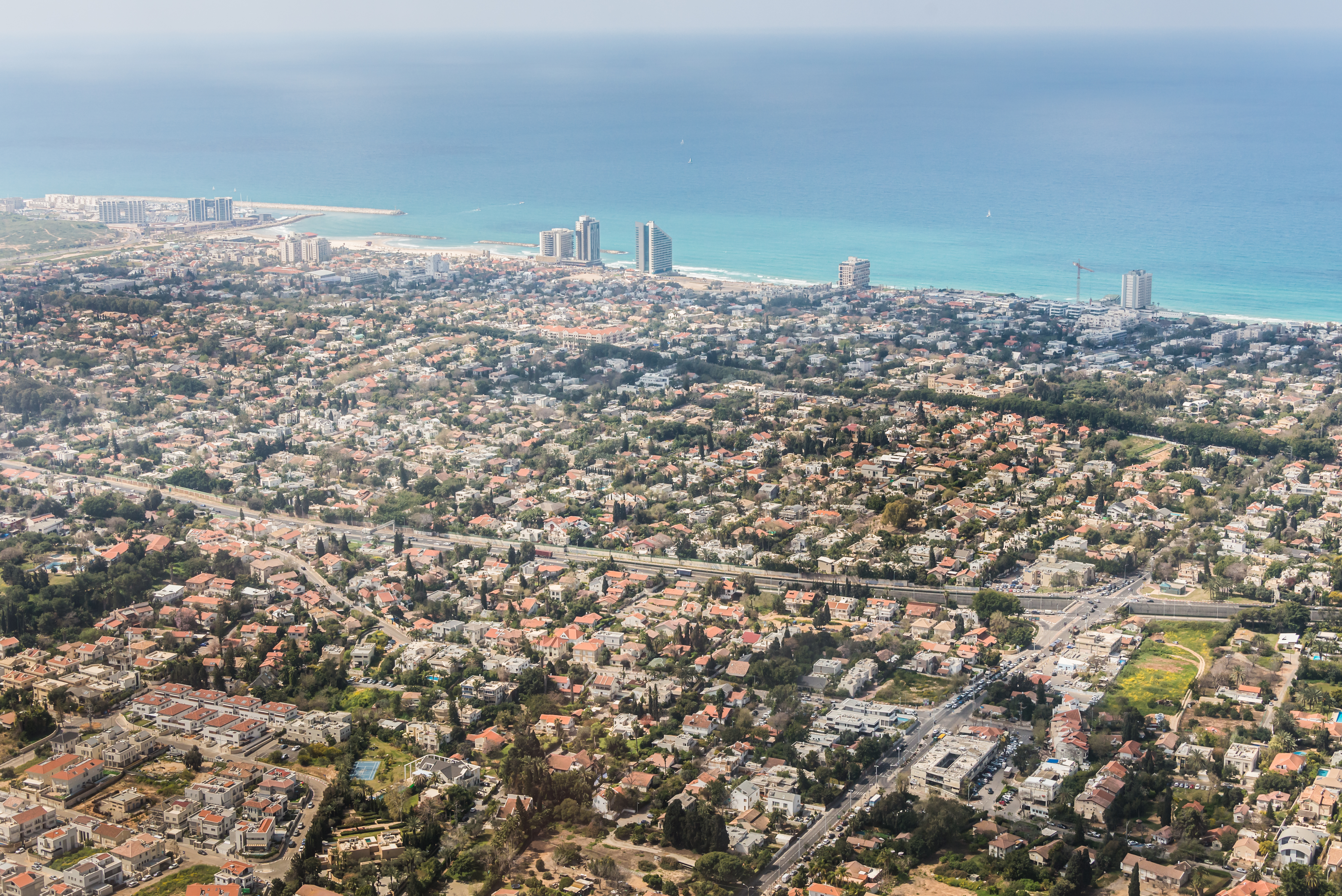
Herzliya sits on Israel's Mediterranean coast, about 21 m above sea level, in the Asia/Jerusalem timezone. The climate is Mediterranean, which means long, warm, rain-free summers and mild, wetter winters, with sea breezes that keep the shoreline comfortable even at the height of August. The city is small by national standards, home to 95 thousand people, and its appeal to newcomers comes down to a handful of districts. Expats tend to cluster in Sharon, Ramat HaSharon, and Marina, a trio that covers everything from quiet residential streets to the waterfront towers and boardwalk of the Herzliya Pituach marina area. Each has a different feel, but all sit within easy reach of the beach, the commercial zones, and the main road and rail links running up and down the coast.
Rents here reflect the city's position in Israel's expensive coastal corridor. A one-bedroom apartment in the city center runs $2,200/mo, while the same outside the center drops to $1,700/mo. Three-bedroom units go for $3,800/mo in the center and $2,900/mo outside it. Beyond rent, a single adult spends about $1,200/mo on everything else, and a family of four spends around $4,200/mo. Utilities add $260/mo, internet $45/mo, and a mobile plan $11/mo. A monthly public transport pass costs $77/mo and a gym membership $84/mo. Eating out is not cheap: an inexpensive restaurant meal is $23 per person, a three-course mid-range dinner for two is $98, and a cappuccino is $5. The average monthly net salary locally is $5,200/mo, and the cost of living index sits at 78/100 against New York City at 100. Budget-conscious single adults can expect total monthly costs of roughly $3,100/mo including rent, a mid-range lifestyle around $4,200/mo, and a comfortable one about $5,800/mo.
Safety is one of Herzliya's strongest selling points. The safety index is 82/100 and the crime index is 18/100, where lower is safer, so everyday life feels calm and low-risk by the standards of major coastal cities. Air quality is decent, with an index of 45, lower being better. Healthcare quality is rated excellent, and English is widely spoken, which softens the practical side of settling in. The expat community is medium in size, large enough to find your footing but small enough that integration with locals is a realistic option rather than an afterthought.
Arrival logistics are straightforward. The nearest airport is TLV, just 4 km away, which makes the first and last hours of any trip unusually short. Visa routes exist for the usual categories of foreign residents, and the specifics depend on your nationality and purpose, so it pays to sort the paperwork before booking anything. Internet averages 96 Mbps, fast enough for remote work without drama. The city scores 68/100 overall for expats, 78/100 for digital nomads, 70/100 for retirees, and 63/100 on FIRE metrics. That mix suits remote professionals who want beach access and a fast commute to Tel Aviv, retirees drawn to the healthcare and safety, and anyone chasing a coastal Mediterranean life without the intensity of a much larger city.