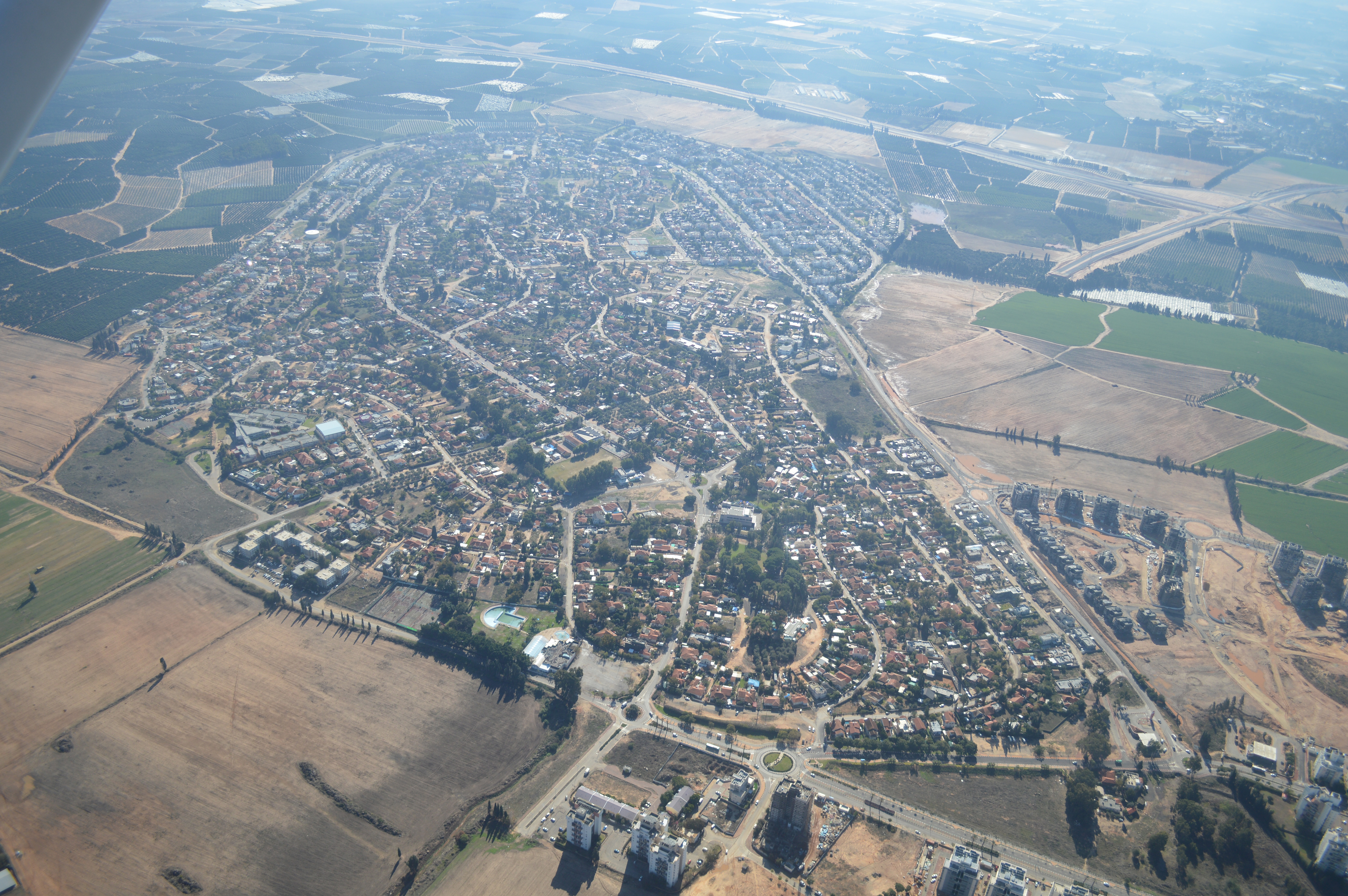
Hadera sits on Israel's Mediterranean coast, roughly halfway between Tel Aviv and Haifa, at just 32 m above sea level in the Asia/Jerusalem timezone. The climate is Mediterranean, which means hot, dry summers and mild, rainy winters, with sea breezes tempering the heat along the shoreline. Expats tend to settle in three areas: Hadera City Center, Neve Yosef, and Givat Olga. Each offers a different feel, from the commercial energy of the center to the quieter residential streets of Neve Yosef and the coastal character of Givat Olga. With a population of 101 thousand, the city stays manageable without feeling small, and English is common in tourist areas, which eases the first weeks of a move.
Rents shape daily life here more than almost anything else. A 1-bedroom apartment in the city center runs $1,064/mo, while the same outside the center drops to $830/mo. For 3-bedroom units, expect $1,823/mo in the center and $1,457/mo outside it. Beyond rent, a single person spends about $1,200/mo, and a family of four about $4,100/mo. Utilities average $339/mo, internet $46/mo, and a mobile phone plan just $10/mo. A monthly public transport pass costs $65/mo and a gym membership $32/mo. Eating out is moderate: $26 for an inexpensive restaurant meal per person, $91 for a three-course mid-range meal for two, and $5 for a cappuccino. Against an average monthly net salary of $3,011/mo, the cost of living index of 78/100 against New York City gives a clearer sense of the tradeoffs. Budget, mid-range, and comfortable tiers for a single adult land at $1,237/mo, $1,855/mo, and $2,376/mo respectively.
Safety is one of Hadera's stronger selling points. The safety index is 75/100 and the crime index is 25/100, where lower is safer, so everyday life tends to feel secure. Healthcare quality is rated Good, which matters for anyone planning a long stay or bringing family. Air quality sits at 52 on the index, where lower is better, a middling figure that reflects the city's coastal and industrial mix. Overall, the numbers suggest a place where personal security and medical access are not the main worries.
Visas depend on your nationality and purpose of stay, so the practical route is to check current requirements before booking anything. Getting there is straightforward by road or rail along the coastal corridor, and once you arrive, a monthly public transport pass at $65/mo covers most local movement. Internet averages 65 Mbps, enough for remote work, and the digital nomad score of 69/100 reflects that. The expat community is medium in size, and the overall expat score of 59/100, FIRE score of 63/100, and retiree score of 62/100 point to a city that suits budget-conscious renters, remote workers, and retirees who want coastal living with lower costs than Israel's bigger hubs.