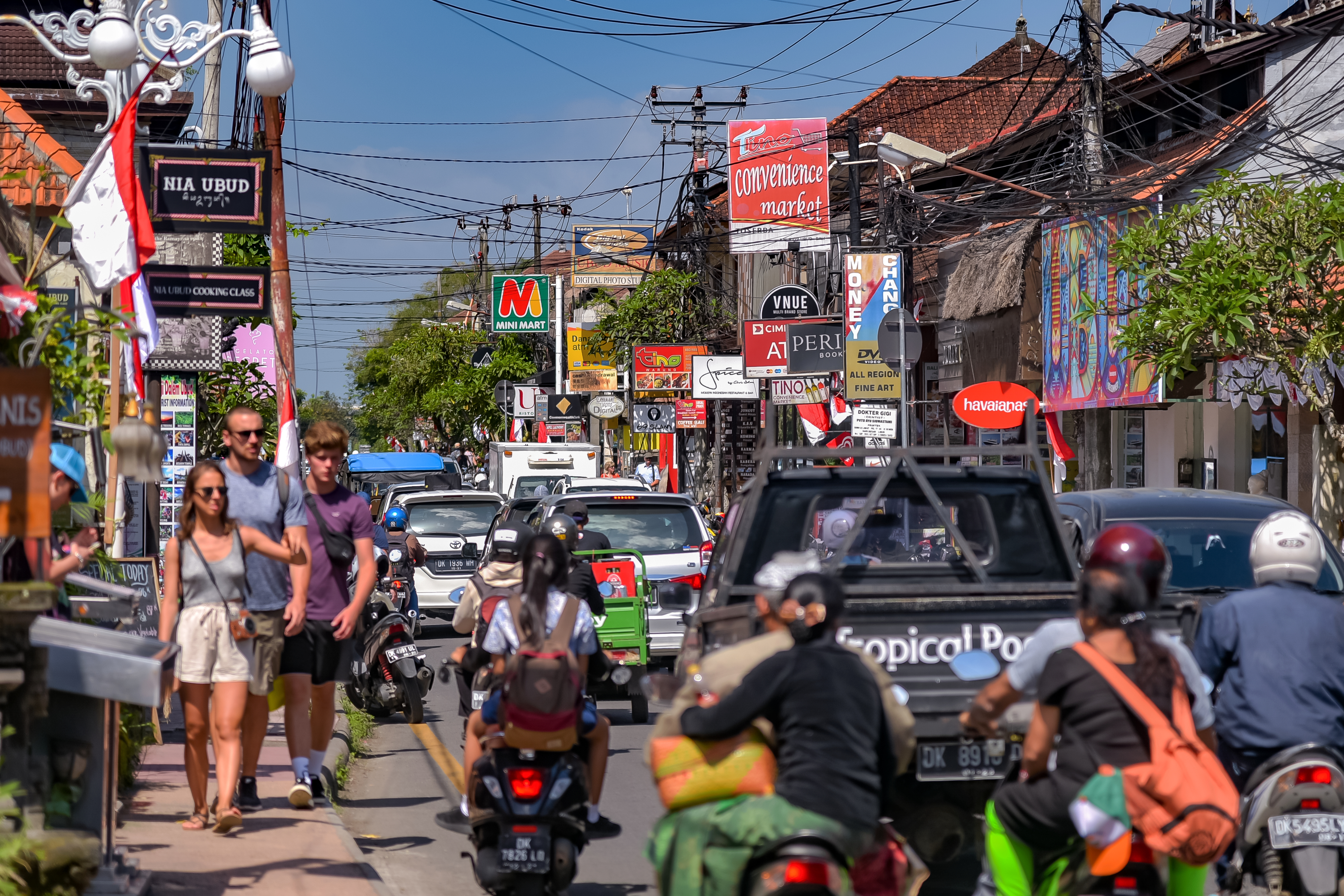
Ubud sits at 515 m above sea level on the Indonesian island of Bali, in the Asia/Makassar timezone, and it holds a tropical rainforest climate that stays warm and humid all year with a monsoon season. The town is home to about 30 thousand people, and its nearest airport is DPS, 29 km away. English is common in tourist areas, which makes daily errands easier for newcomers. Expats who settle here tend to choose between the city center and areas outside the center, and that single choice shapes both rent and the rhythm of daily life.
Rent tells the story of that split. A 1-bedroom in the city center runs $544/mo, while the same apartment outside the center drops to $407/mo. Three-bedroom units follow the same pattern: $1,936/mo in the center against $1,396/mo outside it. Utilities average $82/mo, internet $19/mo, and a mobile phone plan $5/mo, with a gym membership at $52/mo. Food is inexpensive by most standards, with a cappuccino at $2 and an inexpensive restaurant meal at $3 per person, while a mid-range restaurant meal for two with three courses comes to $20. Against those costs, the average monthly net salary locally is $168/mo, so a single adult can live on a budget tier of $468/mo, a mid-range tier of $720/mo, or a comfortable tier of $899/mo, all with rent included.
Safety is one of Ubud's quieter strengths. The safety index is 70/100 and the crime index is 28/100, where a lower number means safer conditions. Air quality is also favorable, with an index of 35, lower being better. Healthcare quality is rated fair, which means routine care is manageable but serious or specialized treatment may require travel. Average internet speed is 20 Mbps, enough for everyday browsing, calls, and most remote work, though heavy data users will notice the ceiling.
For longer stays, Indonesia offers the Retirement Visa (KITAS) and the Remote Worker Visa (E33G), each requiring a minimum monthly income of $2,000/mo. Arrival is through DPS, 29 km from town. Ubud scores 60/100 overall for expats, 62/100 for retirees, and 57/100 for digital nomads, so it suits budget-conscious singles, slow travelers, and remote workers who value low costs, warm weather, and a calm base over big-city convenience.