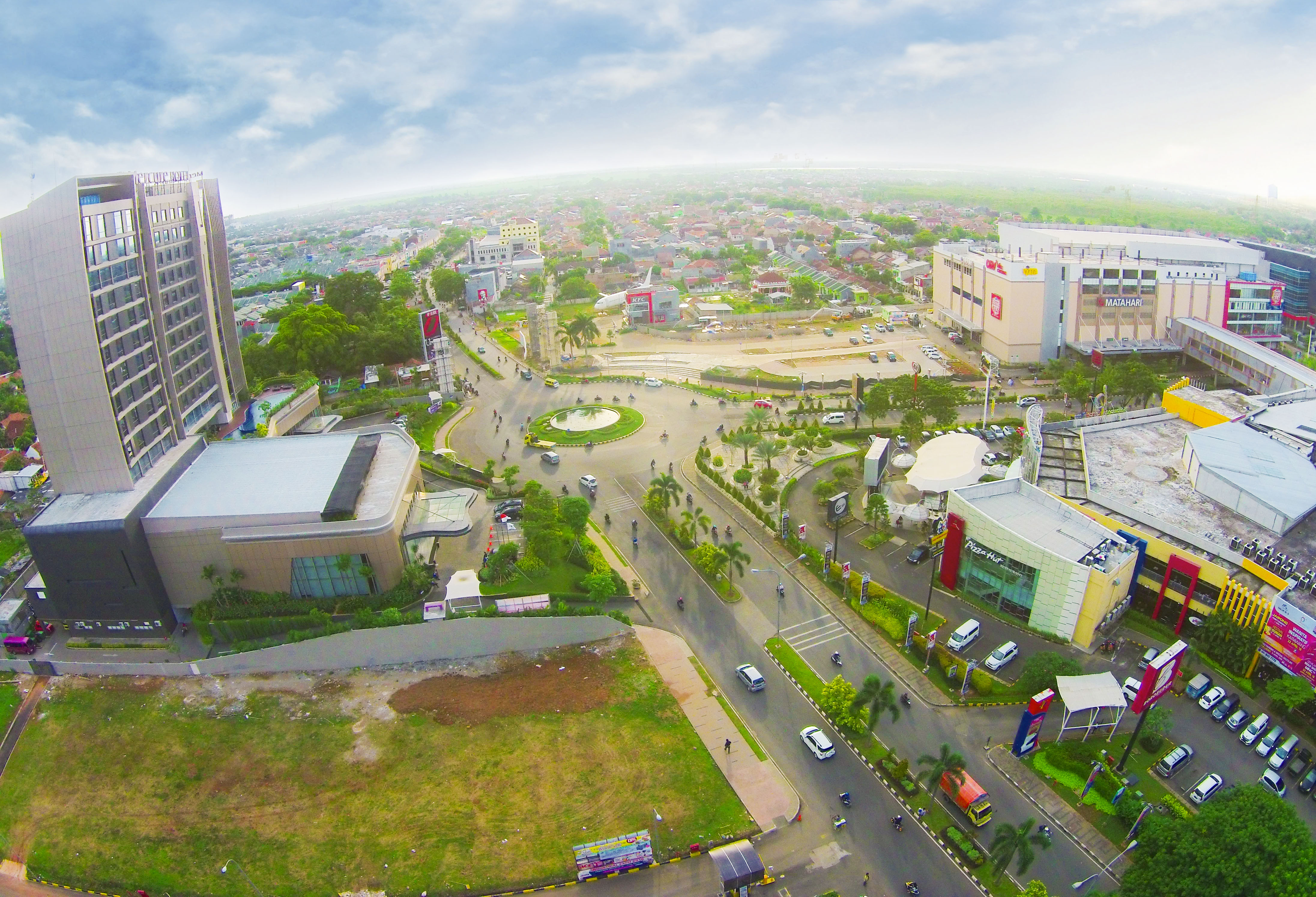
Karawang sits on the flat coastal plain of West Java, about 16 m above sea level, in the Asia/Jakarta timezone, and it runs on a tropical monsoon climate with high heat and humidity year-round. The city holds roughly 1.1 million people, and its scale is part of the appeal: this is a place where daily life stays manageable even as the greater Jakarta sprawl presses in from the west. Expats who settle here tend to sort themselves by budget and commute. Those who want to be close to shops, services, and the main arteries look in the city center, where a one-bedroom rents for $140/mo and a three-bedroom for $223/mo. Those who prefer more space and a quieter street life move outside the center, where the same apartments drop to $70/mo and $112/mo. The trade-off is straightforward: pay more to be central, pay less to be removed.
The cost of living is where Karawang makes its strongest case. A single adult can run a budget tier for $176/mo with rent included, step up to a mid-range tier at $240/mo, or live comfortably at $332/mo. Excluding rent, a single person spends about $350/mo on everything else. Utilities come to $34/mo, internet to $13/mo, and a mobile phone plan to just $4/mo. A gym membership costs $20/mo. Eating out is remarkably cheap: an inexpensive restaurant meal is $1 per person, a mid-range three-course meal for two is $11, and a cappuccino is $1. Against those numbers, the average monthly net salary locally is $411/mo, which means expats on foreign income or remote work hold a large advantage over local wage earners. The gap between what things cost and what local jobs pay is the single most important fact about living here on a budget.
Safety is a genuine strength. The safety index stands at 75/100 and the crime index at 25/100, where lower is safer, so everyday movement around the city is not a source of constant worry. Healthcare quality is rated fair, which is adequate for routine care and minor issues but not a reason to skip comprehensive insurance or a plan for serious treatment elsewhere. Air quality is the weak point, with an index of 105, a figure that reflects the industrial character of the region and the traffic that comes with it. Anyone sensitive to poor air should think carefully about where they live within the city and how much time they spend outdoors.
For stays, Indonesia offers the Retirement Visa (KITAS), which requires a minimum monthly income of $2,000/mo, and the Remote Worker Visa (E33G), which carries the same $2,000/mo minimum monthly income. The nearest airport is HLP, 44 km away. Internet runs at an average of 32 Mbps, enough for calls and most remote work, though not for heavy data work without patience. English proficiency is limited, so learning basic Indonesian pays off quickly. The overall expat score is 83/100, the FIRE score is 85/100, the digital nomad score is 65/100, and the retiree score is 54/100. That mix points to a clear audience: frugal remote workers, early retirees chasing low fixed costs, and anyone who values a cheap, safe base over nightlife, polish, or a large expat social scene.