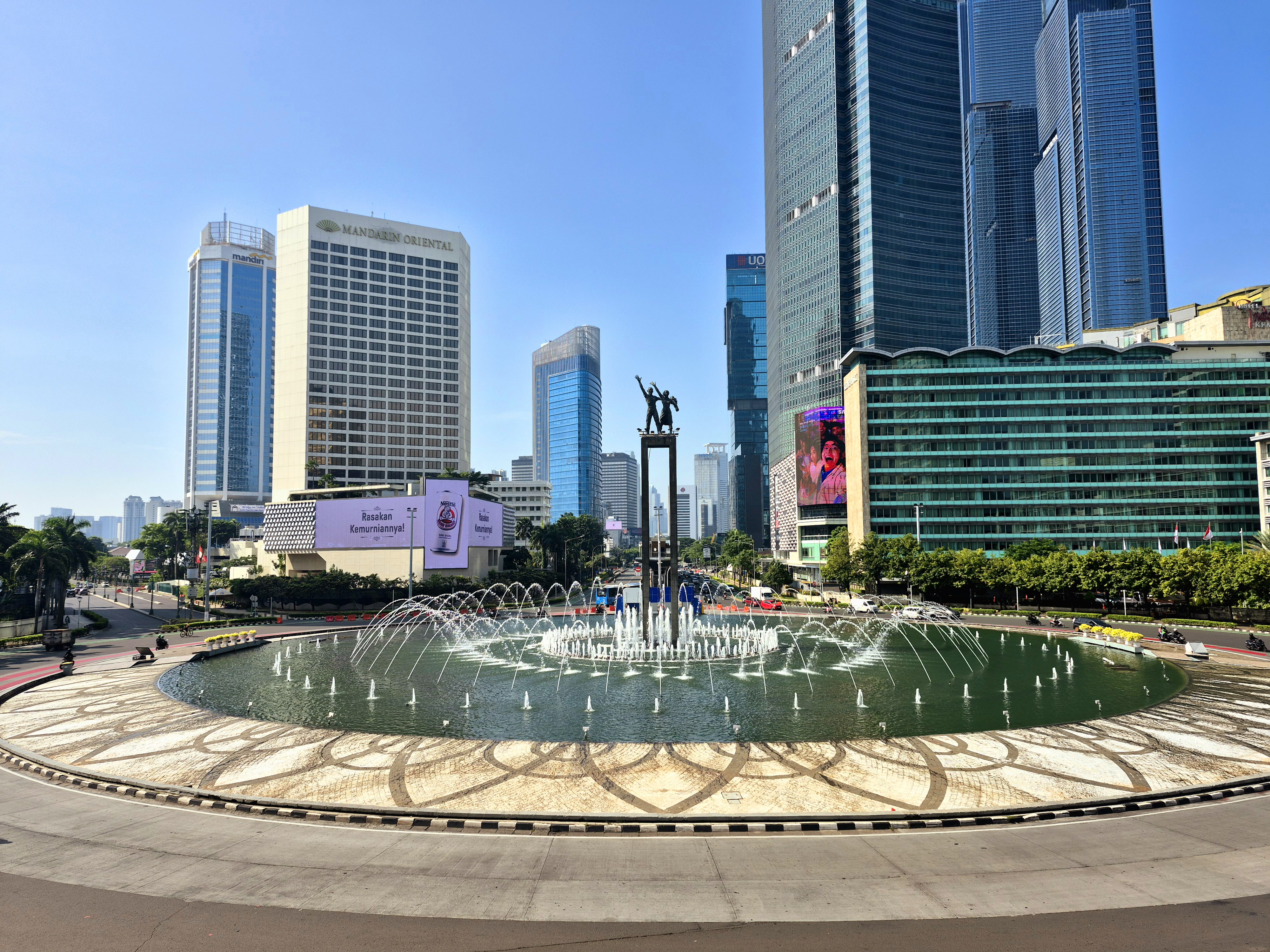
Jakarta, Indonesia Hero Image
Wikipedia Contributor, CC BY-SA

Jakarta, Indonesia

🏛️ Capital City🌊 Coastal

Data updated Oct 8, 2026

Follows Indonesia Residency Rules. Check Digital Nomad & Retiree Pathways →

📊 Scores

78
FIRE
62
Retiree
72
Digital Nomad

Best fit: FIRE / Geoarbitrage (score: 76)

Jakarta sits on the northwest coast of Java at just 8 m above sea level, in the Asia/Jakarta timezone, and it is home to 11 million people. The climate is a tropical monsoon one: hot and humid with significant seasonal rainfall, so afternoons are sticky and the wet season arrives on schedule. Expats tend to cluster in Kemang, Kuningan, and Senopati, three neighborhoods where international schools, cafes, and serviced apartments sit within easy reach of the central business district. With a large and active expat community, newcomers usually find their footing quickly, though English proficiency across the city is limited, which makes a few words of Indonesian go a long way.

The money math here is unusual. A one-bedroom apartment in the city center runs $214/mo, while the same outside the center drops to $158/mo. Three-bedroom units go for $581/mo in the center and $134/mo outside it, a gap that pushes many longer-term residents toward the outskirts. Utilities average $68/mo, internet $20/mo, and a mobile phone plan just $5/mo. A monthly public transport pass costs $9/mo and a gym membership $20/mo. Eating out is remarkably cheap: an inexpensive restaurant meal is $1 per person, a mid-range three-course dinner for two is $14, and a cappuccino is $1. Excluding rent, a single person spends about $550/mo and a family of four about $1,700/mo. Budget-conscious singles can build a full life on roughly $900/mo including rent, while a comfortable tier runs about $3,500/mo. Against that, the average monthly net salary locally is $222/mo, and the cost of living index sits at 38/100 with New York City at 100, which explains why expat salaries and remote income stretch so far here.

Safety is moderate: the safety index is 60/100 and the crime index is 40/100, where lower is safer. Petty theft and traffic are the everyday concerns rather than violent crime, and most expats settle into a routine of avoiding isolated areas late at night. Healthcare quality is rated Good, with reputable international-standard hospitals in the central districts, though many residents still carry evacuation insurance for serious cases. Air quality is the bigger daily irritant, with an air quality index of 115, so air purifiers and masks during the dry season are common household items.

For stays, the Indonesia Retirement Visa (KITAS) requires a minimum monthly income of $2,000/mo, and the Indonesia Remote Worker Visa (E33G) sets the same $2,000/mo threshold. Flights arrive at HLP, 11 km from the city center. Internet averages 50 Mbps, fast enough for remote work, and the city scores 76/100 overall for expats, 78/100 on FIRE, 62/100 for retirees, and 72/100 for digital nomads. Jakarta suits remote workers and early retirees who earn abroad and want low overhead, a large expat network, and a tropical base, more than it suits anyone planning to live on a local salary.
Estimate the cost of moving to Jakarta, Indonesia

Get a free moving cost estimate for moving to Jakarta, Indonesia. Takes 10 seconds.

How much are you shipping?

When are you moving?

Powered by Sirelo. Free quotes from international movers.

🏚️ Cost of Living

A 1BR in the center runs about $214.13/mo. If your income is in another currency, bank FX fees add up. A multi-currency account can cut that cost.

See low-fee transfers

We may earn a commission at no cost to you.

See how Jakarta's cost of living compares with Banyuwangi

Be the first to report costs in Jakarta

Share

🛡️ Safety & Crime

60
Safety Index

(Higher is safer)

40
Crime Index

(Lower is safer)

Jakarta feels moderately safe for expats in established neighborhoods like Senayan, Pondok Indah, and Menteng, where security is visible and expat communities are established. However, petty theft, bag snatching, and motorcycle robbery occur regularly, especially in crowded areas and at night. Avoid displaying valuables, use registered taxis or ride-sharing apps, and stay alert in markets and on public transport. Avoid South Jakarta's outer edges and areas like Tanah Abang after dark. Scams targeting foreigners—overcharging, fake tours, counterfeit goods—are common. Overall, Jakarta is manageable for expats who exercise street smarts and stay in secure residential areas, but it requires more caution than most Western cities.

Jakarta has a safety index of 60/100. Petty theft and lost belongings are the most common problems for newcomers. Compare travel insurance before you go.

Compare travel insurance

We may earn a commission at no cost to you.

🏥 Healthcare

Good
Public Hospitals
Yes
Private Clinics
Yes
English-Speaking Doctors
Widely Available

See how Jakarta's healthcare compares with Banyuwangi

🌤️ Climate

Summer Temp
32°C
Winter Temp
24°C
Humidity
80%
Air Quality Index
115
Annual Rainfall
1809 mm

Best Months

MayJunJulAug

Climate Notes

Tropical monsoon climate; hot and humid with significant seasonal rainfall.

💻 Digital Nomad

Avg Internet Speed
50 Mbps
Internet (monthly)
$20/mo
Coworking Availability
Abundant
Coworking Spaces Nearby
5
Digital Nomad Score
72/100

Community Notes

Jakarta is a bustling hub with a variety of coworking spaces.

Coworking Spaces

NameNotes
WeWork Revenue TowerLocated in the SCBD (Sudirman Central Business District), WeWork Revenue Tower offers a premium coworking experience with modern amenities, a vibrant community, and easy access to restaurants and transportation. It's a solid choice for expats seeking a familiar, professional environment.
GoWork Plaza IndonesiaSituated in the prestigious Plaza Indonesia, GoWork provides a stylish and convenient workspace with excellent facilities and a central location. The surrounding area offers upscale dining and shopping options, appealing to expats looking for a comfortable and accessible base.
CoHive Menara MandiriCoHive Menara Mandiri, located in the heart of Jakarta's business district, offers a cost-effective coworking solution with a focus on community and collaboration. Its central location and range of amenities make it a practical choice for digital nomads.
vOffice JakartavOffice offers several locations throughout Jakarta, including in the business district. They provide a range of services including virtual office and coworking spaces, making it a good option for those needing flexibility and administrative support.

Names, locations and hours can change. Check each space's website before you visit. Places from © OpenStreetMap contributors and Foursquare Open Source Places (Apache 2.0).

Planning to live in Jakarta long-term? Indonesia Remote Worker Visa (E33G) lets remote workers live legally with a minimum income of $2,000/month.

View full requirements →

Working remotely from Jakarta? Nomad health insurance covers you across borders, month to month.

See nomad insurance

We may earn a commission at no cost to you.

See how Jakarta's digital nomad life compares with Banyuwangi

🧳 Expat Life

English Proficiency
Limited
Expat Community
Large & Active
Top Neighborhoods
Kemang, Kuningan, Senopati
Banks Nearby
1302
ATMs Nearby
467

Expat Life Notes

A chaotic, high-energy metropolis with a massive expat community and exceptional hospitality.

Pros

  • ✓ Low cost of living for expats
  • ✓ Dynamic nightlife and dining
  • ✓ Very friendly locals

Cons

  • ✗ Extreme traffic congestion
  • ✗ Air pollution issues
  • ✗ Flood risk

🏘️ Neighborhoods in Jakarta

Areas of Jakarta that expats often consider.

Conditions can change from one block to the next, and these descriptions are general guides, not safety assessments. Before choosing where to stay or live, check current travel advisories, talk to people who live there, and visit in person if you can.

Menteng

Upscale, leafy, residential, historic

Menteng is known for its beautiful colonial-era architecture and quiet, tree-lined streets. It's popular with diplomats and wealthy Indonesians, offering a more relaxed atmosphere. While walkable in some areas, a car is generally needed. Expect higher prices for everything.

Kemang

Trendy, vibrant, expat-centric nightlife

Kemang is a popular expat hub with numerous restaurants, bars, and cafes. It's known for its lively nightlife and international vibe. Traffic can be heavy, and it can be noisy at night. Good for those seeking a social scene.

Kuningan

Business district, modern apartments

Kuningan is a central business district with many modern apartment buildings and shopping malls. It's a convenient location for those working in the area. While there are some parks, it lacks the charm of other neighborhoods. Expect higher rent due to its central location.

Cilandak

Residential, family-friendly, suburban

Cilandak is a more suburban area popular with families and those seeking a quieter lifestyle. It offers larger houses and more green space compared to central Jakarta. While less walkable, it's close to international schools and shopping centers. A good option for those prioritizing space and peace.

Page 1 of 2

Could living/working in Jakarta cut years off your work life?

With a 1-bedroom in the center at $214/mo, your FIRE number here might be much lower than you think.

Calculate My FIRE Date →

🛂 Visa Options for Indonesia

Many long-stay visas require proof of health insurance. Compare international health plans before you apply.

Compare health insurance

We may earn a commission at no cost to you.

🛂

Earning over $2,000/mo? You may qualify for a Indonesia visa.

Answer 11 questions and get a personalized match in under 2 minutes.

Find My Visa →

More Cities to Consider instead of Jakarta

FAQ

Frequently Asked Questions about Jakarta

Click any question to expand the answer.

Jakarta has a population of approximately 10,684,900 people.
A single person can expect to spend around $535 per month in Jakarta, including rent. A 1-bedroom apartment in the city center costs approximately $214/month.
The nearest airport to Jakarta is HLP, approximately 11.4km away.
Jakarta is considered relatively safe, with a safety index of 60.0. As with any city abroad, expats should research specific neighborhoods before committing to a location.
Jakarta has an average internet speed of 50 Mbps. It is considered a well-established digital nomad destination.
Technically, Indonesia does not have a formal digital nomad visa as of 2024 (the Bali 'digital nomad visa' applies only to Bali's special economic zone). Working remotely for a foreign employer while on a tourist visa exists in a legal gray area. Many expats do it short-term, but for stays beyond 60 days you should look at a social or business visa, and for long-term residence you'll need a KITAS, which requires employer sponsorship.
Traffic is genuinely among the worst in the world — a 10km commute can take 90 minutes during peak hours. The MRT currently runs two lines covering a north-south corridor and one cross-town line, which helps if you happen to live and work along those routes. Most expats rely on Grab (ride-hailing) or a company car. Budget significant time and money for transport; it's not a city where you can casually walk or cycle to work.
Rental costs vary greatly. A basic one-bedroom apartment in a less central area like Cilandak can start around $400 USD per month. Expect to pay $800-$1500+ for a modern apartment in a more desirable location like Menteng or Kuningan, often including amenities like a pool and gym.
It's relatively easy to find English-speaking medical professionals, especially in private hospitals and clinics catering to expats. Hospitals like Siloam and Medistra have international patient services. Online platforms like NowDoc can also help you locate English-speaking doctors.
Indonesia doesn't have a specific retirement visa. Many retirees use a social-cultural visa (Visa Sosial Budaya) sponsored by a local, requiring renewals every 6 months. Another option is the KITAS (Limited Stay Permit) through investment, requiring a significant financial commitment.
Generally, Menteng, Kebayoran Baru, and Pondok Indah are considered safe and upscale neighborhoods popular with expats. These areas have lower crime rates and better security compared to other parts of the city. However, petty theft can still occur, so vigilance is always advised.
Internet speeds in Jakarta are generally good, especially with fiber optic connections. You can expect speeds of 50-100 Mbps in most residential areas, sufficient for video conferencing and other remote work tasks. Coworking spaces often offer even faster and more reliable connections.
Jakarta has a sizable expat community, making it relatively easy to connect with others. There are numerous expat groups on Facebook and Meetup, as well as social events organized by international schools and organizations. Joining these groups can help you build a social network quickly.
As a US citizen, you're still required to file US taxes even while living in Jakarta. The Foreign Earned Income Exclusion (FEIE) allows you to exclude a certain amount of your foreign-earned income from US taxes. You may also need to report foreign bank accounts if they exceed $10,000 (FBAR).
Several options exist for international money transfers. Wise (formerly TransferWise) and Remitly are popular for their competitive exchange rates and lower fees. Traditional bank transfers are also possible but often come with higher fees. ATMs are widely available, but check for international transaction fees.
Jakarta has a tropical monsoon climate, meaning it's hot and humid year-round. The wet season is typically from November to April, with heavy rainfall and occasional flooding. The dry season, from May to October, is slightly cooler but still humid.
Jakarta can be viable for FIRE, especially if you're comfortable with a lower cost of living than in the US. Housing, food, and transportation can be significantly cheaper, allowing your passive income to stretch further. However, healthcare costs and potential safety concerns should be factored into your budget.
While Bahasa Indonesia is the official language, English is spoken in tourist areas, business districts, and by many younger people. Learning some basic Indonesian phrases will greatly enhance your daily life and interactions with locals outside of expat-heavy areas.
Jakarta is a predominantly Muslim city, so dressing modestly and respecting local customs is important. Public displays of affection are generally frowned upon. Patience is also key, as things often move at a slower pace than in Western countries. Be prepared for traffic delays and a more relaxed approach to time.
Jakarta has a growing number of coworking spaces catering to digital nomads and remote workers. Popular options include GoWork, WeWork, and CoHive. These spaces offer various membership plans, reliable internet, and networking opportunities.
Jakarta's traffic can be challenging, so planning your commute is essential. The MRT (Mass Rapid Transit) and TransJakarta busway are efficient options for traveling along certain routes. Ride-hailing apps like Gojek and Grab are also widely used and relatively affordable.

Share This Guide