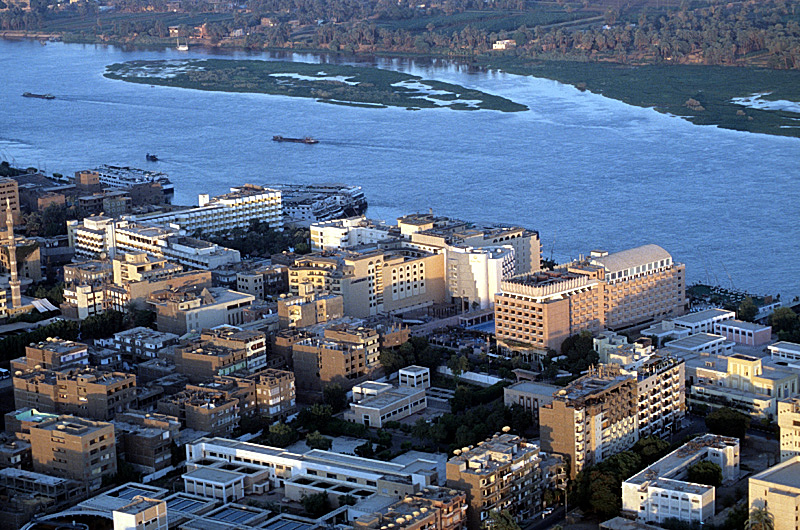
Luxor sits in southern Egypt at 76 m above sea level, in the Africa/Cairo timezone, and packs 422 thousand residents into a landscape of temples, tombs, and riverbank life. The climate splits hard between seasons: scorching, dry summers from May through September push past 40°C, while winters from November through February hover around 15°C. Rainfall is minimal year-round, and low humidity makes the heat more tolerable than the raw numbers suggest. Expats tend to settle in two areas, the East Bank and the West Bank villages, choosing between the city's busy side and a quieter, more rural rhythm across the Nile.
Monthly costs here are low enough to reset expectations. A one-bedroom apartment in the city center rents for $125/mo, while the same outside the center runs $193/mo. Three-bedroom places flip the pattern: $250/mo in the center and $180/mo outside it. Utilities come to $25/mo, internet $6/mo, and a mobile phone plan $3/mo. A gym membership costs $4/mo. Eating out is cheap, with an inexpensive restaurant meal at $4 per person, a cappuccino at $1, and a mid-range three-course meal for two at $41. Excluding rent, a single person spends about $333/mo. Budget-tier living, rent included, totals $321/mo; mid-range totals $500/mo; comfortable totals $362/mo. Against that, the average monthly net salary locally is $67/mo, a gap that shapes who can live on local work versus outside income.
Safety is middling: the safety index is 45/100 and the crime index is 55/100, where lower is safer. Air quality is a bigger daily factor, with an index of 72, where lower is better. Healthcare quality is rated Fair. English proficiency is common in tourist areas, which eases errands and appointments for newcomers, and the expat community size is medium, so connections exist without the feel of a crowded enclave.
For longer stays, the Retirement Residency program is the named route. The overall expat score is 51/100, with retirees at 53/100 and digital nomads at 49/100. Luxor International Airport (LXR) is 7 km from the city, making arrivals quick. Average internet speed is 20 Mbps, workable for routine tasks. The city suits retirees and slow travelers drawn to low rents, warm winters, and monument-heavy surroundings, while remote workers who need heavy bandwidth or a fast social scene may find the pace and the numbers less generous.