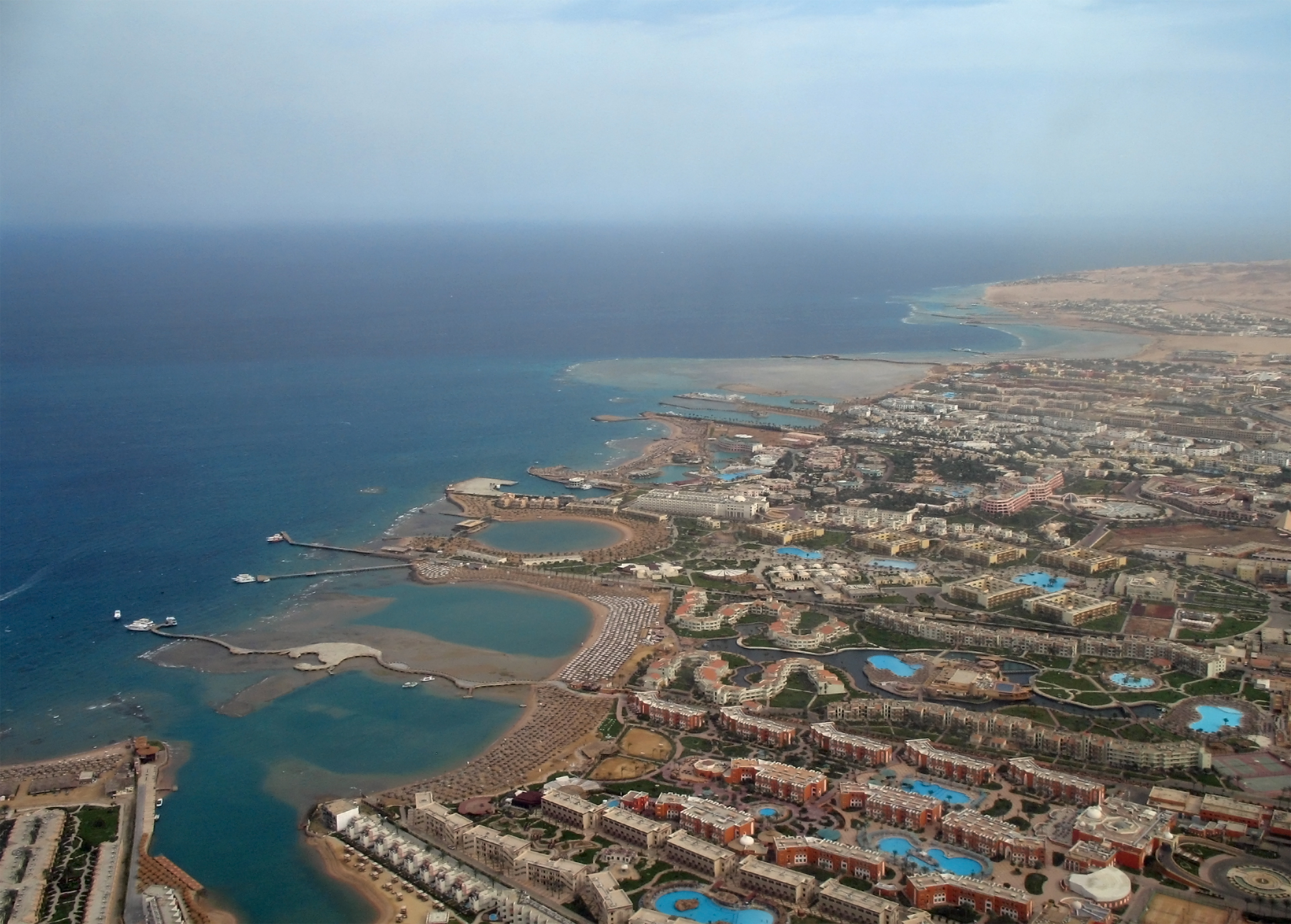
Hurghada sits on Egypt's Red Sea coast, a city of 207 thousand people at just 11 m above sea level, where the desert meets some of the clearest water in the region. The climate is hot desert: summers from May to September are scorching and dry, reaching 34°C, while winters from December to February stay mild at around 20°C. That split makes the city a year-round draw for beach lovers, though the peak summer heat is genuinely challenging. Expats tend to cluster in a few well-known areas. El Gouna, Sahl Hasheesh, and Village Road are the most popular neighborhoods, and the expat community here is large and active, which means newcomers rarely have to look far for company or advice.
The cost of living is where Hurghada gets interesting, and also where the numbers demand a closer look. A one-bedroom apartment in the city center rents for $215/mo, while the same outside the center drops to $119/mo. Three-bedroom units run $217/mo in the center and $556/mo outside it. Monthly utilities come to $25/mo, internet to $9/mo, and a mobile phone plan to $8/mo. A public transport pass costs $6/mo and a gym membership $27/mo. Eating out is cheap: an inexpensive restaurant meal is $4 per person, a mid-range three-course meal for two is $40, and a cappuccino is $2. Excluding rent, a single person spends around $580/mo and a family of four around $1,750/mo. Budget, mid-range, and comfortable tiers for a single adult, rent included, land at $223/mo, $349/mo, and $504/mo. Against all that, the average monthly net salary locally is $153/mo, and the cost of living index sits at 42/100 against New York City at 100. The gap between local wages and expat budgets is the single most important thing to understand before moving.
Safety is a relative strength. The safety index is 65/100 and the crime index, where lower is safer, is 35/100. Healthcare quality is rated Good, which covers the essentials for most residents, though serious or complex cases often mean traveling to Cairo. Air quality is a weaker point, with an index of 68, a reminder that this is a desert city with dust and traffic. Internet averages 29 Mbps, workable for most remote tasks but not exceptional. English is common in tourist areas, so daily errands and social life are manageable without Arabic, though learning some will pay off outside the resort zones.
For stays, the Retirement Residency program is the named route for retirees. The city scores 76/100 overall for expats, 78/100 on FIRE, 64/100 for retirees, and 69/100 for digital nomads, a profile that favors long-stay budget seekers and remote workers over those chasing a fast-paced urban scene. Hurghada International Airport (HRG) is 9 km away, so arrivals are quick and cheap to reach from the city. The timezone is Africa/Cairo. Hurghada suits beach-focused savers, early retirees, and nomads who want low rents and warm winters, and it suits them best if they arrive with income that is not tied to the local job market.