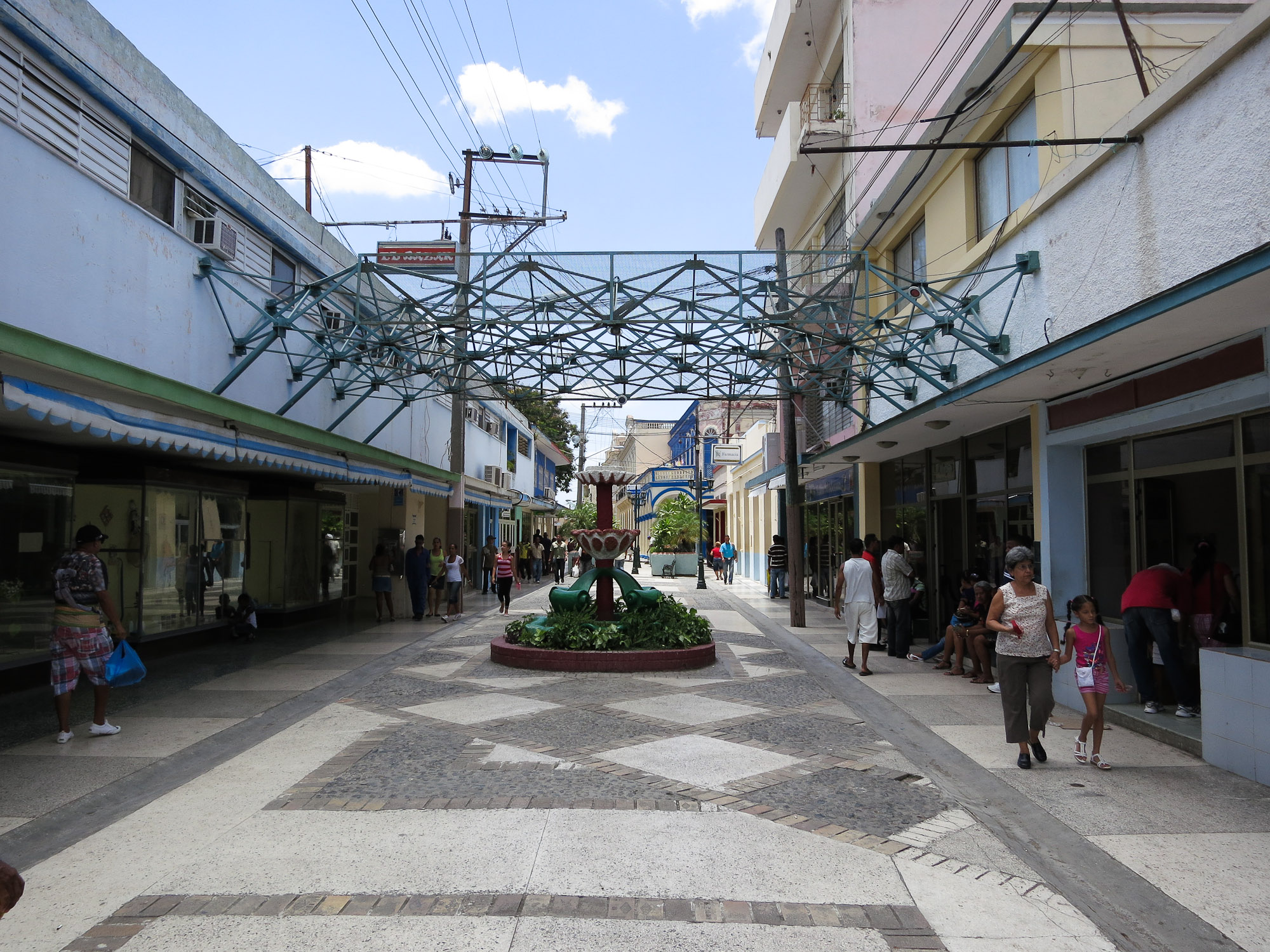
Bayamo sits low in eastern Cuba at just 45 m above sea level, wrapped in a tropical climate that keeps the air warm and the surrounding countryside green year round. The city runs on America/Havana time and holds a population of 235 thousand, small enough that daily errands rarely require more than a short walk or a cheap ride. Foreign residents who settle here overwhelmingly choose Centro, the historic core where colonial streets, local markets, and the main square sit within easy reach of one another. That single neighborhood is the practical answer to the question of where to live, since the expat community is very few in number and does not spread across multiple districts.
Rents in Bayamo behave in a way that surprises newcomers: a 1-bedroom in the city center runs $425/mo, while the same apartment outside the center costs $670/mo, and a 3-bedroom in the center is $590/mo against $965/mo outside it. Central addresses are the cheaper option here, which makes Centro attractive on price as well as location. A single adult can expect a budget tier of $913/mo, a mid-range tier of $1,272/mo, and a comfortable tier of $1,080/mo, all with rent included. Outside rent, a single person spends about $350/mo and a family of four about $1,100/mo. Utilities add $30/mo, internet $250/mo, a mobile plan $10/mo, a monthly public transport pass $35/mo, and a gym membership $40/mo. Meals are inexpensive: $3 per person at a casual restaurant, $50 for a three-course mid-range meal for two, and $3 for a cappuccino. The cost of living index sits at 29/100 against New York City at 100. Local wages tell a different story, with an average monthly net salary of $20/mo, so the gap between local earnings and expat budgets is enormous.
Safety is moderate, with a safety index of 55/100 and a crime index of 45/100, where a lower crime figure means a safer city. Air quality is reasonable at an index of 45, again lower being better. Healthcare quality is poor, and that single fact shapes how residents plan their lives, from routine checkups to emergencies. English proficiency is limited, so everyday interactions reward at least basic Spanish. Internet service averages 7 Mbps, slow enough that remote work demands patience and planning.
Cuba operates a D-visa for digital nomads and remote workers, the route most relevant to foreign residents who need to stay legally while earning abroad. The nearest airport is BYM, only 3 km from the city, which keeps arrivals and departures quick. Bayamo scores 77/100 overall for expats, 79/100 on FIRE, 51/100 for retirees, and 45/100 for digital nomads. Those numbers point to a clear fit: people living on outside income, especially those chasing early financial independence, will find the low costs and central rents compelling, while retirees and remote workers face more friction from poor healthcare, limited English, and slow internet. It suits the self-sufficient and the budget-driven far more than anyone needing strong services or a large expat circle.