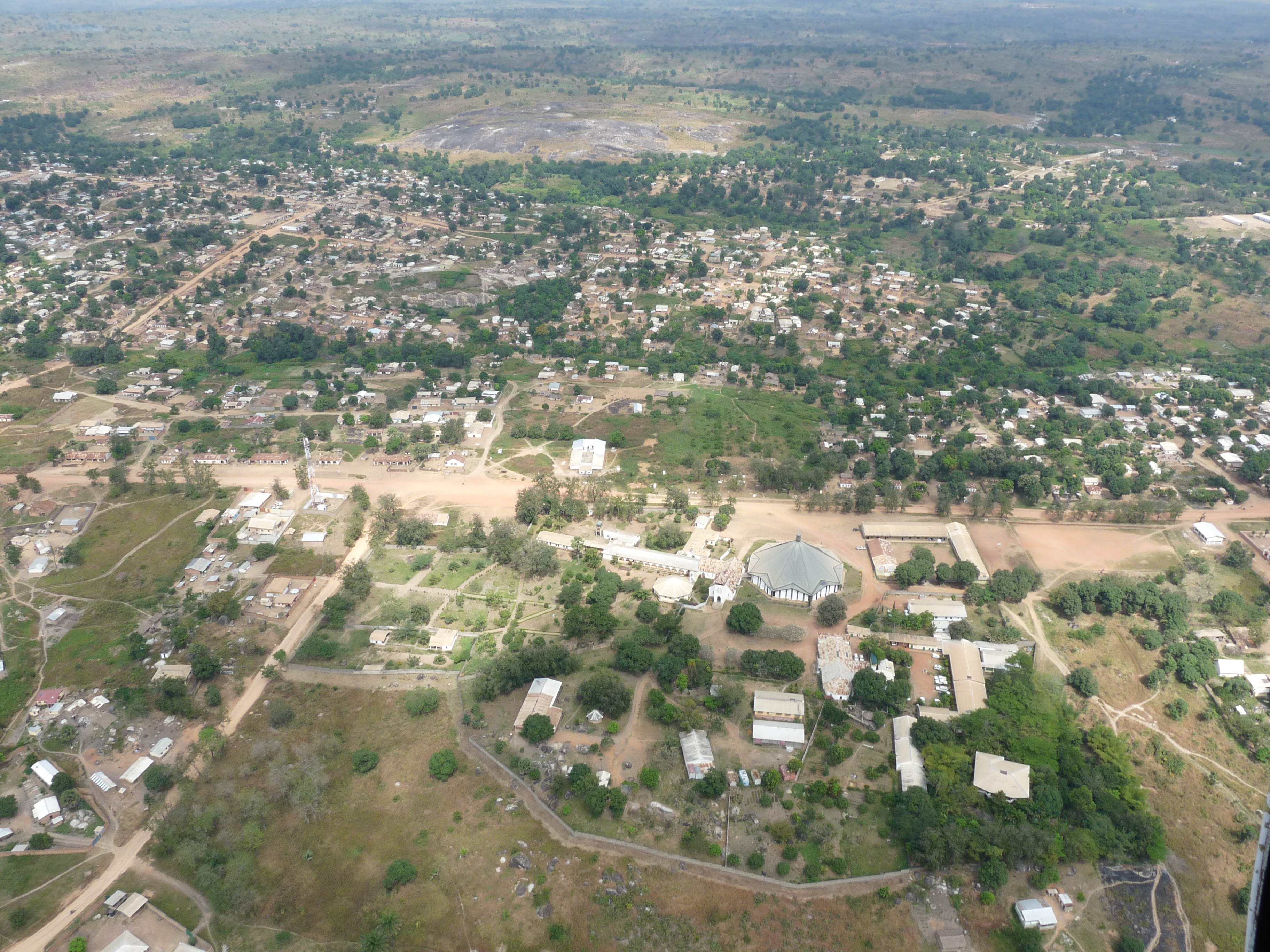
Bouar, Central African Republic
Bouar sits in the western reaches of the Central African Republic, a highland town lifted to 1020 m above sea level and set on Africa/Bangui time. The altitude tempers what is otherwise a tropical savanna climate: hot, humid summers from March through October push toward 36°C, while the drier winters from November to February bring lows near 15°C. That swing demands real adaptation, from intense heat to seasonal rainfall patterns. The city holds roughly 40 thousand people, and the available information does not identify specific expatriate neighborhoods, so newcomers tend to sort out their own footing once they arrive.
Monthly costs for a single person, excluding rent, come to about $314/mo. A one-bedroom apartment in the city centre rents for around $138/mo, which keeps housing within reach for those earning outside the local economy. Internet runs at an average of 5 Mbps, slow enough that remote work needs patience and planning. No wage figures are available, so the local earning picture remains outside what can be stated here.
Safety is a serious consideration. The safety index stands at 25/100, while the crime index, where lower is safer, reaches 75/100. Healthcare quality is rated Poor, which means medical care is limited and anyone with ongoing health needs should plan accordingly. Air quality is moderate, with an index of 45, lower than many larger cities but still worth monitoring during the dry season.
Visas are handled through the relevant authorities, and no specific programs are named here. The nearest airport is BBY. With an overall expat score of 11/100, a retiree score of 36/100, and a digital nomad score of 31/100, Bouar suits those who value low rent and highland air over convenience and connectivity. English proficiency is Limited, so a willingness to work in French or Sango matters. This is a place for the self-sufficient, not the comfort-seeking.
Estimate the cost of moving to Bouar, Central African Republic
Get a free moving cost estimate for moving to Bouar, Central African Republic. Takes 10 seconds.
How much are you shipping?
When are you moving?
Powered by Sirelo. Free quotes from international movers.
Be the first to report costs in Bouar
🛡️ Safety & Crime
(Higher is safer)
(Lower is safer)
Bouar presents significant safety challenges for expats. With a Numbeo Safety Index of 25/100, the city experiences elevated rates of petty theft, armed robbery, and opportunistic crime, particularly after dark. Gang activity and carjacking occur sporadically. The broader Central African Republic context—marked by periodic civil unrest and limited police capacity—compounds risks. Expats should avoid displaying wealth, limit nighttime movement, use trusted transportation, and maintain low profiles. This destination is suitable only for those with security experience, strong local networks, and employer-provided safety infrastructure. Casual remote workers or retirees should seriously reconsider.
Bouar has a safety index of 25/100. Petty theft and lost belongings are the most common problems for newcomers. Compare travel insurance before you go.
Compare travel insuranceWe may earn a commission at no cost to you.
🏥 Healthcare
See how Bouar's healthcare compares with Bria
🌤️ Climate
Best Months
Climate Notes
Bouar has a tropical savanna climate with hot, humid summers (March-October reaching 36°C) and mild, drier winters (November-February with lows around 15°C), requiring adaptation to intense heat and seasonal rainfall patterns.
💻 Digital Nomad
Community Notes
Bouar requires resilience to adapt to its rugged lifestyle and limited facilities.
Coworking Spaces
| Name | Notes |
|---|---|
| Orange Digital Center Bouar | Part of the Orange network, this center likely offers a reliable internet connection, a key amenity in Bouar. It's a good option for those seeking a basic, functional workspace and is often located near the city center. |
| Espace de Coworking Bouar (Informal) | While not a formal, branded coworking space, local internet cafes or business centers in Bouar may offer shared workspace options. These are typically very affordable and provide basic amenities like internet and printing, often located near the market or main commercial areas. |
Names, locations and hours can change. Check each space's website before you visit. Places from © OpenStreetMap contributors and Foursquare Open Source Places (Apache 2.0).
Working remotely from Bouar? Nomad health insurance covers you across borders, month to month.
See nomad insuranceWe may earn a commission at no cost to you.
See how Bouar's digital nomad life compares with Bria
🧳 Expat Life
🏘️ Neighborhoods in Bouar
Conditions can change from one block to the next, and these descriptions are general guides, not safety assessments. Before choosing where to stay or live, check current travel advisories, talk to people who live there, and visit in person if you can.
Neighborhood guides for this city are being reviewed. In the meantime, see the safety section and check current travel advisories before choosing where to stay.
Could living/working in Bouar cut years off your work life?
More Cities to Consider instead of Bouar
Frequently Asked Questions about Bouar
Click any question to expand the answer.
Share This Guide
Bouar won't stay this cheap forever.
Cost-of-living and visa updates for Bouar and the rest of Central African Republic. Free with RA Postcards.
By submitting your email address, you will receive a free subscription to RA Postcards and special offers from Rewire Abroad and our affiliates. You can unsubscribe at any time, and we encourage you to read more about our Privacy Policy.