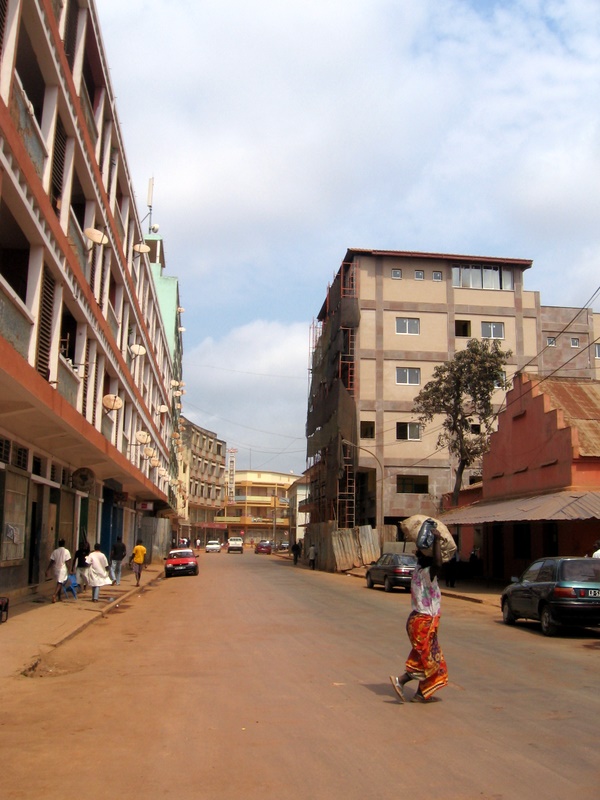
Uíge sits at 840 meters above sea level in Angola's tropical highlands, a city of roughly 599 thousand people where the air is warm and the landscape is green. The timezone is Africa/Luanda, and the climate is distinctly tropical, with a rhythm of wet and dry seasons that shapes daily life. For expats, the practical choice of neighborhood narrows to Centro and Bairro Norte, both close to the city's core and its modest amenities. The nearest airport, UGO, lies just 3 kilometers away, making arrivals and departures relatively straightforward for a city of this size.
Living costs here are low by international standards, with a cost of living index of 33 out of 100 relative to New York City. A single person's monthly expenses excluding rent come to $550, while a family of four spends about $1,800 on the same basis. Rent remains the largest variable: a one-bedroom in the city centre runs $380 per month, dropping to $280 outside the centre, while a three-bedroom in the centre costs $750 and $550 outside it. For a single adult, a budget tier total including rent is $900 per month, a mid-range tier total is $1,600, and a comfortable tier total reaches $2,500, though local wages are not documented here.
Safety is a genuine concern, with a safety index of 40 out of 100 and a crime index of 60, where lower is safer. Healthcare quality is rated as poor, so expats should plan for serious medical needs elsewhere. The air quality index is 35, which is relatively clean, but the overall environment demands caution, especially at night and in less familiar areas. English proficiency is limited, so basic Portuguese goes a long way in daily interactions, and the expat community size is effectively none, meaning newcomers should expect to build their own social circles.
Visas are required for most foreigners, though specific programs are not detailed here; the process involves standard Angolan immigration procedures. Getting there is simple via UGO, the nearest airport just 3 kilometers from the city. This is not a destination for digital nomads, given a digital nomad score of 42 and average internet speed of 10 Mbps, nor for retirees, with a retiree score of 45. Instead, Uíge suits those focused on financial independence or long-term frugal living, reflected in a FIRE score of 74 and an overall expat score of 72, provided they can adapt to limited services and a slower pace of life.